
Email id: info@ijclinmedcasereports.com
Human Milk Bioactives in Early-Life Nutrition, Advances in Human Milk Oligosaccharides, Prebiotics, Probiotics, and Osteopontin in Regulating Gut Microbiota and Infant Immune Development
Dinesh Banur1, Said Eldeib1,*, Ahmed Tahoun1, Jayaraj Damodaran1, Mohamed Chaudhary1, Swapna bade1, Sehrish Munir1, Hind Ali1, Mohammed Zeidan1, Oliyad Abdi1, Ahmed Noureldin2, Mohamed Elmesserey3, Rafia Owera4, Hadi Haddad5 and Julia Bilal Aga6
¹Department of paediatrics, ADSCC/ YAS clinic Hospital, AD, UAE
2Department of Neonatology, Garhoud P Hospital, Dubai UAE
3Department of paediatrics, Al Jalila Children's Hospital, Dubai UAE
4Department of paediatrics, Prime medical centre Jumeirah, Dubai, UAE
5Department of paediatrics, Lebanese American University mc, Lebanon
6Department of paediatrics, University hospital Sharjah, UAE
Received Date: 03/01/2026; Published Date: 20/03/2026
*Corresponding author: Dr. Said Eldeib, Department of paediatrics ADSCC/ YAS clinic Hospital, Abu Dhabi, UAE
Abstract
Human milk contains a broad range of immunomodulatory components, including immunoglobulins, Human Milk Oligosaccharides (HMOs), cytokines, microbiota, innate immune factors, and food antigens. Maternal diet can influence the composition of human milk, as dietary antigens consumed by the mother may be transferred into breast milk. However, whether these dietary antigens promote immune tolerance or lead to sensitization in infants remains a subject of ongoing debate.
Human milk is considered the gold standard for newborn nutrition. Among its key bioactive components are Human Milk Oligosaccharides (HMOs), which are present in high concentrations and provide multiple health benefits. These include supporting the establishment of a healthy gut microbiota, protecting against pathogenic infections, and contributing to immune system development. The composition of HMOs changes dynamically during lactation, allowing the mother to adapt milk composition to meet the evolving needs of the infant.
Despite its benefits, not all infants can be fully breastfed for various reasons. In such cases, infants may receive partially or exclusively cow’s milk–based formulas, which naturally lack HMOs. To compensate, these formulas are often supplemented with Non-Digestible Carbohydrates (NDCs) that mimic some functional effects of HMOs. The production of synthetic HMOs remains technically challenging and costly, and therefore NDCs are used as alternatives. However, NDCs cannot fully replicate the wide range of biological functions provided by HMOs. Future research may enable the development of more effective NDCs tailored to the specific needs of vulnerable groups of infants, such as preterm babies and those at higher risk of allergies.
Human milk is finely attuned to the needs of infants supporting optimal growth and overall development. In addition to the nutritional components, it contains important bioactive components, such as enzymes, growth factors, antimicrobial compounds, oligosaccharides, and immunological factors .Emerging evidence suggests that the distinct array of oligosaccharides in human milk provides a variety of physiologic benefits to infants, including the establishment of a balanced gut microbiota .prevention of pathogen adhesion to mucosal surfaces , modulation of the immune response , and potential support to brain development . Currently, most infant formulas do not contain human milk oligosaccharides and their absence may contribute to differences in health outcomes that have been observed between human milk- and formula-fed infants.
This review summarizes the current literature on these immunologically active factors in human milk, including the microbiome, innate factors, and maternal diet-derived dietary antigens in the context of infant growth and development of allergic diseases.
Keywords: Human milk oligosaccharide; Non-digestible carbohydrates prebiotic; Postbiotic; 2′-linked fucosyllactose (2′-FL); 3-galactosyllactose (3′-GL); Osteopontin
Abbreviations: HMOs: Human Milk Oligosaccharide; SCFAs: Short-Chain Fatty Acids; Gal: β-d-galactose; Glc: β-d-glucose; GlcNAc: β-d-N-acetyglucosamine; Fuc: α-l-fucose; Sia: Sialic acid α-d-N-acetylneuraminic acid; LNnT: Lacto-N-neotetraose; LNT: Lacto-N-tetraose; LNT-II: Lacto-N-triose II; 2′-FL: 2′-fucosyllactose; 3-FL: 3-fucosyllactose; 3′-SL: 3′-sialyllactose; 6′-SL: 6-’sialyllactose; Th2: T helper 2 lymphocyte; IL-4: Interleukin-4; IFN-γ: Interferon gamma; IgE: Immunoglobulin E; Th: T helper; DSLNT: disialyllacto-N-tetraose; DFLNH: difucosyllacto-N-hexaose; LNH: Lacto-N-hexaose; LNF-I: Lacto-N-fucopentaose; 3′-GL: 3′-galactosyllactose; 6′-GL: 6′-galactosyllactose; MAPK: Mitogen-Activated Protein Kinase; OPN: Osteoponitin
Introduction
According to the World Health Organization, infants should be exclusively breastfed for the first six months of life. During the second year, human breast milk continues to provide more than half of a child’s nutritional requirements. [1]. World Health Organization. 2018. The infants who are formula-fed are more prone to infectious diseases, such as gastroenteritis and acute otitis media, and immune-mediated diseases such as allergy, when compared to the infants who are exclusively breastfed [2]. ESPGHAN Committee on Nutrition, Agostoni C, Braegger C2009. The first milk produced by mothers after the delivery is called colostrum, it is biochemically, and functionally different from the mature milk [3]. The human milk is a rich and complete nourishment that is essential for the correct development of the infant’s organism [4]. Colostrum, indeed, contains high concentration of lactoferrin, Immunoglobulin A (IgA), leukocytes and specific developmental factors, and a low amount of lactose, potassium and calcium, underlying its immunological functions rather than nutritional [5,6].
From 5 days to 2 weeks postpartum, there is the production of transitional milk which shares some characteristics of colostrum, although its main function is to support new born at nutritional level [7, 8]. Bacteria located in both colostrum and mature milk can stimulate the anti-inflammatory response, by stimulating the production of specific cytokines, reducing the risk of developing a broad range of inflammatory diseases and preventing the expression of immune mediated pathologies, such as asthma and atopic dermatitis. This mini review discusses the composition of human milk and its biological benefit for infants. Additionally, we also discuss how these beneficial effects can be mimicked if breastfeeding is not possible.
Discussion
Microbiota and the rule in the early life immunity, the specific mechanisms that lead to the formation of the human milk microbiota are still unknown; however, there are different hypothesis that can explain the origin of milk associated bacteria. Indeed, some skin or infant’s oral cavity may become an integral component of the milk microbiota by means of a milk flow back into mammary ducts during lactation [9]. This mechanism may justify the presence of cutaneous and oral bacteria that are recovered in the milk microbiota, such as Streptococcus spp. and Staphylococcus spp [10,11]. Interestingly microorganisms belonging to the maternal, human milk contained also a great number of intestinal bacteria, which may spread from the maternal intestinal environment by a mechanism involving dendritic cells (DCs) and CD18+ cells; these cellular types would be able to capture intestinal microorganisms from the gut lumen and transfer them to lactating mammary glands by means of translocation, which results to be increased during late pregnancy and lactation [9]. Consequently, the milk microbiota can shape the initial intestinal microbiome of new-borns, together with the maternal intestinal and vaginal microorganisms that are ingested by the neonate during the passage through the birth canal [11].
Microbiota:
The survival advantage of breastfed infants over non-breastfed infants is known since the 1900s. The stool bacterial composition of breastfed infants was reported to be different from that of the formula-fed infants. Additionally, the presence of an unidentified carbohydrate fraction was also reported in human human breast milk. The amount and composition of microbiota vary among women, and during the lactation period. Generally, the total microbiota concentration is higher during the early stages of lactation and decreases within the first three months [12-14]. Xu G, Davis, 2017J Thurl S, Munzert M, 2010. The microbiota content of breast milk after term delivery is higher than that after preterm delivery. The HMO fraction is the third most abundant component in human milk after lactose and lipids, excluding water. The HMO content usually varies between 10–15 grams per liter (g/L) of mature milk (or 1.5–2.3 g/100 kcal, assuming an energy density of human milk of 64 kcal/100 mL) and 20–25 g/L of colostrum [15-17]. Bode L. 2012, Kunz C, Kuntz S 2014 Zivkovic AM, 2011The HMO content in the human breast milk is more abundant than the protein content, which is typically around 10 g/L or 1.5 g/100 kcal.
Health Benefits of the Microbiota:
Several studies have reported the beneficial effects of microbiota that include modification of the intestinal microbiota, anti-adhesive effect against pathogens, modulation of the intestinal epithelial cell response, and development of the immune system.
Modulation of intestinal microbiota:
Human Milk Oligosaccharides (HMO) are intrinsic components that affect the gut microbiota by providing an energy source for the beneficial intestinal bacteria. Additionally, HMOs affect the health of the host by serving as a decoy receptor for the opportunistic pathogens in the mucosal surface [18]. Salminen S. 2017 One study reported that none of the selected Enterobacteriaceae strains exhibited growth on a medium containing 2′-FL, 6′-sialyllactose or LNnT as a carbohydrate source. However, several strains were capable of utilizing galacto-oligosaccharides (GOS), maltodextrin, and monosaccharide and disaccharide components of HMOs for their growth [19, 20]. The enriched fecal consortia also did not exhibit growth on a medium containing 2′-FL or 6′-sialyllactose, but exhibited limited growth on a medium containing LNnT [19].
Several in vitro studies have demonstrated that HMOs promote the growth of certain but not all Bifidobacterium [15]. Bode L 2012Bifidobacterium longum subsp. Bifidobacterium infantis exhibit good growth on medium supplemented with HMOs, including 2′-FL, as the sole source of carbohydrate [20]. LoCascio RG, 2007 over time, B. infantis consumes all HMOs including its monosaccharide and disaccharide metabolites [21]. Asakuma S, 2011. The growth of Bifidobacterium bifidum is slower than that of B. infantis in the presence of HMOs. Additionally, certain B. longum strains metabolize fucosylated HMOs [15, 21, 22]. Bode L. 2012 Asakuma S, 2011 Garrido D, 2016, The Bifidobacterium kashiwanohense strain exhibits growth in the presence of 2′-FL and 3′-FL [23-25]. HMOs are a preferred substrate for B. infantis. Other bifidobacteria may reduce the nutrients available for potentially harmful bacteria and limit their growth. Additionally, B. infantis produces shortchain fatty acids (SCFAs), which favor the growth of commensal bacteria and not pathogenic bacteria [23]. Gibson GR, 1994A study reported that among the 24-probiotic strains, only B. longum subsp. B. infantis ATCC 15697 and B. infantis M-63 were able to ferment 3′-sialyllactose, 6′-sialyllactose, 2′-FL, and 3′-FL [24].
When infants are fed with a formula supplemented with 2′-FL and LNnT, they develop a distinctive stool bacterial profile that is more similar to that of the breastfed infants compared to the infants that are fed with a formula not supplemented with prebiotics. The bacterial diversity of infants at the age of 3 months exhibited increased colonization with beneficial bifidobacteria and decreased colonization with pathogenic bacteria [25]. Puccio G2017. Antiadhesive properties HMOs improve the host defense mechanism by strengthening the gut barrier function [26]. Angeloni S2005 the HMO, 2′-FL inhibits Campylobacter jejuni infection and C. jejuni -associated mucosal inflammation [27] Figure 1.
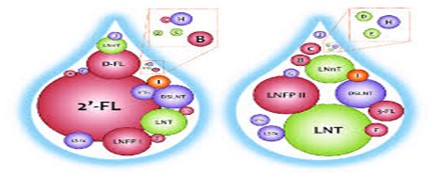
Figure 1: human milk oligosaccharide (HMO) profile in the milk of secretor mothers (left) and non-secretor mothers (right). Secretor milk contains large amounts of α1-2 fucosylated oligosaccharides, while nonsecretor milk has undetectable levels of α1-2 fucosylated oligosaccharides. Nonsecretor milk also contains lower concentrations of total oligosaccharides but has higher concentrations of LNT, LNFP II, and LNFP III. Diameters of each circle depict the concentration of quantified HMO. Concentrations adapted from (Thurl et al., 2017). Neutral non-fucosylated HMO = green. Neutral, fucosylated HMO = red. Acidic, non-fucosylated HMO = purple. Acidic, fucosylated HMO = orange. A = LNFP II, B = LNFP III, C = LNDFHII, D = LNH, E = LNnH, F = FLNH II, G = LST a, H = LST b, I = FSLNnH I, J = 3′-SL.
An in vitro study demonstrated that 2′-FL attenuates C. jejuni invasion by 80% and inhibits the release of mucosal pro-inflammatory signals. A study on mouse model revealed that the ingestion of 2′-FL inhibits the C. jejuni colonization by 80%, weight loss by 5%, intestinal inflammation, and induction of inflammatory signaling molecules [28]. Ruiz-Palacios GM, A2003. Prospective study on infants suggested that the beneficial effect of 2′-FL includes a reduction in the number of episodes of C. jejuni -associated diarrhea [29]. Morrow AL, Ruiz-Palacios GM, 2005 LNnT was reported to reduce the abundance of Streptococcus pneumoniae in the lungs of an animal model Idänpään-Heikkilä I, 1997 HMOs may function as a decoy receptor for group B Streptococcus [30, 31].
HMOs reduce preterm mortality and morbidity by modulating the gut microbiome to protect against necrotizing enterocolitis, candidiasis, and several immune-related diseases [32]. Moukarzel S, 2017LNnT reduces the risk of developing necrotizing enterocolitis in preterm infants [33]. Autran CA 2018Similarly, 2′-FL has also been reported to exhibit beneficial effect against necrotizing enterocolitis [34].
Determinants of Intestinal Cell Response Modulation
HMOs can directly affect the intestinal cell response by reducing the cell growth and by inducing differentiation and apoptosis [35]. Kuntz S, Kunz C, 2009 Intestinal health and barrier function are considered the first line of defence in innate immunity. HMOs have been reported to increase the intestinal cell maturation [36].
Immune Modulators
One of the important properties of HMOs is the immunomodulation. HMOs directly modulate the gene expression of intestinal cells, leading to changes in the expression of cell surface glycans and other cell responses [37]. Kulinich A, 2016 HMOs modulate lymphocyte cytokine production and enable a more balanced TH1/TH2 response. An increasing number of in vitro. Studies suggest that HMOs exert microbiota-independent effects by directly modulating the immune response and by regulating the immune cell population and cytokine secretion [38]. Donovan SM, 2016HMOs may either act locally on the mucosa-associated lymphoid tissue or act at a systemic level.
The plasma concentration of inflammatory cytokines in the breastfed infants and infants fed with experimental formula supplemented with 2′-FL was markedly lower than that in the infants fed with control formula supplemented with galacto-oligosaccharides [39]. Goehring KC, 2016 these data indicate that infants fed with a formula supplemented with 2′-FL exhibit lower plasma inflammatory cytokine profiles, which is similar to those of a breastfed reference group [39].
Goehring KC, 2016 HMOs were more effective than non-human prebiotic oligosaccharides in modulating the systemic and gastrointestinal immune cell responses in pigs [40]. Comstock SS, 2017 these altered immune cell populations may mediate the rotavirus infection susceptibility [40]. Comstock SS, 2017 the symptoms of food allergy are reduced by 2′-FL through induction of interleukin-10+ T-regulatory cells and through indirect stabilization of mast cells [41].
HMOs, especially 2′-FL, directly inhibit the lipopolysaccharidemediated inflammation during enter toxigenic Escherichia coli invasion of T84 and H4 intestinal epithelial cells through attenuation of CD14 induction [42]. He Y, Liu S, 2016, CD14 expression mediates the lipopolysaccharide-Toll-like receptor 4 stimulation of a part of the macrophage migration inhibitory factors inflammatory pathway by suppressing the cytokine signalling 2/signal transducer and by activating the transcription factor 3/nuclear factor-κB. The direct inhibition of inflammation supports the role of HMOs as a stimulator of the innate immune system [42]. He Y, Liu S, 2016 Two-year-old children who were born through C-section and fed on an infant formula supplemented with 2′-FL had a lower risk of developing immunoglobulin E-associated allergies compared to those fed with unsupplemented formula [43].
Since the early 1980's, research unravelled that breastfed infants show higher fecal numbers of bifidobacterial and a lower faecal pH compared to bottle-fed infants supplemented without prebiotics (44). This lower pH of the stool in breastfed infants is caused by higher lactate and acetate levels (45, ). Infant formula supplemented with a mixture of GOS/FOS promote a more bifidogenic microbiota composition (46) and a SCFA profile more similar to breast-fed infants (47). In line with these findings, our batch cultures showed that GOS induced the outgrowth of bifidobacteria and increased production of lactate. Although to a lesser extent, SL also boosted the abundance of bifidobacteria, which is in line with earlier reports showing that different strains of bifidobacteria are capable of metabolizing both neutral and acidic HMO.
Novel Perspectives in Microbial Ecology
The study of microbial interactions within a bacterial population is of extreme importance to clearly understand the specific role of microbiome. Indeed, microorganisms compete for nutrients, exchange genetic material and metabolites, being responsible of influencing the microbiota composition and the host’s health [48]. Due to its dynamic nature and high heterogeneity, the microbiota can be considered a complex and variable ecosystem not often well understandable. For this reason, in the last years a novel approach has been developed to study the microbiota, by using graph theoretical, systems-oriented method able to facilitate the understanding of evolutionary and complex ecological processes [48]. Bacterial network is becoming essential to study microbial relationships and clarify the impact of various interactions on the host by identifying the main “hubs” that may represent the most influential member in a bacterial community [48]. Moreover, a central node is thought to have more links with other hubs, having a pivotal role in the stability of the whole microbial network.
Prebiotics and Probiotics
Clinical benefit in preventing diseases by co-therapy
with probiotics and prebiotics in pregnant women and their infants was demonstrated in an RCT in Finland [49]. A total of 1223 pregnant women who had been identified to deliver infants who would be at high risk of atopic disease because of parental atopic disease history were randomly assigned to be given a mixture of 4 probiotic strains plus GOS or placebo daily for 2 to 4 weeks before delivery. After delivery, their infants then either received the same probiotic mixture plus GOS or the same placebo as the mother. Probiotic/prebiotic treatment showed no effect on the cumulative occurrence of allergic diseases but tended to reduce immunoglobulin E–associated (atopic) diseases (OR: 0.71 [95% CI: 0.50–1.00]; P = .052). Probiotic and prebiotic treatment reduced the occurrence of eczema (OR: 0.74 [95% CI: 0.55–0.98]; P = .035) and atopic eczema (OR: 0.66 [95% CI: 0.46–0.95]; P = .025). Confirmatory studies are necessary.
Prebiotics and Probiotics in Infant Formula: Implications for Gut Microbiota and Immune
Prebiotics As mentioned earlier in this review, human milk contains a number of substances that are prebiotic, the most plentiful of which are oligosaccharides [49,50]. Oligosaccharide prebiotics are also added to many commercially available dietary food supplements. Regarding their addition to infant formula, the European Commission's Scientific Committee on Food concluded in 2003 that they had no major concerns regarding the addition of oligosaccharides to infant formulas, including follow-up infant formulas (formulas modified especially for 6- to 12-month-old infants), up to a total concentration of 0.8 g/ dL in ready-to-feed formula products. Few RCTs have examined the effects of adding prebiotic oligosaccharides to infant formula [51,52]. Boehm et al [51], studied the effect of the addition of oligosaccharides at a concentration of 1 g/dL to preterm infant formula for 1 month (90% GOSs and 10% FOSs). Stool bifidobacteria counts in the oligosaccharide-supplemented group increased significantly compared with the nonsupplemented group, and the bifidobacteria counts reached the range of a breastfed reference group. In a separate study, Moro et al fed term infants the same oligosaccharide supplemented formula. These infants had higher counts of bifidobacteria as well as lactobacilli in their stools. Schmelzle et al conducted a multicenter trial that also examined the efficacy of the addition of prebiotics to infant formula. They reported good overall tolerance and no adverse effects during the 12-week study period. A large multicenter trial to evaluate the safety of FOS-supplemented infant formula was conducted in the United States in 2004 [53-55]. The study demonstrated that infant growth was maintained during the 12- week study period for the FOS-supplemented infant-formula group without any adverse effects. After weaning infants from formula, the addition of prebiotics to solid food seems to have a bifidogenic effect, as shown by the results of a recently published RCT by Scholtens et al. Infant formulas that contain either GOS or FOS are now marketed in the United States. However, more information, including data from RCTs, is needed before the efficacy of adding prebiotics to infant formulas can be determined [56-58]
Osteopontin (OPN)
Is a multifunctional, bioactive glycoprotein abundantly present in human breast milk. It has been increasingly recognized for its critical role in early life development, particularly in shaping the infant immune system, supporting gastrointestinal maturation, and contributing to neurodevelopment. Importantly, the concentration of OPN in human milk is substantially higher than that found in bovine milk and in conventional infant formulas, highlighting its potential biological significance in human infant nutrition
The concentration of OPN in human milk is dynamic and varies throughout lactation and based on maternal factors.
- Peak concentration: OPN levels are highest in early lactation and decrease gradually as lactation progresses. One study noted that levels can remain at about half the maximum concentration for up to 12 months.
- Maternal factors: Concentrations can be influenced by the mother's body mass index (BMI), weight gain during pregnancy, and smoking status.
- Delivery method: Some studies show that vaginal birth is associated with higher breast milk OPN levels compared to a Cesarean section, possibly linked to oxytocin expression during labor.
Functions and Benefits of Osteopontin (OPN) in Infant Development
Human milk osteopontin (OPN) demonstrates relative resistance to gastric digestion, enabling a substantial proportion of the protein to reach the infant intestine in a biologically active form. Within the intestinal environment, OPN can interact with specific cell surface receptors, thereby modulating a range of physiological and developmental processes. These interactions are particularly important for the maturation of the immune system, the development and maintenance of gut integrity, and the support of early brain development.
Through these mechanisms, OPN is believed to contribute to immune regulation, enhancement of intestinal barrier function, and neurodevelopmental processes during early life, highlighting its significance as a bioactive component of human milk.
Immune system development
- Balances immune response: OPN helps balance the Th1/Th2 immune response, which is skewed towards Th2 in neonates. It promotes a healthier, more balanced immune development [59].
- Reduces inflammation: Clinical trials have shown that infants who consume OPN-fortified formula have lower levels of the pro-inflammatory cytokine TNF-α, like breastfed infants.
- Protects against infection: High levels of breast milk OPN have been correlated with a reduced number of fever-related hospitalizations during the first few months of life.
- Strengthens immune defences: Studies show OPN binds to bacteria and can enhance immune cell activity, acting as an opsonin to mark pathogens for destruction.
- Gut health and maturation
- Supports intestinal growth: Animal studies have demonstrated that dietary OPN can promote the maturation of the intestine by increasing villus height and crypt depth.
Maintains gut barrier function: OPN helps preserve the gut barrier, reducing intestinal permeability. Studies show it can alleviate inflammation and protect against damage caused by infections or substances like alcohol.
- Influences the microbiome: Research indicates that OPN can affect the gut microbiome, influencing the populations of both beneficial and potentially harmful bacteria.
- Brain and cognitive development
- Promotes myelination: OPN plays a role in brain maturation, possibly by promoting the myelination of nerves in the central nervous system.
- Supports neurodevelopment: Its influence on brain development is thought to contribute to better cognitive function in breastfed infants compared to those on standard formula [59,60].
Therapeutic use in infant formula
The significant difference in OPN levels between human milk and standard cow milk-based formulas has led to the development of fortified formulas.
- Bovine OPN supplement: Bovine milk OPN is now commercially available and approved for use as an ingredient in infant formula in some regions.
- Mimics human milk: Clinical studies show that supplementing formula with bovine OPN can produce immune outcomes and gene expression patterns in infants that are more like those of breastfed infants [60].
- Supports vulnerable infants: For preterm infants, who have less mature gut and immune systems, OPN supplementation has shown minor improvements in gut structure and systemic immunity [60].
Conclusion
Breast milk, with its complex and dynamic composition, exerts profound benefits on the health and development of newborns and infants, with lasting effects that extend into childhood and adulthood. In this review, we highlighted the multiple physiological and protective roles of human milk oligosaccharides (HMOs), including support for brain and intestinal development and protection against infections. This exemplifies one of the remarkable features of human milk: a single class of molecules can profoundly influence infant development.
This mini-review also emphasizes the critical immunologic role of the microbiota and its impact on neonatal health. Understanding the intricate interactions within bacterial populations, as well as between the microbiota and the host, is essential. The microbiota can act as soluble decoy receptors, preventing the attachment of viral, bacterial, and protozoan pathogens to epithelial cell surfaces, thereby contributing to infection prevention. HMOs further complement these effects through their bacteriostatic and bactericidal properties. Additionally, the microbiota enhances neonatal epithelial and immune cell responses, supporting the development of a robust immune system.
Despite these insights, further research is required to elucidate the direct links between human milk microbiota and immune system maturation in newborns, as definitive evidence remains limited. The application of network biology approaches holds great promise for advancing our understanding of bacterial interactions within milk microbiota. Such knowledge could pave the way for targeted modulation of microbial composition, promoting the abundance of beneficial microorganisms that are critical not only for shaping infant immunity but also for optimizing overall host health.
Human milk oligosaccharides may also influence the infants on a systemic level. Obviously, they are partially absorbed in the intestine of babies, and can be detected in the urine of breast-fed infants). Some evidence exists that milk oligosaccharides may function as anti-inflammatory factors, contributing to the lower incidence and severity of inflammatory diseases in breast-fed infants). Particularly, sialic acid-containing oligosaccharides were found to inhibit the formation of platelet–neutrophil complexes and neutrophil activation. In addition, the acidic oligosaccharide fraction significantly inhibited leucocyte rolling and adhesion on epithelial cells.
Osteopontin (OPN), a multifunctional glycoprotein abundantly present in human breast milk, plays a pivotal role in supporting the development of the infant’s immune system, gastrointestinal tract, and brain. Its markedly higher concentration in human milk compared with bovine milk and standard infant formulas underscores its unique and essential contribution to optimal infant growth and early-life health.
Institutional Review Board Statement: Not applicable.
Informed Consent Statement: Not applicable.
Data Availability Statement: Not applicable.
Funding: This research received no external funding.
Conflicts of Interest: All other authors report no conflicts of interest. Data Availability Data described in the manuscript, code book, and analytic code will be made available upon request pending application and approval.
References
- World Health Organization. Maternal, newborn, child and adolescent health, 2018.
- Agostoni C, Braegger C, Desir T, Kolacek S, et al. ESPGHAN Committee on Nutrition, Breast-feeding: a commentary by the ESPGHAN Committee on Nutrition. J Pediatr Gastroenterol Nutr, 2009; 49: 112-125.
- Castellote C, Casillas R, Ramírez-Santana C, Pérez-Cano FJ, Castell M, et al. Premature delivery influences the immunological composition of colostrum and transitional and mature human milk. J Nutr, 2011; 141: 1181-1187.
- Ballard O, Morrow AL. Human milk composition: nutrients and bioactive factors. Pediatr Clin North Am, 2013; 60: 49-74.
- Kulski JK, Hartmann PE. Changes in human milk composition during the initiation of lactation. Aust J Exp Biol Med Sci, 1981; 59: 101-114.
- Pang WW, Hartmann PE. Initiation of human lactation: secretory differentiation and secretory activation. J Mammary Gland Biol Neoplasia, 2007; 12: 211-221.
- Henderson JJ, Hartmann PE, Newnham JP, Simmer K. Effect of preterm birth and antenatal corticosteroid treatment on lacto genesis II in women. Pediatrics, 2008; 121: e92-e100.
- Nommsen-Rivers LA, Dolan LM, Huang B. Timing of stage II lacto genesis is predicted by antenatal metabolic health in a cohort of primiparas. Breastfeed Med, 2012; 7: 43-49.
- Rodríguez JM. The origin of human milk bacteria: is there a bacterial entero-mammary pathway during late pregnancy and lactation? Adv Nutr, 2014; 5: 779-784.
- Gao Z, Tseng C, Pei Z, Blaser MJ. Molecular analysis of human forearm superficial skin bacterial biota. Proc Natl Acad Sci USA, 2007; 104: 2927-2932.
- Grice EA, Kong HH, Conlan S, Deming CB, Davis J, et al. Topographical and temporal diversity of the human skin microbiome. Science, 2009; 324: 1190-1192.
- Houghteling PD, Walker WA. Why is initial bacterial colonization of the intestine important to infants’ and children’s health? J Pediatr Gastroenterol Nutr, 2015; 60: 294-307.
- Xu G, Davis JC, Goonatilleke E, Smilowitz JT, German JB, et al. Absolute quantitation of human milk oligosaccharides reveals phenotypic variations during lactation. J Nutr, 2017; 147: 117-124.
- Thurl S, Munzert M, Henker J, Boehm G, Müller-Werner B, et al. Variation of human milk oligosaccharides in relation to milk groups and locational periods. Br J Nutr, 2010; 104: 1261-1271.
- Bode L. Human milk oligosaccharides: every baby needs a sugar mama. Glycobiology, 2012; 22: 1147-1162.
- Kunz C, Kuntz S, Rudloff S. Bioactivity of human milk oligosaccharides. In: Moreno FM, Sanz ML, eds. Food Oligosaccharides: Production, Analysis and Bioactivity. 1st ed. Chichester: John Wiley & Sons, Ltd 2014: 5-20.
- Zivkovic AM, German JB, Lebrilla CB, Mills DA. Human milk glycobiome and its impact on the infant gastrointestinal microbiota. Proc Natl Acad Sci USA, 2011; 108: 4653-4658.
- Salminen S. Regulatory aspect of human milk oligosaccharides. Nestle Nutr Inst Workshop Ser, 2017; 88: 161-170.
- Hoeflinger JL, Davis SR, Chow J, Miller MJ. In vitro impact of human milk oligosaccharides on Enterobacteriaceae growth. J Agric Food Chem, 2015; 63: 3295-3302.
- LoCascio RG, Ninonuevo MR, Freeman SL, Sela DA, Grimm R, et al. Glycol profiling of bifid bacterial consumption of human milk oligosaccharides demonstrates strain specific, preferential consumption of small chain glycans secreted in early human lactation. J Agric Food Chem, 2007; 55: 8914-8919.
- Asakuma S, Hatakeyama E, Urashima T, Yoshida E, Katayama T, et al. Physiology of consumption of human milk oligosaccharides by infant gut-associated bifidobacteria. J Biol Chem, 2011; 286: 34583-34592.
- Garrido D, Ruiz-Moyano S, Kirmiz N, Davis JC, Totten SM, et al. A novel gene cluster allows preferential utilization of fucosylated milk oligosaccharides in Bifidobacterium longum subsp. longum SC596. Sci Rep, 2016; 6: 35045.
- Gibson GR, Wang X. Regulatory effects of bifidobacteria on the growth of other colonic bacteria. J Appl Bacteriol, 1994; 77: 412-420.
- Thongaram T, Hoeflinger JL, Chow J, Miller MJ. Human milk oligosaccharide consumption by probiotic and humanassociated bifidobacteria and lactobacilli. J Dairy Sci, 2017; 100: 7825-7833.
- Puccio G, Alliet P, Cajozzo C, Janssens E, Corsello G, et al. Effects of infant formula with human milk oligosaccharides on growth and morbidity: a randomized multicenter trial. J Pediatr Gastroenterol Nutr, 2017; 64: 624-631.
- Angeloni S, Ridet JL, Kusy N, Gao H, Crevoisier F, et al. Glyco profiling with micro-arrays of glycoconjugates and lectins. Glycobiology, 2005; 15: 31-41.
- Yu ZT, Nanthakumar NN, Newburg DS. The human milk oligosaccharide 2′-fucosyllactose quenches Campylobacter jejuni -induced inflammation in human epithelial cells HEp-2 and HT-29 and in mouse intestinal mucosa. J Nutr, 2016; 146: 1980- 1990.
- Morrow AL, Ruiz-Palacios GM, Jiang X, Newburg DS. Human-milk glycans that inhibit pathogen binding protect breast-feeding infants against infectious diarrhea. J Nutr, 2005; 135: 1304-1307.
- Ruiz-Palacios GM, Cervantes LE, Ramos P, Chavez-Munguia B, Newburg DS. Campylobacter jejuni binds intestinal H(O) antigen (Fucα1, 2Galβ1, 4GlcNAc), and fucosyloligosaccharides of human milk inhibit its binding and infection. J Biol Chem, 2003; 278: 14112-14020.
- Idänpään-Heikkilä I, Simon PM, Zopf D, Vullo T, Cahill P, et al. Oligosaccharides interfere with the establishment and progression of experimental pneumococcal pneumonia. J Infect Dis, 1997; 176: 704712
- Lin AE, Autran CA, Szyszka A, Escajadillo T, Huang M, et al. Human milk oligosaccharides inhibit growth of group B Streptococcus. J Biol Chem, 2017; 292: 11243-11249.
- Moukarzel S, Bode L. Human milk oligosaccharides and the preterm infant: a journey in sickness and in health. Clin Perinatol, 2017; 44: 193-207.
- Autran CA, Kellman BP, Kim JH, Asztalos E, Blood AB, et al. Human milk oligosaccharide composition predicts risk of necrotising enterocolitis in preterm infants. Gut, 2018; 67: 1064-1070.
- Good M, Sodhi CP, Yamaguchi Y, Jia H, Lu P, et al. The human milk oligosaccharide 2′-fucosyllactose attenuates the severity of experimental necrotising enterocolitis by enhancing mesenteric perfusion in the neonatal intestine. Br J Nutr, 2016; 116: 1175-1187.
- Kuntz S, Kunz C, Rudloff S. Oligosaccharides from human milk induce growth arrest via G2/M by influencing growth-related cell cycle genes in intestinal epithelial cells. Br J Nutr, 2009; 101: 1306-1315.
- Holscher HD, Davis SR, Tappenden KA. Human milk oligosaccharides influence maturation of human intestinal Caco2Bbe and HT-29 cell lines. J Nutr, 2014;144: 586-591.
- Kulinich A, Liu L. Human milk oligosaccharides: The role in the fine-tuning of innate immune responses. Carbohydr Res, 2016; 432: 62-70.
- Donovan SM, Comstock SS. Human milk oligosaccharides influence neonatal mucosal and systemic immunity. Ann Nutr Metab, 2016; 69: 42-51.
- Goehring KC, Marriage BJ, Oliver JS, Wilder JA, Barrett EG, et al. Similar to those who are breastfed, infants fed a formula containing 2′-fucosyllactose have lower inflammatory cytokines in a randomized controlled trial. J Nutr, 2016; 146: 2559- 2566.
- Comstock SS, Li M, Wang M, Monaco MH, Kuhlenschmidt TB, et al. Dietary human milk oligosaccharides but not prebiotic oligosaccharides increase circulating natural killer cell and mesenteric lymph node memory T cell populations in no infected and rotavirus-infected neonatal piglets. J Nutr, 2017; 147: 1041-1047.
- Castillo-Courtade L, Han S, Lee S, Mian FM, Buck R, et al. Attenuation of food allergy symptoms following treatment with human milk oligosaccharides in a mouse model. Allergy, 2015; 70: 1091-1102.
- He Y, Liu S, Kling DE, Leone S, Lawlor NT, et al. The human milk oligosaccharide 2′-fucosyllactose modulates CD14 expression in human enterocytes, thereby attenuating LPS-induced inflammation. Gut, 2016; 65: 33-46.
- Sprenger N, Lee LY, De Castro CA, Steenhout P, Thakkar SK. Longitudinal change of selected human milk oligosaccharides and association to infants’ growth, an observatory, single center, longitudinal cohort study. PLoS One, 2017; 12: e0171814.
- Matsuki T, Yahagi K, Mori H, Matsumoto H, Hara T, Tajima S, et al. A key genetic factor for fucosyllactose utilization affects infant gut microbiota development. Nat Commun, 2016; 7: 1–12. doi: 10.1038/ncomms11939
- Braegger C, Chmielewska A, Decsi T, Kolacek S, Mihatsch W, Moreno L, et al. Supplementation of infant formula with probiotics and/or prebiotics: a systematic review and comment by the ESPGHAN committee on nutrition. J Pediatr Gastroenterol Nutr, 2011; 52: 238–250. doi: 10.1097/MPG.0b013e3181fb9e80
- Moro G, Minoli I, Mosca M, Fanaro S, Jelinek J, Stahl B, et al. Dosage-related bifidogenic effects of galacto- and fructooligosaccharides in formula-fed term infants. J Pediatr Gastroenterol Nutr, 2002; 34: 291–295. doi: 10.1097/00005176-200203000-00014
- Bode L, Jantscher-krenn E. Structure-function relationships of human milk oligosaccharides. Adv Nutr An Int Rev J, 2012; 3: 383S–391S. 10.3945/an.111.001404.
- Markowiak P, Śliżewska K. Effects of probiotics, prebiotics, and synbiotics on human health. Nutrients, 2017; 9(9): 1021.
- Heller F, Duchmann R. Intestinal flora and mucosal im- mune responses. Int J Med Microbiol, 2003; 293(1): 77– 86.
- Berg RD. Bacterial translocation from the gastrointestinal tract. Adv Exp Med Biol, 1999; 473: 11–30.
- Quan R, Barness LA. Do infants need nucleotide supplemented formula for optimal nutrition? J Pediatr Gastroenterol Nutr, 1990; 11(4): 429 – 434
- Boehm G, Stahl B. Oligosaccharides from milk. J Nutr, 2007; 137(3 suppl 2): 847S– 849S.
- Bocquet A, Lachambre E, Kempf C, Beck L. Effect of Eldeib et al ijclinmedcasereports.com Volume 28- Issue 3 12 Infant and Follow-on Formulas Containing B. Lactis and Galacto-and Fructo-Oligosaccharides on Infection in Healthy Term Infants. J. Pediatr. Gastroenterol. Nutr, 2013; 57: 180–187.
- Wong CB, Iwabuchi N, Xiao J-Z. Exploring the Science behind Bifidobacterium Breve M-16V in Infant Health. Nutrients, 2019; 11: 1724.
- Chua MC, Ben-Amor K, Lay C, Neo AGE, Chiang WC, Rao R, et al. Effect of Synbiotic on the Gut Microbiota of Cesarean Delivered Infants: A Randomized, DoubleBlind, Multicenter Study. J. Pediatr. Gastroenterol. Nutr, 2017; 65: 102–106.
- Lay C, Chu CW, Purbojati RW, Acerbi E, Drautz-Moses DI, de Sessions PF, et al. A Synbiotic Intervention Modulates Meta-Omics Signatures of Gut Redox Potential and Acidity in Elective Caesarean Born Infants. BMC Microbiol, 2021; 21: 191.
- Kosuwon P, Lao-Araya M, Uthaisangsook S, Lay C, Bindels J, Knol J, et al. A Synbiotic Mixture of ScGOS/ LcFOS and Bifidobacterium Breve M-16V Increases Fae- cal Bifidobacterium in Healthy Young Children. Benef. Microbes, 2018; 9: 541–552.
- Van Der Aa LB, Heymans HS, Van Aalderen WM, Sil- levis Smitt JH, Knol J, Ben Amor K, et al. Effect of a New Synbiotic Mixture on Atopic Dermatitis in Infants: A Randomized-Controlled Trial. Clin. Exp. Allergy, 2010; 40: 795–804.
- Sodek J, Ganss B, McKee MD. Osteopontin. Crit. Rev. Oral Biol. Med. 2000; 11: 279–303. doi: 10.1177/10454411000110030101.
- Icer MA, Gezmen-Karadag M. The Multiple Functions and Mechanisms of Osteopontin. Clin. Biochem, 2018; 59: 17–24. doi: 10.1016/j.clinbiochem.2018.07.003