
Email id: info@ijclinmedcasereports.com
Hazardous Work, Thin Job Resources: Occupational Exposures, Sickness Absence and Workers' Perceptions at a Modernized Cotton-Ginning Plant in Uzbekistan
Makhfuza O Ibotova and Kamol Ibrohimov*
Bukhara State Medical Institute, Bukhara, Uzbekistan
Received Date: 10/10/2026; Published Date: 28/12/2026
*Corresponding author: Kamol Ibrohimov, Bukhara State Medical Institute, Bukhara, Uzbekistan
Abstract
Uzbekistan has replaced much of the machinery in its cotton-ginning plants over the past decade, but it is far from clear that the work itself has become safer. We examined working conditions and workers' health at the G'ijduvon cotton-ginning plant in the Bukhara region, which was fully re-equipped in 2019, and read the results through the Job Demands–Resources (JD-R) model. Microclimate, dust, noise, lighting, airborne pesticide residues and bacterial contamination were measured in the production units during the warm (September–October) and cold (November–January) seasons, and work density and physical load were assessed by time-and-motion observation. Health data came from in-depth periodic medical examinations of 240 workers and from temporary work-incapacity records; 269 workers answered a questionnaire on pay, hazard information, perceived working conditions, health and leisure. Dust exceeded the permissible concentration of 4.0 mg/m³ by 2.0–3.8 times in every production unit, noise exceeded 80 dBA by 6–16 dB, and air temperature ranged from 38–42 °C in the warm season to 3–6 °C in the cold season. Workers were occupied for 86–96% of the shift, and five of the six units were rated harmful class 3.2. Respiratory diseases caused 28.9% of sickness-absence cases, musculoskeletal diseases the largest share of lost days (26.5%), and morbidity in bunching, cleaning and pressing was 1.30–1.42 times that of administrative staff. Job resources were scarce: 59% of workers considered their pay too low, 22% had never been told about workplace hazards, and 36.2% did not see a doctor when ill. New equipment has not removed the main hazards. Dust and noise control needs to go together with hazard communication, sensible work–rest scheduling, risk-based medical surveillance and easier access to care, and these tasks sit at the centre of human resource management in agro-processing enterprises.
Keywords: Cotton ginning; Occupational health; Working conditions; Sickness absence; Job demands–resources; Workforce health management; Uzbekistan
Introduction
Cotton remains one of Uzbekistan's strategic crops, and the ginning plants that turn raw cotton into lint, seed and linters feed the textile, oil and chemical industries [1]. Since 2020 the sector has moved to market pricing and cluster-based production, and many ginneries have been rebuilt with new equipment [2]. Mechanization has cut the amount of manual labour, yet a good deal of physically demanding work is still done by hand: raw cotton is stacked into bunches, machines are cleaned manually, and pressed bales are handled at the end of the line [3,4].
The hazards of this work are well documented. Cotton dust is an organic mixture of plant debris, soil, endotoxin, bacteria and fungi, and long exposure leads to byssinosis, chronic bronchitis, asthma and loss of lung function [5–10]. Gins, cleaners and linters produce continuous high-frequency noise and vibration [11], and because processing is seasonal and buildings are poorly climate-controlled, workers face heat in autumn and cold in winter. Pesticides and defoliants applied during the growing season travel with the raw cotton into the plant, and chronic pesticide exposure has been linked to neurotoxic effects [12,13]. Cross-sectional studies from Ethiopia and India found more respiratory symptoms and poorer lung function in ginning workers than in unexposed controls [14,15].
These exposures are also a management problem. In the job demands–resources model, physical, environmental and organizational demands drive health impairment, while job resources such as information, fair pay, support and time to recover soften their effect [16,17]. Hazardous work raises sickness absence and presenteeism and lowers productivity [18–20]. Writers on sustainable and well-being-oriented human resource management (HRM) argue that employers should treat employee health as something to be maintained and renewed rather than used up [21,22]. Safety climate research makes a similar point from a different angle: where managers visibly commit to safety, inform workers about hazards and enforce protective practice, injuries are less frequent [23,24]. Hazard awareness, satisfaction with pay, access to medical care and opportunities for recovery therefore shape both health and retention [25,26]. In low- and middle-income countries, many textile and cotton workers also farm at home after their shift, which leaves little room for recovery [27].
Little is known about working conditions in Uzbekistan's reconstructed ginneries, and we found no study that linked measured exposures with sickness absence and with workers' own view of their jobs. Using the JD-R model as a frame, we set out to (i) measure the physical, chemical and biological hazards and the intensity of work at a recently re-equipped cotton-ginning plant; (ii) classify working conditions by hygienic criteria; (iii) describe morbidity and temporary work incapacity among production workers; (iv) assess the job resources available to workers and how they perceive their work; and (v) identify the workforce health-management measures that follow from these findings.
Materials and Methods
Setting
The study was carried out at the G'ijduvon cotton-ginning joint-stock company in the Bukhara region. The plant opened in 1962 and is one of the oldest and largest ginneries in the region. It occupies 6.5 ha, employs 620 permanent staff and was fully reconstructed and re-equipped in 2019. Raw cotton arrives by tractor trailer and is unloaded onto TLKh-18 and KIP-650 conveyors, which carry it to the bunching yard. From there it passes through saw-type cleaners, DP-130 and DB-1M gins, linters and a DA8237 hydraulic press, and the bales and seed are stored on site. The line runs continuously. Most operations are mechanized, but bunching (10–20 workers per bunch), the cleaning of machines and several steps of the pressing cycle are done by hand.
Fieldwork took place in the warm (September–October) and cold (November–January) seasons of [2024-2026], together with specialists of the sanitary-hygienic laboratory of the Bukhara Regional Department of Sanitary and Epidemiological Welfare and Public Health. Administrative and auxiliary staff (economists, accountants, engineers, cashiers, guards and laboratory assistants), who are not exposed to production hazards, served as the comparison group.
Workplace measurements
Air temperature, relative humidity and air velocity were measured with TKA-PKM (66) and MES-200A meteometers at 1.3–1.5 m above the floor, at permanent and non-permanent workplaces, at the beginning, middle and end of the shift. Results were compared with SanPiN RUz No. 0324-16, which sets optimal values of 22–24 °C in the cold season and 23–25 °C in the warm season, relative humidity of 40–60% and air velocity of 0.1 m/s.
Dust was determined gravimetrically: air was drawn through pre-weighed AFA filters with a MOD-822 aspirator at no less than 10 L/min, and the filters were reweighed on an analytical balance. Samples were taken at 08:00, 12:00, 16:00 and 21:00 in the bunching, cleaning, ginning, linting and pressing units, in the seed and bale stores, and on the open plant site. Concentrations were compared with the maximum permissible concentration (MPC) of 4.0 mg/m³ for cotton dust.
Noise was measured with a VShV-003-M3 sound level meter at three points per unit in each shift (the work zone, the permanent workplace and a non-permanent workplace) in accordance with SanPiN RUz No. 0325-16 and GOST 12.1.050-86; the permissible level was 80 dBA. The daylight factor and artificial illuminance were measured with an Argus-01 luxmeter following SanPiN No. 0331-16 and assessed against SanPiN No. 0327-16 (1.5% and 200 lx, respectively).
To decide which pesticides to look for, we followed the treatment records of the 28 farms that supplied the plant. During the season the fields had received deltamethrin (Decis 12%, 0.5 L/ha, twice), lambda-cyhalothrin (Karate 5%, 0.4 L/ha, three times), phosalone (35%, 2.0 L/ha, twice) and imidacloprid (Confidor 20%, once); nine farms had also used magnesium chlorate as a defoliant. Residues of these compounds were determined in work-zone air by the regional sanitary laboratory and compared with their MPCs. Total bacterial count, cocci and Escherichia coli (CFU/m³) were determined in air samples taken at the start, middle and end of the shift on nutrient agar, blood agar and selective media and assessed against SanPiN No. 0053-23; actinomycetes were recorded as a share of the isolated microflora. In all, we made 1,815 microclimate, 380 dust, 380 noise, 230 pesticide and 320 lighting measurements.
Workload and classification of working conditions
Work density, defined as the share of shift time spent on operations, was obtained by time-and-motion observation. Physical load was assessed from working posture, the number of stereotyped movements, bending and the loads moved; intensity was assessed from monotony, sensory and visual strain and responsibility for continuous machinery. Each factor was graded separately under SanPiN No. 0141-03, and the overall class of a workplace was set by the highest factor grade.
Health data
Morbidity was assessed from in-depth periodic medical examinations carried out under Order No. 200 (2012) of the Ministry of Health by the family polyclinic of the G'ijduvon district central hospital, and from the outpatient records (form 025/u) of the examined workers. The examination group comprised 240 production workers (205 men and 35 women; mean age 45.2 ± 7.3 years; mean length of service 10.2 ± 5.9 years). Prevalence was expressed as the percentage of examined workers with at least one diagnosis in a given ICD-10 class. Temporary work incapacity was analysed from form 16-VN reports and sickness certificates and expressed as cases and days per 100 workers per year, by disease class, production unit and length of service.
Questionnaire
A standardized questionnaire recommended by the Research Institute of Occupational Hygiene was completed by 269 workers. It covered age, length of service and commuting; satisfaction with pay and occupation; whether the employer had informed the worker about workplace hazards; perceived harmfulness, heaviness and intensity of work; self-rated health and health complaints; health-care seeking; physical activity; and use of free time. In the JD-R frame, hazard information, adequate pay, access to medical care and leisure-time recovery were treated as job and personal resources.
Statistical analysis
Workplace measurements are given as mean ± standard error of the mean (M ± m), except noise levels, lighting and pesticide concentrations, which are given as mean ± standard deviation (SD); categorical data are given as percentages. Means were compared with Student's t-test and associations were examined with Pearson's correlation coefficient; p < 0.05 was taken as significant. Exceedance ratios were calculated as the measured value divided by the hygienic standard. For each production unit we calculated the crude rate ratio (RR) of morbidity relative to administrative staff and the etiological fraction, EF = (RR − 1)/RR, and graded work-relatedness by EF as low (< 33%), medium (33–50%), high (51–66%), very high (67–80%) or almost complete (81–100%) [28]. Calculations were done in Microsoft Excel.
Results
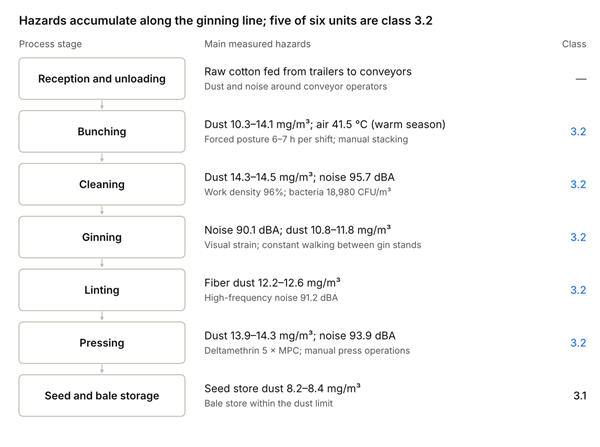
Figure 1: Technological process of the cotton-ginning plant, the main hazards measured at each stage and the hygienic class of working conditions (SanPiN No. 0141-03).
Physical work environment
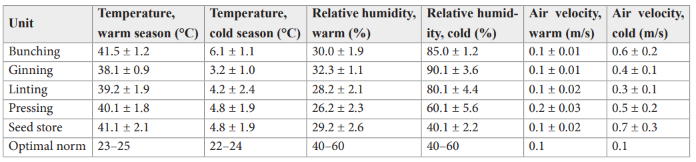
The microclimate was outside hygienic norms in both seasons (Table 1). In September and October the air in the production units reached 38.1–41.5 °C, 13–17 °C above the upper optimal limit, while relative humidity fell to 26–32%. Air moved at only 0.1–0.2 m/s, which gives no cooling at such temperatures. In winter the picture reversed: temperatures dropped to 3.2–6.1 °C, 16–19 °C below the lower optimal limit, humidity in the bunching, ginning and linting units rose to 80–90%, and air velocity increased to 0.3–0.7 m/s, producing draughts. The main cause was poorly working air exchangers and deflectors.
Table 1: Microclimate in the main production units (M ± m).
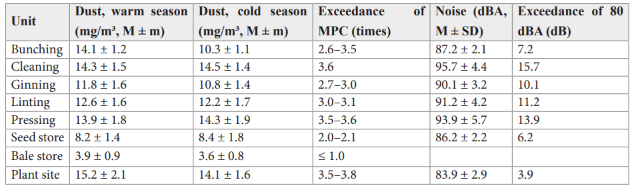
Dust exceeded the MPC everywhere except the bale store (Table 2). The heaviest dust was on the open plant site (15.2 and 14.1 mg/m³ in the warm and cold seasons, 3.8 and 3.5 times the MPC) and in the cleaning (3.6 times), pressing (3.5–3.6 times) and bunching (2.6–3.5 times) units. It came mainly from unloading raw cotton into bunches and from the multicyclones, and the site was never cleaned wet. Noise was above 80 dBA in all units and highest in cleaning (95.7 dBA), pressing (93.9 dBA) and linting (91.2 dBA).
Table 2: Dust concentration and noise level at workplaces.
Lighting fell short of the norms in every unit. The daylight factor was 1.07–1.21% against the required 1.5%, and artificial illuminance ranged from 145.4 ± 35.2 lx in the seed store to 179.4 ± 40.3 lx in the pressing unit, against 200 lx. Both reflect the design of the buildings rather than the new equipment.
Chemical and biological hazards
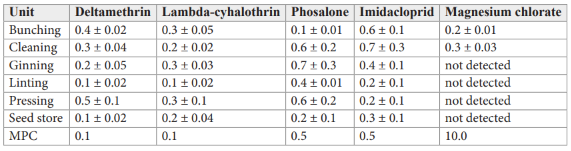
All five pesticides were found in workplace air, and four of them exceeded their MPCs in at least one unit (Table 3). Deltamethrin reached five times its MPC in the pressing unit and four times in bunching; lambda-cyhalothrin was two to three times above its MPC in every unit except linting. Phosalone (1.2–1.4 times the MPC in cleaning, ginning and pressing) and imidacloprid (1.2–1.4 times in bunching and cleaning) exceeded their limits less often. Magnesium chlorate stayed far below its MPC.
Table 3: Pesticide residues in workplace air (mg/m³, M ± SD).
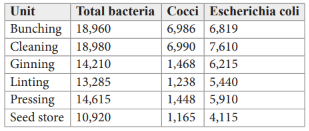
Bacterial contamination followed the dust (Table 4). Total bacterial counts were highest in the cleaning (18,980 CFU/m³) and bunching (18,960 CFU/m³) units, 3.9 and 3.7 times the hygienic standard, and in pressing (14,615 CFU/m³; 3.1 times). E. coli counts in these three units were 2.2–3.6 times the standard. Actinomycetes made up 49.4–50.6% of the microflora isolated in the processing units, which points to irregular cleaning of the shop floors.
Table 4: Bacterial contamination of workplace air (mean CFU/m³).
Work intensity and hygienic class
Workers were occupied for most of the shift in every unit (Figure 2): 96% of shift time in cleaning, 94% in ginning and pressing, 92% in bunching, 88% in the seed store and 86% in linting. Machines and floors were cleaned by hand. Bunching workers spent 6–7 hours of the shift in forced postures, and workers in bunching, cleaning and pressing made up to 1,000 working movements per shift, with heavy loading of the arms, shoulders and lower back. Running the gins and linters also meant constant visual strain and the emotional load of being responsible for machinery that never stops.
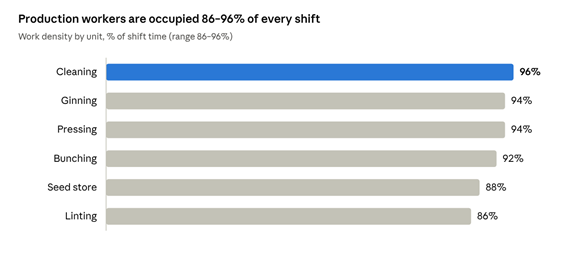
Figure 2: Work density (share of shift time spent on operations) in the production units.
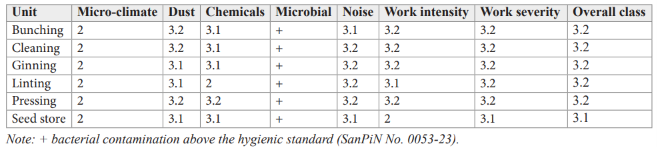
Taking all factors together, working conditions in bunching, cleaning, ginning, linting and pressing were rated harmful class 3.2 (second degree), and in the seed store class 3.1 (Table 5). Dust, noise, work intensity and physical severity set the class; bacterial contamination exceeded the standard in all units.
Table 5: Hygienic classification of working conditions by factor (SanPiN No. 0141-03).
Morbidity and sickness absence
At the periodic examinations, diseases of the respiratory system were by far the most common, found in 40.1% of the examined workers (Figure 3). They were followed by musculoskeletal diseases (19.2%), diseases of the ear (16.2%), the nervous system (14.1%), the digestive system (11.2%) and the circulatory system (10.8%).
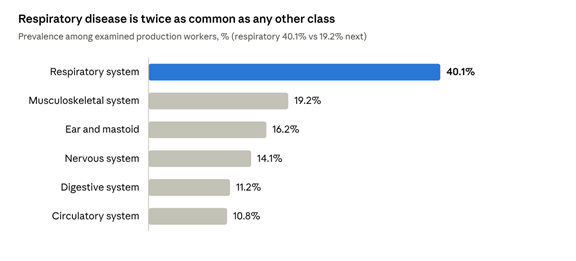
Figure 3: Prevalence of the six leading ICD-10 disease classes among production workers at periodic medical examination (n = 240; % of examined workers).
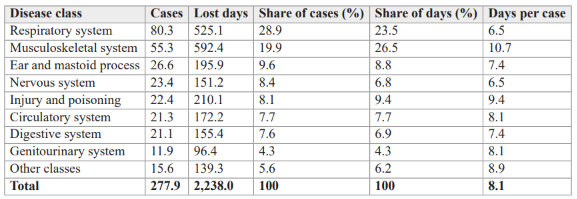
Sickness absence came to 277.9 cases and 2,238 lost days per 100 workers per year, an average of 8.1 days per case (Table 6). Respiratory diseases produced the most cases (80.3 per 100 workers; 28.9%), and within this class chronic lower-airway disease (bronchitis, emphysema; 32.3 per 100) and asthma-like conditions (22.5 per 100) dominated. Musculoskeletal diseases produced the most lost days (592.4 per 100 workers; 26.5%), because each episode lasted longer (10.7 days on average); deforming dorsopathies and spinal osteochondrosis alone accounted for 42.4 cases and 510.2 days per 100 workers.
Table 6: Temporary work incapacity by ICD-10 disease class (per 100 workers per year).
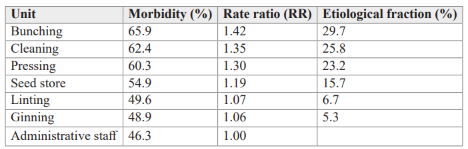
Morbidity differed by unit (Table 7). It was highest in bunching (65.9%), cleaning (62.4%) and pressing (60.3%), which is 1.30–1.42 times the level among administrative staff (46.3%), with etiological fractions of 23–30%. In ginning and linting the excess was small (RR 1.06–1.07; EF 5–7%). By the EF scale, work-relatedness was low in all units.
Table 7: Morbidity by production unit compared with administrative staff.
Morbidity also rose with length of service (Figure 4). Between workers with 1–5 and 15–19 years at the plant, registered circulatory disease increased from 20.1 ± 2.0 to 35.2 ± 2.6 cases per 100 workers, musculoskeletal disease from 28.1 ± 2.0 to 36.9 ± 4.1, eye disease from 5.9 to 14.8 ± 2.0 and respiratory disease from 70.4 ± 3.2 to 74.4 ± 2.8. Overall morbidity correlated positively with length of service (r = 0.65; p < 0.05).
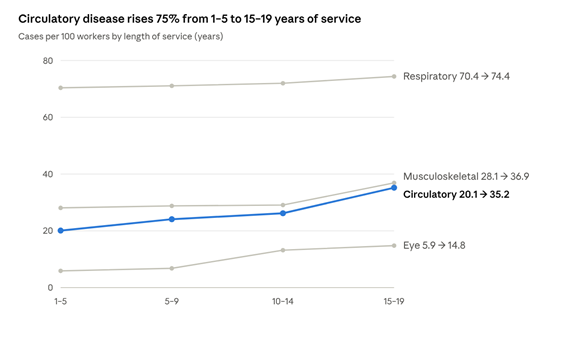
Figure 4: Registered cases of selected chronic disease classes per 100 production workers by length of service.
Job resources and workers' perceptions
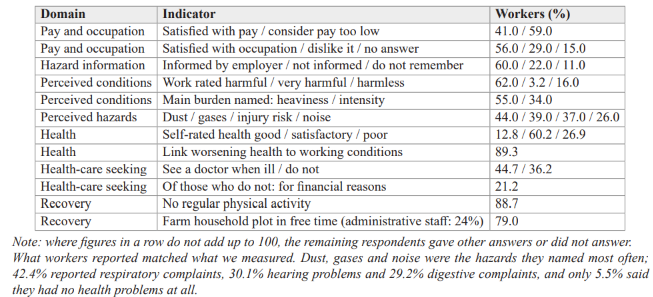
Most respondents were 40–49 years old, and two-thirds (66.9%) had worked at the plant for 10–14 years. They lived in villages 5–15 km away, and 76% cycled to work, a journey of 40–60 minutes each way. All had permanent contracts, and the plant provided changing rooms, showers and a rest room. Beyond that, the resources that the JD-R model treats as protective were thin (Table 8). Fewer than half of the workers were satisfied with their pay, one in five had never been told by the employer what hazards they faced, and more than a third did not see a doctor when they fell ill, in one case out of five because they could not afford it. Recovery time was short: 79% spent their free time working on household plots, against 24% of administrative staff, and 88.7% took no regular exercise.
Table 8: Selected questionnaire results (n = 269).
Discussion
The main lesson of this study is that new machinery did not bring safe work. After reconstruction, dust in the production units was two to four times the permissible level, noise was up to 16 dB above the standard, and workers moved between summer-like heat in autumn and near-freezing air in winter. Five of the six units fell into harmful class 3.2. Similar dust levels, with more respiratory symptoms and poorer lung function, have been reported from ginneries and textile mills in Ethiopia, India and Pakistan [14,15,29,30], and dose–response data from Karachi [31] suggest that exposure of this order carries real long-term risk. Pesticide residues added a chemical load that is easy to overlook in a plant that does not use pesticides itself; they arrive with the raw cotton and are released when it is cleaned, ginned and pressed.
The health data broadly follow the exposure profile. Respiratory disease led both the examination findings and the sickness-absence cases, with chronic bronchitis and asthma-like conditions most common, as expected from organic dust and endotoxin [5,7,9,32]. High bacterial counts and a large share of actinomycetes are consistent with the bioaerosol exposure described on cotton farms [33]. Musculoskeletal disease cost the most working days, in line with the forced postures, manual cleaning and repetitive movements we observed, and the high rate of ear disease is what one would expect where four of the six production units exceed 90 dBA. Circulatory disease rose steadily with years of service, which agrees with the higher prevalence of hypertension reported among textile workers [34].
The link between exposure and morbidity was not uniform, however. Ginning and linting, with dust about three times the MPC and noise above 90 dBA, had morbidity only 6–7% higher than among administrative staff. A healthy-worker effect may explain part of this, since workers who become ill are often moved away from the most demanding jobs; differences in age and length of service between units, and the small comparison group, may explain the rest. The etiological fractions (5–30%) indicate low work-relatedness at unit level, so the excess morbidity is best read as a pointer for targeted prevention rather than as proof that the work caused each case.
Seen through the JD-R model, the plant combines high demands with few resources, and that combination points to three tasks for management. The first is to lower the demands at their source. Sickness absence is concentrated in a few units and disease groups, so prevention can be targeted: local exhaust and wet dust suppression at bunching and cleaning, properly maintained cyclones and filters [35,36], enclosures around gins and cleaners, and climate control in bunching and pressing. A cluster-randomized trial in Pakistani textile mills showed that such workplace measures do reduce the respiratory effects of cotton dust [37]. The second is to strengthen resources. One worker in five had never been told about the hazards of the job, most considered their pay too low, and many did not seek care when ill, partly for financial reasons. Regular hazard briefings, the supply and enforced use of respirators and hearing protection, and paid time for medical visits are part of a safety climate that management has to build; they cannot be left to the plant's medical service [23–25,38]. The third is to protect recovery. With 86–96% of the shift spent on operations and most workers farming at home in the evening, fatigue accumulates. Planned short breaks, rest rooms with a controlled microclimate and workplace health promotion would reduce musculoskeletal strain [18,26] and fit the sustainable HRM view that employee health should be renewed, not used up [21,22].
Medical surveillance should follow risk. Workers with more than five years in class 3.2 units should have an annual in-depth examination that includes spirometry, audiometry and assessment of the spine and joints, as Order No. 200 allows, and those with early signs of disease should be transferred to lower-exposure tasks before the condition becomes chronic. Linking these examination results with sickness-absence records by unit would also let the plant see whether the measures it introduces are working.
The study has several limitations. It covers one plant, so the results may not apply to all ginneries in the country. The design is cross-sectional and does not allow causal conclusions, and a healthy-worker effect may have led us to underestimate the risk. The comparison group of administrative staff was small and differed from production workers in sex, tasks and probably age, and we had no data on smoking, an important confounder for respiratory disease. Rate ratios were calculated from aggregated data, without confidence intervals or adjustment for age and service. Morbidity data came from routine records, and survey answers were self-reported. Finally, we did not measure lung function, endotoxin, personal exposure or the actual use of protective equipment. Multi-site studies with personal sampling, spirometry, multivariable analysis and follow-up over time are needed to confirm these findings and to test the effect of the measures proposed here.
Conclusion
Workers at a recently modernized cotton-ginning plant in Uzbekistan remain exposed to dust, noise, an unfavourable microclimate, pesticide residues and airborne bacteria well above hygienic standards, and they work at high density under heavy physical load. Conditions in the main production units correspond to harmful class 3.2. This burden shows up as frequent respiratory, musculoskeletal, ear and circulatory disease, about 2,240 lost workdays per 100 workers a year, and morbidity that grows with length of service. At the same time, hazard information, satisfaction with pay, access to care and time for recovery are limited.
Re-equipment has therefore solved only part of the problem. A workforce health-management programme for ginneries should combine engineering control of dust, noise and microclimate with hazard communication and personal protection, work–rest scheduling and recovery facilities, risk-based medical surveillance, and attention to pay, access to care and healthy lifestyles. Multi-site and longitudinal studies are needed to confirm these findings and to evaluate such a programme in practice.
Author Contributions: Makhfuza O. Ibotova: conceptualization, methodology, investigation, formal analysis, and writingoriginal draft preparation. Kamol Ibrohimov: conceptualization, methodology, formal analysis, writingoriginal draft preparation, and writingreview and editing. All authors have read and agreed to the published version of the manuscript.
Funding: This research was funded by the author personally.
Informed consent statement: All workers who took part in the medical examination analysis and the questionnaire survey gave informed consent. Data were anonymized before analysis.
Data availability statement: The individual data are not publicly available to protect participants' privacy. Aggregated data are presented in the tables, and anonymized data are available from the corresponding author on reasonable request.
Acknowledgment: We thank the management and workers of the G'ijduvon cotton-ginning joint-stock company and the staff of the sanitary-hygienic laboratory of the Bukhara Regional Department of Sanitary and Epidemiological Welfare and Public Health for their help. This article is based on the PhD dissertation of M.O. Ibotova.
Conflict of interest: The authors declare no conflict of interest.
References
- Tausif M, Jabbar A, Naeem MS, Basit A, Ahmad F, Cassidy T. Cotton in the new millennium: Advances, economics, perceptions and problems. Textile Progress, 2018; 50(1): 1–66.
- President of the Republic of Uzbekistan. Resolution No. PQ-4633 of 6 March 2020 on measures for the wide introduction of market principles in cotton growing. Tashkent, 2020.
- Abdulkhadi O. Vacuum cleaning system in cotton cleaning field: Improvement measures. Universum: Technical Sciences, 2024; 12(129): 13–16.
- Tursunov ZR, et al. Analysis of existing cotton seed cleaners at cotton-ginning enterprises. Universum: Technical Sciences, 2023; 10-4(115): 11–17.
- Fishwick D. Cotton, other bioaerosols, inhalation fevers and occupational organising pneumonia. In Occupational and Environmental Lung Disease (ERS Monograph, pp. 211–226). European Respiratory Society, 2020.
- Nafees AA, et al. Byssinosis and lung health among cotton textile workers: Baseline findings of the MultiTex trial in Karachi, Pakistan. Occupational and Environmental Medicine, 2023; 80(3): 129–136.
- Ashuro Z, et al. The effect of occupational exposure to organic dust on lung function parameters among African industrial workers: A systematic review and meta-analysis. Frontiers in Public Health, 2024; 12: 1424315.
- Subramaniam S, et al. Impact of cotton dust, endotoxin exposure, and other occupational health risks due to indoor pollutants on textile industry workers in low- and middle-income countries. Journal of Air Pollution and Health, 2024; 75–96.
- Poole JA, et al. Airway diseases due to organic dust exposure. In Asthma in the Workplace. CRC Press, 2021; pp. 293–302.
- Ibotova MO. Cotton dust exposure, endotoxin exposure, and other occupational health risks due to indoor pollutants for cotton industry workers. Global Science Review, 2025; 2(1): 17–21.
- Kalandarov RK. Basic principles and sources of vibration and noise in cotton-ginning plants. Universum: Technical Sciences, 2025; 5(134): 28–31.
- Richardson JR, Fitsanakis V, Westerink RHS, Kanthasamy AG. Neurotoxicity of pesticides. Acta Neuropathologica, 2019; 138(3): 343–362.
- Arab A, Mostafalou S. Neurotoxicity of pesticides in the context of CNS chronic diseases. International Journal of Environmental Health Research, 2022; 32(12); 2718–2755.
- Derso Y, et al. Pulmonary function, respiratory symptoms and associated factors among cotton-ginning workers at Gondar city, Northwest Ethiopia: A comparative cross-sectional study. International Journal of Physiology, Pathophysiology and Pharmacology, 2021; 13(5): 140.
- Rathod SS, et al. Health status of cotton-ginning workers in Central India: A cross-sectional study. Journal of Datta Meghe Institute of Medical Sciences University, 2024; 19(1): 146–150.
- Demerouti E, Bakker AB, Nachreiner F, Schaufeli WB. The job demands-resources model of burnout. Journal of Applied Psychology, 2001; 86(3): 499–512.
- Bakker AB, Demerouti E. The Job Demands-Resources model: State of the art. Journal of Managerial Psychology, 2007; 22(3): 309–328.
- Birhan M, Endawoke M. Effects of occupational hazard on employee health and productivity in case of academic institutions. Mathews Journal of Sports Medicine, 2023; 3(2): 1–12.
- Makhmudov YA, Umarov TK. Problems of insurance from accidents and professional diseases in cotton protection. Textile Journal of Uzbekistan, 2019; 2(1): 4.
- Johns G. Presenteeism in the workplace: A review and research agenda. Journal of Organizational Behavior, 2010; 31(4): 519–542.
- Kramar R. Beyond strategic human resource management: Is sustainable human resource management the next approach? The International Journal of Human Resource Management, 2014; 25(8): 1069–1089.
- Guest DE. Human resource management and employee well-being: Towards a new analytic framework. Human Resource Management Journal, 2017; 27(1): 22–38.
- Zohar D. Safety climate in industrial organizations: Theoretical and applied implications. Journal of Applied Psychology, 1980; 65(1), 96–102.
- Christian MS, Bradley JC, Wallace JC, Burke MJ. Workplace safety: A meta-analysis of the roles of person and situation factors. Journal of Applied Psychology, 2009; 94(5): 1103–1127.
- Islam T. Health concerns of textile workers and associated community. INQUIRY: The Journal of Health Care Organization, Provision, and Financing, 2022; 59: 00469580221088626.
- Sharin VI, Plutova MI. Social factors of labor productivity. Human Progress, 2023; 9(1): 18.
- Khan M, et al. Epidemiology of respiratory diseases and associated factors among female textile workers in Pakistan. International Journal of Occupational Safety and Ergonomics, 2022; 28(1): 184–198.
- Federal Center for Hygiene and Epidemiology of Rospotrebnadzor. Guidelines for the assessment of occupational health risk for workers: Organizational and methodological principles, principles and evaluation criteria (R 2.2.1766-03). Moscow, 2004.
- Khan AW, Moshammer HM, Kundi M. Industrial hygiene, occupational safety and respiratory symptoms in the Pakistani cotton industry. BMJ Open, 2015; 5(4): e007266.
- Daba Wami S, et al. Cotton dust exposure and self-reported respiratory symptoms among textile factory workers in Northwest Ethiopia: A comparative cross-sectional study. Journal of Occupational Medicine and Toxicology, 2018; 13: 13.
- Ali NA, et al. Dose-response of cotton dust exposure with lung function among textile workers: MultiTex study in Karachi, Pakistan. International Journal of Occupational and Environmental Medicine, 2018; 9(3): 120.
- Ha TTT, et al. The cotton dust-related allergic asthma: Prevalence and associated factors among textile workers in Nam Dinh province, Vietnam. International Journal of Environmental Research and Public Health, 2021; 18(18): 9813.
- Adhikari A, et al. Exposure levels of airborne fungi, bacteria, and antibiotic resistance genes in cotton farms during cotton harvesting and evaluations of N95 respirators against these bioaerosols. Microorganisms, 2023; 11(6): 1561.
- Ali NA, Feroz A, Khoja A. Prevalence of hypertension and its risk factors among cotton textile workers in low- and middle-income countries: A systematic review. Public Health, 2022; 211: 128–135.
- Adilova, A. Sh., et al. (2024). Analysis of the efficiency of cyclone dust collectors at cotton-processing enterprises for reducing environmental pollution. Universum: Technical Sciences, 2024; 11(128): 5–10.
- Sharipov, Sh. N., et al. (2021). Application of electric filters for cleaning cotton from small dust particles. Universum: Technical Sciences, 2021; 2-3(83): 90–93.
- Nafees AA, et al. A cluster randomised controlled trial to reduce respiratory effects of cotton dust exposure among textile workers: The MultiTex RCT study. European Respiratory Journal, 2024; 63(1).
- Ghori S, et al. Occupational exposure and physiological risk perception among workers in the textile sector: A cross-sectional study from Hyderabad, Pakistan. Journal of Medical and Health Studies, 2025; 6(3): 125–138.