
Email id: info@ijclinmedcasereports.com
Financial Wellness in Medicine: A Fair Isaac Corporation (FICO) Score Cross-Sectional Analysis of United States Trainees and Attendings
Peter Palumbo1,2, Jamal J Hasoon3, Timothy Flanagan4, Christopher Worsham5,6,7, Anupam B Jena5,6,8, R Jason Yong9,#, Wael Saasouh10,11,# and Christopher L Robinson12,#,*
1Geisel School of Medicine at Dartmouth, Hanover, NH, USA
2The Tuck School of Business at Dartmouth, Hanover, NH, USA
3Department of Anesthesia and Pain Medicine, UTHealth McGovern Medical School, Houston, TX, USA
4Spencer Fox Eccles School of Medicine, University of Utah, Salt Lake City, UT, USA
5Department of Health Care Policy, Harvard Medical School, Boston, MA, USA
6Department of Medicine, Massachusetts General Hospital, Boston, MA, USA
7Division of Pulmonary and Critical Care Medicine, Massachusetts General Hospital, Boston, MA, USA
8National Bureau of Economic Research, Cambridge, Massachusetts
9Department of Anesthesiology, Perioperative and Pain Medicine, Brigham and Women’s Hospital, Boston, USA
10Department of Anesthesiology, Wayne State University, Detroit, MI, USA
11Outcomes Research Consortium®, Houston, TX, USA
12Division of Pain, Department of Anesthesiology and Critical Care, The Johns Hopkins University School of Medicine, Baltimore, USA
#Denotes equal contribution
Received Date: 08/04/2026; Published Date: 12/06/2026
*Corresponding author: Christopher L Robinson, MD, PhD, Johns Hopkins School of Medicine, Department of Anesthesiology and Critical Care Medicine, 1800 Orleans Street, Baltimore, MD 21287, USA
Abstract
Introduction: Limited data exists on the credit profile of physician borrowers and the reasons for their borrowing. In the first analysis of its kind, we assessed the credit profile of physician borrowers by FICO score and whether there was a difference between trainees versus attendings and amongst medical and surgical specialties.
Methods: This cross-sectional study is based on pooled FICO scores from 3,843 physician borrowers from 2019-2023 sourced from a privately held physician and dentist financial services company in compliance with the Equal Credit Opportunity Act (ECOA). Participants were physician borrowers who had applied for loans from October 1, 2019 to May 31, 2023. Descriptive statistical analyses were performed characterizing the median physician borrower FICO score based on status (trainees vs. attendings), geographical distribution, medical and surgical specialty, and reasons for loan requests.
Results: Of the 3,843 physician borrowers, the median FICO score with interquartile ranges (IQR) of the 2,098 trainees was 659 (IQR = 618, 704) and of the 1,745 attendings was 712 (IQR = 661, 771) with a statistically significant difference of 53 points (p < 0·0001) and no significant differences between trainee and attending status in surgical and medical specialties. A statistically significant difference was maintained across all geographic regions in the USA. The most notable FICO score rise of 28 points (p < 0·0001) occurs after one year after finishing training and being in practice. The most common reason for requesting a loan between both groups was credit card debt consolidation.
Conclusion: The median FICO score of attendings was 712 which is six points below the average score of American citizens despite the considerably higher annual salary of an attending physician. The debt accrued may be one factor contributing to the trend of U.S. physicians leaving medicine.
Keywords: FICO; Cross-Sectional Analysis; Physician; Debt; Trainees
Introduction
Training to become a board-certified physician is not only a long and arduous process but is also quite costly. The average cost for tuition, fees, and living expenses at 50% of United States medical schools exceeds $275,000 with 19 schools costing >$350,000 [1,2]. Despite a rather stable rate of debt accrual, the cost of medical education continues to outpace inflation and surpasses grants and scholarships [1,3-5]. Though the percentage of medical graduates having debt has decreased from 86% in 1984 to 73% in 2019, debt remains fundamental for medical graduates in order to obtain their degrees [1]. This debt is typically compounded by the following four to seven years of residency and fellowship training with interest accruing and a salary several times smaller than the debt acquired to fund the education [1,3,4]. Nevertheless, physicians remain reliable payers of debt despite the significant negative influence on their quality of life [6-8].
The cost of medical education will continue to pose challenges with total U.S. student debt standing at $1.75 trillion as of 2023, constituting a significant financial burden second only to mortgage debt [9]. With inflation historically elevated, the ability to pay down this debt continues to be affected with Medicare conversion factors decreasing since 2020 and at no point in recent history keeping up with inflation [10,11].
The credit profile of an applicant is defined by many factors, a prominent one being the Fair Isaac Corporation (FICO) score which is a three-digit number incorporating data from credit reports such as outstanding debt and payment history [12,13]. The FICO score, a mathematically derived number, is a representation to lenders of the borrower’s ability to repay the debt [12]. Moreover, it may determine the payment timeline, amount available to borrow, and interest rate. Interestingly, the FICO score excludes age, employment history, gender, location, income, marital status, national origin, and race to protect customers from potentially discriminatory credit decisioning [12]. The FICO score pulls data from the three credit bureaus (Equifax, Experian, and Transunion) weighing the following categories when being calculated: payment history (35%), amounts owed (30%), length of credit history (15%), recent credit applications (10%), and credit mix (10%) [12,13].
Considering that many medical graduates have a hefty student debt and receive a modest salary during training, it can be expected that their FICO scores may be lower than their non-medical counterparts resulting in higher interest rates when loans are needed. To date, no study has been performed to analyze the FICO scores of medical and surgical trainees and attendings. Here, we present a statistical analysis of 3,843 trainee and attending FICO scores which were obtained during the application and acceptance of personal unsecured loans.
Methods
Study Design and Participants: This cross-sectional study is based on pooled FICO scores from 3,843 United States physician borrowers from 2019-2023 sourced from a privately held physician and dentist financial services company in compliance with the Equal Credit Opportunity Act (ECOA). Participants were physician borrowers who had applied for loans from October 1, 2019 to May 31, 2023. The regulatory compliant de-identified financial loan data were obtained from a privately held physician and dentist financial services company, Doc2Doc Lending, Inc. Ethics committee approval was not required for this study as it did not involve patients and all data was de-identified.
Procedures: The data obtained included individual FICO scores, physician specialty, training status (trainee vs. attending), area of residence at time of loan acceptance, reason for loan, and years in practice. The trainee status was defined as trainees who applied to and accepted a loan within the time between obtaining a residency slot (the official National Resident Matching Program [NRMP] Match Day) and completion of residency or fellowship training. The trainees and attendings were further subdivided by region (as defined by the United States Census Bureau) and medical versus surgical specialties (See Appendix Tables) [14,15].
Statistical Analysis: The distribution of the trainee and attending physicians was analyzed for normality based on a multiple linear regression model and the residuals were assessed by the Kolmogorov-Smirnov test. Each population was found to have a non-normal distribution and the medians and Interquartile Ranges (IQR) were used for comparison. For comparison between groups, the Mann-Whitney test was performed. For comparison of multiple groups, the Kruskall-Wallis test was performed. Given the exploratory nature, no adjustments were made for multiplicity.
Role of the Funding Source: Doc2Doc Lending provided access to the private database but had no role in study design, data analysis, data interpretation.
Results
The FICO scores of 3,843 physician-borrowers were analyzed from loan approvals between January 1, 2019 and May 20, 2023. Of the physician borrowers, 2,098 were trainees and 1,745 were attendings. The median FICO score was 659 (IQR = 618, 704) for trainees and 712 (IQR = 661, 771) for attendings with a statistically significant difference of 53 points (p < 0·0001) (Figure 1A). To further evaluate the differences in median FICO scores between medical and surgical specialties, the trainees and attendings were compared both within and across each group (Figure 1B). The difference in median FICO scores for medical and surgical specialties within each group (trainees and attendings) was not statistically significant (659 [IQR = 615, 701], 668 [IQR = 633, 713], 712 [IQR = 660, 771], and 706 [IQR = 661, 771]). Similar to other analyses, there was a statistically significant difference of 53 points (p < 0·0001) between medical trainees and attendings and a smaller statistically significant difference of 38 points (p < 0·0001) between surgical trainees and attendings. The distribution of median FICO scores based on categories for trainees vs attendings was as follows: Poor (300-579): 14% (284/2,098) vs 6% (101/1,745); Fair (580-669): 42% (891/2,098) vs 23% (406/1,745); Good (670-739): 31% (642/2,098) vs 33% (574/1,745); Very Good (740-799): 12% (257/2,098) vs 25% (434/1,745); Excellent (800-850): 2% (33/2,098) vs 13% (231/1,745), respectively (Figure 1C). The distribution of FICO score categories for trainees was skewed to the left (lower numbers) and for attendings skewed to the right (higher numbers).
To assess whether the difference in median FICO scores between trainees and attendings was maintained geographically, we used the regions defined by the United States Census Bureau to compare the differences (Table 1) [16]. There were statistically significant differences in the median FICO scores across all geographical regions between the trainees and attendings: East North Central (71, p < 0·0001), East South Central (33, p < 0·001), Middle Atlantic (37, p < 0·0001), Mountain (37, p < 0·01), New England (44, p < 0·0001), Pacific (65, p < 0·0001), South Atlantic (63, p < 0·0001), West North Central (74, p < 0·001), and West South Central (43, p < 0·0001) (Figure 2, Table 2).
Based on the 2023 Medscape Resident Salary and Debt Report, the average annual salary of a US resident was $64,200 irrespective of specialty [17]. The salary of a first-year resident was $61,000 and that of a sixth-year resident was $74,000, indicating a salary gap of 21% over six years [17]. Conversely, the average attending salary was $352,000, almost a five-fold increase from trainees [18]. When separated by Primary Care Physicians (PCPs) and specialists, there was a difference of 48% with PCPs earning an average of $265,000 and specialists an average of $382,000— a difference of $117,000 — almost double the salary of a resident [18]. The range of salaries is considerable with plastic surgery earning an average of $619,000 and public health and preventative medicine earning $249,000 [18]. Given this large range in salaries, we aimed to compare the differences in the median FICO scores of attendings across all specialties, medical and surgical (Figure 3, Table 3-5). The largest statistically significant absolute difference in median FICO scores was between rheumatology with the highest median FICO score (783, IQR = 818, 703, n = 17) and minimally invasive surgery with the lowest median FICO score (633, IQR = 703, 610, n = 4) with a difference of 150 points (p < 0·01).
The specialty with the greatest number of statistically significant median FICO positive differences between scores included hematology and oncology with minimally invasive surgery (130, p < 0·01), infectious disease (107, p < 0·01), vascular surgery (95, p < 0·05), cardiothoracic surgery (93, p < 0·05), nephrology (80, p < 0·01), pathology (72, p < 0·01), physical medicine and rehabilitation (69, p < 0·05), pulmonology/critical care (66, p < 0·05), general surgery (54, p < 0·05), anesthesiology (53, p < 0·05), internal medicine (50, p < 0·05), cardiology (46, p < 0·01), emergency medicine (41, p < 0·05), neurology (35, p < 0·05), and pediatrics (34, p < 0·05) (Figure 3). The specialty with the most number of statistically significant median FICO negative differences included family medicine with rheumatology (-88, p < 0·01), gastroenterology (-82, p < 0·01), hematology oncology (-68, p < 0·001), pediatrics (-34, p < 0·001), obstetrics and gynecology (-29, p < 0·001), emergency medicine (-27, p < 0·01), psychiatry (-27, p < 0·001), radiology (-20, p < 0·05), internal medicine (-18, p < 0·01), anesthesiology (-15, p < 0·05), and otolaryngology (-11, p < 0·01) (Table 5).
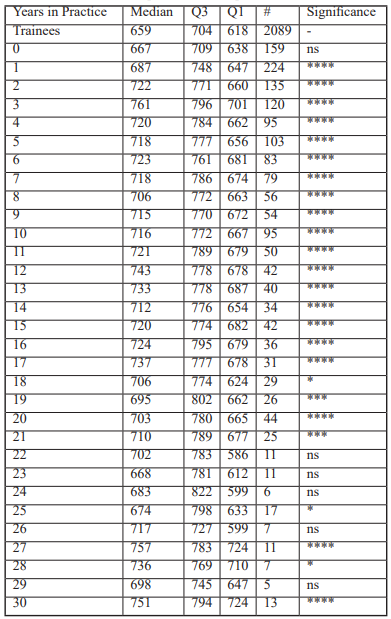
Trainee salaries significantly increase upon graduation and starting the first job, which allows them to apply for larger credit limits. Though only a snapshot in time and not prospective, the median FICO scores from trainee status to 30 years in practice was assessed (Figure 5, Table 6). The first statistically significant difference in median FICO scores occurred after one year in practice as attending with an increase of 28 FICO points (p < 0.0001). The peak in statistically significant differences occurs after three years in practice with an increase of 102 FICO points (p < 0·0001) and remains consistently above the trainee median FICO score.
When assessed for reasons for acquiring the loan, the largest reason for both trainees and attendings was credit card debt consolidation at 39·3% and 27·8%, respectively (Figure 5). For trainees, the second most common reason was moving/relocation expenses (34·7%,) followed by total debt refinancing (8·7%). For attendings, the second most common for attendings was home improvement (19·6) followed by total debt refinancing (16·9%). Of note, only 39·9 % of trainees and 47·8% of attendings listed a reason for the loan application.

Figure 1: Attending median scores are higher than trainees with skewed FICO score category distributions. Scatter plot comparisons of median FICO scores with interquartile ranges between (A) trainees and attendings (n = 2,098 and 1,745), (B) and medical and surgical trainees and attendings (n = 1,785, 313, 1,569, and 176). (C) Frequency distribution of trainees and attendings FICO score categories. Categories include Poor (300-579), Fair (580-669), Good (670-739), Very Good (740-799), and Excellent (800-850). Data are analyzed by Mann-Whitney test and Kruskal-Wallis tests. (ns = not significant, ****p < 0·0001).

Figure 2: Box and whisker plot comparison of median FICO scores between trainees and attendings across geographical regions. Regions are defined by the United States Census Bureau (Appendix Table 1). No adjustments were made for multiplicity. Three applicants from each category were excluded due to each applicant being outside of the above regions. Data are analyzed by Mann-Whitney tests. (n for each group can be found in Appendix Table 2, **p < 0·01, ***p< 0·001, ****p < 0·0001).

Figure 3: Comparisons of median FICO scores with IQR across all medical and surgical specialties for attendings. Data are analyzed by Kruskal-Wallis Test. Comparisons with family medicine are shown with the other comparison in Appendix Table 5. Number of medical specialties attendings is 1,569, and number of surgical specialties attendings is 176. Data in tabulated form in Appendix Table 5 (*p < 0·05, **p < 0·01, ***p < 0·001).

Figure 4: Comparison of trainees versus attendings in training by years in practice up to 25 years. Data are analyzed by Kruskal-Wallis Test. Number of attendings is 1,647, and number of trainees is 2,089. Year 0 represents those who applied for loans during the start of their first attending year to the end of their first year. Numbers for each year are located in Appendix Table 6 including additional years 25-30 not shown in graph (ns = not significant, ****p < 0·0001).

Figure 5: Reasons for acquiring the loan. (Trainees n = 959, 60·1% (1255/2,2089) declined to respond, Attendings n = 834, 52·2% declined to respond (834/1,745)).
Table 1: States included in each region as defined by the United States Census Bureau.
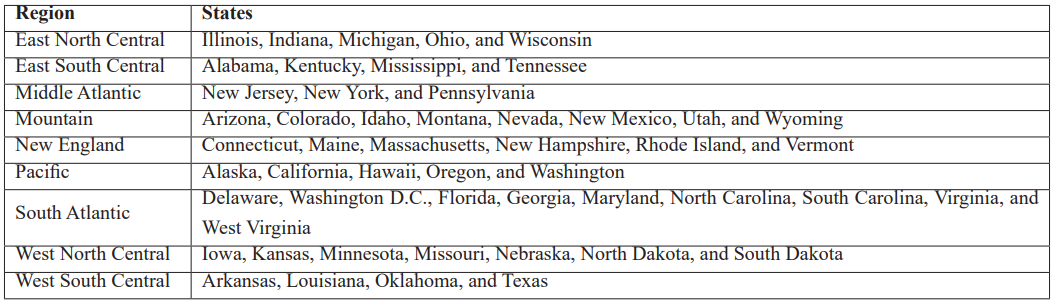
Table 2: Median FICO scores, upper quartile (Q3), lower quartile (Q1) and number (#) of trainees and attendings per region.
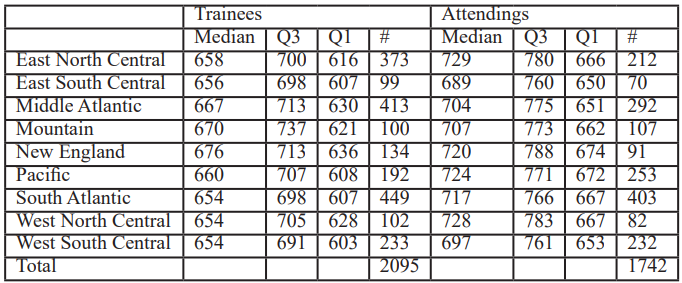
Table 3: Median FICO scores, upper quartile (Q3), lower quartile (Q1), and number (#) for attendings in medical specialties. Number of medical attendings is 1,569.
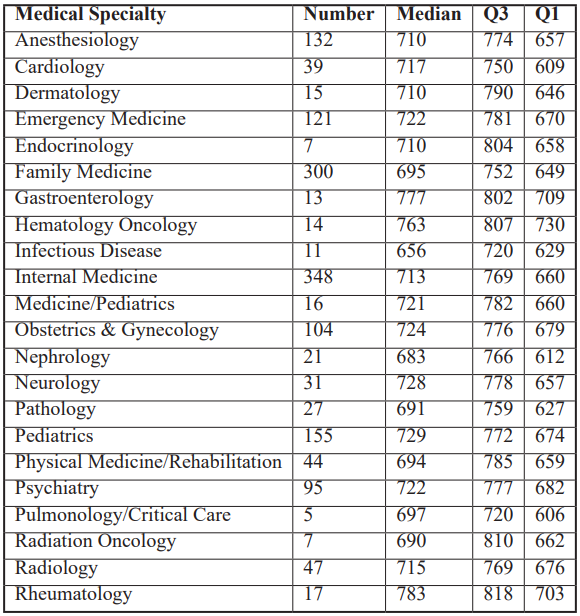
Table 4: Median FICO scores, upper quartile (Q3), lower quartile (Q1), and number (#) of attendings for surgical specialties. Number of surgical attendings is 176.
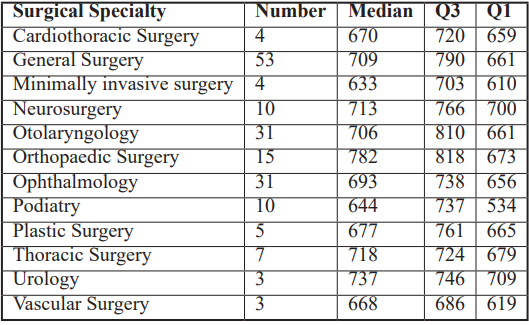
Table 5: Individual specialty median FICO comparisons and statical analysis between various medical and surgical specialty attendings with the FICO median differences. (*p < 0·05, **p < 0·01, ***p < 0·001).
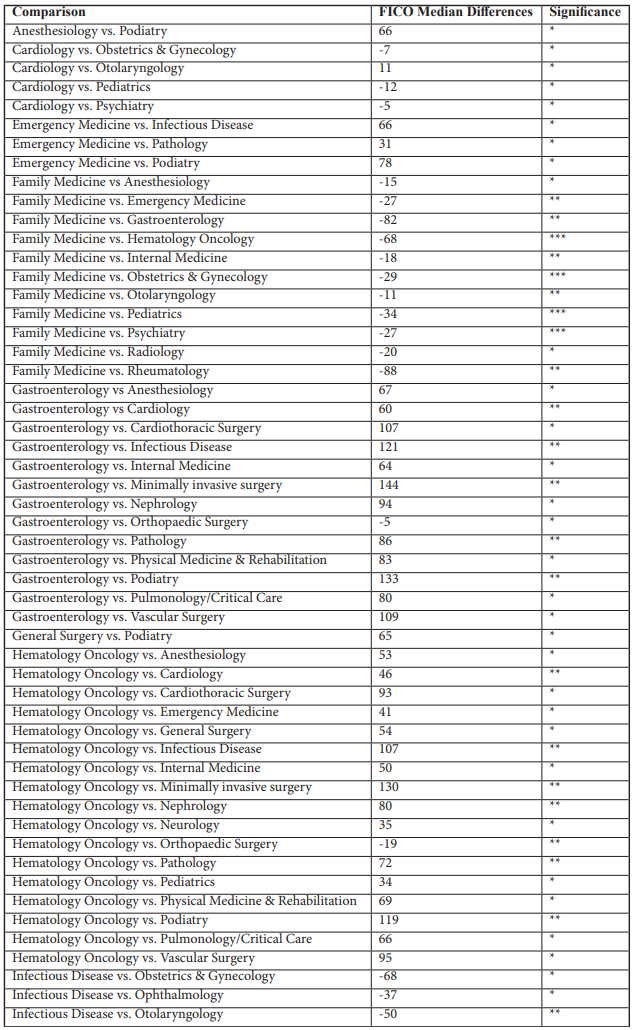
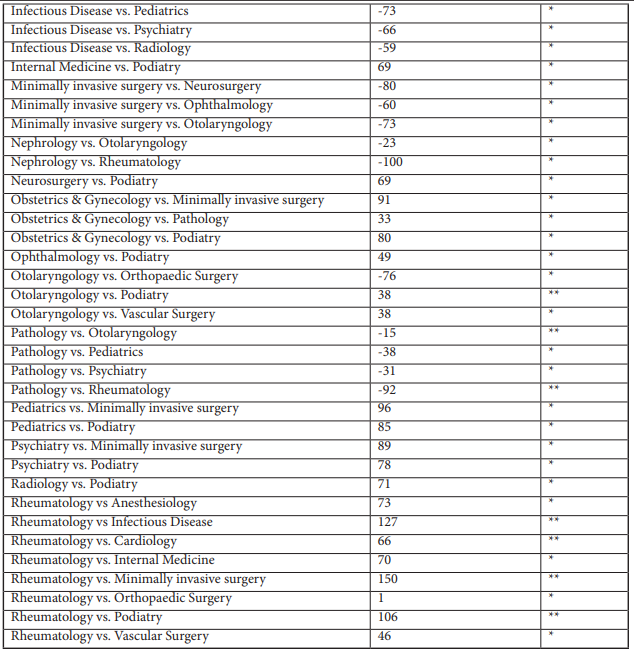
Table 6: Median FICO scores, upper quartile (Q3), lower quartile (Q1), number (#), and statistical significance as compared to trainees of attendings per year in practice including trainees. Number of attendings in years of practice at time of application having # of years in practice is 1717. (ns = not significant, *p < 0·05, ***p < 0·001, ****p < 0·0001).
Discussion
This FICO score analysis of 3,843 trainees and attendings who applied for a loan is the first of its kind and underscores the statistically significant difference between the credit profiles of both groups. With the average debt of medical students being $200,000 not including the additional ~$50,000 from debt acquired from medical school, it is understandable that trainees rely on a more easily accessible form of revolving credit card debt [1,2]. Obtaining a credit card versus personal debt is easier especially with the understanding that salaries will rise five to ten-fold upon completion of residency. In line with the data, trainees in the cohort tended to get loans to consolidate credit card debt more frequently than attendings. Credit card debt has a more harmful impact on the credit score and borrowing power as it is revolving debt, tends to have higher interest rates than personal fixed debt, and the interest compounds unlike fixed debt. Though both impact the calculation of the credit score, credit reporting agencies view revolving debt as a barometer for borrower risk and utilize credit utilization as a determinant for the FICO score with a high utilization weighing negatively. As trainees graduate, less funding is needed for relocation as some contracts may include relocation stipends and sign-on bonuses. Often, funds are needed later in a career for family planning, buying into a practice, or advancing education. Thus, as physicians attempt to expand their careers and skills, they will often encounter paying off student debt and potentially add practice debt [7].
In our dataset, surgical attendings possessed a lower FICO score than medical attendings, although the difference was not statistically significant and based on a small group of surgical attending applicants. Surprisingly, studies demonstrated that 32% of academic surgeons would not recommend the same choice to their children stating the educational debt affected their productivity, quality of life, and career choices [6,19]. A recent survey of 2,212 students from 91 countries found that 69% of medical students were concerned about their income as an attending [20,21]. Alarmingly, 25% of US medical students were considering quitting training [20,21].
One can only assume that debt plays a significant factor as can be seen one year after New York University (NYU) made tuition free for medical school [22]. Applications to NYU medical school rose 47% with nearly a 50% jump in underrepresented minorities who often come from financially disadvantaged backgrounds [22]. The trend of medical schools providing more financial assistance may alter the debt acquired by trainees. With more financial education, trainees may opt for fixed versus revolving debt, thus improving their overall FICO scores and access to lower interest rates, decreasing the long-term total debt.
The significant increase in FICO scores after one year in practice can be theorized to be either due to paying down revolving credit card debt, obtaining higher credit limits, or both thus lowering the credit utilization ratio which factors into the FICO score. Trainees often have more payment delinquencies that also create drag on their FICO scores. We hypothesize that the increased income of attendings allows for more diligent on-time debt repayment habits that may also contribute to the FICO increase for attendings after one year in practice. Though a cross-sectional snapshot in time and not prospective, the FICO scores out to 30 years in practice appeared to remain rather stable in our dataset. Furthermore, with this FICO analysis up to 30+ years, the overall median score difference of 53 points for physicians did cross FICO score categories after graduation (from Fair to Good). Interestingly, the median FICO score of attendings is six points lower than that of the average American (718) despite the attending salary being nearly five-fold greater than the average American citizen suggesting that a closer look into this phenomenon may be warranted [23]. Furthermore, the average age of USA trainees is roughly 30 yet their credit score is 59 points lower than the average American [23]. Though some medical residents may delay major life decisions such as marriage, family, and buying a house until completion of training, many do not. Therefore, they may have similar financial obligations to their non-physician peers all while having a much lower FICO score and decreased access.
Family medicine physicians typically receive lower salaries due to billing based on clinic visits which often carry a lower reimbursement. This potentially translates into a decreased ability to pay down debt, revolving and fixed, affecting their credit profile as can be seen by having a lower median FICO score (702) than peers in other specialties [21,24,25].
This study has several limitations. First, in compliance with the ECOA, post-hoc data analysis was limited and excluded race, color, religion, national origin, sex, marital status, and age [26]. Comparisons were only made between trainee and attending status, geographical status, specialties, and years in training. Potential further studies may consider gaps during training as a surrogate for age after application approval and acceptance to maintain compliance with ECOA. Only voluntary, non-obligatory reporting of the aforementioned categories could be surveyed. Second, given the retrospective nature of the data, limited conclusions and associations can be made. Third, the number of surgical applicants was limited in both the trainee and attending groups. In addition, the number of physicians in various subspecialties was limited, decreasing the applicability to the entire population of physicians. Furthermore, the data consist of approved physician-borrowers applying for a personal loan potentially skewing the median FICO score. Finally, no data were available on the socioeconomic support system of the applicants and may represent a biased analysis such that those without alternative financial reserves were the ones applying. Future, prospective, longitudinal studies, while remaining compliant with ECOA, may help shed light on the appropriate representation of trainees and attendings in terms of their FICO scores and comparisons between and within groups.
Among trainees and attendings, there was a statistically significant difference between the median FICO scores. The difference became statistically significant after one year as an attending. Between both groups, credit card consolidation was the number one reason for a borrowing application. The overall median FICO score of attendings is six points lower than the average American despite the significant difference in annual salary between attendings and the American citizen. The debt accrued may be one factor contributing to the trend of U.S. physicians leaving medicine though physicians’ credit profiles remain rather stable after graduation suggesting that physicians are reliable borrowers [27].
Key Summary Points:
- S. physicians incur a substantial and growing educational debt burden that may affect financial wellness, access to credit, and long‑term workforce retention, yet objective data describing physician credit profiles are lacking.
- Credit scores are a widely used proxy for financial health and borrowing access but had not previously been systematically examined among U.S. physician trainees and attendings.
- This study asked whether physician trainees and attendings differ in credit profile, as measured by FICO scores, across training status, specialty, geography, and years in practice.
- Among 3,843 physician borrowers, attendings had a significantly higher median FICO score than trainees (712 vs 659), with scores rising notably within the first year of independent practice and remaining relatively stable over subsequent decades.
- Despite high educational debt and delayed earning potential, physicians demonstrated overall good credit profiles and reliability as borrowers, suggesting opportunities for earlier financial interventions during training to improve long‑term financial well‑being.
Declaration of Interests
Funding: Funding was provided by Doc2Doc Lending.
Conflicts of Interest: CR, PP, WS, JY are consultants for Doc2Doc Lending. CLR receives consulting fees from GLG, Augmend Health, Celeri Health, Shiratronics, and is a limited partner in OneSixEight Ventures. CW reports receiving (in the last 36 months) consulting fees unrelated to this work from Alosa Health, Analysis Group, Atheneum, Berkshire Hathaway Home Companies, Chronius, FVC Health, GLG, Guidepoint, NuvoAir, Ogilvy, Philips, Simbo, Substack, Tell Health, The New York Times, and The Wall Street Journal, income unrelated to this book from book rights to Doubleday Books, and speaking fees from the Harry Walker Agency. CW is supported by a career development grant from the Agency for Healthcare Research and Quality (grant # K08HS029197). ABJ reported receiving personal fees from Analysis Group, Freakonomics MD, The Wall Street Journal, The New York Times, and The Los Angeles Times; speaking fees from the AAE Speakers Bureau and Harry Walker Agency; and royalties from Doubleday Books outside the submitted work.
Author Contributions: PP, RJY, WS, and CLR devised, analyzed, and wrote the paper. JJH, TF, CW, ABJ assisted with writing, revising, and providing expertise.
Ethics/Ethical Approval: Ethics committee approval was not required for this study as it did not involve patients and all data was de-identified.
Data Sharing: All de-identified data will be available upon publication and request from Doc2Doc Lending with data not to be reproduced or published without the authorized permission of Doc2Doc Lending and to be used for only academic purposes. A signed data access agreement must be signed prior to sharing of data. Requests should be sent to crobi151@jh.edu and will be considered on a case-by-case basis.
References
- Jay J, Youngclaus, Fresne JA. Physician Education Debt and the Cost to Attend Medical School, 2020.
- Average Medical School Debt: Student Loan Statistics n.d, 2023.
- Pisaniello MS, Asahina AT, Bacchi S, Wagner M, Perry SW, Wong ML, et al. Effect of medical student debt on mental health, academic performance and specialty choice: a systematic review. BMJ Open, 2019; 9: e029980. https://doi.org/10.1136/BMJOPEN-2019-029980.
- Greysen SR, Chen C, Mullan F. A history of medical student debt: Observations and implications for the future of medical education. Academic Medicine, 2011; 86: 840–845. https://doi.org/10.1097/ACM.0B013E31821DAF03.
- Consumer Price Index, 1913- | Federal Reserve Bank of Minneapolis n.d, 2023.
- Kibbe MR, Troppmann C, Barnett CC, Nwomeh BC, Olutoye OO, Doria C, et al. Effect of educational debt on career and quality of life among academic surgeons. Ann Surg, 2009; 249: 342–348. https://doi.org/10.1097/SLA.0B013E318195E5C8.
- Manisundaram AD, Nagai MY, Frey JD. Physician Loans: Understanding and Overcoming an Epidemic. Plast Reconstr Surg, 2022; 150: 1375–1381. https://doi.org/10.1097/PRS.0000000000009712.
- Gray K, Kaji AH, Wolfe M, Calhoun K, Amersi F, Donahue T, et al. Influence of Student Loan Debt on General Surgery Resident Career and Lifestyle Decision-Making. J Am Coll Surg, 2020; 230: 173–181. https://doi.org/10.1016/J.JAMCOLLSURG.2019.10.016.
- Student Loan Debt Statistics: Average Student Loan Debt – Forbes Advisor n.d, 2023.
- Medical Association A. History of Medicare Conversion Factors Year Conversion Factor % Change Primary Care Conversion Factor % Change Surgical Conversion Factor % Change Other Nonsurgical Conversion Factor %, 1992.
- Medicare physician payment on the decline: It’s not your imagination | The Bulletin n.d, 2023.
- What Is a FICO Score? - Buy Side from WSJ n.d, 2023.
- Doroghazi RM. FICO Scores. Am J Cardiol, 2020; 130: 157–158. https://doi.org/10.1016/j.amjcard.2020.06.001.
- Torpy JM, Lynm C, Glass RM. Medical Specialties. JAMA, 2003; 290: 1268–1268. https://doi.org/10.1001/JAMA.290.9.1135.
- What are the surgical specialties? | ACS n.d, 2023.
- Geographic Levels n.d, 2023.
- Annual Income Rises, Pay Satisfaction High: Medscape Resident Salary & Debt Report 2023 n.d, 2023.
- Medscape Physician Compensation Report 2023: Your Income vs Your Peers’ n.d, 2023.
- Abd-Elsayed A. If the Savior Is Not Safe How Can He Save? The Challenges Facing Physicians Today, 2019; 2019.
- 1 in 4 US medical students consider quitting, most don’t plan to treat patients: report | The Hill n.d, 2023.
- Clinician of the Future 2023 Education Edition| Elsevier n.d, 2023.
- One year after offering free tuition, applications to NYU medical school surge - MarketWatch n.d, 2023.
- Average U.S. FICO Score at 718 n.d, 2023.
- Al-Khateeb B. Primary health care and family physicians provide frontline care to the dermatology patients during the era of COVID-19: Recommendations and future directions. J Family Med Prim Care, 2020; 9: 5862. https://doi.org/10.4103/JFMPC.JFMPC_1393_20.
- Schoen C, Osborn R, Phuong TH, Doty M, Peugh J, Zapert K. On The Front Lines of Care: Primary Care Doctors’ Office Systems, Experiences, And Views in Seven Countries, 2006; 25. https://doi.org/10.1377/HLTHAFF.25.W555.
- Depositor D, Protection CV. Lending-Equal Credit Opportunity Act V-7.1 Equal Credit Opportunity Act (ECOA) n.d.
- Why physicians are leaving medicine n.d, 2023.