
Email id: info@ijclinmedcasereports.com
The Importance of Social Support for Treatment Regimen Adherence Among Emerging Adults Experiencing Mental Illnesses
Uwemedimo S Isaiah1,*, Chineye Fabian Adili-George2, James R Sunday1, Mbuotidem E Ekerette1, Emmanuel E Abiama1, Ekaette M Useh4, Ini-obong George1 and Abraham T Naibo3
1Department of Psychology, University of Uyo, Nigeria
2Faculty of Medicine, Global Studies Institute, University of Geneva, Switzerland
3Department of Psychology, Nnamdi Aizkiwe University, Awka, Anambra State, Nigeria
4Department of Measurement and Evaluation, University of Calabar, Nigeria
Received Date: 19/03/2026; Published Date: 27/05/2026
*Corresponding author: Uwemedimo S Isaiah, Department of Psychology, University of Uyo, Nigeria
Abstract
Emerging adults with mental illnesses often struggle to adhere to treatment regimens, jeopardizing recovery. Although social support from family, friends, and healthcare providers has been shown to enhance adherence, little is known about how Nigerian emerging adults experience this support. This qualitative study explored patients’ experiences with social support and how it may influence adherence to treatment regimens. Nineteen emerging adults (18–30 years) with mental illness, including 7 males and 8 females, were purposively recruited from a neuropsychiatric hospital in Nigeria. In-depth, unstructured interviews were conducted between July and September 2025, and responses were transcribed and analyzed using content analysis. Major findings were summarized in four themes: (a) living with supportive family and significant others, (b) gaining knowledge and understanding of medication, (c) confiding in doctors and healthcare providers, and (d) having the full support of a spouse. These themes illustrate the scope and variety of patients' perceptions of social support. The study's conclusions suggest that spouses, family members, and friends are the most significant and frequent providers of social support for emerging adults living with mental illness in Nigeria. Access to social support may facilitate adherence to treatment regimens and improve condition management. Health professionals, particularly nurses, can enhance patient adherence by leveraging forms of perceived social support to inform and implement evidence-based care plans and organize support systems.
Keywords: Adherence; Mental Illness; Social Support; Treatment Regimes
Introduction
Mental illness is a growing public health concern, particularly among emerging adults (ages 18–29), a critical developmental period marked by transitions in education, employment, and social relationships [1-5]. Globally, non-adherence to psychiatric treatment remains alarmingly high, with adherence rates often ranging between 40–60%, thereby increasing relapse, hospitalization, and overall healthcare costs [6,7]. In Nigeria, treatment engagement remains suboptimal due to stigma, limited mental health infrastructure, and structural barriers to care [8,9]. These trends underscore the urgent need to examine context-specific factors influencing adherence behaviors.
Emerging adults experiencing mental health conditions often face challenges in adhering to treatment regimens, including medication compliance, therapy attendance, and lifestyle modifications [10-12]. Epidemiological evidence indicates that approximately 75% of lifetime mental disorders begin before the age of 30, making emerging adulthood a particularly vulnerable developmental period for the onset and progression of psychiatric conditions [10,13]. In low- and middle-income countries such as Nigeria, underfunded mental health systems and workforce shortages further compound this burden [14,15]. Non-adherence to treatment can lead to worsened symptoms, frequent relapses, and poor long-term outcomes [16-18].
Adherence during emerging adulthood is especially complex due to developmental characteristics such as increasing autonomy, unstable routines, academic and occupational mobility, and identity exploration [1,3]. These developmental dynamics may foster ambivalence toward long-term medication use and professional help-seeking [19,20]. Additionally, stigma, limited mental health literacy, and economic dependence further exacerbate adherence challenges in resource-constrained settings [21,22].
Social support has been identified as a crucial factor influencing treatment adherence among individuals with mental illnesses [23-25]. Studies suggest that strong social networks, including family, friends, and peer groups, can enhance motivation, provide emotional reinforcement, and reduce feelings of isolation, thereby improving adherence to treatment plans [26-28]. Conversely, a lack of social support has been linked to higher dropout rates and treatment discontinuation [20,29].
Despite its recognized importance, there remains limited research on how different forms of social support (emotional, instrumental, informational) specifically impact treatment adherence among emerging adults with mental illnesses [30,31]. Additionally, cultural and socioeconomic factors may influence the availability and effectiveness of social support, necessitating further investigation in diverse populations [32,33].
In Nigeria, mental health stigma and limited access to mental health services exacerbate treatment non-adherence [21,22]. Many emerging adults rely heavily on informal support systems due to inadequate professional mental health resources [35]. Understanding the role of social support in this context is essential for developing targeted interventions that improve treatment adherence and overall mental health outcomes. This study seeks to explore the relationship between social support and treatment regimen adherence among emerging adults with mental illnesses.
Theoretical Framework
This study is anchored in Social Support Theory and the Health Belief Model (HBM). Social Support Theory posits that emotional, informational, and instrumental support from significant others buffer stress and enhance health-related behaviors [23,24]. Emotional support provides reassurance and belonging; informational support offers guidance and knowledge; and instrumental support includes tangible assistance such as financial help or medication reminders [27]. Research consistently demonstrates that perceived social support enhances coping, treatment engagement, and adherence among individuals managing chronic illnesses, including mental disorders [26,35].
Within the Nigerian sociocultural context, where collectivist values and family interconnectedness are prominent, social networks may exert particularly strong influence on health behaviors [32]. Thus, Social Support Theory provides a useful lens for understanding how family members, spouses, and healthcare providers facilitate adherence among emerging adults experiencing mental illness.
Moreso, The Health Belief Model explains health behavior as a function of perceived susceptibility, perceived severity, perceived benefits, perceived barriers, cues to action, and self-efficacy [Rosenstock, 1974; 36]. Social support may operate as a cue to action (e.g., reminders from family), a mechanism reducing perceived barriers (e.g., financial support) and a factor strengthening self-efficacy (e.g., encouragement from spouse). Studies show that when patients believe in the necessity of medication and receive supportive reinforcement, adherence significantly improves [36,37]. Together, these frameworks provide a comprehensive explanation of how social relationships influence treatment regimen adherence among emerging adults with mental illness.
Method
Study Design
This study employed a qualitative research design using hermeneutic phenomenology. Hermeneutic phenomenology focuses on understanding and interpreting the lived experiences of individuals experiencing a common phenomenon [38]. This design assumes that personal experiences are best understood through direct, subjective accounts, allowing for an in-depth exploration of emerging adults' perspectives on social support and treatment adherence [39]. The study utilized in-depth, unstructured interviews to collect data from participants, enabling a detailed description of their experiences. Given the limited research on the role of social support in medication adherence among emerging adults with mental illness in Nigeria, a phenomenological approach was the most suitable method for capturing and interpreting their narratives [40].
Study Area
This study was conducted at the Neuropsychiatric Hospital, Aro, Abeokuta, Ogun State, Nigeria. The hospital is a leading mental health institution in Nigeria, providing specialized psychiatric care, research, and training. It is located in Abeokuta, the capital of Ogun State, in the southwestern region of Nigeria, at latitude 7°09′N and longitude 3°21′E. The hospital serves a diverse population across Nigeria, with patients referred from various states for mental health treatment. The climate in Abeokuta is tropical, with a daily temperature averaging around 28°C and an annual rainfall of approximately 1200 mm. The major ethnic groups in the area include the Yorubas, with a mix of other ethnic groups such as the Igbos and Hausas due to its urban setting. The predominant economic activities in Abeokuta include commerce, civil service, and agriculture.
Participants
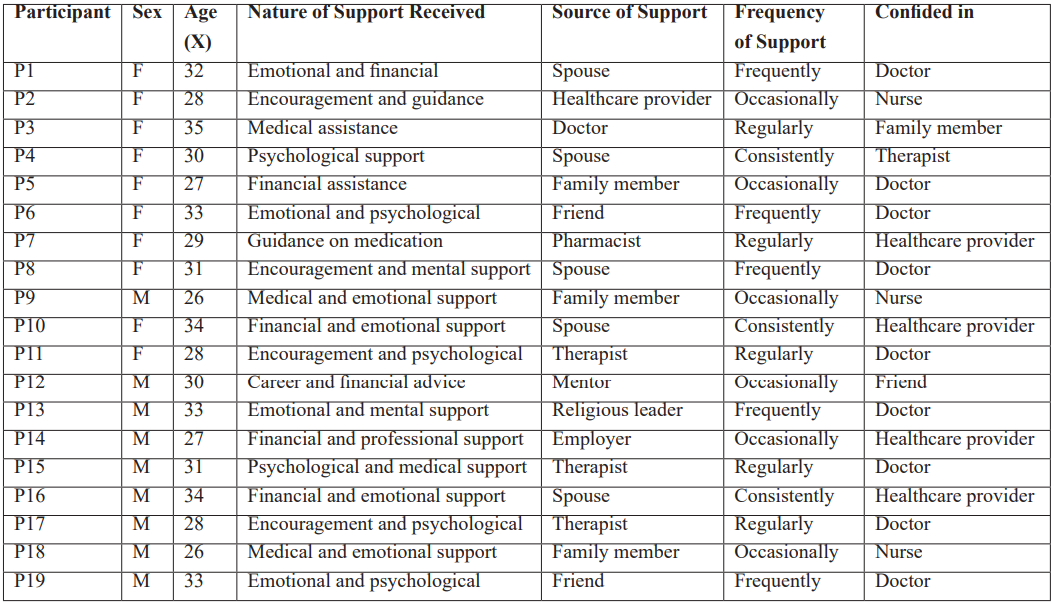
Nineteen emerging adults diagnosed with a mental illness participated in this study. They were recruited from the Neuropsychiatric Hospital, Aro, Abeokuta, Ogun State, Nigeria. The sample consisted of 11 males and 8 females between the ages of 18 and 30 years. Participants were selected using purposive sampling based on their diagnosis and ongoing treatment at the hospital. All participants reported having received some form of social support from family, friends, spouses, or healthcare providers while adhering to their treatment regimen. Further details on participants' characteristics are presented in Table 1.
Procedure
Before data collection commenced, the lead researcher conducted an interactive session with trained interviewers to discuss strategies for ensuring objectivity. Interviewers were encouraged to engage in a process of reflexivity, similar to the concept of epoche [38], to set aside personal biases and preconceptions regarding social support and mental illness [40]. This helped them to remain neutral and fully attuned to participants' narratives during the interviews.
Participants for this study were recruited from the outpatient and inpatient units of the Neuropsychiatric Hospital, Aro, Abeokuta. The selection process was purposive, focusing on emerging adults aged 18–30 years diagnosed with a mental illness and receiving treatment at the hospital. Potential participants were approached by trained research assistants and were given a detailed explanation of the study’s purpose, confidentiality measures, and voluntary participation rights, including their ability to withdraw at any time without consequences.
A total of 19 participants (11 males and 8 females) met the inclusion criteria and agreed to participate in the study. The data collection took place between July and September, 2025. In-depth, unstructured interviews were conducted in private consultation rooms within the hospital to ensure a sense of privacy and security. Interviews explored participants' experiences of social support and how it influenced their adherence to treatment. An interview guide was used to facilitate the conversations, but interviewers had the flexibility to ask follow-up questions and probe deeper into emerging themes. Interviews lasted between 20 and 45 minutes and were audio-recorded with participants' consent. Following each session, participants were thanked for their time and, if needed, were referred for additional psychological support within the hospital.
Data Analysis
The recorded interviews were transcribed verbatim and analyzed using content analysis. The first author carefully read and reread the transcripts to identify emerging patterns and themes, following the approach described by Charmaz and Mitchell (1996) [41]. Each transcript was examined individually, and key themes were synthesized across cases to establish commonalities and differences in participants’ experiences of social support and its influence on medication adherence.
Recurring themes were coded and reviewed by multiple researchers to ensure accuracy and reliability. Excerpts from the interviews, including direct quotes and significant exclamations, were incorporated to illustrate participants’ lived experiences. Any discrepancies in thematic interpretation were resolved through a review of the transcripts and audio recordings until a consensus was reached. The final themes were compared with existing literature on social support and medication adherence to provide a broader context for the findings.
Ethical Statement
The study received ethical approval from the Neuropsychiatric Hospital, Aro, Abeokuta Ethical Review Board and was conducted in compliance with the ethical principles outlined in the 1964 Declaration of Helsinki and its subsequent amendments. Before participation, all individuals were informed about the study’s purpose, their rights, and the confidentiality of their responses. Written informed consent was obtained from all participants. To protect anonymity, pseudonyms were assigned, and no identifying information was recorded. Participants were also assured that their decision to participate or withdraw from the study would not affect their treatment at the hospital.
Table 1: Based on your request, focusing on participants' demographics and the nature and characteristics of support.
Findings and Discussion
Participants in this study openly discussed their experiences with social support and how it influenced their medication adherence. Their narratives highlighted the critical role of family members, significant others, and healthcare professionals in encouraging adherence to treatment regimens. It was observed that 74% of participants lived with supportive family members who actively reminded them to take their medication, while 52% acknowledged the role of peer support in motivating them to stay committed to their treatment.
However, the findings also revealed challenges related to adherence. Some participants faced stigma within their families and communities, which discouraged them from consistently taking their medication. Others expressed concerns about misinformation from family members, especially when mental illness was attributed to supernatural causes rather than medical conditions. Despite these challenges, healthcare providers played a significant role in reinforcing adherence through psychoeducation, follow-ups, and emotional support. The key themes that emerged from the interviews are explored in the subsequent sections.
Living with Supportive Family and Significant Others
Participants highlighted the importance of social support in maintaining medication adherence. Those who lived with supportive family members and significant others expressed feeling reassured and encouraged to stay consistent with their treatment. They described how loved ones played an active role in reminding them to take their medication, accompanying them to hospital visits, and offering financial assistance when needed.
P16 shared: “My elder brother always makes sure I take my medication. Even when I forget, he reminds me. He also helps me buy my drugs when I don’t have money.” Similarly, P3 recounted: “If not for my mother, I would have stopped my medication. She sits with me every night and ensures I take them before I sleep.” These narratives illustrate how family members act as a safety net, ensuring that individuals remain committed to their treatment regimen.
For some participants, the presence of a caring partner significantly influenced their adherence. P10 stated: “My husband is my biggest support. He keeps track of my medications and even goes with me to my hospital appointments.” This suggests that spousal support fosters accountability and strengthens adherence.
However, not all participants experienced such positive reinforcement. A few narrated feelings isolated or unsupported, which made adherence more challenging. P7 recounted: “My family doesn’t really understand what I’m going through. They believe that if I pray more, I won’t need medication. Sometimes, I feel like I’m on my own.” These experiences highlight how misconceptions and stigma within families can negatively impact medication adherence.
Despite these challenges, many participants who received strong social support acknowledged its crucial role in keeping them on track. Their accounts reinforce the idea that a supportive social network serves as a protective factor against non-adherence. By ensuring constant reminders, emotional reassurance, and financial aid, family members and significant others help emerging adults with mental illness maintain treatment consistency.
The findings from this study align with a substantial body of empirical research emphasizing the critical role of social support in medication adherence among individuals with mental illness. Studies have shown that family involvement, emotional encouragement, and practical assistance such as reminders or accompaniment to medical appointments significantly improve adherence to psychiatric treatment regimens [35,42]. For instance, [42] found that schizophrenia patients with higher family support demonstrated greater consistency in taking prescribed medications. Similarly, [35] reported that patients with strong social support networks were up to three times more likely to adhere to treatment across various chronic conditions, including mental health disorders. Conversely, some studies indicate that the absence of supportive networks, or the presence of stigma and misconceptions within families, can impede adherence, leading to higher rates of missed doses and treatment discontinuation [36,37]. These findings corroborate the present study, illustrating that supportive family members and partners act as protective factors, facilitating medication adherence, whereas lack of understanding or negative attitudes may present barriers.
Getting Knowledge and Understanding Medication
Knowledge and understanding of medication play a critical role in treatment adherence and health outcomes. Studies suggest that when individuals possess adequate information about their medication, including its benefits, side effects, and proper usage, they are more likely to adhere to prescribed treatment plans [36]. Conversely, misinformation or a lack of understanding can lead to non-adherence, worsening health conditions [37].
Participants in this study expressed varied levels of knowledge about their medication. While some had a clear understanding of their prescriptions, others struggled with confusion and doubts. P8 stated: “At first, I was afraid of the side effects, but after asking my doctor questions and doing some research, I understood that it was necessary for my condition.” This aligns with existing research that emphasizes the importance of patient education in improving medication adherence [45].
For some, lack of information created anxiety and reluctance. P5 recounted: “Nobody really explained the medications to me. I just knew I had to take them. But when I started feeling dizzy, I thought something was wrong and wanted to stop.” Similarly, a study by [46] found that inadequate knowledge about side effects often leads to medication discontinuation.
Healthcare professionals play a crucial role in bridging this knowledge gap. Participants who received detailed explanations from their doctors or pharmacists reported feeling more confident in their treatment plans. P13 shared: “My doctor told me exactly why I needed the medication and what to expect. That made me trust the process.” This reflects findings from research indicating that effective communication between healthcare providers and patients enhances treatment outcomes (Tucker, Lewis, & Hardy, 2019).
However, some participants lacked access to professional guidance, leading them to rely on peers or online sources. P19 explained: “I didn’t get much explanation from the hospital, so I started reading online. Some things scared me, but others helped me understand.” While online resources can be informative, studies caution that misinformation from non-credible sources may contribute to medication hesitancy [47].
This finding aligns with a robust body of empirical evidence emphasizing that patient education is critical for medication adherence and optimal health outcomes. Research has consistently shown that individuals who understand the purpose, benefits, and potential side effects of their medications are more likely to adhere to prescribed treatment regimens [36,37]. Conversely, a lack of information or misinformation can lead to non-adherence, increasing the risk of adverse health outcomes. For instance, [45] demonstrated that structured patient education significantly improved adherence among psychiatric patients, while the [46] highlighted that inadequate communication about side effects contributes to treatment discontinuation. Effective communication from healthcare professionals, such as detailed explanations provided by doctors or pharmacists, fosters trust and confidence in treatment, which has been linked to better adherence [48]. However, reliance on informal sources such as peers or unverified online materials can sometimes exacerbate anxiety and confusion, potentially reducing adherence [47]. Overall, these findings underscore that structured, clear, and accessible health education is a pivotal factor in enhancing adherence among emerging adults with mental illness, supporting the results observed in this study.
Confiding in Doctors and Healthcare Providers
Confiding in doctors and healthcare providers is a crucial step in receiving appropriate medical care, emotional support, and guidance for managing health conditions. However, research indicates that many individuals struggle with fully disclosing their health concerns due to fear, distrust, or previous negative experiences with healthcare professionals [49]. Effective communication between patients and providers is essential for accurate diagnosis, treatment adherence, and overall well-being [50].
Participants in this study expressed varying experiences with confiding in their healthcare providers. While some felt supported and understood, others faced skepticism or dismissive attitudes. P4 shared: “At first, I hesitated to tell my doctor everything. I wasn’t sure how they would react, but when I finally opened up, they reassured me and made me feel safe.” This indicate that a non-judgmental and empathetic approach from healthcare providers fosters trust and encourages disclosure.
However, not all participants had positive experiences. P7 recounted: “I tried explaining my symptoms, but my doctor barely listened. They just prescribed medication without really asking more questions.” This reflects concerns raised in existing literature that rushed consultations and lack of patient-centered care can discourage individuals from fully confiding in their doctors.
For some participants, past negative experiences shaped their reluctance to seek medical advice. P9 stated: “A doctor once dismissed my concerns as stress, so I stopped going for check-ups regularly.” This indicate that perceived dismissiveness or misdiagnosis can lead to healthcare avoidance and poor health outcomes.
On the other hand, participants who found healthcare providers who actively listened and engaged in meaningful conversations reported feeling more comfortable. P12 said: “My doctor asked me detailed questions and took the time to explain my condition. That helped me trust them more and follow my treatment plan.” This implies that effective communication and shared decision-making improve patient satisfaction and treatment adherence. This finding is strongly supported by empirical research emphasizing the role of patient-provider communication in promoting trust, disclosure, and adherence to treatment. Studies indicate that patients are more likely to fully confide in healthcare professionals when they perceive them as empathetic, attentive, and non-judgmental [49,51]. Conversely, negative experiences such as dismissive attitudes, rushed consultations, or previous misdiagnoses can reduce disclosure and discourage engagement with healthcare services [52,53]. Evidence also suggests that patient-centered care, which includes active listening and shared decision-making, enhances trust, satisfaction, and adherence to treatment recommendations [50,54]. The findings from this study mirror these patterns, showing that emerging adults with mental illness who felt understood and supported by their doctors were more willing to disclose concerns and adhere to medication, whereas those encountering dismissiveness experienced anxiety, reluctance, and reduced adherence. These results highlight the critical importance of fostering positive, communicative relationships between patients and healthcare providers to improve health outcomes.
The Full Support of a Spouse
The support of a spouse plays a significant role in an individual’s emotional resilience, recovery, and overall well-being, especially when facing difficult experiences. Research suggests that spousal support is a critical factor in mental health, providing both emotional reassurance and practical assistance during challenging times [55]. When individuals feel understood and supported by their spouse, they are more likely to cope effectively with stress and trauma [56].
Participants in this study highlighted the impact of spousal support on their ability to navigate difficult situations. Some recounted that their spouse’s encouragement and understanding were essential in helping them manage their emotions. For instance, P3 shared: “At first, I was scared to tell my husband everything, but when I finally did, he held my hands and told me we would get through it together. That changed everything for me.” This implies that perceived emotional support from a spouse enhances psychological well-being and reduces stress [57].
However, not all participants experienced the same level of support. Some recounted instances where their spouse’s reaction was indifferent or dismissive. P5 stated: “I expected him to stand by me, but instead, he acted as if it was not important. I felt alone.” This reflects findings in the literature that lack of spousal support can contribute to feelings of isolation and distress [58]. When a spouse does not provide the necessary emotional or practical assistance, individuals may experience increased vulnerability to anxiety and depression [59].
In contrast, those who received consistent and affirming support from their spouse reported better emotional stability and confidence. P17 recounted: “My wife listened to me without judgment, and even when I was struggling, she kept reassuring me. Knowing she was there for me made a huge difference.” This supports studies showing that emotional validation from a spouse fosters resilience and enhances one’s ability to handle adversity [60].
Furthermore, research indicates that spousal support extends beyond emotional reassurance to include tangible help, such as assisting with daily responsibilities and providing financial support during tough times [61]. P9 mentioned: “My husband not only comforted me but also helped me take time off work so I could focus on healing.” This exemplifies how instrumental support from a spouse can be just as important as emotional support.
Overall, the presence of a supportive spouse serves as a protective factor against emotional distress and contributes to a sense of security. Encouraging open communication, empathy, and mutual support in marital relationships can significantly improve an individual’s ability to cope with life’s challenges.
The theme “The Full Support of a Spouse” is well-supported by empirical research emphasizing the critical role of spousal support in mental health and well-being. Studies consistently show that emotional reassurance, practical assistance, and active involvement from a spouse enhance resilience, reduce stress, and improve coping mechanisms during challenging situations [55,56]. Participants in this study reported that supportive spouses provided both emotional comfort and tangible help, which facilitated adherence to treatment regimens and strengthened psychological stability. This aligns with research indicating that perceived spousal support is linked to lower levels of anxiety and depression, greater emotional stability, and improved overall well-being [57,61]. Conversely, participants who experienced indifferent or dismissive responses from spouses reported feelings of isolation and increased vulnerability to mental health challenges, reflecting findings that lack of spousal support contributes to emotional distress [58,59]. Recent studies also emphasize that spousal support enhances coping in emerging adults and other populations, highlighting the importance of both emotional validation and instrumental assistance in promoting adaptive outcomes [62,63]. The findings of this study reinforce the buffering hypothesis of Social Support Theory, which posits that supportive relationships mitigate stress and promote adaptive health behaviors [23]. Participants who reported consistent emotional and instrumental support demonstrated stronger adherence behaviors, suggesting that social networks function as protective mechanisms against treatment discontinuation.
Family involvement emerged as particularly influential, reflecting the collectivist orientation prevalent in Nigerian society, where family structures often remain central into adulthood [32]. Unlike Western contexts that emphasize individual autonomy, adherence among Nigerian emerging adults appears embedded within relational accountability systems.
Spousal support demonstrated unique salience. Emotional validation and practical assistance from spouses enhanced adherence consistency, aligning with findings that marital support predicts improved psychological outcomes and treatment engagement [56,61,64].
Healthcare provider communication also significantly shaped adherence. Participants who experienced patient-centered care and shared decision-making reported greater trust and medication confidence. This finding supports evidence that empathetic doctor–patient relationships improve adherence and health outcomes [51,54].
Conversely, stigma and supernatural attributions of mental illness within families created barriers to adherence. This reflects broader literature documenting the impact of cultural stigma on mental health treatment engagement in Nigeria [9,21].
Conclusion
This study provides an in-depth exploration of how perceived social support influences treatment regimen adherence among emerging adults experiencing mental illnesses in Nigeria. Drawing from a hermeneutic phenomenological approach, the findings reveal that adherence is not merely an individual behavioral decision but a relationally embedded process shaped by emotional reassurance, informational guidance, instrumental assistance, and the quality of interactions with healthcare providers. Support from spouses, family members, and trusted professionals emerged as central to medication consistency, confidence in treatment, and psychological stability. Participants who were well-informed about their medications and who experienced empathetic, communicative relationships with healthcare providers demonstrated stronger commitment to treatment regimens. Conversely, stigma, misinformation, and dismissive communication created barriers to adherence. These findings underscore that social relationships function both as protective buffers and as potential impediments in the management of mental health conditions during emerging adulthood.
The study makes several important contributions to knowledge. First, it extends the literature on social support and medication adherence into a Nigerian psychiatric context, an area that remains underrepresented in global mental health research. Much of the existing empirical evidence originates from Western populations; therefore, this study offers culturally grounded insights that reflect the collectivist family structures and relational dynamics characteristic of many Nigerian communities. Second, by focusing specifically on emerging adults, the study addresses a developmental stage marked by identity formation, relational transitions, and increasing autonomy; factors that uniquely shape adherence behaviors. Third, the qualitative design contributes phenomenological depth to an area often dominated by quantitative measurement, illuminating the lived meanings, relational negotiations, and emotional complexities underlying adherence decisions. In doing so, the study advances understanding beyond the question of whether social support matters to how and why it matters in everyday lived experience.
From a clinical practice perspective, the findings highlight the necessity of integrating social support systems into mental health care planning. Healthcare professionals, particularly psychiatrists, psychologists, nurses, and pharmacists, should move beyond a solely biomedical model toward a relationally informed care approach. Structured psychoeducation about medication purpose, side effects, and long-term benefits should be embedded into routine clinical practice to strengthen patients’ confidence and self-efficacy. Furthermore, fostering empathetic, patient-centered communication is essential, as trust in healthcare providers emerged as a decisive factor influencing adherence. Family-inclusive care models, where appropriate, may enhance accountability and continuity of treatment. Mental health services should consider developing spouse and family engagement programs that provide guidance on supportive behaviors, stigma reduction, and practical strategies for assisting adherence.
At the policy level, the findings call for broader systemic interventions aimed at strengthening mental health literacy and reducing stigma within Nigerian society. Public health campaigns should emphasize the medical nature of mental illnesses and the importance of consistent treatment adherence. Given the influential role of informal support networks identified in this study, community-based mental health initiatives could leverage family and faith-based structures to promote awareness and support adherence. Policymakers should also prioritize training programs that equip healthcare providers with communication and psychosocial support competencies, ensuring that mental health services are not only accessible but relationally responsive. Expanding access to affordable medications and integrating psychosocial interventions into primary care systems may further reduce structural barriers to adherence.
The study possesses notable strengths. Its hermeneutic phenomenological design allowed for rich, nuanced exploration of participants’ lived experiences, generating insights unlikely to emerge from survey-based research. The inclusion of participants from both inpatient and outpatient settings enhanced experiential diversity. Methodological rigor was strengthened through reflexivity, multiple researcher reviews, and consensus-based thematic analysis, which enhanced credibility and trustworthiness. By centering participants’ voices through direct narratives, the study offers authentic, context-sensitive interpretations of adherence behavior.
Nevertheless, several limitations warrant consideration. The relatively small sample size limits the generalizability of findings to the broader population of Nigerian emerging adults with mental illness. Recruitment from a single neuropsychiatric hospital may restrict contextual diversity, as experiences in rural or under-resourced settings may differ. The reliance on self-reported experiences introduces the possibility of recall bias and social desirability bias. Additionally, the study did not incorporate perspectives from family members, spouses, or healthcare providers, which could have provided a more triangulated understanding of support dynamics. Future research should consider multi-site studies, larger and more diverse samples, and inclusion of multiple stakeholder perspectives to strengthen transferability and comprehensiveness.
Additionally, future studies could incorporate mixed-method designs to combine phenomenological depth with measurable adherence outcomes, thereby strengthening evidence for intervention development. Longitudinal research may also illuminate how support dynamics evolve over time and influence sustained adherence.
In conclusion, this study shows that treatment regimen adherence among emerging adults with mental illnesses is fundamentally relational. Social support operates as a critical determinant of adherence through emotional validation, informational clarity, and instrumental assistance. Strengthening family engagement, improving healthcare communication, and implementing supportive mental health policies are essential steps toward enhancing adherence outcomes. By foregrounding the lived experiences of Nigerian emerging adults, this research contributes meaningful, culturally relevant knowledge to global mental health discourse and provides a foundation for more inclusive, relationally grounded models of psychiatric care.
Acknowledgements: We appreciate the participants for sharing their experiences and insights with us.
Consent to participate: All participants provided written informed consent prior to enrollment in the study, and included consent to participate and for publication.
Declaration of conflicting interests: The authors declare no conflict of interest.
Funding: The authors received no financial support for the research, authorship, and/or publication of this article.
Footnote:
USI: conceptualized and designed the study, coordinated data collection, performed the statistical analysis, and drafted the article. CFA-G: contributed to the conceptualization and design of the study, assisted with methodology development, and critically revised the article. JSR: assisted with data analysis, interpretation of findings, and manuscript revision. MEE: supported data collection, data curation, and literature review. EEA: contributed to the development of the theoretical framework, assisted with reviewing relevant literature, and participated in manuscript review. ATN: provided guidance on statistical procedures, contributed to data interpretation, and critically reviewed and edited the article. All authors approved the final manuscript as submitted.
References
- Arnett JJ. Emerging adulthood: A theory of development from the late teens through the twenties. American Psychologist, 2000; 55(5): 469–480. https://doi.org/10.1037/0003-066X.55.5.469
- Schulenberg JE, Sameroff AJ, Cicchetti D. The transition to adulthood as a critical juncture in the course of psychopathology and mental health. Development and Psychopathology, 2004; 16(4): 799–806. https://doi.org/10.1017/s0954579404040015
- Arnett JJ, Žukauskienė R, Sugimura K. The new life stage of emerging adulthood at ages 18–29 years: Implications for mental health. The Lancet Psychiatry, 2014; 1(7): 569-576.
- Wood D, Crapnell T, Lau L, Bennett A, Lotstein D, Ferris M, et al. Emerging adulthood as a critical stage in the life course. Handbook of life course health development, 2017; 123-143. DOI: 10.1007/978-3-319-47143-3
- Halliburton AE, Hill MB, Dawson BL, Hightower JM, Rueden H. Increased stress, declining mental health: Emerging adults’ experiences in college during COVID-19. Emerging Adulthood, 2021; 9(5): 433-448. https://doi.org/10.1177/21676968211025348
- World Health Organization. The world health report 2003: shaping the future. World Health Organization, 2003.
- Higashi K, Medic G, Littlewood KJ, Diez T, Granström O, De Hert M. Medication adherence in schizophrenia: factors influencing adherence and consequences of nonadherence, a systematic literature review. Therapeutic advances in psychopharmacology, 2013; 3(4): 200-218. https://doi.org/10.1177/2045125312474019
- Gureje O, Kola L, Afolabi E. Epidemiology of major depressive disorder in elderly Nigerians in the Ibadan Study of Ageing: a community-based survey. The Lancet, 2007; 370(9591): 957-964.
- Adewuya AO, Owoeye OA, Erinfolami AR, Coker AO, Ogun OC, Okewole AO, et al. Prevalence and correlates of poor medication adherence amongst psychiatric outpatients in southwestern Nigeria. General hospital psychiatry, 2009; 31(2): 167-174. https://doi.org/10.1016/j.genhosppsych.2008.12.005
- Kessler RC, Berglund P, Demler O, Jin R, Merikangas KR, Walters EE. Lifetime prevalence and age-of-onset distributions of DSM-IV disorders in the National Comorbidity Survey Replication. Archives of General Psychiatry, 2007; 62(6): 593–602. https://doi.org/10.1001/archpsyc.62.6.593
- Mojtabai R, Olfson M, Mechanic D. Perceived need and help-seeking in adults with mood, anxiety, or substance use disorders. Archives of General Psychiatry, 2011; 59(1): 77–84. https://doi.org/10.1001/archpsyc.59.1.77
- Jayasree A, Shanmuganathan P, Ramamurthy P, Alwar MC. Types of medication non-adherence & approaches to enhance medication adherence in mental health disorders: a narrative review. Indian Journal of Psychological Medicine, 2024; 46(6): 503-510. https://doi.org/10.1177/02537176241233745
- Kessler RC, Demler O, Frank RG, Olfson M, Pincus HA, Walters EE, et al. Prevalence and treatment of mental disorders, 1990 to 2003. New England Journal of Medicine, 2005; 352(24): 2515-2523. DOI: 10.1056/NEJMsa043266
- Gureje O, Abdulmalik J, Kola L, Musa E, Yasamy MT, Adebayo K. Integrating mental health into primary care in Nigeria: report of a demonstration project using the mental health gap action programme intervention guide. BMC health services research, 2015; 15(1): 242. https://doi.org/10.1186/s12913-015-0911-3
- World Health Organization. WHO consolidated guidelines on tuberculosis. Module 4: treatment-drug-resistant tuberculosis treatment, 2022 update. World Health Organization, 2022.
- DiMatteo MR, Lepper HS, Croghan TW. Depression is a risk factor for noncompliance with medical treatment: Meta-analysis of the effects of anxiety and depression on patient adherence. Archives of Internal Medicine, 2002; 162(14): 1749–1756. https://doi.org/10.1001/archinte.162.14.1749
- Novick D, Montgomery W, Treuer T, Aguado J, Kraemer S, Haro JM. Impact of once-daily oral versus intramuscular depot antipsychotic therapy on adherence in schizophrenia. Patient Preference and Adherence, 2010; 4: 297–305. https://doi.org/10.2147/ppa.s11824
- Zewdu WS, Dagnew SB, Tarekegn GY, Yazie TS, Ayicheh MA, Dagnew FN, et al. Non-adherence level of pharmacotherapy and its predictors among mental disorders in a resource-limited life trajectories: a systematic review and meta-analysis. BMC psychiatry, 2025; 25(1): 512. https://doi.org/10.1186/s12888-025-06838-9
- Rickwood DJ, Deane FP, Wilson CJ. When and how do young people seek professional help for mental health problems?. Medical journal of Australia, 2007; 187(S7): S35-S39. https://doi.org/10.5694/j.1326-5377.2007.tb01334.x
- Gulliver A, Griffiths KM, Christensen H. Perceived barriers and facilitators to mental health help-seeking in young people: A systematic review. BMC Psychiatry, 2010; 10: 113. https://doi.org/10.1186/1471-244X-10-113
- Gureje O, Lasebikan VO, Ephraim-Oluwanuga O, Olley BO, Kola L. Community study of knowledge of and attitude to mental illness in Nigeria. The British Journal of Psychiatry, 2006; 186(5): 436–441. https://doi.org/10.1192/bjp.186.5.436
- James BO, Jenkins R, Lawani AO, Omoaregba JO, Ike J. Depression in primary care: The knowledge, attitudes and practice of general practitioners in Benin City, Nigeria. South African Family Practice, 2012; 54(1): 55–60. https://doi.org/10.1080/20786204.2012.10874183
- Cohen S, Wills TA. Stress, social support, and the buffering hypothesis. Psychological Bulletin, 1985; 98(2): 310–357. https://doi.org/10.1037/0033-2909.98.2.310
- Thoits PA. Mechanisms linking social ties and support to physical and mental health. Journal of Health and Social Behavior, 2011; 52(2): 145–161. https://doi.org/10.1177/0022146510395592
- Deng M, Zhai S, Ouyang X, Liu Z, Ross B. Factors influencing medication adherence among patients with severe mental disorders from the perspective of mental health professionals. BMC psychiatry, 2022; 22(1): 22. https://doi.org/10.1186/s12888-021-03681-6
- Berkman LF, Glass T, Brissette I, Seeman TE. From social integration to health: Durkheim in the new millennium. Social Science & Medicine, 2000; 51(6): 843–857. https://doi.org/10.1016/S0277-9536(00)00065-4
- Uchino BN. Social support and health: A review of physiological processes potentially underlying links to disease outcomes. Journal of Behavioral Medicine, 2006; 29(4): 377–387. https://doi.org/10.1007/s10865-006-9056-5
- Van Orden KA, Bower E, Lutz J, Silva C, Gallegos AM, Podgorski CA, et al. Strategies to promote social connections among older adults during “social distancing” restrictions. The American Journal of Geriatric Psychiatry, 2021; 29(8): 816-827. https://doi.org/10.1016/j.jagp.2020.05.004
- Salzmann-Erikson M, Lagerqvist C. Persons calling the emergency ward for advice: A qualitative study of healthcare providers’ responses. International Journal of Qualitative Studies on Health and Well-being, 2016; 11(1): 29841. https://doi.org/10.3402/qhw.v11.29841
- Collins RL, Ellickson PL, Orlando M, Klein DJ. Isolating the nexus of substance use, violence, and sexual risk for HIV infection among young adults in the United States. AIDS and Behavior, 2010; 14(6): 1295–1306. https://doi.org/10.1007/s10461-009-9617-2
- Rickwood D, Deane FP, Wilson CJ, Ciarrochi J. Young people’s help-seeking for mental health problems. Australian e-Journal for the Advancement of Mental Health, 2005; 4(3): 218–251. https://doi.org/10.5172/jamh.4.3.218
- Kawachi I, Berkman LF. Social ties and mental health. Journal of Urban Health, 2001; 78(3): 458–467. https://doi.org/10.1093/jurban/78.3.458
- Wang PS, Aguilar-Gaxiola S, Alonso J, Angermeyer MC, Borges G, Bromet EJ, et al. Use of mental health services for anxiety, mood, and substance disorders in 17 countries in the WHO World Mental Health Surveys. The Lancet, 2007; 370(9590): 841–850. https://doi.org/10.1016/S0140-6736(07)61414-7
- Adewuya AO, Makanjuola ROA. Social distance towards people with mental illness in southwestern Nigeria. Australian and New Zealand Journal of Psychiatry, 2008; 42(5): 389–395. https://doi.org/10.1080/00048670801961115
- DiMatteo MR. Social support and patient adherence to medical treatment: A meta-analysis. Health Psychology, 2004; 23(2): 207–218. https://doi.org/10.1037/0278-6133.23.2.207
- Horne R, Chapman SC, Parham R, Freemantle N, Forbes A, Cooper V. Understanding patients’ adherence-related beliefs about medicines prescribed for long-term conditions: A meta-analytic review of the Necessity-Concerns Framework. PLoS ONE, 2013; 8(12): e80633. https://doi.org/10.1371/journal.pone.0080633
- Nieuwlaat R, Wilczynski N, Navarro T, Hobson N, Jeffery R, Keepanasseril A, et al. Interventions for enhancing medication adherence. Cochrane Database of Systematic Reviews, 2014; 11: CD000011. https://doi.org/10.1002/14651858.CD000011.pub4
- Creswell JW, Hanson WE, Clark Plano VL, Morales A. Qualitative research designs: Selection and implementation. The Counseling Psychologist, 2007; 35(2): 236–264. https://doi.org/10.1177/0011000006287390
- Brooks J, McCluskey S, Turley E, King N. The utility of template analysis in qualitative psychology research. Qualitative Research in Psychology, 2015; 12(2): 202–222. https://doi.org/10.1080/14780887.2014.955224
- Moustakas C. Phenomenological research methods. Thousand Oaks, CA: Sage, 1994.
- Charmaz K, Mitchell RG. The myth of silent authorship: Self, substance, and style in ethnographic writing. Symbolic Interaction, 1996; 19(4): 285–302. https://doi.org/10.1525/si.1996.19.4.285
- Velligan DI, Weiden PJ, Sajatovic M, Scott J, Carpenter D, Ross R, et al. The expert consensus guideline series: Adherence problems in patients with serious and persistent mental illness. The Journal of Clinical Psychiatry, 2006; 67(Suppl 4): 1–46. https://doi.org/10.4088/JCP.v67s041
- Lacro JP, Dunn LB, Dolder CR, Leckband SG, Jeste DV. Prevalence of and risk factors for medication nonadherence in patients with schizophrenia: A comprehensive review of recent literature. The Journal of Clinical Psychiatry, 2002; 63(10): 892–909. https://doi.org/10.4088/JCP.v63n1007
- Kreyenbuhl J, Nossel IR, Dixon LB. Disengagement from mental health treatment among individuals with schizophrenia and strategies for facilitating connections to care: A review of the literature. Schizophrenia Bulletin, 2009; 35(4): 696–703. https://doi.org/10.1093/schbul/sbp045
- Kim J, Ozzoude M, Nakajima S, Shah P, Caravaggio F, Iwata Y, et al. Insight and medication adherence in schizophrenia: an analysis of the CATIE trial. Neuropharmacology, 2020; 168: 107634. https://doi.org/10.1016/j.neuropharm.2019.05.011
- World Health Organization (WHO). Medication adherence: WHO policy perspectives on medicine. Geneva, Switzerland: WHO Press, 2018.
- Moorhead SA, Hazlett DE, Harrison L, Carroll JK, Irwin A, Hoving C. A new dimension of health care: Systematic review of the uses, benefits, and limitations of social media for health communication. Journal of Medical Internet Research, 2013; 15(4): e85. https://doi.org/10.2196/jmir.1933
- Bussell JK, Cha E, Grant YE, Schwartz DD, Young LA. Ways health care providers can promote better medication adherence. Clinical Diabetes, 2017; 35(3): 171-177. https://doi.org/10.2337/cd016-0029
- Ha JF, Longnecker N, O'Connor M. Doctor-patient communication: A review. Ochsner Journal, 2010; 10(1): 38–43. https://www.ochsnerjournal.org/content/10/1/38
- Ong LM, de Haes JC, Hoos AM, Lammes FB. Doctor-patient communication: A review of the literature. Social Science & Medicine, 1995; 40(7): 903–918. https://doi.org/10.1016/0277-9536(94)00155-M
- Epstein RM, Street RL. The values and value of patient-centered care. Annals of Family Medicine, 2011; 9(2): 100–103. https://doi.org/10.1370/afm.1239
- Roter DL, Hall JA. Doctors talking with patients/patients talking with doctors: Improving communication in medical visits. 2nd Edition. Westport, CT: Praeger, 2006.
- Verlinde E, De Laender N, De Maesschalck S, Deveugele M, Willems S. The social gradient in doctor-patient communication. International Journal for Equity in Health, 2012; 11: 12. https://doi.org/10.1186/1475-9276-11-12
- Elwyn G, Frosch D, Thomson R, Joseph-Williams N, Lloyd A, Kinnersley P, et al. Shared decision making: A model for clinical practice. Journal of General Internal Medicine, 2012; 27(10): 1361–1367. https://doi.org/10.1007/s11606-012-2077-6
- Cutrona CE. Social support in couples: Marriage as a resource in times of stress. SAGE Publications, 1996.
- Feeney BC, Collins NL. A new look at social support: A theoretical perspective on thriving through relationships. Personality and Social Psychology Review, 2015; 19(2): 113–147. https://doi.org/10.1177/1088868314544222
- Reis HT, Gable SL. Toward a positive psychology of relationships. In C. L. M. Keyes & J. Haidt (Eds.), Flourishing: Positive psychology and the life well-lived. American Psychological Association, 2003; pp. 129–159.
- Ryan LH, Wan WH, Smith J. Spousal social support and strain: Impacts on health in older couples. Journal of behavioral medicine, 2014; 37(6): 1108-1117. https://doi.org/10.1007/s10865-014-9561-x
- Whisman MA. The association between depression and marital dissatisfaction. In S. R. H. Beach (Ed.), Marital and family processes in depression: A scientific foundation for clinical practice. American Psychological Association, 200; pp. 3–24. https://doi.org/10.1037/10350-001
- Neff LA, Karney BR. To know you is to love you: The implications of global adoration and specific accuracy for marital relationships. Journal of Personality and Social Psychology, 2005; 88(3): 480–497. https://doi.org/10.1037/0022-3514.88.3.480
- Umberson D, Crosnoe R, Reczek C. Social relationships and health behavior across the life course. Annual Review of Sociology, 2010; 36(1): 139–157. https://doi.org/10.1146/annurev-soc-070308-120011
- Renshaw KD, Blais RK. Spousal support and psychological health: Evidence from couples in clinical settings. Journal of Family Psychology, 2017; 31(2): 153–162. https://doi.org/10.1037/fam0000243
- Papp LM, Cummings EM, Goeke-Morey MC. Spouses' support and strain: Implications for individual and relational outcomes. Family Process, 2014; 53(1): 1–18. https://doi.org/10.1111/famp.12042
- Roter DL, Hall JA. Doctors talking with patients/patients talking with doctors: Improving communication in medical visits. Westport, CT: Greenwood Publishing Group, 2006.