
Email id: info@ijclinmedcasereports.com
General Information about (AD-AH) Alzheimer's Disease
Emin Taner ELMAS1,*,İbrahim DAĞ2 and Simge KARADENIZ3
1Assistant Professor Dr., Vocational School of Higher Education for Technical Sciences, Division of Motor Vehicles and Transportation Technologies, Department of Automotive Technology, Iğdır University, Turkey & Graduate School of Natural and Applied Sciences - Major Science Department of Bioengineering and Bio-Sciences, Iğdır University, Turkey
2Civil Engineer, İnşaat Mühendisi, Turkey
3Dr., Specialist Doctor, MD, (Neurology- Specialist Medical Doctor), Neurology Specialist, Ağrı Training and Research Hospital, Ağrı, Turkey
Received Date: 15/07/2025; Published Date: 11/08/2025
*Corresponding author: Emin Taner ELMAS, Assistant Professor Dr., Vocational School of Higher Education for Technical Sciences, Division of Motor Vehicles and Transportation Technologies, Department of Automotive Technology, Iğdır University, Turkey & Graduate School of Natural and Applied Sciences - Major Science Department of Bioengineering and Bio-Sciences, Iğdır University, Turkey
ORCID ID: https://orcid.org/0000-0002-7290-2308
Abstract
This article is a study which gives general information about the Alzheimer's Disease (AD-AH).
Alzheimer's Disease (AD) is a progressive neurodegenerative disease that leads to memory loss, cognitive impairment, behavioral changes, and ultimately death. Alzheimer's disease is the most common cause of dementia and is expected to affect more than 152 million people by 2050. Neuropathologically, the disease is characterized by abnormal protein accumulation, leading to the formation of extracellular senile plaques and intracellular neurofibrillary tangles (NFTs) [60].
Alzheimer's disease is a common type of dementia characterized by amyloid plaques, neurofibrillary tangles, and neuronal degeneration. There is no cure for the disease, and early diagnosis is critical for improving patient outcomes. Magnetic resonance imaging (MRI) is important for measuring neurodegeneration during the course of the disease. Computer-aided image processing tools have been used to help medical professionals diagnose Alzheimer's in its early stages. Because the characteristics of the stages of dementia overlap, monitoring progression is difficult [59].
Alzheimer's disease (AD) is a progressive neurodegenerative disease that affects many people worldwide and, to date, has no effective treatment. AD is characterized by the formation of senile plaques and neurofibrillary tangles, followed by neurodegeneration, leading to cognitive decline and, ultimately, death. Pathological changes in AD occur years before the onset of the disease. Because disease-modifying therapies may be most beneficial in the early stages of AD, biomarkers are vital for early diagnosis and long-term monitoring of disease progression [60].
About 25 to 30 years ago, we only had a few basic facts about Alzheimer's disease. It was not even known that this disease was an independent disease, different from normal aging. But now we know much more:
- What is Alzheimer's disease
- Who is affected
- How does it develop
- What stages does it go through
We can now diagnose Alzheimer’s disease earlier and more accurately. There are even some promising treatments. In recent years, studies have begun to explore how we can reduce people’s risk of developing Alzheimer’s in the future. Research over the past two decades has expanded not only our understanding of Alzheimer’s, but also our understanding of brain function in healthy older adults. These studies also provide clues about how to reduce the loss of mental function that comes with age [55].
Where Do People with Alzheimer's Disease Receive Care?
- At Home
- In Assisted Living Facilities (Early Stages of the Disease)
- In Nursing Homes
- In Special Care Units
The brain is an extraordinary organ. Without even realizing it:
- It manages every aspect of our daily lives,
- It regulates functions that we are not aware of, such as breathing, blood circulation and digestion,
- It allows us to speak, move, see, remember, feel and make decisions.
All of these functions are the result of complex chemical and electrical processes that take place in our brains. Our brains are made up of nerve cells called neurons and other types of cells.
The neurons of all animals work basically the same way, but what sets humans apart from other animals is the large number of neurons in the part of the brain called the “cerebral cortex.”
The cerebral cortex is where cognitive functions such as thinking, learning, speaking, remembering, and making decisions take place. There are many connections between the neurons in these areas, and these connections make us different from other animals [55].
This article will examine the following topics: Internal Structure of the Human Brain, Neurons and Their Functions, Plaques and Tangles: Distinctive Features of Alzheimer's, Brain Changes in Alzheimer's Disease, Investigating the Causes of Alzheimer's, Genetic Factors in Alzheimer's, Early-Onset Alzheimer's and Genes, Different Genetic Structure in Late-Onset Alzheimer's, Other Factors, Beta-amyloid, Tau, Cardiovascular Risk Factors, Oxidative Damage from Free Radicals, Inflammation, Brain Infarction, New Methods in Diagnosing Alzheimer's, Searching for New Treatments, Helping to Preserve Mental Function, Slowing, Delaying or Preventing Alzheimer's, Managing the Symptoms. [1-70].
Alzheimer's disease, the most common type of dementia, is a global health problem affecting approximately two-thirds of the population aged 65 and over. A chronic, progressive, and neurodegenerative disease, Alzheimer's disease causes behavioral and cognitive dysfunction. It can negatively impact many different cognitive functions, including memory, comprehension, language, attention, judgment, and the ability to establish cause-effect relationships [68].
A multidisciplinary team, including caregivers, physicians, physiotherapists, nurses, social support specialists, and dietitians, plays a critical role in the management of Alzheimer's disease. While significant advances have been made in recent years, including immunotherapies targeting the pathophysiology of the disease, the need for further information and results from new studies continues [67,68].
A method that can be beneficial in the prevention and treatment of Alzheimer's disease is presented in the article "Medical Treatment Method of Alzheimer's Disease & Parkinson's Disease by the Help of the Natural Musical Sound of Nây-ı Şerîf, Instrument of Ney (Ney: Turkish Reed Flute, Nay). IJCMCR. 2024; 42(3): 004 DOI: 10.46998/IJCMCR.2024.42.001039", written by Emin Taner ELMAS, and expanding its field of application will be effective in the prevention, regression and treatment of the disease [2]. Again, the study titled “Elmas, Emin Taner, ELMAS’s Theory of Thermodynamics”: A Scientific Approach for the 5th Law of Thermodynamics -A Theoretical Application Example for Medical Thermodynamics. Op Acc J Bio Sci & Res 2(1)-2020. DOI: 10.46718/JBGSR.2020.01.000030” should also be evaluated together with other issues in order to reveal the thermodynamic interaction between the drug and the cell [1]. The article titled “Emin Taner ELMAS* and Levent OĞUL. The Effects of Medicine and Music Therapy Practices on Human Health. IJCMCR. 2025; 50(2): 003, DOI: 10.46998/IJCMCR.2025.50.001233” includes explanations for supportive treatment methods and should also be taken into consideration for Alzheimer's treatment [41]. It would be appropriate to utilize the issues foreseen in the medical specialization thesis titled “Specialist Dr. Simge KARADENİZ, Medical Specialization Thesis, “Evaluation of disease self-management and factors affecting self-management in patients with multiple sclerosis”, 2023, Yöktez No: 10544927, in terms of method analogy in Alzheimer’s treatment [69].
Keywords: Alzheimer’s; Alzheimer’s Disease; Advanced Biomechanics; Biomechanics; Thermodynamics; Energy Transfer; Fluid Mechanics; Heat Transfer; Mathematics; Medical Technique; Medical Engineering; Medicine; Biomechanical Analysis; Bioengineering; Health Science
Introduction
Alzheimer's Disease (AD) is a progressive neurodegenerative disease that leads to memory loss, cognitive impairment, behavioral changes, and ultimately death. Alzheimer's Disease is the most common cause of dementia and is expected to affect more than 152 million people by 2050. The disease is neuropathologically characterized by abnormal protein accumulation, leading to the formation of extracellular senile plaques and intracellular neurofibrillary tangles (NFTs) [60].
The brain is an extraordinary organ. Before you know it:
- Manages every aspect of our daily life,
- It regulates functions that we are not aware of, such as respiration, blood circulation and digestion,
- It allows us to speak, move, see, remember, emotion and make decisions.
All of these functions are the result of complex chemical and electrical processes that take place in our brain [55].
Our brain is made up of nerve cells and other types of cells called neurons.
All animals' neurons work in basically the same way, but what sets humans apart from other animals is the sheer number of neurons in a part of the brain called the cerebral cortex [55].
The cerebral cortex is where cognitive functions such as thinking, learning, speaking, remembering, and decision-making take place. There are numerous connections between neurons in these regions, and these connections make us different from other animals [55].
Thinking about Alzheimer's disease begs many questions: Will I get Alzheimer's too? Causes?
Is it possible to treat or prevent it?
Scientists ask the same questions. This study describes the scientific journey that seeks answers to these questions. It is intended for people with Alzheimer's disease, their family members, friends, caregivers, and anyone else who cares about the disease [55].
Alzheimer's disease is a general type of dementia characterized by amyloid plaques, neurofibrillary tangles, and neuron degeneration. There is no definitive cure for the disease, and early detection is critical in improving patient outcomes. Magnetic Resonance Imaging (MRI) is important in measuring neurodegeneration during disease. Computer-aided image processing tools have been used to help medical professionals diagnose Alzheimer's in its early stages. Since the characteristics of the stages of dementia overlap with each other, it is difficult to track progression [59].
Alzheimer's Disease (AD) is a progressive neurodegenerative disease that affects many people worldwide and to date has no effective treatment. AD is characterized by the formation of senile plaques and neurofibrillary tangles, followed by neurodegeneration, leading to cognitive decline and eventually death. Pathological changes in AD occur many years before the onset of the disease. Because disease-modifying therapies may be most beneficial in the early stages of AD, biomarkers are vital for early detection and long-term monitoring of disease progression [60].
This article consists of two main sections:
Chapter 1: Gives the reader the basics – it's a kind of "walking tour through the brain".
Thanks to the visuals provided with the texts, it is explained what a healthy brain looks like, how it works and what changes in Alzheimer's disease.
Part 2: Describes current research and advances in how Alzheimer's can be managed, and perhaps even eradicated one day.
The basic terms used throughout the article are explained in the glossary in the last section [55].
Understanding the brain is key to understanding Alzheimer's. First, we'll look at the internal structure of a normal brain, how it works, and the changes in the aging process. Next, we will examine what changes in Alzheimer's disease and how this disease slowly destroys a person's mental and physical capacity [1-70].
Method, Findings and Discussion
Alzheimer's disease, the most common type of dementia, is a global health problem that affects approximately 2/3 of the population aged 65 and over. Alzheimer's disease, which is a chronic, progressive and neurodegenerative disease, causes loss of behavioral and cognitive functions. It can adversely affect many different cognitive functions such as memory, comprehension, language, attention, reasoning, and establishing cause-effect relationships [68].
In the 'Revised Criteria for Diagnosis and Staging of Alzheimer's Disease' study published by the 'Alzheimer's Asssosication' study group in 2024, clinical staging consisting of 7 stages was determined in addition to the biological staging created with biomarker and PET imaging techniques. Clinical staging steps are as follows [67].
Stage 0: It is the stage where clinically asymptomatic and biomarker levels can be detected normally.
Stage 1: It is the stage where no deterioration is detected in cognitive tests, it is asymptomatic but only biomarker positivity.
Stage 2: It is determined as the transition phase between stages 1 and 3. Compared to the cognitive status of the individual in the last 1-3 years, there is minimal loss in the last 6 months, and there is no significant loss in terms of functionality in daily living activities.
Stage 3: It is the stage where the individual can perform daily life activities independently, but the early effects of cognitive impairment begin to be seen in functionality.
Stage 4: It is the stage defined as 'dementia with mild deterioration in functionality and cognition'.
Stage 5: In the dementia stage with moderate loss of functionality, progressive cognitive and functional loss is detected, which requires support in basic activities of daily living.
Stage 6: In the stage of dementia, in which there is a severe loss of functionality, a loss of fully dependent, progressive, cognitive and advanced functionality is detected in basic activities of daily living.
Patients in the stage 3-6 range have significant cognitive loss as well as neurobehavioral symptoms.
Caregivers in the management of Alzheimer's disease; Physicians; A multidisciplinary team, including physiotherapists, nurses, social support specialists, and dieticians, has a critical role.
Although significant advances have been made in recent years, including immunotherapies for the pathophysiology of the disease, new studies and results are still needed [67,68].
As we mentioned in the "Introduction" section, let's consider the two main parts of the article in order as follows:
Part-1
Vital Statistics of the Brain [55]:
- Adult brain weight: about 1.4 kg (3 pounds)
- The size of the adult brain: about the size of a medium-sized cauliflower
- Number of neurons: 100 billion
- Number of synapses (connections between neurons): 100 trillion
The Internal Structure of the Human Brain – Three Main Players [55]:
🔹 Cerebral Hemispheres (Brain Hemispheres):
They make up 85% of the weight of the brain. The two hemispheres are connected by a thick bundle of nerves called the "corpus callosum".
It used to be that one hemisphere was thought to be "logical" and the other to be "artistic". Today, scientists believe that the main difference between these two hemispheres is in the way they process information:
- The left hemisphere focuses on details (such as recognizing a particular face in a crowd),
- The right hemisphere, on the other hand, perceives the general structure (such as the positions of objects in space).
The outer layer of these hemispheres is called the cerebral cortex. Cerebral cortex:
- Processes sensory information from the outside world,
- Controls voluntary movements,
- It regulates conscious thought and mental activities.
🔹 Cerebellum (Cerebellum) [55]:
It makes up about 10% of the brain. It is responsible for balance and coordination.
- It works continuously with information from the eyes, ears, and muscles.
- It processes this information, communicates with other parts of the brain and spinal cord, and sends movement instructions to the body.
- Thanks to the cerebellum, we can walk, turn and balance while moving.
🔹 Brain Stem [55]:
It is the smallest but most vital part of the brain for our survival.
- It connects the brain with the spinal cord.
- It controls automatic functions such as heartbeat, blood pressure, and breathing.
- It transmits information from the brain to the body.
- Sleep and dreams are also regulated by the brain stem.
Other Critical Areas of the Brain:
There are some vital structures located deep within the cerebral hemispheres (brain hemispheres): [55]
🔹 Limbik System:
- It connects the brainstem with the cerebral cortex, which produces high levels of thought.
- Emotions and instinctive behaviors are controlled by this system.
- In addition, the sense of smell is also located here.
🔹 Hipokampus:
- It is very important for learning and short-term memory.
- Short-term memories are processed here and then converted into long-term memory and transferred to other parts of the brain.
🔹 Thalamus:
- It receives sensory data and information from the limbic system, processes it, and sends it to the cerebral cortex.
🔹 Hypothalamus:
- It is located below the thalamus.
- It monitors and balances functions such as body temperature and hunger.
- Sends corrective instructions when the balance is disturbed.
- In addition, the body's internal clock is also controlled by the hypothalamus.
🔹 Brain Stem (highlighted again):
- It is located at the base of the brain.
- Thanks to its connections with the spinal cord, it controls automatic vital functions such as heartbeat and breathing.
- It also governs sleep and dream cycles.
The View of the Brain in Action – The Brain in Action:
Today, scientists are able to monitor living brains thanks to advanced imaging techniques. This allows us to understand how brain function changes with aging or disease. [55]
One of these techniques is:
🧠 Positron Emission Tomography (PET Scan)
- It measures blood flow and glucose metabolism within the brain.
- When neurons in an area of the brain become active, blood flow and metabolism there increase.
- PET scans show this increase in red and yellow colors.
- Blue and black tones indicate areas with low or no activity.
With these scans, we can see what is happening in a person's brain when they are sleeping, resting, or doing a mental task. It is also possible to monitor neurotransmitters (chemical transporters between nerve cells) such as dopamine and serotonin. These substances can change with age, disease or medication. [55]
The Aging Brain [55]:
As a person ages, changes occur in all areas of the brain:
- Some neurons (especially those involved in learning and memory) shrink.
- As with Alzheimer's disease, plaques and tangles may form, but at a milder level.
- Damage caused by free radicals (reactive molecules) increases.
So what is the impact of these? [55]
- Healthy older individuals may notice slight decreases in their ability to learn new things and recall information (e.g., difficulty remembering names).
- They may be slower on complex tasks that require attention, learning, and memory, but when given enough time, they often do well similarly to young adults.
- Interestingly, as they get older, people often increase their vocabulary and verbal knowledge.
Figure 1 shows the PET Scan of the Normal Brain, and Figure 2 shows the PET Scan of the Alzheimer's Disease Brain.
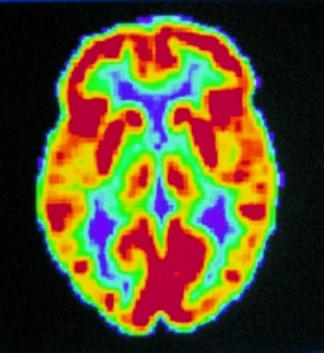
Figure 1: PET Scan of the Normal Brain [55].
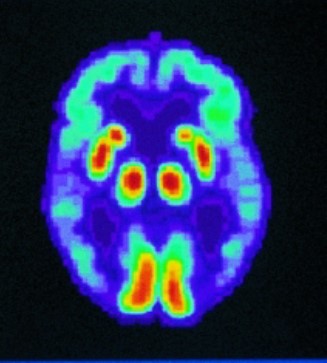
Figure 2: PET Scan of Alzheimer's Disease Brain [55].
Neurons and Their Functions:
The human brain is made up of billions of neurons. Each neuron is made up of the following parts:
- Cell body
- Axon (transmitter extension)
- Dendrites (receptor appendages)
The cell body contains the nucleus, which manages all the activities of the cell. The axon extends from the cell body and sends messages to other neurons. Most of the time, these messages travel long distances (sometimes up to 1.5 meters!). Dendrites, on the other hand, receive messages from other neurons [55].
Each neuron connects with thousands of other neurons through its axons and dendrites.
Neurons are surrounded by glial cells. Glia support, protect, and nourish neurons [55].
Neurons in the brain perform different tasks:
- Some of them are related to thinking, learning, and memory.
- Others pick up sensory information.
- Others, on the other hand, provide movement by sending signals to the muscles.
In order for neurons to remain healthy and survive, these three processes must run smoothly:
- Communication
- Metabolism
- Repair
Communication: Sending millions of messages per second:
We can think of this process as a telecommunication network. Just like millions of phone calls are carried by fiber optic cables, neurons in our brain are in constant communication. When a neuron receives messages from surrounding cells, an electrical signal (nerve impulse) occurs inside the cell. This signal travels along the axon and when it reaches its tip, it triggers the release of chemical messengers called neurotransmitters. Neurotransmitters cross the small space (synapse) between two neurons and bind to receptors (receptors) in the dendrite or cell body of other cells. When they bind to receptors, channels open in the cell membrane or trigger other processes. These processes allow the recipient neuron to decide what to do. Some neurotransmitters suppress the signal, while others stimulate it. After all, millions of signals are in motion inside the brain at the same time. These signals allow information to be transmitted to different parts of the body. If these connections between neurons are broken, the cells become sick and can die [55].
Metabolism: Providing Energy to Cells:
Metabolism is the process by which cells break down chemicals and nutrients to produce energy and create new molecules. The energy required for the brain is provided only by a type of sugar called glucose. In order for this process to be efficient, enough blood, oxygen and glucose must reach the brain. Without oxygen or glucose, neurons die [55].
Repair: Keeping Long-Lived Neurons Healthy:
Other cells may have a short lifespan; But neurons form shortly after birth and can live for 100 years or more. In adults, once neurons die, they are usually not regenerated. However, recent research shows that new neurons can be born in some areas of the brain even in old age. In order for neurons to survive, they need to constantly repair and renew themselves. If the cleaning and repair processes slow down or stop, the cell loses its function and dies [55].
Plaques and Tangles: Hallmarks of Alzheimer's Disease:
Alzheimer's disease disrupts three basic processes that are essential for neurons to stay healthy:
- Communication
- Metabolism
- Repair
The disruption of these processes leads to the fact that some nerve cells lose their function, lose their connection with other neurons and, ultimately, die. As a result, symptoms specific to Alzheimer's such as memory loss, personality changes, and difficulty in daily functions occur. [55]
Two types of abnormal structures abound in the brains of Alzheimer's patients, especially in areas related to memory:
- Beta-amyloid plaques
- Neurofibrillary tangles (tau tangles)
Although these structures are seen in a small amount in some of the elderly individuals, they are much more common in Alzheimer's patients. We have been aware of these structures for years; However, recent research has allowed us to better understand their content, how they are formed, and their relationship to the disease. [55]
Amyloid Plaques:
Plaques are made up of a piece of protein called beta-amyloid. This fragment is formed by cutting the larger protein APP (amyloid precursor protein). Beta-amyloid fragments clump together and fuse with other molecules, neurons, and extraneural cells to form insoluble plaques. These plaques accumulate especially in the regions of the hippocampus, which functions as memory forming, and the cerebral cortex, which manages thinking-decision-making functions.
Although it is still not known for sure, the question of whether beta-amyloid plaques cause Alzheimer's or is only a consequence of it is being investigated. However, changes in the structure of APP are known to cause rare hereditary types of Alzheimer's [55].
Beta-amyloid Formation from APP:
- APP is a protein that runs through the neuron membrane and extends both inside and outside the cell.
- Enzymes break down this protein.
- One of these fragments, beta-amyloid, begins to clump when it goes out of the cell.
- It combines with other cells and molecules to form insoluble plaques.
Neurofibrillar Tangles (Tau Tangles):
The internal support structure of healthy neurons is made up of structures called microtubules. These microtubules are like "rails" that carry nutrients and molecules from the cell body to the axons.
The protein that keeps this transport system stable is tau. In Alzheimer's disease, the tau protein changes chemically and combines with other tau strands to form complex tangles. In this case, the microtubules collapse, the transport system is disrupted. This results in communication disorder between neurons and then cell death [55].
Altered Brain in Alzheimer's Disease:
We don't know for sure why Alzheimer's disease begins, or why the normal changes that come with aging become extreme and destructive in some people.
But we know pretty well what happens in the brain once the disease sets in, and the physical and mental changes that occur over time [55].
Life expectancy after diagnosis varies:
- If the person is over 80 years old, this period can be as short as 3 years.
- For a younger patient, it may be 10 years or more.
The process of every Alzheimer's patient is not exactly the same; However, symptoms usually develop within the framework of the same stages [55].
Alzheimer's Preclinic:
The disease begins in the entorhinal cortex, which is directly connected to the hippocampus. It then proceeds to the hippocampus — the structure critical in the formation of short- and long-term memory. In these areas, atrophy (shrinkage) begins. These changes usually begin 10-20 years before symptoms appear. Memory loss is the earliest symptom of Alzheimer's, and this stage is often referred to as mild cognitive impairment (MCI). Many scientists think that MCI is a transitional phase between normal aging and Alzheimer's [55].
Hafif Evre Alzheimer:
When the disease begins to affect the cerebral cortex:
- Memory loss increases
- Deterioration in other cognitive functions begins
At this stage, a clinical diagnosis is usually made.
The main symptoms are:
- Memory loss
- Losing direction in familiar places
- Difficulty doing daily tasks
- Difficulty in tasks such as using money and paying bills
- Don't make bad decisions
- Loss of sincerity and assertiveness
- Mood and personality changes
- Increased anxiety
Plaques and tangles first affect brain regions that govern memory, language, and reasoning functions. Therefore, even if the person seems physically healthy at this stage, he becomes increasingly difficult to perceive the world mentally. Since early symptoms can be confused with signs of aging, it can be difficult for both the patient and the family to accept these changes and refer to the diagnosis process [55].
Orta Evre Alzheimer:
At this stage, damage to the brain:
- Language
- Reasoning
- Sensory processing
- Conscious thinking
It spreads more to the areas of the cerebral cortex that govern its areas. This is the stage where behavioral problems (e.g., wandering, agitation) begin [55].
More intensive care and supervision may be required, and this can be very challenging for the family.
The main symptoms are:
- Increased memory loss and confusion
- Decrease in attention span
- Difficulty recognizing relatives
- Language problems; difficulty reading, writing, calculating
- Difficulty organizing thoughts
- Inability to learn new things or adapt to new situations
- Restlessness, agitation, anxiety, crying, nocturnal wanderings
- Repetitive words or movements, muscle twitches
- Hallucinations, delusions, skepticism, aggression
- Loss of impulse control (e.g. inappropriate behavior during meals, undressing in an inappropriate place)
- Perception and movement problems (e.g. difficulty getting up from a chair)
These behaviors are a direct result of impaired functioning in the brain. For example, when a patient does not want to take a bath, it may be because he does not understand or does not remember how to take a bath [55].
Severe Stage Alzheimer's:
In this final phase:
- Plaques and tangles are spread throughout the brain
- Severe atrophy (shrinkage) occurs in various parts of the brain
Patients:
- He cannot recognize his relatives
- Unable to communicate
- He is completely dependent on the care of others
- They lose their sense of "self"
Symptoms:
- Weight loss
- Seizures
- Skin infections
- Swallowing difficulties
- Sighing, moaning
- Excessive sleep
- Loss of bladder and bowel control
At this stage, patients are usually in bed all the time. Most Alzheimer's patients die from other diseases, such as aspiration pneumonia. (Aspiration pneumonia: Infection caused by food escaping into the lungs) [55]
MRI images of Dementia cases in Figure 3, 4. AD leads to hippocampal atrophy and ventricular enlargement, healthy brain and brain images with AD are given in Figure 5 in an elderly, cognitively normal (CN) individual, an individual with amnestic mild cognitive impairment (aMCI) and an individual with Alzheimer's disease (AD) by obtaining images from the relevant literature.
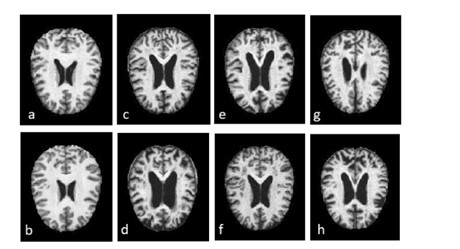
Figure 3: MRI images of dementia cases (a,b) Non-dementia, (c,d) Very mild dementia, (e,f) Mild dementia, and (g,h) Moderate dementia [59].
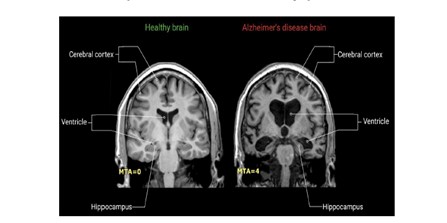
Figure 4: AD leads to hippocampal atrophy and ventricular dilation. Healthy brain (left) and AD brain (right). AD leads to a decrease in hippocampal volume, shrinkage of the cerebral cortex, and ventricular dilation. MTA: medial temporal lobe atrophy; MTA = 0: no atrophy of the medial temporal lobe; MTA = 4: Severe volume loss in the hippocampus [60].
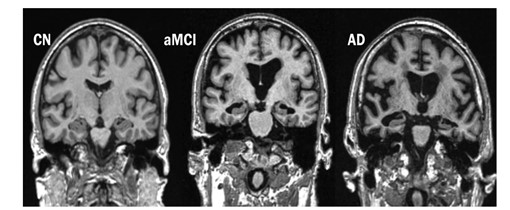
Figure 5: Progressive atrophy (medial temporal lobes) in an elderly, cognitively normal (CN) individual, an individual with amnestic mild cognitive impairment (aMCI), and an individual with Alzheimer's disease (AD) [61].
Part 2
Alzheimer's Research – New Answers and Better Questions:
Over the past 25 years, scientists have studied Alzheimer's disease from many different angles:
- Population studies were conducted to see which groups contracted the disease
- It was investigated whether there is a relationship between genetic structure and lifestyle
- Patients at different stages and healthy individuals were clinically examined
- How beta-amyloid and other molecules affect nerve cells has been observed in the laboratory
Thanks to these studies:
- Better diagnostic methods developed
- Progress has been made in the management of behavioural symptoms
- An increasing number of drug candidates have emerged
- Research has led to better questions and new directions
In this section, we'll look at what research has learned and what's in store for us in the fight against Alzheimer's [55].
What Has Changed in Alzheimer's Research in Recent Years?
15 years ago:
- We didn't know the genes that cause Alzheimer's
- The biological pathways leading to brain damage were unknown
10 years ago:
- We didn't have models to simulate the disease in animals
5 years ago:
- Clinical trials testing preventative treatments were not funded
- We couldn't figure out who was at high risk
1 year ago:
- We didn't know the relationship between plaques and tangles
Today:
- We know of 3 genes that cause early-onset Alzheimer's and 1 risk gene for the late-onset strain
- The pathways to beta-amyloid plaque formation have been largely resolved
- Developed special mouse models that form beta-amyloid plaques
- The NIH (National Institutes of Health) funds clinical trials to prevent Alzheimer's
- High-risk individuals can be identified with imaging, cognitive tests, and structured interviews
- Produced "double transgenic mice" that carry plaques and tangles together — plaques appeared to trigger tangle formation
Investigating the Causes:
One of the most important steps in solving the Alzheimer's mystery is to find out what causes the disease:
- What started the process?
- Why does it get worse over time?
- Why do some people get sick and others don't?
- Why is age the biggest risk factor?
Some diseases (for example, measles or pneumonia) have specific and clear causes. Such diseases can be prevented by vaccination or treated with antibiotics. Other diseases (e.g. diabetes, arthritis) are caused by a combination of genetic, lifestyle and environmental factors. Alzheimer's is also in this second group. Today, we know that Alzheimer's develops as a result of a complex and long-term process. Many studies are being conducted to better understand the causes and stages of this process. [55]
Genetic Factors in Alzheimer's:
In recent years, researchers have been able to uncover the genetic links associated with two main types of Alzheimer's: [55]
- Early-Onset Alzheimer's Disease
- It usually starts between the ages of 30-60
- Rare
- Forms that are inherited from the family are called "familial Alzheimer's" (FAD)
- Late-Onset Alzheimer's Disease
- It is the most common type
- It occurs in individuals aged 65 and over
DNA, Chromosomes and Genes: The Control Center of the Body:
In the nucleus of every human cell is a chemical data bank that tells the cell what to do. The name of this bank is: DNA [55].
DNA is in the form of long strands with double strands, and these strands are packaged in structures called chromosomes. Each cell has 23 pairs of chromosomes (46 in total). Chromosomes are made up of 4 chemical structures called bases. Each of the chromosomes contains thousands of genes. Genes determine how the cell produces certain proteins. These proteins control both the physical characteristics and all the functions of the body [55].
Small changes in genes can produce problematic proteins in cells, which can lead to disease [55].
- Rare changes are called mutations
- Changes that are more common but increase the risk of disease are called genetic risk factors
Early Onset Alzheimer's and Genes:
In the past, researchers have noticed that in some families with Alzheimer's at an early age, the disease is genetically transmitted. When DNA samples from these families were examined, it was discovered that there were certain gene mutations on chromosomes 21, 14 and 1:
- Chromosome 21: Mutation in the APP (amyloid precursor protein) gene → abnormal beta-amyloid production
- Chromosome 14: Mutation in a protein called presenilin 1
- Chromosome 1: Mutation in a similar protein called presenilin 2
An individual with a mutation in one of these genes will often inevitably develop Alzheimer's. In other words, if one of their parents carries this mutation, there is a 50% chance that children will develop the disease. These genes are not directly linked to the more common late-onset strain of Alzheimer's; however, these discoveries have revealed important biological pathways of the Alzheimer's process. For example, it has been discovered that presenilin proteins can be enzymes that break down APP. This has given scientists the goal of developing drugs [55].
Different Genetic Structure in Late-Onset Alzheimer's:
Some scientists were interested in early-onset Alzheimer's, while others were investigating genetic links to the late-onset form. In 1992, researchers focused their attention on chromosome 19. At the same time, other researchers looking for a protein that binds tightly and quickly with beta-amyloid have found a protein called apolipoprotein E (ApoE). They discovered that the genetic code of this protein is also located on chromosome 19. This suggested that a type of the ApoE gene may be a risk factor for late-onset Alzheimer's [55].
Apolipoprotein E (ApoE) and Alzheimer's Risk:
ApoE is a protein that is produced in the liver and circulates in the blood. It is also produced by glial cells in the brain and transports fat molecules to neurons.
There are three different variants (alleles) of the ApoE gene:
- ApoE ε2: Rare, may lower the risk of Alzheimer's
- ApoE ε3: The most common allele, with no apparent association with Alzheimer's risk
- ApoE ε4: Strongly associated with late-onset Alzheimer's
Individuals who carry ApoE ε4 have a higher risk of developing Alzheimer's than those who do not.
- The risk is increased in those who carry 1 ε4 allele
- The risk is much higher in those who carry the 2 ε4 allele (i.e., inherited from both mother and father)
But an important point is the following:
Not everyone who carries ApoE ε4 will get Alzheimer's; Those who do not carry ApoE ε4 can also get the disease.
Therefore, ApoE ε4 is a risk factor and not a cause. Scientists are still trying to understand exactly how ApoE ε4 contributes to Alzheimer's.
Some theories include:
- May lead to higher than normal production of beta-amyloid
- It can cause amyloid plaques to be more difficult to clean
- May increase inflammation
- It can make it difficult to repair nerve cells
Some research also suggests that ApoE ε4 may contribute to the greater formation of neurofibrillary tangles in Alzheimer's patients [55].
Other Factors:
Apart from genetic factors, there are other biological processes that may play a role in the development of Alzheimer's. Researchers are also conducting intensive studies in these areas. [55]
Beta-amiloid:
A great deal of research has been done on how beta-amyloid fragments form and turn into plaques. Most scientists think that these fragments accumulate over time, damaging nerve cells. In addition, the ways in which APP is cut, i.e. which enzymes break it down, have also been investigated. [55]
- There are enzymes that make "harmless" cuts
- But some enzymes cut the APP in a way that creates harmful beta-amyloid
For this reason, scientists are trying to develop inhibitors (inhibitors) of these harmful enzymes as drugs.
Tau:
The tau protein normally supports microtubules. However, in Alzheimer's, it undergoes chemical changes and turns into filamentous tangles.
In the process:
- Microtubules collapse
- Transport of nutrients and communication stops
- The cell dies
Tau proteins also form abnormal deposits in other degenerative diseases. (e.g. frontotemporal dementia) [55]
Cardiovascular Risk Factors:
Links between Alzheimer's and cardiovascular health are being discovered.
The following conditions pose a risk to both the heart and the brain:
- High blood pressure
- High cholesterol
- Diabetes
- Obesity
- Smoking
- Sedentary life (inactivity)
It is thought that these risk factors may affect blood vessels, reducing blood flow to the brain. Furthermore, these conditions may contribute to Alzheimer's by reducing the oxygen and nutrient uptake of brain cells [55].
Free Radicals:
Free radicals formed during metabolism are chemical substances that can damage cell structure.
Normally, cells can control these substances, but as we age, this ability decreases.
Free radicals:
- To the cell membrane
- To proteins
- To DNA
It can damage neurons and wear them out. This process is called oxidative stress and may be a cause of cell damage in Alzheimer's [55].
Inflation (Ultimatum):
When brain cells are damaged, the immune system activates cells called microglia. These cells usually remove harmful substances, but:
- If it becomes chronic
- If he constantly tries to attack the plaques
- May damage surrounding healthy tissues
Therefore, the potential of anti-inflammatory drugs in Alzheimer's is being studied [55].
Cerebral Infarction and Mixed Dementia:
In some older individuals, both Alzheimer's and post-stroke brain damage can coexist. This condition is called mixed dementia [55].
Stroke or blockages in small cerebral vessels:
- Lack of oxygen in some areas of the brain
- Death of nerve cells
- Acceleration of the Alzheimer's process may cause.
New Methods for Diagnosing Alzheimer's:
The only way to definitively diagnose Alzheimer's disease is to examine brain tissue after death. Here, beta-amyloid plaques and neurofibrillary tangles, which are typical Alzheimer's features, are sought.
However, scientists are trying to develop ways to diagnose Alzheimer's more accurately and earlier while people are alive [55].
The aim of these efforts is to:
- Differentiating Alzheimer's disease from other types of dementia
- Correctly determining the stage of the disease
- Monitoring whether treatments are working
- Finding metrics (biomarkers) that can be used in clinical trials of new drugs
Available diagnostic methods:
Currently, the diagnosis of Alzheimer's disease is usually made by using a combination of the following methods:
- Medical history: The person's history, symptoms, medications, and family history are evaluated
- Mental status tests: Skills such as memory, attention, language, problem solving are evaluated
- Neurological examination: Reflexes, muscle tone, balance and coordination are checked
- Blood tests: Done to rule out other diseases
- Brain imaging: The brain structure is examined using MRI (magnetic resonance) or CT (computed tomography)
New Research Methods:
Scientists are working on new ways to make the diagnosis of Alzheimer's earlier and more precise [55].
🧠 Brain Imaging Techniques
- MRI (Magnetic Resonance Imaging): Shows the structure of the brain in high resolution. In Alzheimer's patients, atrophy (shrinkage) can be detected in the hippocampus and other brain regions.
- PET (Positron Emission Tomography): Glucose metabolism in certain areas of the brain is measured.
Inactive areas often overlap with areas associated with Alzheimer's.
In addition, special PET scans are being developed that can directly image amyloid plaques.
🧬 Cerebrospinal Fluid (CSF) Tests
Research has shown that in CSF samples of Alzheimer's patients:
- Low levels of beta-amyloid
- It has shown that tau protein levels are high
These findings can be used as biomarkers of the disease. However, these tests are not yet used as a standard diagnostic method [55].
🧠 Electroencephalogram (EEG) and Other Methods
EEG measures the electrical activity of the brain. Alzheimer's patients experience a slowdown in brain waves. These and similar methods can help distinguish between other types of dementia.
🧠 Genetic Tests
Mutations in the aforementioned APP, presenilin 1, and presenilin 2 genes can be tested for the diagnosis of familial Alzheimer's.
There are also genetic tests that look for ApoE ε4 allele carrier.
However, genetic tests:
- Not recommended for everyone
- Results provide limited information
- It can have psychological effects
For this reason, it is recommended to seek genetic counseling before undergoing genetic testing.
The Search for New Treatments:
There is currently no cure for Alzheimer's disease. However, in recent years, many promising approaches have emerged to manage the symptoms of the disease, slow its progression, and even prevent it [55].
The researchers focus on three key objectives:
- Maintaining mental function
- Slowing, delaying, or preventing disease
- Managing behavioral and psychological symptoms
1. Helping to Maintain Mental Function:
Impairment in mental functions such as memory and thinking is one of the first signs of Alzheimer's. This is usually due to the deterioration of communication between brain cells [55].
Cholinesterase Inhibitors:
These drugs inhibit the breakdown of a neurotransmitter called acetylcholine, which plays a role in communication between brain cells [55].
Some cholinesterase inhibitors currently FDA-approved:
- Donepezil (Aricept)
- Rivastigmin (Exelon)
- Galantamin (Razadyne)
These drugs are:
- May temporarily relieve symptoms
- It can provide short-term improvement in memory, attention, speech, and daily functions
- They are moderately effective and do not stop progressive brain damage
Each individual's response to medication is different. Some people may have significant benefits, while others may have little effect. Side effects may include nausea, vomiting, loss of appetite.
Glutamate Blockers (NMDA Receptor Antagonists):
Memantine (Namenda) is another drug approved for mild-to-moderate Alzheimer's. It works by regulating the level of a neurotransmitter called glutamate in the brain.
Glutamate is normally essential for learning and memory, but in Alzheimer's, excess glutamate can damage cells. Memantine tries to reduce this harm.
Some patients may also use cholinesterase inhibitors such as donepezil along with memantine. This combination therapy may give better results in some people [55].
2. Slowing, Delaying, or Preventing Alzheimer's:
Treatments to stop the progression of Alzheimer's or prevent its onset are currently in the experimental phase [55].
Scientists are investigating the following strategies:
🧪 Drugs That Prevent Beta-Amyloid Formation
- Enzyme inhibitors that block harmful enzymes that interrupt the APP
- Drugs that prevent the clumping of beta-amyloid particles
- Vaccines or immunotherapies that work to eliminate plaque through the immune system
🧪 Approaches Targeting Tau Protein
- Compounds that work to prevent tau from forming knots
- Supporting agents that protect the microtubule structure
🧪 Methods to Reduce Inflammation and Oxidative Damage
- Anti-inflammatory drugs (NSAIDs)
- Antioxidants (e.g., vitamin E, vitamin C)
Note: High doses of vitamin E may be risky for heart patients
Lifestyle Interventions:
It is thought that the following habits may be beneficial to reduce the risk of Alzheimer's:
- Physical exercise
- Mental activity (crossword puzzles, reading books, learning new skills)
- Healthy eating (e.g. Mediterranean diet)
- Social relationships
- Maintaining cardiovascular health
These approaches are not yet "proven" ways to prevent disease, but they do contribute to overall brain health [55].
3. Managing Symptoms
In Alzheimer's patients, not only problems with memory and thinking occur, but also behavioral and psychological symptoms. These symptoms are not only challenging for the patient, but also a source of great stress for the caregivers [55].
These symptoms may include:
- Unrest
- Irritability
- Sleep disorders
- Hallucinations (seeing or hearing things that aren't there)
- Paranoia (believing that others will hurt him)
- Depression
- Getting tangled or lost
Understanding Behavioral Symptoms:
These behaviors often occur as a result of loss of brain function caused by the disease. For example, when a patient does not want to take a bath, this:
- Not remembering what it is to take a bath
- Feeling cold or frightened
- It may be due to his inability to understand what is being done at that moment
Likewise, a patient who wakes up at night and wants to leave the house may once be accustomed to going to work early in the morning. When the concept of time is distorted, he cannot understand what time of day it is [55].
Intervention Methods:
Non-Drug Approaches (Behavioral Methods):
First, drug-free methods should be tried. These:
- Making the environment quiet and safe
- Maintaining routines
- Avoiding overstimulating (noise, crowded) environments
- Supporting the patient with polite directions
- Engaging in activities (e.g. music, painting, walking)
With these methods, significant relief can be achieved in many patients [55].
Drug Intervention:
If the behavioral symptoms are severe, long-lasting and dangerous for the patient, medications can be used under the supervision of a doctor [55].
These drugs can be:
- Antidepressants: for depression and anxiety
- Antipsychotics: for hallucinations and aggression (should be used with caution, may have side effects)
- Sleep regulators: For sleep problems
Warning: Some antipsychotic drugs may increase the risk of stroke and death in elderly Alzheimer's patients. Therefore, it should always be used carefully, under the supervision of a doctor [1-70].
Influencer Marketing
Influencer marketing is another strategy with a significant impact on consumer behavior, precisely because the healthcare facility is also a business, which has to be sustainable. To this end, reaching specific individuals capable of
Conclusion
Alzheimer's disease is a general type of dementia characterized by amyloid plaques, neurofibrillary tangles, and neuron degeneration. There is no definitive cure for the disease, and early detection is critical in improving patient outcomes. Magnetic resonance imaging (MRI) is important in measuring neurodegeneration during disease. Computer-aided image processing tools have been used to help medical professionals diagnose Alzheimer's in its early stages. Since the characteristics of the stages of dementia overlap with each other, it is difficult to track progression [59].
Alzheimer's disease (AD) is a specific type of dementia that causes widespread deterioration of nerve tissue. This degenerative disease primarily affects elderly individuals, and patients over 60 years of age have a high proportion of comorbidities. As the patient ages, the risk of developing the disease increases exponentially [59].
After the onset of the disease, treatment focuses solely on improving symptoms. There is no definitive treatment yet [59].
Therefore, acceptable patient outcomes depend on early diagnosis of the disease. Dementia is a broad term that describes a decline in cognitive skills and memory over a long period of time. This decline is so pronounced that it affects daily life. Although there are many types of dementia, Alzheimer's is the most common; It has been identified as the primary cause in 70% of cases [59].
As of 2020, 50 million cases of Alzheimer's have been identified. The burden on the health care system is significant; More than $1 trillion is spent globally to alleviate disease [59].
This cost is due to the important post-diagnostic care required for Alzheimer's patients [59].
Alzheimer's Disease (AD) is a progressive neurodegenerative disease that affects many people worldwide and to date has no effective treatment. AD is characterized by the formation of senile plaques and neurofibrillary tangles, followed by neurodegeneration, leading to cognitive decline and eventually death. Pathological changes in AD occur many years before the onset of the disease. Because disease-modifying therapies may be most beneficial in the early stages of AD, biomarkers are vital for early detection and long-term monitoring of disease progression [60].
Alzheimer's Disease (AD) is a progressive neurodegenerative disease that leads to memory loss, cognitive impairment, behavioral changes, and ultimately death. Alzheimer's Disease is the most common cause of dementia and is expected to affect more than 152 million people by 2050. The disease is neuropathologically characterized by abnormal protein accumulation, leading to the formation of extracellular senile plaques and intracellular neurofibrillary tangles (NFTs) [60].
When evaluated as pathological step and structural magnetic resonance imaging; Alzheimer's Disease (AD) is a multifaceted disease in which cumulative pathological brain injuries lead to progressive cognitive decline and ultimately dementia. Amyloid plaques, neurofibrillary tangles (NFTs), neurodegeneration, and inflammation are well-established pathological manifestations of AD. A plausible model for the development of AD suggests that amyloid accumulation occurs early in the process, but does not directly cause clinical symptoms on its own [61].
Neuronal and synaptic losses appear to be the main determinants of cognitive impairment in AD. If neuronal loss leads to cerebral atrophy (which is likely), cognitive decline and atrophy can be expected to be closely related. Based on this evidence, it has been hypothesized that the AD pathological step is a two-step process in which amyloidosis and neuronal pathology (tauopathy, neuronal damage, and neurodegeneration) are largely sequential processes rather than simultaneous [61].
There is also sufficient literature to support the fact that atrophy of brain structures or neurodegeneration is the proximate cause of cognitive impairment in AD [61].
A method that can provide preventive and therapeutic benefits related to Alzheimer's is "Medical Treatment Method of Alzheimer's Disease & Parkinson's Disease by the Help of the Natural Musical Sound of Nây-ı Şerîf, Instrument of Ney (Ney: Turkish Reed Flute, Nay). IJCMCR. 2024; 42(3): 004 DOI: 10.46998/IJCMCR.2024.42.001039" and expanding the application area will be effective in preventing, regressing and treating the disease [2].
Again, "Elmas, Emin Taner, ELMAS's Theory of Thermodynamics": A Scientific Approach for 5th Law of Thermodynamics -A Theoretical Application Example for Medical Thermodynamics. Op Acc J Bio Sci & Res 2(1)-2020. DOI: 10.46718/JBGSR.2020.01.000030" should be evaluated together with other issues in order to reveal the thermodynamic interaction between the drug and the cell [1].
"Emin Taner ELMAS* and Levent OĞUL. The Effects of Medicine and Music Therapy Practices on Human Health. IJCMCR. 2025; 50(2): 003, DOI: 10.46998/IJCMCR.2025.50.001233" contains explanations for supportive treatment modalities and should also be considered for the treatment of Alzheimer's [41].
"Dr. Simge KARADENİZ, Medical Specialization Thesis, "Disease self-management in multiple sclerosis patients and evaluation of factors affecting self-management", 2023, Yöktez No: 10544927 It would be appropriate to benefit from the issues stipulated in the medical specialization thesis in terms of method analogy in the treatment of Alzheimer's [69].
Information and Training for Caregivers:
The better family members and caregivers understand and learn to manage the symptoms of the disease, the less stress will be reduced and the patient will live in a safer environment. Many resources offer specialized training programs for caregivers. The following subjects are taught in these programs [55]:
- Understanding patient behaviors
- Tips in daily care
- Coping with stress
- How to navigate the health system
- Access to community support services
Increasing Support for Families and Carers:
Alzheimer's disease radically changes not only the life of the individual, but also the life of his family and caregivers. As the disease progresses, the patient needs more help and supervision, which increases the responsibilities and stress of the caregiver [55].
Being a Caregiver:
Most Alzheimer's patients are cared for at home by their families. [55]
The caregiver is mostly:
- Spouse
- Adult child
- Brother
- Or other close relatives
These individuals provide the patient with:
- Dressing
- Nutrition
- Bathing
- Toilet
- Drug tracking
- Security surveillance
They help with daily tasks such as.
Challenges for Caregivers:
Caregivers often experience great difficulties emotionally, physically, and financially. [55]
The most common problems are:
- Fatigue and burnout
- Depression and anxiety
- Social isolation
- Problems in business life
- Financial difficulties
Caregivers often neglect their own health and find it difficult to ask for help when they need it. However, research shows that caregivers who receive support achieve more positive outcomes for both themselves and the patient [55].
Support Resources:
The following services can facilitate the maintenance process:[55]
🧭 Information and Education
- Understanding the disease and its process
- Learning methods of coping with behavioral problems
- Gain practical tips in daycare
💬 Support Groups
- Sharing feelings with other caregivers
- Realizing that you are not alone
- Learning new strategies
🧑 ⚕️ Professional Services
- Home care services
- Nurse support
- Counseling and psychological support
- Legal and financial guidance
🌿 Respite Care
- Short break from maintenance
- The caregiver can rest and take time for their own needs
Division of Domestic Labor:
In some families, the responsibility of care is placed on a single person [55].
But in a long-term disease like Alzheimer's, shared responsibilities are much healthier.
- Division of duties among family members
- Implementing rotational maintenance
- Sharing emotional and physical support prevents caregivers from burnout.
Community-Based Services:
In many countries and local governments, there are publicly funded programs for Alzheimer's patients and their caregivers: [55]
- Day care centers
- Food services
- Patient transport
- Home health care
- Legal advice
Being aware of these services and applying them in a timely manner makes the maintenance process more sustainable [55].
In the 'Revised Criteria for Diagnosis and Staging of Alzheimer's Disease' study published by the 'Alzheimer's Asssosication' study group in 2024, clinical staging consisting of 7 stages was determined in addition to the biological staging created with biomarker and PET imaging techniques. Clinical staging steps are as follows; [67,68].
Stage 0: It is the stage where clinically asymptomatic and biomarker levels can be detected normally.
Stage 1: It is the stage where no deterioration is detected in cognitive tests, it is asymptomatic but only biomarker positivity.
Stage 2: It is determined as the transition phase between stages 1 and 3. Compared to the cognitive status of the individual in the last 1-3 years, there is minimal loss in the last 6 months, and there is no significant loss in terms of functionality in daily living activities.
Stage 3: It is the stage where the individual can perform daily life activities independently, but the early effects of cognitive impairment begin to be seen in functionality.
Stage 4: It is the stage defined as 'dementia with mild deterioration in functionality and cognition'.
Stage 5: In the dementia stage with moderate loss of functionality, progressive cognitive and functional loss is detected, which requires support in basic activities of daily living.
Stage 6: In the stage of dementia, in which there is a severe loss of functionality, a loss of fully dependent, progressive, cognitive and advanced functionality is detected in basic activities of daily living.
Patients in the stage 3-6 range have significant cognitive loss as well as neurobehavioral symptoms.
Alzheimer's disease, the most common type of dementia, is a global health problem that affects approximately 2/3 of the population aged 65 and over. Alzheimer's disease, which is a chronic, progressive and neurodegenerative disease, causes loss of behavioral and cognitive functions. It can adversely affect many different cognitive functions such as memory, comprehension, language, attention, reasoning, and establishing cause-effect relationships. [67,68]
Glossary [55]:
Familial Alzheimer's disease (FAD): A rare type of Alzheimer's that is genetically inherited, usually starting between the ages of 30 and 60.
Alzheimer's disease: A progressive disease that leads to the death of cells in the brain. It affects memory, thinking, and behavior.
Amyloid: It is a group of proteins that occur naturally in the body. In Alzheimer's, a part of it called beta-amyloid builds up between brain cells to form plaque.
Antioxidant: These are substances that reduce the damage caused by free radicals in the body. Example: vitamin E, vitamin C.
ApoE (Apolipoprotein E): A fat-carrying protein. A form called ApoE ε4 is a genetic risk factor for Alzheimer's.
Atrophy: Shrinkage or shrinkage of brain tissue.
Beta-amyloid: Small piece of protein formed by the breakdown of the APP protein. In Alzheimer's, it turns into plaques.
Cognitive: Related to mental functions such as thinking, remembering, learning, making decisions, among others.
Dementia: A group of symptoms that occur with impairment in memory, language, reasoning, and other cognitive functions.
Dendrite: Branched structures that the neuron uses to receive messages from other cells.
DNA: The molecule that contains genetic information determines how cells function.
Electroencephalogram (EEG): A test that measures the electrical activity of the brain.
Entorhinal cortex: The brain region that carries information to the hippocampus. It's one of the places where Alzheimer's affects early.
Gene: The region of DNA responsible for producing a specific protein.
Glial cells: Cells that support and protect neurons.
Glutamate: The main excitatory neurotransmitter in the brain.
Mild Cognitive Impairment (MCI): A condition in which there is more cognitive loss than expected for age, but which does not significantly affect daily life.
Hippocampus: The structure of the brain that is important for learning and memory.
Cholinesterase inhibitors: Drugs that promote communication by inhibiting the breakdown of the neurotransmitter acetylcholine.
Limbic system: The system formed by brain structures related to emotions, behavior and memory.
Metabolism: The process by which cells produce energy and remove waste materials.
Memantine: Alzheimer's drug that regulates glutamate levels by blocking NMDA receptors.
Microtubule: Tubular structures that function as structure and transport within the cell.
Neuron: The basic cell of the brain and nervous system. It conveys a message.
Neurofibrillary tangles (tau tangles): Filamentous structures formed by the irregular accumulation of tau protein in Alzheimer's.
Neurotransmitter: Chemical transporters that enable communication between neurons.
PET (Positron Emission Tomography): An imaging method that shows brain activity and metabolism.
Plaque: Structures formed by the aggregation of beta-amyloid fragments.
Presenilin: The protein involved in the cutting of the APP protein. It is associated with early forms of Alzheimer's.
Free radicals: Reactive molecules that can damage cells.
Synapse: The space between two neurons; where communication takes place.
Tau protein:The protein that normally fixes microtubules. It forms tangles in Alzheimer's [1-70].
Biography of Authors
Emin Taner ELMAS*
Asst.Prof. Dr. Emin Taner ELMAS is a Mechanical Engineer having degrees of B.Sc., M.Sc., Ph.D., and was born in Sivas in 1974. He completed his doctorate at Ege University, Graduate School of Natural and Applied Sciences, Mechanical Engineering Department, Thermodynamics Science Branch, and his master's degree at Dokuz Eylül University, Mechanical Engineering Department, Energy Science Branch. He also completed his undergraduate education at Hacettepe University, ZEF, Mechanical Engineering Department and graduated from the faculty with honors in 1995 and became a mechanical engineer. He was awarded a non-refundable scholarship by the Turkish Chamber of Mechanical Engineers in his 4th year because he was the most succesful student during his first 3 classes study at the faculty. He graduated from İzmir Atatürk High School in 1991.
Asst. Prof. Dr. ELMAS has completed his military service as a NATO Officer in Bosnia and Herzegovina. He was a “Reserved Officer” as a “2nd Lieutenant” as an “English-Turkish Interpreter”. He was also a “Guard Commander” and served in Sarajevo, Camp Butmir within the SFOR task force of NATO. He has been awarded with 2 (two) NATO Medals and Turkish Armed Forces Service Certificate of Pride (Bosnia & Herzegovina).
In addition to his academic duties at universities, he has worked as an engineer and manager in various industrial institutions, organizations and companies; He has served as Construction Site Manager, Project Manager, Management Representative, Quality Manager, Production Manager, Energy Manager, CSO-CTO, CBDO, Factory Manager, Deputy General Manager and General Manager.
Asst. Prof. Dr. Elmas is Department Head and is an Assistant Professor of Automotive Technology at the Department of Motor Vehicles and Transportation Technologies at Vocational School of Higher Education for Technical Sciences at IGDIR UNIVERSITY, Turkey. He is also an Assistant Professor of Bioengineering & BioSciences at the same university. He has nearly 30 years of total experience in academia and in industry.
He has served as a scientific referee and panelist for ASME, TUBITAK and many scientific institutions, organizations and universities, including NASA.
“Mechanical Engineering, Energy Transfer, Thermodynamics, Fluid Mechanics, Heat Transfer, Higher Mathematics, Evaporation, Heat Pipes, Space Sciences, Automotive, Bioengineering, Medical Engineering Applications, Neuroengineering, Medical Technique” are his academic and scientific fields of study; “Heating-Ventilation Air Conditioning Applications, Pressure Vessels, Heat Exchangers, Energy Efficiency, Steam Boilers, Power Plants, Cogeneration, Water Purification, Water Treatment, Industrial Equipment and Machinery, Welding Manufacturing, Sheet Metal Forming, Machining” are his industrial experience fields.
Asst. Prof. Dr. Emin Taner ELMAS is also a musician, saz (baglama) virtuoso player and ney (Nay, Turkish Reed Flute) performer. He has a YouTube Music Channel (Emin Taner ELMAS) which includes some of his sound recordings of him playing the saz-baglama and blowing the ney. He composed the poem written by the great poet Âşık Veysel ŞATIROĞLU under the name of “Raşit Bey” in memory of his father Judge (Hâkim) Raşit ELMAS as “Raşit Bey Türküsü”, wrote it down, notated and published it as an academic article and broadcasted this song on his own music channel. He wrote the poems entitled “Canım Babam” and “Geldim Babam” which he wrote also in memory of his father and published in an academic literature journal, and composed instrumental musics for these poems. He also composed an instrumental song called “Annem Annem Türküsü” and gave it to his mother, Lawyer Tuna ELMAS, as a gift on Mother’s Day, 11.05.2025. He continues his artistic studies by writing various poetry, lyrics and also realizing musical composition and repertoire works.
İbrahim DAĞ
Born in Şanlıurfa in 1995, İbrahim Dağ discovered his interest in engineering at a young age and shaped his educational life accordingly. He was accepted to the Civil Engineering Department at Iğdır University in 2016 and graduated in 2020. With the goal of combining different fields of engineering with an interdisciplinary perspective, he began his master's degree in Mechatronic Engineering at Iğdır University in 2023.
During his graduate studies, he focused on scientific research, particularly on Alzheimer's disease and biomechanical approaches. Thanks to his multidisciplinary approach to mechatronic engineering, he conducts literature reviews and field research on topics such as artificial intelligence-assisted early diagnosis methods and structural biology modeling in neurodegenerative diseases. He also aims to develop an alternative treatment method for Alzheimer's disease by utilizing the therapeutic effects of sound waves generated by the ney flute in his graduate project with his advisor, Asst. Prof. Dr. Emin Taner ELMAS. This project, which he and his advisor are conducting on Alzheimer's treatment, serves as a significant example of the application of technical engineering skills in the healthcare field.
In the summer of 2017, he worked as a civil engineer intern at Bak Yapı, a company operating in Bursa, gaining hands-on experience in a construction site environment. As of 2024, Dağ has been working as a Construction Manager at Doğu Yapı Denetim, where he continues to contribute to scientific projects by balancing his engineering practices with his academic pursuits. Dağ is an advanced user of AutoCAD, IdeCAD, and Microsoft Office programs, and also has experience in technical reporting, field data analysis, and project management.
İbrahim Dağ, who has B1 level reading, writing and speaking proficiency in English, aims to develop technical solutions for Alzheimer's and similar diseases and advance his academic career in this field as a solution-oriented, researcher and disciplined engineer.
Simge KARADENİZ
Neurology Specialist Dr. Simge Karadeniz (Nöroloji Uzm. Dr. Simge Karadeniz)
After completing my medical education (English) at Marmara University Faculty of Medicine in 2015, I worked as a general practitioner at Kağıthane Community Health Center in Istanbul the same year. In 2018, I began my neurology residency at Namık Kemal University in Tekirdağ and successfully completed the specialty exam in 2023 to become a neurology specialist. As part of my public service obligation, I began working at Ağrı Training and Research Hospital, my first position in this specialty, in November 2023, and I continue to do so. Adopting professional and humanitarian ethical principles, adhering to international literature, believing in the importance of multidisciplinary work, and striving to achieve the best within the current circumstances, I continue to pursue my profession with dedication.
References
- Elmas Emin Taner. ELMAS’s Theory of Thermodynamics”: A Scientific Approach for 5th Law of Thermodynamics -A Theoretical Application Example for Medical Thermodynamics. Op Acc J Bio Sci & Res, 2020; 2(1). DOI: 10.46718/JBGSR.2020.01.000030.
- Emin Taner ELMAS. Medical Treatment Method of Alzheimer's Disease & Parkinson’s Disease by the Help of the Natural Musical Sound of Nây-ı Şerîf, Instrument of Ney (Ney: Turkish Reed Flute, Nay). IJCMCR, 2024; 42(3): 004 DOI: 10.46998/IJCMCR.2024.42.001039.
- Elmas Emin Taner. Medical Treatment Method of “Bio-robotic Resonance and Thermodynamical Interaction” with Analogy of “Frequency – Resonance Setting Formation” on the Application of “Algorithm for Smart Drugs Controlled by a Bio-robotic System” developed for the “Treatment of Covid-19, Coronavirus and Virus Infections”. Open Access Journal of Biogeneric Science and Research (BGSR), Op Acc J Bio Sci & Res, 2020; 1: 1. DOI: 10.46718/JBGSR.2 020.01.000007.
- Elmas Emin Taner. Scope of Applications for Medical Technique at Science and Engineering, Open Access Journal of Biogeneric Science and Research (BGSR), Op Acc J Bio Sci & Res, 2020; 1: 1. DOI: 10.46718/JBGSR.2020.01.000002.
- Emin Taner ELMAS. System Design and Development of a Novel Unique Neuro-Physical Medical Treatment Method for SMA-SPINAL MUSCULAR ATROPHIA-Disease and for Similar Neurological Muscle Diseases. Herculean Res, 2024; 4(1): 90-97.
- Fevzi Daş, Emin Taner Elmas, İhsan Ömür Bucak, Book Chapter: Innovative Use of Machine Learning-Aided Virtual Reality and Natural Language Processing Technologies in Dyslexia Diagnosis and Treatment Phases; From the Edited Volume Digital Frontiers - Healthcare, Education, and Society in the Metaverse Era; Written By Fevzi Daş, Emin Taner Elmas and İhsan Ömür Bucak, DOI: 10.5772/intechopen.1006621, IntechOpen Limited, UNITED KINGDOM; indexed in the Book Citation Index in Web of Science™ Core Collection (BKCI), 2024.
- Emin Taner ELMAS. Design of Bionic Eye and Artificial Vision System; a Unique Project “Mobile Bio-Eye-Tronic System”. Herculean Res, 2024; 4(1): 97-100 https://dx.doi.org/10.70222/hres23.
- Emin Taner ELMAS. Project for “Amphibious Mobile Snow Track Ambulance” for Healthcare System. Am J Biomed Sci & Res, 2024; 22(4). AJBSR.MS. ID.002990, DOI: 10.34297/AJBSR.2024.22.002990.
- Emin Taner ELMAS. The first “Olive Seedlings” and “Artichoke Seedlings” Planted in Iğdır Province, Turkey. Am J Biomed Sci & Res, 2024; 22(5). AJBSR.MS. ID.002996, DOI: 10.34297/AJBSR.2024.22.002996
- Emin T Elmas, İhsan Ö Bucak. Modeling and Simulation of Smart-Drug Algorithms Through Frequency Modulation for the Treatment of Covid-19 and Similar Viruses. Global Journal of Research in Medical Sciences, 2023; 3(5): 1–6. https://doi.org/10.5281/zenodo.10051793.
- Emin TE, İhsan Ömür B. FM Modulated Smart Drug Algorithm for the treatment of Cancer Cells. In Global Journal of Research in Medical Sciences, 2024; 4(1): pp. 1–6. https://doi.org/10.5281/zenodo.10463529.
- Emin Taner ELMAS. Prototype Desıgn, Productıon and Functıonıng of a Portable (Movable), Home-Type (Domestıcal) Hemodıalysıs Machıne (Unıt). In Global Journal of Research in Medical Sciences, 2023; 3(6): pp. 11–12. https://doi.org/10.5281/zenodo.10252972.
- Elmas, Emin Taner. Thermodynamical Balance Associated with Energy Transfer Analysis of the Universe Space as a Pressure Vessel Analogy. Journal of Applied Sciences, Redelve International Publications, 2019; 2019(1): RDAPS- 10002.
- Elmas Emin Taner. Productivity and Organizational Management (The Book) (Chapter 7): Prospective Characteristics of Contemporary Engineer (By the Approach of Mechanical Engineering) Contribution and Role of the Mechanical Engineer to the Organization Management and Productivity. Machado Carolina, Davim J Paulo (Eds.), DEGRUYTER, Walter de Gruyter GmbH, Berlin / Boston, Spain, 2017. (ISBN:978-3-11-035545-1)
- Elmas Emin Taner. Prospective Characteristics of Contemporary Engineer (By the Approach of MechanicalEngineering) Contribution and Role of the Mechanical Engineer to the Organization Management and Productivity). DeGruyter, Germany, 2017. DOI 10.1515 / 9783110355796-007.
- ELMAS Emin Taner, ALMA MH. Iğdır University ISO 50001 Energy Management System Certification Studies. In Global Journal of Research in Engineering & Computer Sciences, 2025; 5(2): pp. 6–24. https://doi.org/10.5281/zenodo.15011984.
- Emin Taner Elmas. Design of Bio-Artificial Liver Organ. J Biomed Sci Biotech Res, 2024; 2(3): 1-4. DOI: doi.org/10.61440/JBSBR.2024.v2.12.
- ELMAS ET. Design of Bionic Ear-Cochlear Implant and Artificial Hearing System; a Unique Project “Mobile Bio-Ear-Tronic System”. Journal homepage: https://gjrpublication. com/gjrms, 2024; 4(02). http://doi.org/10.5281/zenodo.12751385.
- Emin Taner Elmas. A Review for Combined Cycle Power Plants. Biomed J Sci & Tech Res, 2024; 58(1). DOI: 10.26717/BJSTR.2024.58.009087.
- ELMAS, Emin Taner. Dimensional Unit Analysis Applications for Heat Pipe Design. In Global Journal of Research in Engineering & Computer Sciences, 2024; 4(5): pp. 12–26. https://doi.org/10.5281/zenodo.13741540.
- ELMAS, Emin Taner. Calculation of the Filling Amount of Working Fluid to be Placed in a Heat Pipe. In Global Journal of Research in Engineering & Computer Sciences, 2024; 4(5): pp. 100–108. https://doi.org/10.5281/zenodo.13844847.
- ELMAS, Emin Taner. Providing Fully Developed Flow for Waste Exhaust Gas at the Inlet Region of a Heat Pipe Air Recuperator. In Global Journal of Research in Engineering & Computer Sciences, 2024; 4(5): pp. 118–124. https://doi.org/10.5281/zenodo.13931542.
- Emin Taner Elmas. ONLINE BOOKLET - E -Print - A Review for Combined Cycle Power Plants: DOI: 10.26717/BJSTR.2024.58.009087.
- Emin Taner ELMAS. Thesis, "Thermodynamic and Experimental Analysis of Design Parameters of High Temperature, Heat Pipe, Heat Recovery Units", Thesis Advisor: Prof. Dr. Ali Güngör, Ege University, Institute of Natural and Applied Sciences, Department of Mechanical Engineering, Department of Thermodynamics, Izmir, 2011.
- Elmas, Emin Taner. Thesis, "Evaporation Plant for Recyling of Caustic Soda", Thesis Advisor: Prof. Dr. Fehmi Akdoğan, Dokuz Eylül University, Institute of Natural and Applied Sciences, Department of Mechanical Engineering, Department of Energy Science, Izmir, 1999.
- Emin Taner E. Thermodynamical and Experimental Analysis of Design Parameters of a Heat Pipe Air Recuperator. Global Journal of Research in Engineering & Computer Sciences, 2023; 3(6): 6–33. https://doi.org/10.5281/zenodo.10116309.
- Emin TE. Design, Production, Installation, Commissioning, Energy Management and Project Management of an Energy Park Plant Consisting of Renewable Energy Systems Established at Igdir University. In Global Journal of Research in Engineering & Computer Sciences, 2023; 3(6): pp. 67–82. https://doi.org/10.5281/zenodo.10406670.
- Hasan TAMSÖZ, Emin Taner ELMAS. Investigation on energy costs and energy efficiency factors of electric arc furnace for steeel production, Fenerbahçe University Journal of Design, Architecture & Engineering - Journal of Design, Architecture & Engineering, 2021; 1(3): 163-180.
- Adem KAYA, Emin Taner ELMAS. Determination of energy utilization points and the methods using the efficient energy for sintering plants, Fenerbahçe University Journal of Design, Architecture and Engineering - Journal of Design, Architecture & Engineering, 2022; 2(2): 170-181.
- Emin Taner ELMAS. The Electrical Energy Production Possibility Research Study by using the Geothermal Hot Water Resources, which is a a kind of Renewable Energy Resource, located at the Region of Mollakara Village which is a part of Diyadin Town and City of Ağrı, Turkey. In Global Journal of Research in Engineering & Computer Sciences, 2024; 4(1): pp. 90–101. https://doi.org/10.5281/zenodo.10729333.
- ELMAS Emin Taner. Energy Analysis, Energy Survey, Energy Efficiency and Energy Management Research carried out at Iğdır University. In Global Journal of Research in Engineering & Computer Sciences, 2024; 4(2): pp. 12–30. https://doi.org/10.5281/zenodo.10828077.
- ELMAS Emin Taner. A Research Study of Salt Dome (Salt Cave) Usage Possibility for CAES – Compressed Air Energy Storage Systems. In Global Journal of Research in Engineering & Computer Sciences, 2024; 4(2): pp. 128–131. https://doi.org/10.5281/zenodo.10980421.
- ELMAS Emin Taner. Wankel Rotary Piston Engine Design Project. In Global Journal of Research in Engineering & Computer Sciences, 2024; 4(3): pp. 1–4. https://doi.org/10.5281/zenodo.11117047.
- ELMAS Emin Taner. An innovative solar dish type collector – concentrator system having an original – unique geometrical mathematical model called as DODECAGON which has 12 equal segments. In Global Journal of Research in Engineering & Computer Sciences, 2024; 4(3): pp. 31–38. https://doi.org/10.5281/zenodo.11397848.
- Emin Taner ELMAS. Waste Heat Recovery Boilers (WHRBs) and Heat Recovery Steam Generators (HRSGs) used for Co-generation and Combined Cycle Power Plants. Op Acc J Bio Sci & Res, 2024; 12(1). DOI: 10.46718/JBGSR.2024.12.000284.
- ELMAS Emin Taner. Presentation and Curriculum of Division of Motor Vehicles and Transportation Technologies & Department of Automotive Technology at Vocational School of Higher Education for Technical Sciences at Iğdır University, Turkey. In Global Journal of Research in Engineering & Computer Sciences, 2024; 4(3): pp. 60–67. https://doi.org/10.5281/zenodo.12536211.
- Emin Taner ELMAS. Design and Production of a Unique Hand-Made Energy-Efficient 4 x 4 – Four Wheel Drive (4wd – 4 Matic) Traction System Electric Automobile. In Global Journal of Research in Engineering & Computer Sciences, 2023; 3(6): pp. 48–51. https://doi.org/10.5281/zenodo.10359170.
- ELMAS Emin Taner. Three – Pass Fire Tube Boilers for production of Steam, Hot Water and Superheated Water. In Global Journal of Research in Engineering & Computer Sciences, 2024; 4(4): pp. 29–38. https://doi.org/10.5281/zenodo.12741030.
- Elmas Emin Taner. Evaporation Plant for Recycling of Caustic Soda, INTERNATIONAL JOURNAL of ENGINEERING TECHNOLOGIES-IJET Emin Taner Elmas., 2017; 3(3).
- Elmas Emin Taner. What is Expected from the Engineer of Our Age, Night Library, 2014.
- Emin Taner ELMAS, Levent OĞUL. The Effects of Medicine and Music Therapy Practices on Human Health. IJCMCR, 2025; 50(2): 003, DOI: 10.46998/IJCMCR.2025.50.001233.
- Emin Taner E, Servet K. Biomechanical Analysis of Transtibial Prosthesis Designed for Runners. Biomedical and Clinical Research Journal, 2025; 1(2). DOI: http;/02.2025/BCRJ/007.
- Elmas ET, Cinibulak MA. Fundamental Scientific and Technical Issues related with the “Hip Replacement Design and Biomechanical Analysis”. Journal of Material Science and Nanotechnology, Matsci Nano J, 2025.
- ELMAS Emin Taner, KUNDURACIOĞLU I. A Model for Second Law of Thermodynamics, Relationship between Health, Disease, Aging, Death Processes and Consciousness, Nervous System and Time. In Global Journal of Research in Medical Sciences, 2025; 5(2): pp. 1–6. https://doi.org/10.5281/zenodo.14973559.
- ELMAS Emin Taner, KUNDURACIOĞLU I. Metabolic Heat Production with Energy Transfer and Laws of Human Thermodynamics: The Energy Balance of the Human Body. In Global Journal of Research inMedical Sciences, 2025; 5(2): pp. 7–14. https://doi.org/10.5281/zenodo.14973620.
- Elmas ET, Kunduracıoğlu I. Artificial Heart Design and Biomechanical Analysis. Open Access Journal of Medicine and Healthcare, Research Article, 2025; 1(1): 01-06.
- ELMAS Emin Taner, KUNDURACIOĞLU I. Fundamentals of Human Vision System. In Global Journal of Research in Medical Sciences, 2025; 5(2): pp. 103–117. https://doi.org/10.5281/zenodo.15078754.
- ET Elmas. Kitchen Hood Design & Manufacturing Project 3D Modeling, Engineering Calculations, and Technical Drawings for Igdir University Medico Social Building Dining Hall”. Matsci Nano J, 2025; 1(1): 102.
- Emin Taner ELMAS, İsmail KUNDURACIOĞLU. Signal Transduction System in Neurons. International Journal of Research in Medical and Clinical Sciences. 2025; 3(1): 26-35.
- Emin Taner ELMAS, İsmail KUNDURACIOĞLU. An Introduction to Sound and Sound Perception System for Human Ear. International Journal of Research in Medical and Clinical Sciences, 2025; 3(1): 36-49.
- Emin Taner ELMAS, İsmail KUNDURACIOĞLU. Medical Structure of the Human Respiratory System. International Journal of Research in Medical and Clinical Sciences, 2025; 3(1): 50-63.
- Emin Taner ELMAS, İsmail KUNDURACIOĞLU. Medical Structure and Hemodynamics of the Human Circulatory System. International Journal of Research in Medical and Clinical Sciences, 2025; 3(1): 64-81.
- Emin Taner ELMAS and İsmail KUNDURACIOĞLU. General Aspects of Advanced Biomechanics. Biomed J Sci & Tech Res, 2025; 61(5).
- Emin Taner Elmas and İsmail KUNDURACIOĞLU. Conservation Laws and the Main Physical Parameters for Advanced Biomechanics. Biomed J Sci & Tech Res, 2025; 61(5).
- ALZHEIMER’S DISEASE, UnravelingtheMystery, National Institute on Aging, National Institutes of Health, U.S. Department of Health and Human Services, 2003. National Institutes of Health NIH Publication Number: 02-3782.
- Emin T Elmas, M. Şimşek. Bionic Prosthetic Robotic Artificial Hand Design and Biomechanics Analysis. Journal of Medical Discoveries. RPC Publishers, 2025; 2(1); DOI: https://www.doi.org/rpc/2025/rpc.jmd/00311.
- ELMAS ET. Prosthetics, Artificial Limbs, Implants and Their Biomedical Applications. J Surg, 2025; 10: 11365. DOI:10.29011/2575-9760.011365.
- ELMAS ET. An Introduction to Electrophysical Properties of the Human Heart. J Surg, 2025; 10: 11364. DOI: 10.29011/2575-9760.011364.
- Pasnoori N, Flores-Garcia T, Barkana BD. Histogram-based features track Alzheimer's progression in brain MRI. Sci Rep,2024; 14: 257. https://doi.org/10.1038/s41598-023-50631-1.
- van Oostveen WM, de Lange ECM. Imaging Techniques in Alzheimer’s Disease: A Review of Applications in Early Diagnosis and Longitudinal Monitoring. Int. J. Mol. Sci, 2021; 22: 2110. https://doi.org/ 10.3390/ijms22042110.
- Vemuri P, Jack CR Jr. Role of structural MRI in Alzheimer’s disease. Alzheimer’s Research & Therapy, 2010; 2: 23.
- Elmas ET. A Brief Information about Cataract Operation. European Journal of Science and Modern Technologies, 2025; 1(2): 61-66. https://doi.org/10.59324/ejsmt.2025.1(2).05.
- ELMAS Emin Taner. Industrial Applications of Heat Pipes and its Project Design Systematics. In ICON Journal of Engineering Applications of Artificial Intelligence, 2025; 1(1): pp. 19–26. https://doi.org/10.5281/zenodo.15868628.
- ELMAS Emin Taner. A Brief Information about Blood Sugar and Diabetes Management. In ICON Journal of Applied Medical Sciences, 2025; 1(1): pp. 1–5). https://doi.org/10.5281/zenodo.15870465.
- Emin Taner Elmas, Ismail Kunduracioglu. An Introduction to the Medical Body Mechanics and Human Muscles. Journal of Medical and Clinical Case Reports, 2025; 2(1). https://doi.org/10.61615/JMCCR/2025/APRIL027140418.
- Emin TE, İsmail K. Elastomechanics Fundamentals for Bones and Fractures. Ann Biotech & Biomed Sci, 2025; 1(1): 1-12.
- Revised criteria for diagnosis and staging of Alzheimer’s disease: Alzheimer’s Association Workgroup, DOI: 10.1002/alz.13859.
- Alzheimer Disease, Anil Kumar; Jaskirat Sidhu; Forshing Lui; Jack W. Tsao. National Library of Medicine, National Institutes of Health. StatPearls Publishing, 2025.
- Simge KARADENİZ. Medical Specialization Thesis, "Disease self-management in multiple sclerosis patients and evaluation of factors affecting self-management", 2023; Yöktez No: 10544927.
- Emin Taner ELMAS, Yavuz ORUC. “An Alternative Non-Surgical Cataract Treatment Method in Medicine and Ophthalmology; “Medi-Ultrasound Eye-Tronic Method””, Universal Library of Medical and Health Sciences, 2025; 3(3): 01-07. DOI: https://doi.org/10.70315/uloap.ulmhs.2025.0303001.