
Email id: info@ijclinmedcasereports.com
Control of Viral Pandemics by the Use of Artificial Intelligence
Abdul Hai1, Nadeem Kizilbash1,*, Sultan Mohammed J Alanazi1, Nadi Dhafi Alshammari2, Maha Zainab3, Nayha Qazi4 and Zaina Qazi4
1Department of Medical Laboratory Technology, Faculty of Applied Medical Sciences, Northern Border University, Arar-91431, Saudi Arabia
2Maternity and Children Hospital in Hail, Hail-55471, Saudi Arabia
3Stephen Leacock Collegiate Institute, Scarborough, ON M1T 2M5, Canada
4Abington Senior High School, Abington, PA 19001, USA
Received Date: 20/03/2026; Published Date: 29/05/2026
*Corresponding author: Nadeem Kizilbash, Department of Medical Laboratory Technology, Faculty of Applied Medical Sciences, Northern Border University, Arar-91431, Saudi Arabia
Abstract
Epidemics involving infectious diseases, cause the emergence of new pathogens and changed disease dynamics that can be handled well via Artificial Intelligence (AI). Viral infectious diseases have the potential of becoming pandemics and can create several challenges for public health and emergency management. One of the most important objective of a pandemic response is to ensure access to resources and AI technologies have proven to be effective for predicting and detecting the spread of viral infectious diseases due to their capability for data processing and pattern recognition. The recent COVID-19 pandemic specially prompted the integration of AI into public health systems.
Introduction
Artificial Intelligence (AI) comprises a set of techniques developed in the 1950s that allow a machine to simulate certain human cognitive functions. Since the 2010s, AI has undergone major revival with the progress in machine learning, supported by advances in computing and the availability of large and diverse datasets via the internet [1]. AI tools offer the capacity to rapidly process large volumes of heterogeneous data to support clinical decision-making and to guide public health strategies (Figure 1).
Machine learning models are used by many applications. In machine learning, the model learns directly from labeled or unlabeled data. Deep learning is a subcategory of machine learning that relies on neural networks. These networks enable the construction of complex representations of data through multiple layers of processing [2]. In recent years, there has been an emergence of generative artificial intelligence models particularly Large Language Models (LLMs) such as ChatGPT.
Surveillance of Infectious Diseases:
AI-powered systems handle data-sets by the use of search engines such as Google Trends, Baidu Index, etc., social media activity, climate records and traditional laboratory-based reporting systems [3,4]. An example is the Google Flu Trend (GFT) analysis, which was developed during the 2009 H1N1 pandemic as an alternative method to estimate influenza-like illness (ILI) in the general population [5]. AI models can detect infections like pneumonia or tuberculosis (TB) using chest radiographs and CT scans. For instance, in COVID-19-linked pneumonia, deep learning methods have achieved sensitivities of 60–95 % on test datasets, comparable to human radiologists (range 42–100 %) [6].
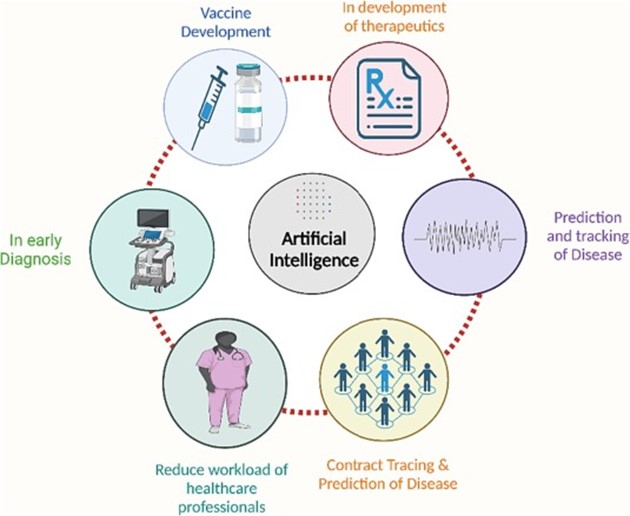
Figure 1: Application of AI in the healthcare industry.
Use of AI for Risk Prediction:
AI technologies can be used very effectively to improve public health [7]. AI employs epidemiological data to trace infected individuals and simulate transmission patterns. It can identify potential hotspots and notify individuals who have been in close proximity to confirmed cases. It can also identify those using a mask in public spaces. HealthMap [8], developed by Boston Children's Hospital, uses language processing to extract such information from data sources such as news reports and official announcements, etc [9].
Monitoring of Resource Allocation:
AI-driven vaccine distribution was shown to successfully identify high-risk regions and to be able to maximize resource allocation during pandemics [10]. In a recent systematic review comprising 80 studies and over 1.3 million patients, machine learning (ML) models were shown to be efficient in handling Antimicrobial Stewardship (AMS) [11]. These studies covered prediction of resistance patterns and assessment of the treatment methods
Drug Discovery:
Molecular docking is a technique used to virtually screen to predict ligands to determine how they will bind to a biological target. For example, a study analyzing the binding affinity of 33 compounds with inhibitory activity against the HIV-1 protease led to the development of a model capable of identifying a new molecule with activity against HIV-1 protease [12].
Vaccine Development:
AI has helped in the selection of vaccine candidates by the use of algorithms such as XGBoost. AI can also play a role in vaccine development through the prediction of the viral mutations [13]. AI can help in the vaccine development process by screening compound libraries and predicting epitopes with high accuracy.
Studies by Floresta et al [14], Wang et al. (2021) [15] and Kaushik et al. (2023) [16] used ML techniques to identify vaccine candidates. Additionally, multiple ML methods contributed to epitope scoring. These approaches have advanced the identification of epitopic regions on the viral coat that are capable of eliciting immune responses [17,18]. A COVID-19 vaccine was successfully developed using ML-predicted B-cell and T-cell epitopes, demonstrating both efficacy and safety [19]. Deep learning models such as AlphaFold, have helped design the mRNA vaccine by accurately predicting three-dimensional protein structures.
Use of AI during COVID-19 Pandemic
AI was widely integrated into China’s healthcare ecosystem by mid-2020s (Table 1) [20]. In densely populated provinces like Guangdong and Zhejiang, numerous local healthcare facilities implemented AI applications, demonstrating extensive geographic and demographic reach. Various studies showed that AI adoption in healthcare not only increased significantly during the initial months of the pandemic but also diversified in its applications.
A comparative analysis of AI technologies used by various countries during the COVID-19 pandemic is presented in Table 2. The table outlines variations in public health policies and AI use in China, United States, United Kingdom, Sweden, Germany, Italy, Japan, South Africa, and Ecuador.
Regulations Introduced for Ethical Use of AI:
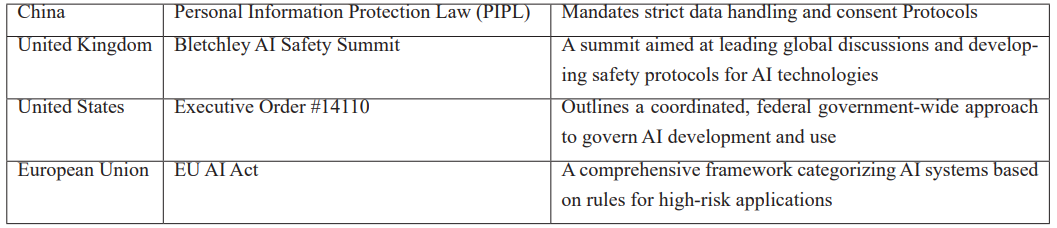
In the European Union, the European AI Office has set strict guidelines regarding the use of personal health data. In 2025, the AI Act introduced new regulations for clinical decision-making (Table 3) [21]. These include transparency, human oversight, post-market monitoring, and proof that the AI system performs safely and fairly. Hospitals that use AI have to ensure their tools are properly classified, documented, and monitored.
Table 1: AI technologies introduced in China during the COVID-19 pandemic.
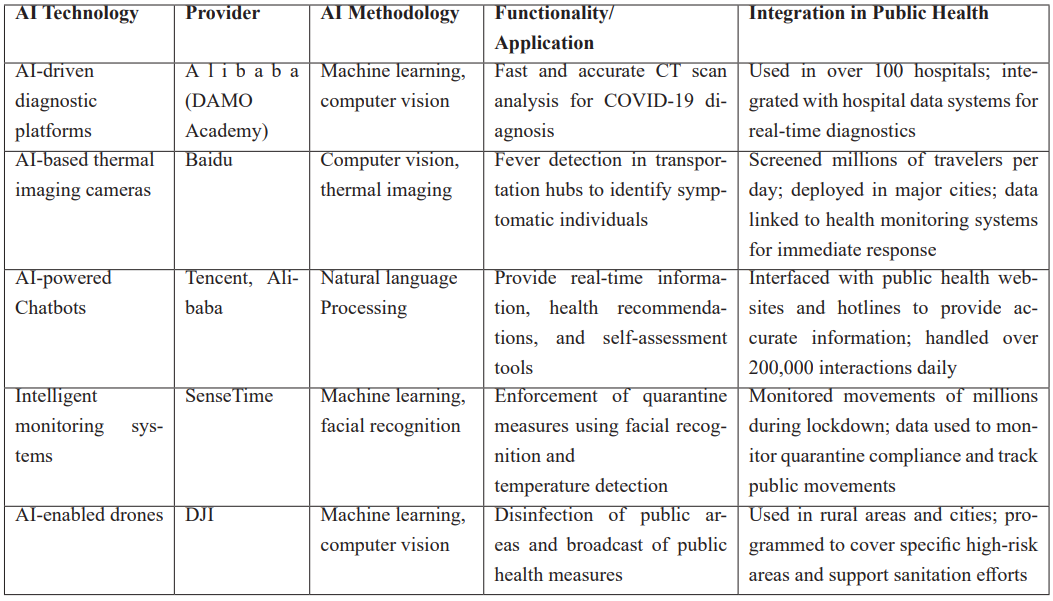
Table 2: Comparison of various AI Technologies used in Public Health by different Countries.
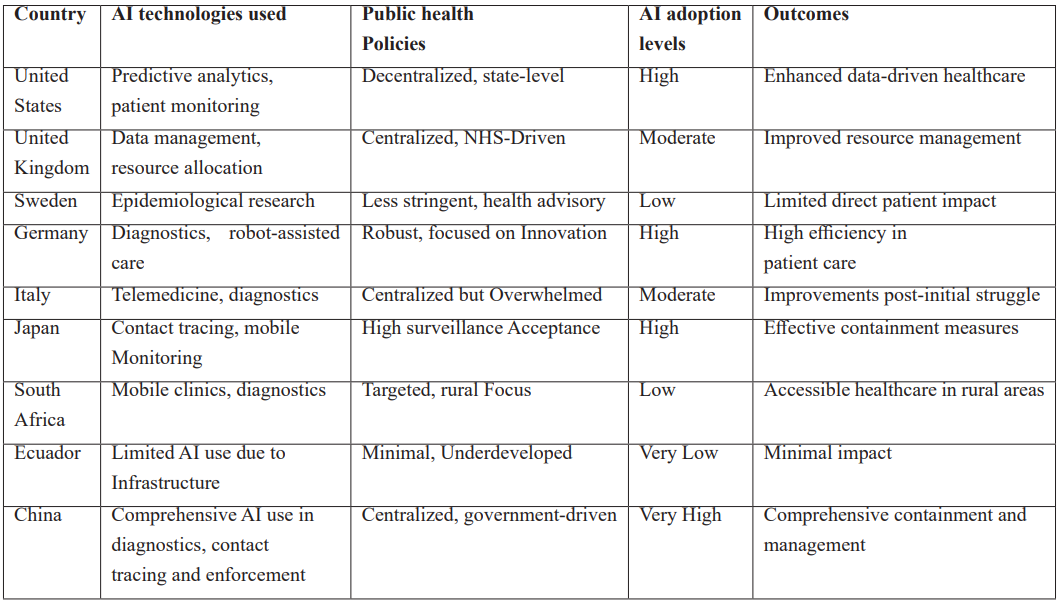
Table 3: Various national, regional, and international efforts to regulate AI.
Conclusion
Artificial intelligence is reshaping how infections are diagnosed and treated. AI proved this during the recent COVID-19 pandemic that it can turn a huge amount of clinical data into prognosis and diagnosis at a rapid speed that is required to control evolving microbes during global pandemic outbreaks. The future use of AI will depend on an increase in data-science literacy among medical practitioners and the establishment of interdisciplinary clinical teams. Presently, regulatory legislation such as the EU AI Act have provided different guidelines. However, clinicians, data scientists, and software engineers will have to share the responsibility to implement these principles into up-datable models that can remain clinically relevant as the dynamics of viral epidemics shift.
References
- Delipetrev B, Tsinaraki C, Kosti´c U. AI Watch, historical evolution of artificial intelligence: analysis of the three main paradigm shifts in AI. Publications Office of the European Union, 2020.
- Schmidhuber J. Annotated History of Modern AI and Deep Learning, 2022.
- Venkata SSMGN. AI-Driven Data Engineering for Real-Time Public Health Surveillance and Early Outbreak Detection. Engineering International. Engineering International, 2023; 11(2): 85–98.
- Xu L, Zhou C, Luo ST, et al. Modernising infectious disease surveillance and an early-warning system: The need for China's action. Lancet Reg Health West Pac, 2022; 23: 100485.
- Ginsberg J, Mohebbi MH, Patel RS, et al. Detecting influenza epidemics using search engine query data. Nature, 2009; 457(7232): 1012–1014.
- Kriza C, Amenta V, Zeni´e A, Panidis D, Chassaigne H, Urb´ an P, et al. Artificial intelligence for imaging-based COVID-19 detection: systematic review comparing added value of AI versus human readers. Eur J Radiol, 2021; 145: 110028.
- Chen S, Yu J, Chamouni S, Wang Y, Li Y. Integrating machine learning and artificial intelligence in life-course epidemiology: pathways to innovative public health solutions. BMC Med, 2024; 22: 354.
- Syrowatka A, Kuznetsova M, Alsubai A, et al. Leveraging artificial intelligence for pandemic preparedness and response: a scoping review to identify key use cases. NPJ Digit Med, 2021; 4(1): 96.
- Freifeld CC, Mandl KD, Reis BY, et al. HealthMap: global infectious disease monitoring through automated classification and visualization of Internet media reports. J Am Med Inform Assoc, 2008; 15(2): 150–157.
- Ali H. AI for Pandemic Preparedness and Infectious Disease Surveillance: Predicting Outbreaks, Modeling Transmission, and Optimizing Public Health Interventions. Int J Res Publ Rev, 2024; 5(8): 4605–4619.
- Pennisi F, Pinto A, Ricciardi GE, Signorelli C, Gianfredi V. Artificial intelligence in antimicrobial stewardship: a systematic review and meta-analysis of predictive performance and diagnostic accuracy. Eur J Clin Microbiol Infect Dis, 2025; 44: 463–513.
- Baassi M, Moussaoui M, Soufi H, Rajkhowa S, Sharma A, Sinha S, et al. Towards designing of a potential new HIV-1 protease inhibitor using QSAR study in combination with Molecular docking and Molecular dynamics simulations. PLoS One, 2023; 18: e0284539.
- Zeng D, Xin JB, Yang KY, et al. A hemagglutinin stem vaccine designed rationally by AlphaFold2 confers broad protection against influenza B infection. Viruses, 2022; 14(6): 1305.
- Floresta G, Zagni C, Gentile D, Patamia V, Rescifina A. Artificial intelligence technologies for COVID-19 de novo drug design. Int J Mol Sci, 2022: 23.
- Wang L, Zhang Y, Wang D, Tong X, Liu T, Zhang S, et al. Artificial intelligence for COVID-19: A systematic review. Front Med (Lausanne), 2021; 8: 704256.
- Kaushik R, Kant R, Christodoulides M. Artificial intelligence in accelerating vaccine development - current and future perspectives. Front Bacteriology, 2023; 2: 1258159.
- Mohanty E, Mohanty A. Role of artificial intelligence in peptide vaccine design against RNA viruses. Inform Med Unlocked, 2021; 26.
- Arora G, Joshi J, Mandal RS, Shrivastava N, Virmani R, Sethi T. Artificial intelligence in surveillance, diagnosis, drug discovery and vaccine development against covid-19. Pathogens, 2021; 10: 1048.
- Ong E, Wong MU, Huffman A, et al. COVID-19 coronavirus vaccine design using reverse vaccinology and machine learning. Front Immunol, 2020; 11: 1581.
- Huang CH, Batarseh FA, Boueiz A, Kulkarni A, Su PH, Aman J. Measuring outcomes in healthcare economics using artificial intelligence: with application to resource management. Data Policy, 2021; 3: e30.
- Proposal for a Regulation laying down harmonised rules on artificial intelligence: Shaping Europe's digital future". digital-strategy.ec.europa.eu, 2021.