
Email id: info@ijclinmedcasereports.com
Effect of Climate Change on Global Health
Nadeem Kizilbash1,*, Abdul Hai1, Daliyah Alruwaili1, Maha Zainab2, Nayha Qazi3 and Zaina Qazi3
1Department of Medical Laboratory Technology, Faculty of Applied Medical Sciences, Northern Border University, Arar, Saudi Arabia
2Stephen Leacock Collegiate Institute, Scarborough, ON M1T 2M5, Canada
3Abington Senior High School, Abington, PA 19001, USA
Received Date: 08/12/2025; Published Date: 20/01/2026
*Corresponding author: Nadeem Kizilbash, Department of Medical Laboratory Technology, Faculty of Applied Medical Sciences, Northern Border University, Arar, Saudi Arabia
Abstract
The accumulation of greenhouse gases in the atmosphere is causing climate change. There are certain gases such as carbon dioxide that are emitted into the atmosphere through both natural processes as well as human activity. These gases trap heat in the atmosphere and cause the global temperature to rise. Climate change can affect health due to the increased frequency and intensity of heat waves, floods and droughts and outbreaks of infectious diseases. The overall effect of climate change on health is negative and low-income countries are especially vulnerable to its effects.
Introduction
“Climate change” refers to changes in temperature, rainfall, snow and wind patterns. It is due to the rising levels of greenhouse gases due to the burning of fossil fuels in developed and developing countries. The United Nations Framework Convention on Climate Change (UNFCCC) has explained that climate change alters the composition of global atmosphere (Figure 1). Both man-made and natural factors contribute to climate change. Some examples of man-made causes include the use of fossil fuels, cutting down of forests to develop farmlands, etc. In 2022, the world experienced the highest temperature for over 100,000 years (Figure 2). The results of climate change include more frequent and intense heat waves, hurricanes and increased risks from droughts, wildfires, and floods [1,2]. A combination of these outcomes has affected human health and public safety.
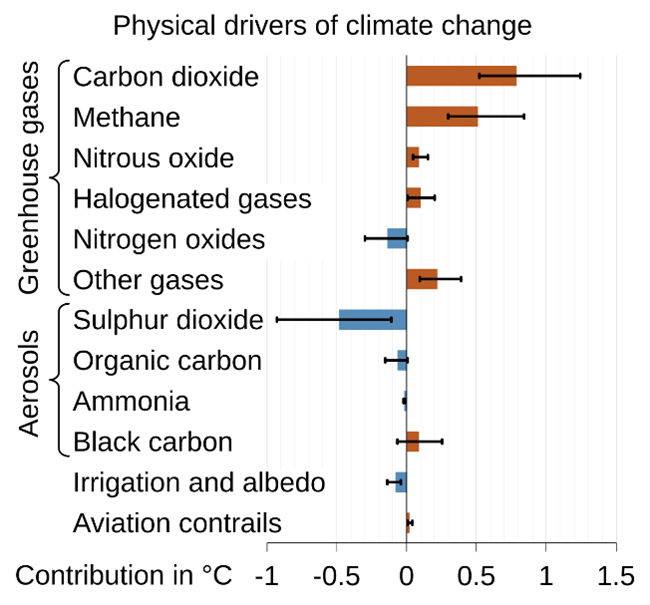
Figure 1: Contribution of various gases to climate change.
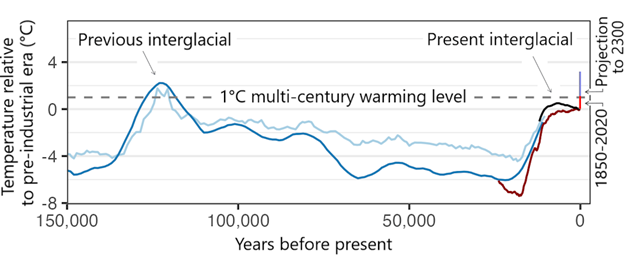
Figure 2: Variation of average global temperature over last 100,000 years.
Climate change can affect various ecological and biological systems and it has increased the frequency of both infectious and non-communicable disease [3,4] (Figure 3). The Lancet Commission on Health and Climate Change was established in 20155 and its report was released in 2023 [5]. It concluded that there has been little progress in protecting individuals from the adverse health effects of climate change [5]. Low-income and middle-income countries are not equipped to protect themselves from the effects of climate change [5]. However, they suffer the most risks, even though high-income countries emit the largest amounts of greenhouse gases [5].
Climatology and Climate Change
Greenhouse gases trap heat in the atmosphere. They can be produced naturally by volcanoes and forest fires. However, the warming seen today cannot be explained by natural processes alone. From CE 1000 to 1750, carbon dioxide levels increased from 275 to 285 parts per million, but over the next 250 years, they rose from 285 to 379 parts per million, due to human activity.
The models that are currently being used by Climatologists are more comprehensive than the ones used in the 1990s [6]. They use different interacting cycles to derive climate change models (Figure 4). Today’s models have been validated against recorded data from the past [7]. However, modeling is not an exact science. Some uncertainty is always present due to the sensitivity of the climate systems to future atmospheric changes [7]. Some discrepancies have been found between the predicted levels and the actual greenhouse gas emission levels [7]. Also, the models have wrongly predicted changes in temperature and rainfall pattern. Hence, estimates of climate change over the coming decades by various models are considered more hypothetical than predictive [7]. Some models have indicated that even if mankind manages to curb excess greenhouse gas emissions, the levels of world’s oceans will continue to rise for the 1000 years [7].
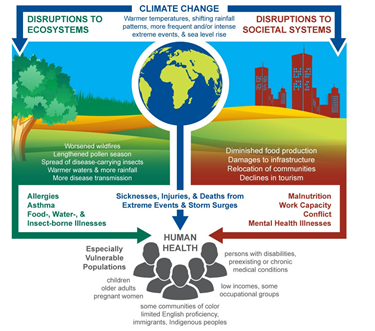
Figure 3: Climate change can affect various ecological and biological systems.
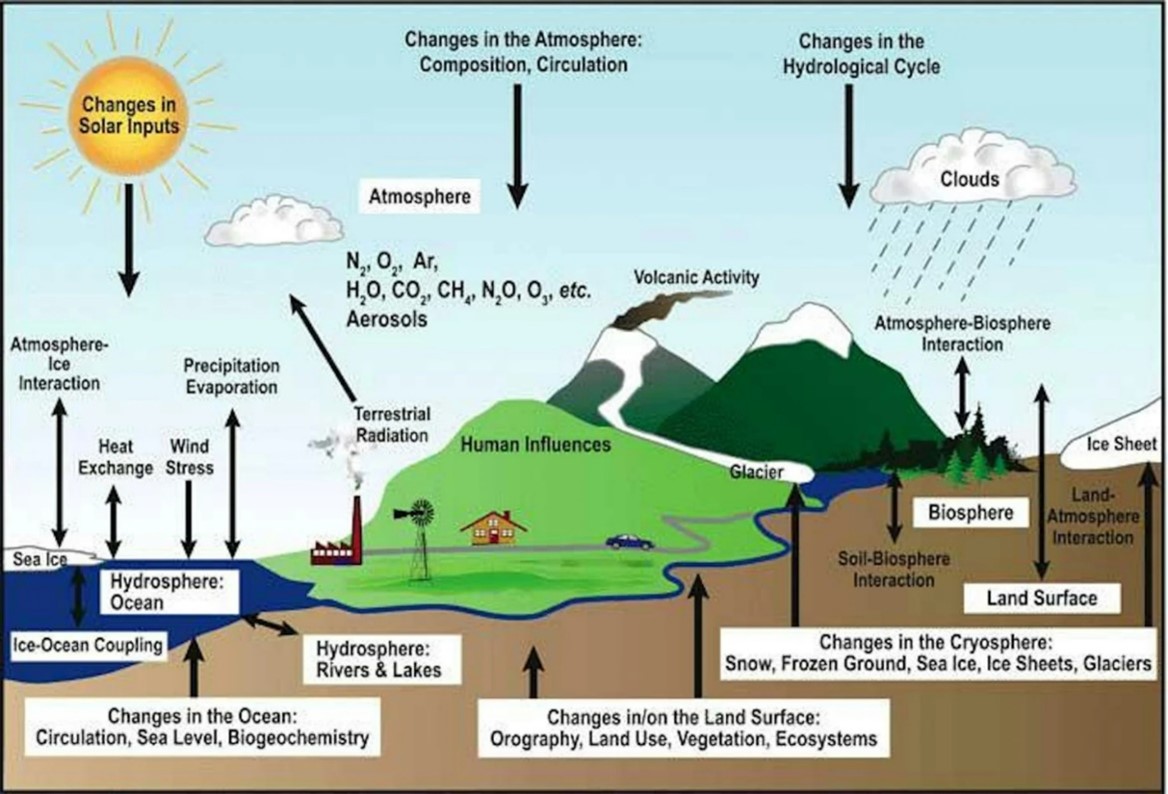
Figure 4: Various interacting cycles are used to derive climate change models.
Effect of Climate Change on Life Expectancy
A relationship between temperature and life expectancy has been formulated that relies on the latitude of the earth and the various climatic zones to make predictions [7]. It shows that people living in warmer climates are more affected by colder temperatures, and populations living in colder climates are more affected by warm temperatures. Also, regions in which housing provides poor protection against cold weather have higher winter mortality rate [7]. The results of these studies have shown a correlation between heat waves and mortality among old people [7]. The data shows that mentally ill patients, children and others with pre-existing conditions are especially vulnerable to heat waves [7].
Effect of Climate Change on Metabolic Disorders
The human body has very few coping mechanisms to handle excessive heat. The mechanisms that do exist include evaporation by sweating, conduction, convection, and radiation. The ability of the body to adapt to heat exposure declines with age, pre-existing conditions and the use of prescription drugs [8]. The duration and intensity of heat exposure can determine if cramps and heat-related edema occur or whether heat exhaustion and life-threatening hyperthermia or heatstroke can develop [9]. A heat stroke can occur with minimal physical activity and it affects the elderly and those suffering from dementia, cardiovascular disease, diabetes, hypertension, renal disease, and alcoholism [9]. Heat stroke can result in cardiac arrest [9] as well as atrial and ventricular arrhythmias, myocardial infarction (MI) and stroke [9].
Effect of Climate Change on Infectious Diseases
The increase in temperature affects the rate of pathogen replication [7]. In colder and dryer climates, changes in climate can affect the ecological balance and trigger epidemics [7]. The increased temperature can result in outbreaks of infections if pathogens are present in water and food [10]. Salmonella bacteria are present in animal gut and food and cholera bacteria are found in contaminated water. Both Salmonella and Cholera bacteria proliferate rapidly at high temperatures [7].
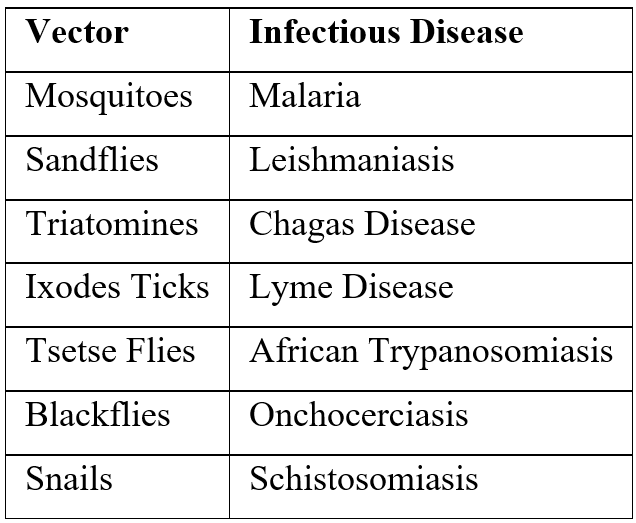
An increase in the life-cycle of both the vector species, such as mosquitoes, and the pathogens such as protozoa, bacteria and viruses, can increase the potential transmission of many vector-borne infectious diseases such as Malaria, Dengue Fever and Leishmaniasis [11] (Table 1). For example, Malaria is transmitted by Anopheles mosquitoes that live and breed on the surface of stagnant water [12]. Many studies have shown that an increase in ambient temperature has caused an increase in the geographical distribution of malarial mosquitoes [13]. Another viral disease, Dengue, is transmitted by the Aedes mosquito. It causes about 96 million cases every year and an estimated 40,000 deaths [12]. Other viral mosquito-borne diseases include Zika, Chikungunya, Yellow and West Nile fever [12].
Table 1: Examples of vector-borne diseases sensitive to climate change.
Effect of Climate Change on Mental Health
Climate change can affect the mental health and well-being of societies [13]. Factors contributing to climate change can induce anxiety about the unknown in places at risk from flooding and drought [13]. The combination of social and environmental stress causes diverse mental health conditions and results in anxiety and depression, post-traumatic stress disorder (PTSD) and impaired sleep [13].
Health Impact of Climate Change in Africa
An epidemic of Malaria has been reported in East Africa, Rwanda and Zimbabwe for the last 15 years. It has been associated with climate variability [11]. Malaria outbreaks have also been reported in Somalia and Kenya following flooding caused by the El Niño cycles in 1997/98 [14]. El Niño caused the epidemic of cholera in Djibouti, Somalia, Kenya, Mozambique and the United Republic of Tanzania due to the rise in sea-surface temperature and flooding. It has been concluded that a significant association between water supply from Lake Tanganyika and the risk of infection for cholera exists. The cause of this is most likely due to warming of the African lakes.
Health Impact of Climate Change in Asia
Climate change can affect the mental health and well-being of societies [13]. Factors contributing to climate change can induce anxiety about the unknown in places at risk from flooding and drought [13]. The combination of social and environmental stress causes diverse mental health conditions and results in anxiety and depression, post-traumatic stress disorder (PTSD) and impaired sleep [13].
Effect of Climate Change on Infectious Diseases
In Asia, the main public health risks are Malaria and Cholera [11]. Malaria is one of the most important vector-borne diseases in India, Bangladesh, Sri Lanka, Thailand, Malaysia, Cambodia, Vietnam, Indonesia, Papua New Guinea and parts of China [11]. In many South Asian countries, water-borne diseases such as cholera, and diarrheal diseases such as giardiasis, salmonellosis and cryptosporidiosis, are presently affecting individuals whom are drinking contaminated water. As the temperature increases, these diseases could become more rampant in many parts of South Asia [11].
Health Impact of Climate Change in Europe
The major health impact in Europe is mainly due to thermal stress and air pollution [15]. It has been conjectured that the recent emergence of Malaria in southeastern Europe might be due to the increase in average temperature11. In England and Wales, more than 2000 deaths were reported16 in a heat wave in western Europe in 2003 [16]. In France, it was estimated that more than 14,800 extra deaths occurred during the first 3 weeks of August 2003 [17].
Future directions
Climate change scenarios are obtained from various global climate change models (Figure 3). The measurements obtained are then applied to receive projections for the frequency of occurrence of various diseases in the future. The World Health Organization (WHO) has estimated that the global burden of disease (GBD) due to climate change can be related to a parameter called disability adjusted life years lost (DALYS). The epidemiological models need to be correlated to these to estimate the effect on frequency of deaths due to Malaria, Diarrhoea, Malnutrition, etc.
Conclusion
Since the effects of climate change, including the impact on health, are increasing rapidly, a global response against climate change has to be organized quickly. Some researchers have expressed concerns that governments and healthcare providers are still not completely aware about the increase in the health burden due to climate change. In fact, physicians need to be especially trained to handle the health outcomes of climate change.
References
- Seneviratne SI, Zhang X. Intergovernmental Panel on Climate Change (IPCC), Weather and climate extreme events in a changing climate: Climate Change 2021 – The Physical Science Basis: Working Group I Contribution to the Sixth Assessment Report of the Intergovernmental Panel on Climate Change. Cambridge University Press, 2023; 1513-1766.
- Balbus JA, Crimmins JL, Gamble DR. Introduction: Climate change and human health: The Impacts of Climate Change on Human Health in the United States: A scientific assessment, Washington, DC, U.S. Global Change Research Program, 2016; 25-42.
- Guo Y, Gasparrini A, Armstrong B, Global variation in the effects of ambient temperature on mortality: A systematic evaluation: Epidemiology, 2014; 25: 781.
- Sun S, Weinberger KR, Nori-Sarma A, Ambient heat and risks of emergency department visits among adults in the United States: time stratified case crossover study: BMJ, 2021; 375: e065653.
- Romanello M, Napoli CD, Green C. The 2023 report of the Lancet Countdown on health and climate change: The imperative for a health-centred response in a world facing irreversible harms. Lancet, 2023; 402(10419): 2346-2394.
- AR5 Synthesis Report - Climate Change 2014. Contribution of Working Groups I, II and III to the Fifth Assessment Report of the Intergovernmental Panel on Climate Change, 2014; p. 58: Box 2.3.
- McMichael AJ. “Climate Change and Human Health: Present and Future Risks.” The Lancet Series, 2006; 367: 859-869.
- Kovats RS, Campbell-Lendrum D, Matthies F. Climate change and human health: estimating avoidable deaths. Risk Anal, 2005; 25: 1409–1418.
- Khan A. Heat related illnesses: Review of an ongoing challenge. Saudi Medical Journal, 2019; 40(12): 1195-1201.
- Jessica Dietrich, Jens-Andre Hammerl, Annette Johne, Oliver Kappenstein, Christopher Loeffler, Karsten Nöckler, et al. Impact of climate change on foodborne infections and intoxications. J Health Monit, 2023; 8(Suppl 3): 78–92.
- McMichael AJ. Climate Change and Human Health. World Health Organization, 2003: 1-306.
- Agyemang-Badu SY, Awuah E, Oduro-Kwarteng S, Dzamesi JYW, Dom NC, KannoEnvironmental Management and Sanitation as a Malaria Vector Control Strategy: A Qualitative Cross-Sectional Study Among Stakeholders, Sunyani Municipality, Ghana. Environ Health Insights, 2023; 17: 11786302221146890.
- Leal SDV, Sousa Cd, Monteiro DDSR, Mendonc MdLL, Gonc alves AALM, DePina AJ. The geographical distribution of the malaria vector Anopheles arabiensis in Cabo Verde, 2016–2023. Front. Trop. Dis, 2024; 5: 1353839.
- Kovats S, Bouma MJ, Hajat S, Worrell E, Haines A. El Nino and health. Lancet, 2003; 361: 1481–1489.
- Purse BV, Mellor PS, Rogers DJ, Samuel AR, Mertens PPC, Baylis M. Climate change and the recent emergence of bluetongue in Europe. Nat Rev Microbiol, 2005; 3: 171–181.
- Johnson H, Kovats RS, McGregor GR, et al. The impact of the 2003 heatwave on mortality and hospital admissions in England. Health Stat Q, 2005; 25: 6–11.
- Conti S, Meli P, Minelli G, Solimini R, Toccaceli V, Vichi M, et al. Epidemiologic study of mortality during the Summer 2003 heat wave in Italy. Environ Res, 2005; 98: 390–399.