
Email id: info@ijclinmedcasereports.com
Chronic Inflammatory Axonal Polyneuropathy: A Challenging Case Report
Kaoutar Simma1,2,*, Kamal Haddouali1,2, Mariem Jalami1,2, Asmae Sikkal1,2, Hajar Khattab1,2, Salma Bellakhdar1,2,3, Hicham El Otmani1,2,3, Mohamed Abdoh Rafai1,2,4 and Bouchra El Moutawakil1,2,3
1Hassan II University of Casablanca, Faculty of Medicine and Pharmacy of Casablanca, Casablanca 20100, Morocco
2Department of Neurology, CHU Ibn Rochd, Casablanca, Morocco
3Laboratory of Genetics and Molecular Pathology, Faculty of Medicine and Pharmacy, Casablanca, Morocco
4Research Laboratory on Nervous System Diseases, Neurosensory Diseases and Disability, Faculty of Medicine and Pharmacy, Casablanca, Morocco
Received Date: 19/05/2026; Published Date: 20/07/2026
*Corresponding author: Kaoutar Simma, Department of Neurology, CHU Ibn Rochd, Casablanca, Morocco; Hassan II University of Casablanca, Faculty of Medicine and Pharmacy of Casablanca, Casablanca 20100, Morocco
Abstract
Chronic Inflammatory Axonal Polyneuropathy (CIAP) is a rare immune-mediated disorder characterized by chronic axonal neuropathy, inflammatory features, and responsiveness to immunotherapy, distinct from the classical demyelinating pattern of Chronic Inflammatory Demyelinating Polyneuropathy (CIDP). Its relationship with acute axonal neuropathies such as Guillain-Barré syndrome remains poorly understood. We report the case of a 32-year-old woman initially diagnosed with acute motor-sensory axonal neuropathy (AMSAN) who achieved partial recovery after Intravenous Immunoglobulin (IVIg) therapy. Three years later, she relapsed with progressive limb weakness, cranial nerve involvement, and persistent axonal electrophysiology. Brain MRI showed contrast enhancement of cranial nerves. A second IVIg course resulted in marked clinical improvement. This case supports the existence of a continuum between acute axonal neuropathies and CIAP, and underscores the importance of recognizing immune-mediated mechanisms in relapsing axonal neuropathy to guide therapeutic decisions.
Keywords: Chronic inflammatory axonal polyneuropathy; CIAP; Axonal neuropathy; Guillain-Barré syndrome; AMSAN; Intravenous immunoglobulin; Immune-mediated neuropathy
Introduction
Immune-mediated neuropathies encompass a broad spectrum of disorders affecting motor, sensory, and autonomic fibers of the peripheral nervous system [1]. These conditions range from acute monophasic entities such as Guillain-Barré Syndrome (GBS) to chronic progressive disorders including Chronic Inflammatory Demyelinating Polyneuropathy (CIDP) [1,2]. CIDP is classically defined by demyelinating features on nerve conduction studies, whereas axonal involvement is traditionally associated with Acute Motor-Sensory Axonal Neuropathy (AMSAN), a GBS subtype typically considered monophasic [1].
Emerging evidence, however, indicates that chronic immune-mediated neuropathies may present with predominant axonal involvement without electrophysiological demyelination. This entity, termed Chronic Inflammatory Axonal Polyneuropathy (CIAP), has been increasingly recognized as a distinct clinicopathological condition [3]. Unlike CIDP, CIAP exhibits inflammatory characteristics and responsiveness to immunotherapy despite the absence of demyelinating features [3]. Diagnostic criteria proposed by Oh et al. have further consolidated its recognition within the spectrum of immune-mediated neuropathies.
Cases initially presenting as acute axonal neuropathies and subsequently evolving into a relapsing or chronic course remain exceptionally rare. We report the case of a young woman initially diagnosed with AMSAN who later developed a relapsing course responsive to IVIg therapy, highlighting the diagnostic and conceptual challenges at the interface between acute and chronic inflammatory axonal neuropathies.
Case Report
A 32-year-old woman with no significant medical history presented in December 2020 with a 4-week history of progressive ascending weakness involving all four limbs, associated with paresthesias, dysphagia, dysphonia, and bilateral facial diplegia. Neurological examination revealed flaccid tetraparesis, deep sensory impairment, preserved deep tendon reflexes, and bulbar involvement. Nerve conduction studies demonstrated a sensorimotor axonal neuropathy consistent with AMSAN given the acute onset and non-length-dependent pattern. Cerebrospinal fluid (CSF) analysis was normal, and anti-GQ1b antibodies were negative. IVIg therapy was initiated on day 45 after symptom onset, the delay being attributable to late referral to our tertiary center, with gradual clinical improvement. Follow-up nerve conduction studies at 2 years showed a persistent sensorimotor polyneuropathy without demyelination, with active denervation signs (Figure 1).
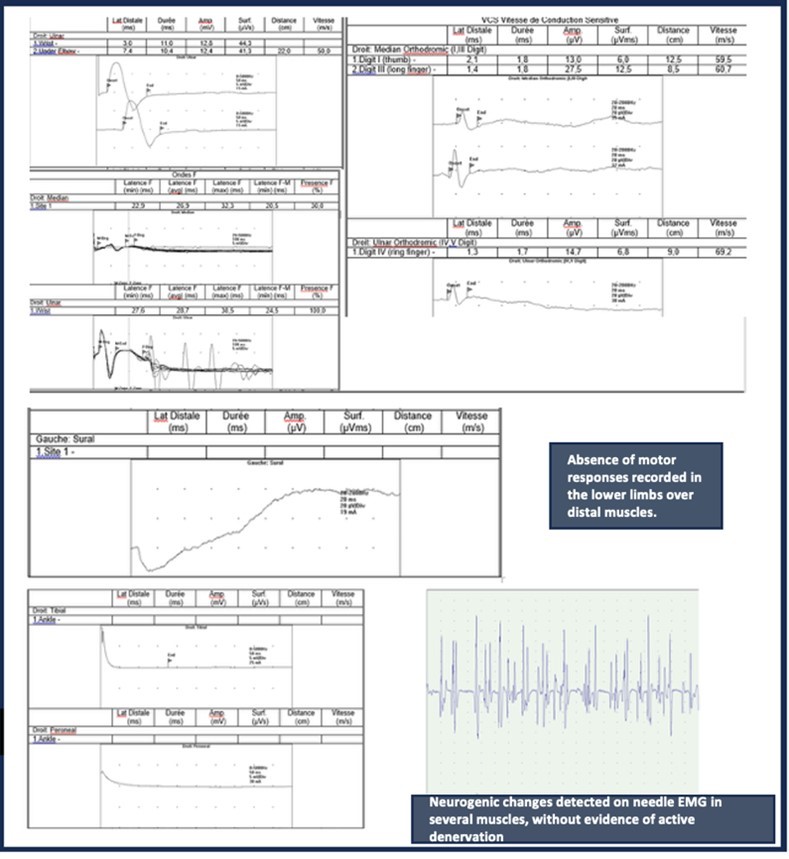
Figure 1: Follow-up ENMG at 2 years: sensorimotor polyneuropathy without evidence of demyelination.
In March 2024, she relapsed with limb heaviness, bulbar symptoms, gait impairment requiring assistance, steppage gait, and distal amyotrophy. Repeat nerve conduction studies confirmed persistent axonal involvement. Brain MRI demonstrated contrast enhancement of cranial nerves (Figure 2). Anti-ganglioside antibodies were not retested at the time of relapse due to logistical constraints; nerve biopsy was not performed as teasing preparations to detect focal demyelination were unavailable.
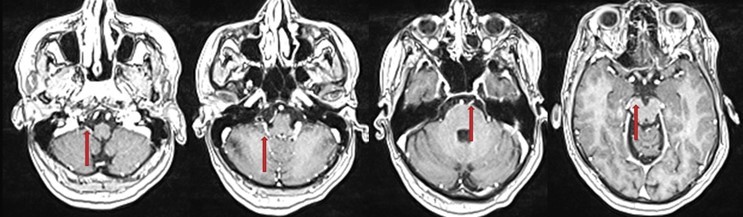
Figure 2: Brain MRI demonstrated contrast enhancement of cranial nerves.
A second IVIg course administered on day 60 following relapse onset resulted in marked clinical improvement. The patient has since remained clinically stable without maintenance therapy.
Discussion
CIAP represents a rare subtype within the spectrum of immune-mediated peripheral neuropathies [1]. The distinction between CIAP and CIDP is clinically relevant: CIDP is defined by electrophysiological demyelination, whereas CIAP is characterized by axonal neuropathy without primary demyelinating features and the presence of inflammatory markers [3,4]. Although the term "axonal CIDP" has been proposed, the designation CIAP may be more appropriate given the lack of definitive evidence that axonal damage is secondary to demyelination [4].
Clinically, CIAP usually presents as a slowly progressive sensorimotor neuropathy [3]. Proximal weakness and cranial nerve involvement, as observed in our patient, may also occur, suggesting that neurological dysfunction may extend beyond axonal degeneration through inflammatory mechanisms affecting nerve roots [1]. CSF protein elevation, reflecting proximal nerve inflammation, is a supportive criterion, though it lacks specificity to differentiate CIAP from CIDP [4].
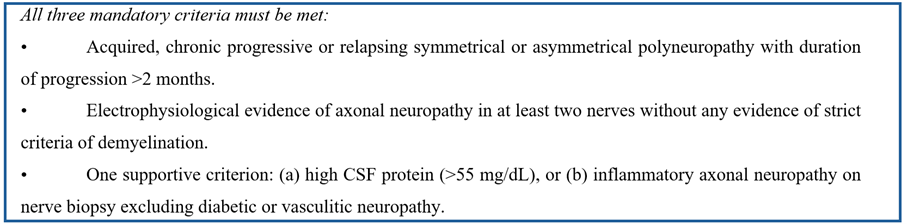
The diagnosis of CIAP requires a chronic or relapsing course exceeding two months, axonal electrophysiology in at least two nerves without demyelinating criteria, and at least one supportive criterion: CSF protein above 55 mg/dL or histopathological evidence of inflammatory axonal neuropathy on nerve biopsy [3,5]. The diagnostic criteria proposed by Oh et al. are summarized in Box 1. In our patient, the relapsing course, persistent axonal electrophysiology, and sustained IVIg responsiveness fulfilled these criteria, despite the absence of CSF protein elevation at onset and unavailability of nerve biopsy.
Other causes of inflammatory axonal neuropathy should be systematically excluded, including vasculitic, diabetic, and paraprotein-associated neuropathies [1,2].
Therapeutically, IVIg and corticosteroids remain the cornerstone of management, capable of stabilizing disease progression or improving neurological function [1,6]. Complete recovery appears less frequent than in demyelinating neuropathies, yet clinically meaningful improvement can be achieved [3]. The present case suggests that axonal dysfunction in CIAP may be at least partially reversible when inflammatory mechanisms are adequately controlled.
This case is notable for documenting the transition from AMSAN to a relapsing CIAP-like phenotype, a trajectory that remains exceptionally rare in the literature [5]. It highlights the diagnostic challenge in settings where nerve biopsy with teasing preparations is unavailable, and underscores that delayed recognition of an immune-mediated mechanism may contribute to irreversible neurological disability [1,3]. In summary, this observation supports considering an immune-mediated etiology in patients with chronic or relapsing axonal polyneuropathy, as early immunotherapy may improve functional outcomes. Further multicenter prospective studies are required to validate diagnostic criteria and optimize therapeutic strategies for CIAP [4,5].
Box 1: Diagnostic criteria of CIAP proposed by Oh et al. [3].
Declarations
Competing interests: The authors declare that they have no competing interests.
Funding: This research received no external funding.
Acknowledgements: The authors thank the patient for her consent to publish this case.
References
- Shastri A, Al Aiyan A, Kishore U, Farrugia ME. Immune-Mediated Neuropathies: Pathophysiology and Management. Int J Mol Sci, 2023; 24(8): 7288. doi: 10.3390/ijms24087288.
- Antoine JC. Antibodies in immune-mediated peripheral neuropathies. Where are we in 2024? Rev Neurol (Paris), 2024; 180(9): 876-887. doi: 10.1016/j.neurol.2024.09.002.
- Oh SJ, Lu L, Alsharabati M, Morgan MB, King P. Chronic inflammatory axonal polyneuropathy. J Neurol Neurosurg Psychiatry, 2020; 91(11): 1175-1180. doi: 10.1136/jnnp-2020-323504.
- Vallat JM, Deschamps N, Corcia P, Magy L, Mathis S. Chronic Inflammatory or Chronic Inflammatory Demyelinating Polyradiculoneuropathy? Front Neurol, 2022; 13: 862335. doi: 10.3389/fneur.2022.862335.
- Sreij A, Sawaya R. Chronic Inflammatory Axonal Polyneuropathy: An Entity by Itself. J Clin Neuromuscul Dis, 2024; 25(4): 205-207. doi: 10.1097/CND.0000000000000494.
- Lin CS, Krishnan AV, Park SB, Kiernan MC. Modulatory Effects on Axonal Function After Intravenous Immunoglobulin Therapy in Chronic Inflammatory Demyelinating Polyneuropathy. Arch Neurol, 2011; 68(7): 862-869. doi: 10.1001/archneurol.2011.137.