
Email id: info@ijclinmedcasereports.com
Intra-Abdominal Migration of an Osteosynthesis Pin Causing Bladder and Vascular Injury: A Rare Case Report
El Wassi Anas, Benzidane Kamal, Elhaddadi Mosaab*, Bouali Ichrak, Ettaoussi Abdelhak, Kamal Khadija, Majid Abdessamad, Bouali Mounir, Elbakouri Abdelilah and El Hattabi Khalid
Faculty of Medicine and Pharmacy of Casablanca, Visceral Emergency Department P35, IBN ROCHD University hospital of Casablanca, Casablanca, Morocco
Received Date: 08/04/2026; Published Date: 08/07/2026
*Corresponding author: Elhaddadi Mosaab, Faculty of Medicine and Pharmacy of Casablanca, Visceral Emergency Department P35, IBN ROCHD University hospital of Casablanca, Casablanca, Morocco
Abstract
Introduction: Migration of orthopedic fixation devices is a rare but potentially life-threatening complication. Intra-abdominal migration is exceptional and may result in severe visceral and vascular injuries requiring urgent intervention.
Presentation of case: A 71-year-old woman underwent osteosynthesis for a right femoral neck fracture. On postoperative day 3, she developed acute abdominal symptoms with bowel obstruction. Imaging revealed intra-abdominal migration of an osteosynthesis pin traversing the abdominopelvic cavity. Computed tomography demonstrated close relationships with major vascular structures and the urinary bladder. Emergency laparotomy identified a pin entering through the hypogastrium, perforating the bladder, compressing the sigmoid colon, and extending retroperitoneally with perforation of the left common iliac artery. The pin was successfully removed, and vascular and bladder injuries were repaired.
Discussion: Hardware migration is an unpredictable complication that may occur early or late after surgery. Computed tomography is essential for diagnosis and operative planning. Surgical management is mandatory in symptomatic patients or when organ injury is present.
Conclusion: Intra-abdominal migration of orthopedic hardware should be considered in postoperative patients presenting with acute abdominal symptoms. Early diagnosis and prompt surgical intervention are crucial to prevent life-threatening complications and improve outcomes.
Keywords: Osteosynthesis hardware migration; Intra-abdominal migration; Bladder perforation; Iliac artery injury; Surgical emergency; Computed tomography
Introduction
Migration of orthopedic fixation devices is a rare but potentially serious complication of osteosynthesis procedures. Although most frequently reported in the thoracic region, migration into the abdominal or pelvic cavity has also been described and may lead to life-threatening complications [1,2].
The mechanisms of hardware migration are multifactorial and include inadequate fixation, bone resorption, repetitive motion, and muscular activity, which may progressively displace the implant from its original position. Migration can occur early in the postoperative period or several years after the initial procedure [2,3].
Intra-abdominal migration may present with nonspecific clinical features such as abdominal pain or bowel obstruction, making diagnosis challenging. However, severe complications including visceral perforation and vascular injury have been reported, requiring urgent surgical management [1,4].
Computed tomography is the imaging modality of choice, allowing precise localization of the migrated hardware and assessment of its relationship with surrounding vital structures [4].
We report a rare case of intra-abdominal migration of an osteosynthesis pin complicated by bladder perforation and iliac artery injury.
Aim of the Article:
This article aims to describe an unusual and potentially life-threatening complication of orthopedic hardware migration and to discuss its clinical presentation, imaging findings, and surgical management.
Presentation of Case
A 71-year-old woman with no significant past medical history underwent surgery for a right femoral neck fracture treated by osteosynthesis following a fall from standing height. On postoperative day 3, the patient developed signs of bowel obstruction associated with diffuse abdominal pain without alimentary vomiting. These symptoms occurred in a context of apyrexia and deterioration of the general condition.
Clinical examination revealed a conscious patient who was hemodynamically and respiratorily stable. Abdominal examination showed a distended and tympanic abdomen, with palpable osteosynthesis material in the left hypochondrium.
The examination of the lower limbs revealed no abnormalities, particularly with preserved peripheral pulses, with a slight swelling of the right thigh related to the surgery.
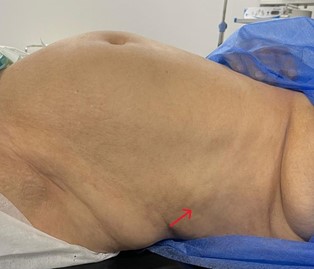
Figure 1: Image showing the subcutaneous prominence of the osteosynthesis pin.
A plain abdominal radiograph including the pelvis demonstrated the presence of an osteosynthesis pin within the abdominal cavity.
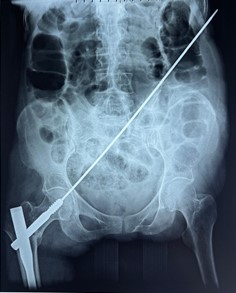
Figure 2: Abdominal radiograph showing intra-abdominal migration of an osteosynthesis pin.
Abdominopelvic computed tomography revealed a right femoral metallic osteosynthesis device generating significant artifacts that limited interpretation. One component had migrated from its original osseous location, traversing the abdominopelvic cavity along an oblique upward and leftward trajectory, extending to the left flank with externalization in the subcutaneous soft tissues.
The pin was seen passing close to the right external iliac vascular axis and the left common iliac vessels, anterior to the left psoas muscle, and in intimate contact with the urinary bladder. In addition, dilatation of small bowel loops up to 54 mm in maximal diameter with air-fluid levels was observed upstream of the terminal ileum, without a clearly identifiable transition zone.
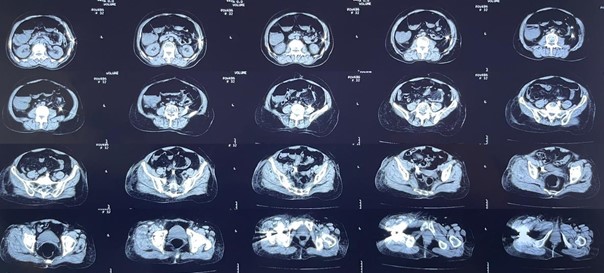
Figure 3: Abdominopelvic CT demonstrating a migrated osteosynthesis pin traversing the abdominopelvic cavity with dilatation of small bowel loops.
Laboratory investigations showed anemia (hemoglobin 11.5 g/dL), leukocytosis (14,600/mm³), normal coagulation parameters (prothrombin time 85%), and markedly elevated C-reactive protein (290.5 mg/L).
The patient was taken to the operating room. Surgical exploration through a midline supra- and infra-umbilical incision revealed a moderate amount of serous peritoneal fluid. A metallic pin was identified traversing the abdomen with a hypogastric entry point, perforating the urinary bladder and passing close to the anterior surface of the sigmoid colon, which was compressed and responsible for upstream colonic distension reaching 7 cm at the level of the transverse colon and cecum, without small bowel involvement.
The pin then followed a retroperitoneal course through the sigmoid mesentery and perforated the left common iliac artery while sparing the left iliac vein and the left ureter.
The surgical procedure consisted of extraction of the intra-abdominal migrating pin, repair of two lacerations of the left common iliac artery, closure of the bladder perforation, and drainage of the Douglas pouch using a Salem sump drain.
The postoperative course was uneventful, and the patient was discharged on postoperative day 6.
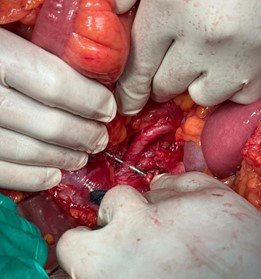
Figure 4: Intraoperative view showing vascular injury of the left common iliac artery caused by the migrated pin.
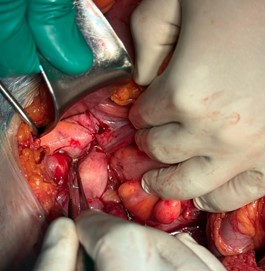
Figure 5: Intraoperative view demonstrating bladder perforation caused by the migrated osteosynthesis pin.
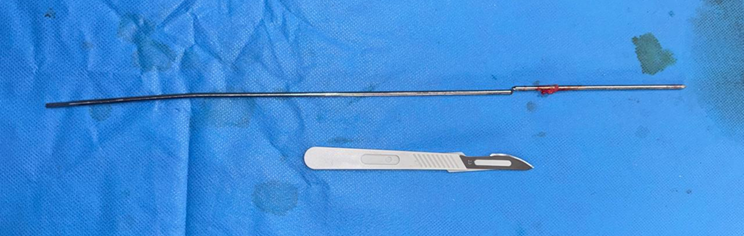
Figure 6: Intraoperative view showing the osteosynthesis pin after the extraction.
Discussion
Migration of orthopedic fixation devices is an uncommon but potentially catastrophic complication of osteosynthesis, capable of causing severe visceral and vascular injuries. Although intrathoracic migration has been more frequently reported, intra-abdominal migration remains rare and is often associated with delayed diagnosis and significant morbidity [3,5].
The pathophysiology of implant migration is complex and multifactorial. Mechanical instability at the fixation site, progressive bone resorption, repetitive limb motion, and muscle contractions all contribute to gradual displacement of hardware [2,6]. Notably, migration may occur early in the postoperative period, as in our case, or several years later, highlighting the unpredictable nature of this phenomenon [3]. Early migration, particularly within the first postoperative days, suggests technical factors such as insufficient anchorage or inadequate fixation stability.
Clinical presentation is highly variable and often misleading. While some patients remain asymptomatic, others may present with nonspecific abdominal symptoms or acute surgical emergencies. Reported complications include bowel obstruction, perforation of hollow viscera, and major vascular injury, which can be rapidly fatal if not promptly recognized [4,5]. The coexistence of bladder perforation and iliac arterial injury, as observed in our patient, represents an exceptionally rare and life-threatening association that underscores the aggressive potential of such migrations.
Imaging plays a pivotal role in diagnosis. Although plain radiographs may identify hardware displacement, computed tomography remains the gold standard for precise localization and evaluation of relationships with adjacent structures, particularly vascular and retroperitoneal elements [4,5]. CT imaging is also essential for surgical planning and risk assessment.
Management strategies depend on clinical presentation but are predominantly surgical in symptomatic cases or when organ injury is suspected. Early surgical intervention allows definitive treatment through safe extraction of the foreign body and repair of associated injuries. Delayed management has been associated with increased morbidity due to progressive tissue damage and septic complications [4,7]. In our case, prompt laparotomy enabled successful removal of the migrated pin and repair of both vascular and bladder injuries, resulting in a favorable postoperative outcome.
From a preventive perspective, meticulous surgical technique, appropriate selection of fixation devices, and careful postoperative monitoring are essential to minimize the risk of hardware migration. Some authors advocate routine radiographic follow-up in high-risk patients to detect early displacement before the occurrence of severe complications [3].
Conclusion
Intra-abdominal migration of an osteosynthesis pin is a rare but potentially life-threatening complication that may lead to severe visceral and vascular injuries. This case highlights the possibility of early postoperative migration and its unpredictable clinical course.
Prompt imaging, particularly computed tomography, is essential for accurate diagnosis and surgical planning. Early surgical intervention remains the cornerstone of management, allowing safe extraction of the migrated hardware and repair of associated injuries.
Meticulous surgical technique and close postoperative monitoring are crucial to prevent such complications and ensure favorable outcomes.
Provenance and Peer Review: Not commissioned, externally peer reviewed.
Consent: As per international standard or university standard, patient(s) written consent has been collected and preserved by the author(s).
Ethical Approval: As per international standard or university standard written ethical approval has been collected and preserved by the author(s).
Conflicts Interests: Authors have declared that no competing interests exist.
Source of Funding: None
References
- Intra-abdominal migration of a lag screw in gamma nailing: report of a case. Journal of Orthopaedic Trauma 2010; 24(12): p e119-e122.
- Early asymptomatic intrathoracic migration of a threaded pin after proximal humeral osteosynthesis Paola Cerruti, Tony Mangano, Marcello Giovale, Ilaria Repetto. Int J Shoulder Surg, 2016; 10(1): 41–43. doi: 10.4103/0973-6042.174520.
- Intra-pulmonary migration of a clavicle osteosynthesis pin: a case report Kaouther Ben Amara, Sarra Zairi, Bechir Ben Radhia, Mahdi Abdennadher, Hazem Zribi, Adel Marghli. J Med Case Rep, 2024; 18: 184. doi: 10.1186/s13256-024-04369-7.
- Heineman David J, van Buijtenen, Jesse M, Heuff Gijsbert, Derksen Eric J, Pöll Ruud G. Intra-abdominal Migration of a Lag Screw in Gamma Nailing: Report of a Case. Journal of Orthopaedic Trauma, 2010; 24(12): p e119-e122. DOI: 10.1097/BOT.0b013e3181db7f25.
- Intra-abdominal migration of a k-wire during revision total hip arthroplasty Kevin T Hug, Navin D Fernando. Arthroplast Today, 2016; 3(1): 3–5. doi: 10.1016/j.artd.2016.09.002.
- Van Dyck R, Decker G. How can osteosynthesis material used for fracture fixation undergo intrathoracic migration?-a systematic literature review. J Thorac Dis, 2024; 16(11): 8068-8087. doi: 10.21037/jtd-24-943.
- Zarattini G, Breda L, Zacharia M, Sibona F. Intra-Pelvic Migration of Sliding Hip Screw During Osteosynthesis of Hip Fracture: A Rare Avoidable Intraoperative Complication. J Orthop Case Rep, 2015; 5(3): 25-28. doi: 10.13107/jocr.2250-0685.299.