
Email id: info@ijclinmedcasereports.com
A Rare Case of Popliteal Artery Aneurysm Complicated with Chronic Total Occlusion Treated by Endovascular Therapy
Pei-Jung Chen1,2, Syue-Jin Li1,2, En-Chia Chang1,2, Nai-Yu Chi1,2, Tzu-Chieh Lin1,2, Tsung-Han Lin1,2, Yu-Shien Kao1,2, Tsung-Hsien Lin1,2,3 and Po-Chao Hsu1,2,3,*
1Department of Internal Medicine, Kaohsiung Medical University Hospital, Kaohsiung Medical University, Kaohsiung, Taiwan
2Division of Cardiology, Department of Internal Medicine, Kaohsiung Medical University Hospital, Kaohsiung Medical University, Kaohsiung, Taiwan
3Department of Internal Medicine, Faculty of Medicine, School of Medicine, Kaohsiung Medical University, Kaohsiung, Taiwan
Received Date: 16/03/2026; Published Date: 22/05/2026
*Corresponding author: Dr. Po-Chao Hsu, Division of Cardiology, Department of Internal Medicine; Kaohsiung Medical University Hospital, 100 Tzyou 1st Road, Kaohsiung. 80708, Taiwan, ROC
Abstract
Introduction: Popliteal Artery Aneurysm (PAA) is the most frequent peripheral artery aneurysm, primarily presenting with thromboembolic complications. PAA manifesting as Chronic Total Occlusion (CTO) is extremely rare and presents significant revascularization challenges. We report a complex PAA-CTO case successfully managed via Endovascular Therapy (EVT).
Case Presentation: A 58-year-old male car mechanic presented with a six-month history of right popliteal swelling and pain, followed by two months of distal paresthesia. Imaging revealed a 4.57 cm PAA with total thrombotic occlusion and extensive collateralization. Given the patient’s occupational demands and lesion complexity, EVT was performed. Initial antegrade and retrograde crossing attempts failed due to the organized thrombus within the large aneurysmal sac. Revascularization was ultimately achieved using a "combined strategy," where the retrograde guidewire served as an anatomical landmark to guide successful antegrade penetration of the CTO segment. Two covered stents were deployed from the distal superficial femoral artery to the popliteal artery, successfully restoring flow.Post-procedural recovery was rapid. At three-month follow-up, ultrasound confirmed stent patency, significant aneurysm shrinkage, and resolved symptoms. The patient successfully returned to his physically demanding occupation.
Conclusion: PAA complicated by CTO represents a technical challenge for endovascular intervention. This case demonstrates that a multi-access strategy, combining antegrade and retrograde techniques with covered stent exclusion, is an effective and minimally invasive alternative to open surgery for complex PAA-CTO lesions.
Introduction
Popliteal Artery Aneurysm (PAA) is the most common type of peripheral artery aneurysm, accounting for 70% to 85% of all peripheral artery aneurysms [1]. Its prevalence in the general population is relatively low, typically less than 0.1% [2]. However, in men aged 65 to 80 years, the incidence can significantly increase to approximately 1%. Two notable epidemiological characteristics of PAA are its high bilateral occurrence (around 50% to 70% of patients have a contralateral PAA) and its strong association with Abdominal Aortic Aneurysm (AAA), with approximately 30% to 50% of PAA patients also having an AAA [1,3]. The presence of bilateral PAA often indicates a systemic aneurysmal diathesis.
The primary clinical threat of PAA is not rupture, which occurs in less than 2% to 5% of cases. Instead, its main danger lies in thromboembolic events caused by intra-aneurysmal thrombus formation or embolization, leading to acute limb ischemia (ALI) [4]. Untreated PAA patients have about 30% risk of acute thrombosis and distal embolization, with an associated limb amputation rate of 20% to 40% [1,5]. However, PAA further complicated by Chronic Total Occlusion (CTO) is considerably rarer. Such lesions not only pose a long-term threat of limb ischemia but also significantly increase the difficulty of treatment. Herein, we reported a rare case of PAA with CTO who successfully underwent complex endovascular therapy and had a favorable clinical outcome.
Case Report
A 58-year-old male car mechanic presented to our department complaining of right popliteal fossa pain and swelling for six months, accompanied by right toe numbness and paresthesia for two months. His occupation involved working in a squatting position for 6-8 hours daily and five days a week. The patient had a history of poorly controlled hypertension but denied any knee trauma.
Physical examination revealed a fixed, tender mass in the right popliteal fossa with no mobility, and diminished distal peripheral pulses. Initial diagnostic imaging with musculoskeletal ultrasound showed a 4.57 × 3.14 cm heterogeneous mass in the popliteal fossa with mixed anechoic and hypoechoic areas internally. Subsequent Doppler ultrasound evaluation further demonstrated complete absence of blood flow signals in the popliteal artery, but prominent collateral circulation around the mass, suggesting severe vascular compromise. Magnetic Resonance Imaging (MRI) T1 and T2-weighted sequences confirmed a lobulated mass with mixed signal intensity in the popliteal fossa, consistent with the characteristics of a typical aneurysm. Finally, angiography definitively confirmed the diagnosis of total thrombotic occlusion of the right popliteal artery (Figure 1).
Given the complexity of popliteal artery aneurysm complicated by CTO, an endovascular approach was chosen. The initial antegrade attempt to cross the CTO of the popliteal artery aneurysm failed, despite repeated changes of various guidewires and assistance by microcatheters and balloons (Figure 2A). Facing this challenge, a retrograde approach was then attempted. Although the retrograde guidewire successfully entered the aneurysm sac, it could not penetrate the large, completely thrombosed aneurysm to reach the superficial femoral artery. Ultimately, with the retrograde guidewire serving as an anatomical landmark, another antegrade attempt was made. This combined strategy allowed the guidewire to successfully cross the CTO segment of the popliteal artery aneurysm and enter the below-knee vessels (Figure 2B). Subsequently, angioplasty was performed using balloons of different sizes, and two covered stents were successfully deployed from the distal superficial femoral artery to the popliteal artery, which eventually restored antegrade blood flow (Figure 3).
After the procedure, the patient experienced significant symptomatic improvement. Follow-up ultrasound at one- and three-months post-surgery showed a gradual reduction in the popliteal fossa mass, restoration of arterial blood flow signals, and a corresponding decrease in surrounding collateral circulation. Clinically, the patient's pain and swelling completely resolved, and he successfully returned to his physically demanding job as a car mechanic.
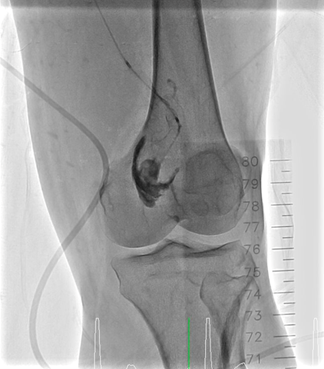
Figure 1: Angiography showed a popliteal artery aneurysm with chronic total occlusion.
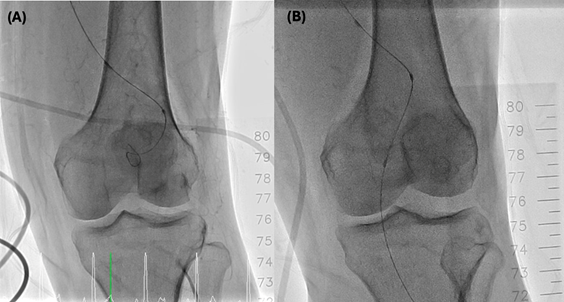
Figure 2:
Figure 2A: Difficulty wiring cross CTO lesion of PAA with initial antegrade attempt.
Figure 2B: Antegrade wire was successfully crossed by the assistance of retrograde wire landmarking after several times attempt.
CTO: chronic toal occlusion; PAA: popliteal artery aneurysm
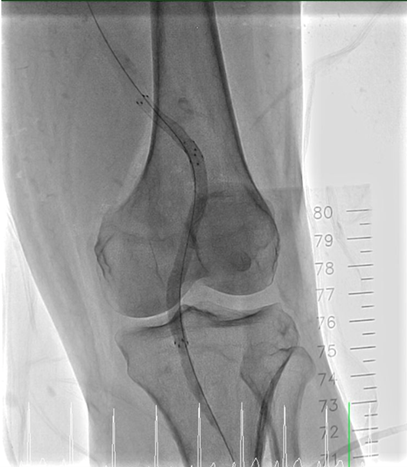
Figure 3: After balloon angioplasty and stent implantation, a good blood flow over distal superficial femoral artery to popliteal artery was regained.
Discussion
PAA, as the most common peripheral aneurysm, primarily poses a threat by causing thrombosis and distal embolization, leading to ALI. If left untreated, the amputation rate for ALI patients can range from 14.1% to 40% [6]. The uniqueness of this case lies in PAA being complicated by CTO. This condition is more complex than a simple aneurysm or acute embolism because prolonged occlusion leads to thrombus organization, making guidewire penetration difficult with conventional catheter techniques.
When treating popliteal artery disease, two main options are available: Open Surgical Repair (OSR) and Endovascular Therapy (EVT). OSR has long been considered the gold standard, particularly when using autologous great saphenous vein as graft material, due to its excellent long-term patency rates (around 80%-90% at 5 years) and lower re-intervention rates [5]. However, OSR is more invasive, involves longer hospital stays, and carries a higher risk of wound complications [7]. For example, the PARADE study found that mean hospital stay was longer in the open group. Nerve injury was also a rare but potential complication for open surgery, occurring in 0.7% of cases in the PARADE study [8].
In contrast, EVT is a minimally invasive technique associated with shorter operating times, less blood loss, and shorter hospital stays, making it particularly suitable for high-surgical-risk patients [7]. However, EVT in the popliteal artery region faces specific challenges. The knee joint is a highly mobile area, increasing the risk of stent fatigue, fracture, migration, or thrombosis. Existing studies show that EVT generally has lower long-term patency rates than OSR and higher re-intervention rates. The PARADE study reported that at after several years follow-up, freedom from re-intervention was higher in the open group, and primary patency was also higher in the open group [8]. The ESVS guidelines suggest that covered stents should not be considered a first-line treatment for ALI secondary to PAA. Even if thrombolysis is considered to improve distal flow, open venous bypass is usually ultimately recommended [1].
The PAA with CTO lesion in this case presented significant difficulties for EVT. CTO itself is challenging to penetrate with a guidewire due to its organized nature, and the large, completely thrombosed aneurysm further complicated guidewire manipulation. This led to the failure of the initial antegrade attempt and prevented the retrograde guidewire from reaching its target despite entering the aneurysm sac. Ultimately, the successful application of a multi-strategy approach, utilizing the retrograde guidewire as a precise anatomical marker to aid antegrade guidewire crossing of the occluded segment, proved crucial for success. The rapid post-operative recovery of the patient and his return to a high-demand job demonstrate the effectiveness of this treatment and its significant improvement on the patient's quality of life.
Conclusion
PAA complicated by CTO is a rare and extremely complex vascular condition posing a severe threat to limb viability. This case successfully demonstrates that despite the significant technical challenges in EVT of PAA with CTO, revascularization can be effectively achieved through the flexible application of combined antegrade and retrograde catheter techniques, coupled with precise image guidance and covered stent placement. This successful case not only offers valuable experience for managing similar complex lesions but also underscores the importance of continuous technological innovation and multi-strategy approaches in the field of EVT for improving patient outcomes. Future research should further investigate the long-term therapeutic effects of such rare and complex PAA lesions to establish clearer evidence-based concensus or guideline.
References
- Wanhainen A, Verzini F, Van Herzeele I, et al. Editor’s Choice – European Society for Vascular Surgery (ESVS) 2019 Clinical Practice Guidelines on the Management of Abdominal Aorto-iliac Artery Aneurysms. Eur J Vasc Endovasc Surg, 2019; 57(1): 8–93.
- Lawrence PF, Lorenzo-Rivero S, Lyon JL. The incidence of iliac, femoral, and popliteal artery aneurysms in hospitalized patients. J Vasc Surg, 1995; 22(4): 409-415.
- Diwan A, Sarkar R, Stanley JC, et al. Incidence of femoral and popliteal artery aneurysms in patients with abdominal aortic aneurysms. J Vasc Surg, 2000; 31(5): 863-869.
- Dawson I, Sie RB, van Bockel JH. Atherosclerotic popliteal artery aneurysmS. Br J Surg, 1997; 84(3): 293-299.
- Beuschel B, Nayfeh T, Kunbaz A, et al. A systematic review and meta-analysis of treatment and natural history of popliteal artery aneurysms. J Vasc Surg, 2022; 75(1S): 121S-125S.e14.
- Kropman RH, Schrijver AM, Kelder JC, Moll FL, de Vries JP. Clinical outcome of acute leg ischaemia due to thrombosed popliteal artery aneurysm: systematic review of 895 cases. Eur J Vasc Endovasc Surg, 2010; 39(4): 452-457.
- Galiñanes EL, Dombrovskiy VY, Graham AM, et al. Endovascular versus open repair of popliteal artery aneurysms: outcomes in the US Medicare population. Vasc Endovascular Surg, 2013; 47(4): 267-273.
- Troisi N, Bertagna G, Saratzis A, et al. Elective Surgical Repair of Popliteal Artery Aneurysms with Posterior Approach vs. Endovascular Exclusion: Early and Long-Term Outcomes of Multicentre PARADE Study. Eur J Vasc Endovasc Surg, 2025; 69(1): 110-117.