
Email id: info@ijclinmedcasereports.com
Fracture of the Corpora Cavernosa: A Report of 35 Cases
Anas Tmiri*, Mehdi Bennani, Oussama Bjane, Yassine Daghdagh, Adil Kbirou, Amine Moataz, Mohamed Dakir, Adil Debbagh and Rachid Aboutaieb
Department of Urology, University hospital center Ibn Rochd, Casablanca, Morocco
Received Date: 10/03/2026; Published Date: 15/05/2026
*Corresponding author: Anas Tmiri, Department of Urology, University hospital center Ibn Rochd, Casablanca, Morocco; Faculty of Medicine and Pharmacy, Hassan II University, Casablanca, Morocco
Abstract
It is a rare condition constituting a urological emergency; it mainly affects young men. In a Maghreb country, taboos surrounding sexuality can lead to a delay in seeking medical advice, compromising optimal care.
We report a series of cases of 35 patients who presented with a fracture of the corpora cavernosa.
The aim of this work was to analyze the epidemiological, diagnostic and therapeutic aspects of fractures of the corpora cavernosa of the penis.
Keywords: Fracture of the corpora cavernosa; Urological emergency; Surgical treatment; Sexuality
Introduction
This is a pathology rare, often observed in young adults, caused by forced manipulation of the erect penis, is accompanied by an audible cracking sound quickly followed by detumescence of penis. A few minutes later, a hematoma, often large, will gradually develop, giving the penis an eggplant-like appearance [1,2].
Due to the patient's discomfort, the exact circumstances surrounding a rupture of the corpora cavernosa are sometimes difficult to ascertain. In Western countries, the most frequent cause (30 to 50% of cases) is vigorous vaginal or anal intercourse. The erect penis then strikes the partner's pubic symphysis as it slips out of the vagina ("coital mishap"). In the Middle East, manipulations of the penis to stop morning erections and masturbation are the most common causes [2,3].
Objective: The aim of this work was to analyze the epidemiological, diagnostic and therapeutic aspects of fractures of the corpora cavernosa of the penis.
Materials and Methods
This was a single-center, descriptive retrospective study with an analytical focus on patients treated for cavernous body fractures in the urology department at Ibn Rochd University Hospital in Casablanca over a 5-year period, from March 2021 to March 2026.
- Inclusion criteria:
- All patients admitted with a clinical and/or intraoperative diagnosis of fracture of the corpus cavernosum.
- Patients aged ≥ 18 years.
- Usable medical records (complete or sufficiently documented).
- Exclusion criteria:
- Penile trauma without rupture of the corpus cavernosum.
- Suspicion not confirmed surgically.
- Incomplete or unusable medical records.
- Data collection method:
The data was collected from:
- Hospitalization records.
- Medical records.
- Operative reports.
- Imaging reports.
- Follow-up consultations.
A standardized data collection form was used to collect the following data:
3.1 Epidemiological data:
- Age
- Marital status
- Medical and surgical history
3.2 Clinical data:
- Consultation period
- Circumstances of the trauma (sexual intercourse, deliberate manipulation, direct trauma)
- Symptoms: audible cracking sound, pain, sudden detumescence
- Clinical examination: hematoma, penile deformity (“aubergine”), deviation, urethrorrhagia
3.3 Paraclinical data:
- Penile ultrasound (if performed)
- MRI (if performed)
- Retrograde urethrography in case of suspected urethral lesion (if performed).
3.4 Therapeutic data:
- Time between admission and intervention
- Surgical approach
- Location and size of the rupture
- Associated involvement (urethra)
- Repair technique used
- Length of hospital stay
3.5 Evolving data:
- Early complications (infection, hematoma, fistula)
- Late complications (erectile dysfunction, penile curvature, fibrous plaques)
- Functional outcome (quality of erections, resumption of intercourse)
- Statistical analysis:
- The statistical analysis was performed using the softwareSPSS and Excel.
- The variables were expressed as counts and percentages.
- Summary tables or graphs were created to visualize the results.
- Ethical considerations:
- The study adhered to current ethical principles, including the confidentiality of collected data and the anonymity of participants, and all patients contacted by telephone were informed of the objective of the study and gave their verbal consent to participate.
- Methodological limitations of the study:
This study has several limitations; its retrospective nature, unicentricity, and small sample size limit the representativeness of the results.
Results
- 35 patients consulted for a fracture of the corpora cavernosa at the urological emergency department during this period, in which two patients refused surgical intervention.
- The average age of the patients was 30 years, with an age range of 20 to 38 years.
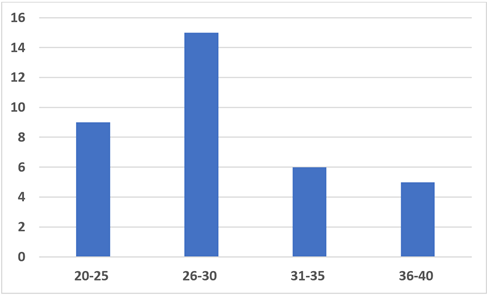
Figure 1: The age of the patients in our case series.
- Two of our patients were hypertensive under amlodipine (06%), one patient had already undergone an appendectomy (3%), the rest of the patients had no particular pathological history.
- 25 patients in our case series were single (71%).
- The most frequent reason for consultation was forced maneuvering on the erect penis in 23 patients (66%), coital faux pas in 12 patients (34%).
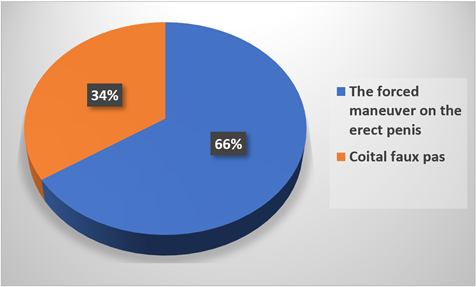
Figure 2: The mechanism of fracture of the corpora cavernosa.
- The majority of patients had consulted within a period of less than 24 hours (86%).
- An audible cracking sound, followed by detumescence, then hematoma, penile deformity (aubergine) and deviation to the contralateral side of the fracture was present in 34 patients (97%).
- The fracture was on the right side in 57% of cases.
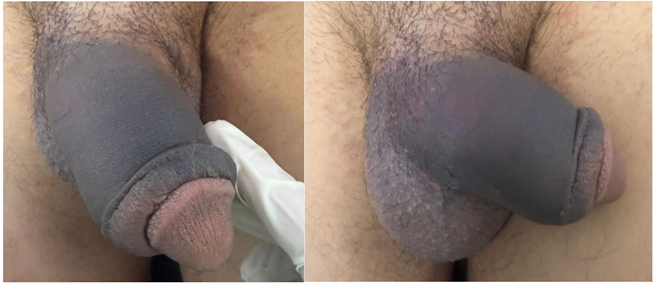
Figure 3: Eggplant-shaped penile deformity and deviation to the contralateral side of the fracture.
- In a patient, following diagnostic uncertainty, a penile MRI was performed, revealing a fracture at the root of the penis.
- A case of urethrorrhagia was found with rupture of the urethra.
- The treatment was surgical in 33 patients (94%), two patients had refused to be operated on.
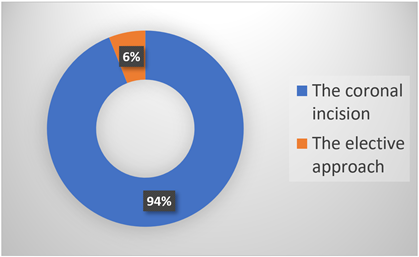
Figure 4: Fracture at the level of the lateral part of the right corpus cavernosum and suture of this fracture with interrupted reverse stitches.
- Coronal incision was predominant (94%) compared to elective incision (6%).
Figure 5: Surgical approach.
- Inverted separated stitches were the most used suturing technique (97%).
- The urethra was repaired with simple stitches.
- The post-operative course was simple with no impact on sexuality, in particular no deviation of the penis or erectile dysfunction.
Discussion
Rupture of the corpora cavernosa is observed almost exclusively in an erect penis and is caused by a forced curvature of the penis's axis resulting in intracavernous overpressure [4].
The microarchitecture of the penis is made up of transverse collagen fibers and longitudinally aligned elastic fibers. The collagen fibers prevent excessive expansion of the penis during erection and allow for a return to its original shape. Resting position during detumescence. The tunica albuginea the corpora cavernosa measure 2 mm in thickness when the penis is at rest, but thins to 0.25 mm during of the erection where it becomes more vulnerable to sudden mechanical stresses. The tunica albuginea ruptures above of 1500 mmHg pressure. Urethral rupture is the main associated injury to look for. It is commonly observed in cases of bilateral fracture of the corpora cavernosa and/or provoked fracture. Through intercourse due to the greater violence of the trauma [5,6].
Rupture of the tunica albuginea of the corpora cavernosa of the penis must be surgically repaired as soon as the diagnosis is made. Antibiotic prophylaxis with second-generation cephalosporins is most often administered at the time of induction, but this varies among surgical teams. Placement of a urinary catheter facilitates identification of the urethra during the procedure [7].
For the first route This is the purpose of preoperative radiological examinations (ultrasound, MRI or cavernography), which aim to locate the fracture of the corpora cavernosa of the penis as precisely as possible, thus allowing an elective approach to the lesion. Several approaches are possible. Coronal incision at the level of the balanopreputial sulcus with degloving The complete penis has the advantage of allowing a wide access to the corpora cavernosa and the corpus spongiosum but exposes you to complications such as infection, edema and skin necrosis, the frequency of which varies from 14 to 25% [8]. For Albany, a proponent of the elective approach, the coronal incision is unnecessary and traumatic because in the vast majority of cases the tear in the tunica albuginea is located at the proximal part of the penis. Furthermore, according to the same author, this incision risks damaging subcutaneous nerve branches, which could subsequently lead to sensory disturbances in the penis. It is important to inform the patient before the procedure that, in the case of a coronal incision, a circumcision will often be performed [8].
According to Fergagny, if there is an associated urethral rupture, the foreskin should be preserved as it can be used later for a possible urethroplasty. A lateral and longitudinal incision opposite one of the corpora cavernosa allows for selective access to the fracture site without risk of skin damage. For us, this is the standard incision, to be performed whenever possible, particularly when imaging studies have clearly identified the location of the fracture. The penis is then degloved. This approach is also possible. Finally, the high penoscrotal incision, which is more aesthetically pleasing, can be used for proximal fractures. It has several advantages: it avoids undressing, which is dangerous and too extensive for a lesion that is most often at the base, it allows you to approach the lateral faces, even the dorsal surface of the corpora cavernosa [9].
Late sequelae include curvature during erection resulting from plaques secondary to the injury to the corpus cavernosum, erectile dysfunction following fibrosis of the erectile tissue and nerve and/or vascular damage; and finally, difficulty urinating due to urethral stricture, which may result from a urethral injury. Furthermore, the psychological impact of the trauma and its impact on sexual desire and erectile function have been very little studied. Erectile dysfunction may be of psychological origin and not only organic. Indeed, it has been reported that a penile fracture could affect self-esteem and a patient's self-image, leading to anxiety or depression during short-term follow-up [10,11].
This psychological impact can have repercussions for the partner. Memories trauma and the fear of experiencing another one can be encounters can lead to performance anxiety and decreased desire, even resulting in avoidance sexual.Few studies in the literature have focused on investigating predictive factors for the occurrence of erectile dysfunction after Penile fracture surgery. Age has been implicated as a risk factor for the development of erectile dysfunction after this surgery; however, the results are controversial. According to Bozzini et al., this criterion did not have a significant impact on the development of postoperative erectile dysfunction after multivariate analysis [12,13].
It has been demonstrated in some studies that the time elapsed between trauma and surgery for a fracture of the corpora cavernosa significantly affects postoperative anatomical and functional outcomes in the medium and long term; in particular, the occurrence of erectile dysfunction, painful erections, and penile curvature. Through a large study, Bozzini et al. Studies have shown that a repair delay exceeding 8.23 hours is a predictive factor for the occurrence of erectile dysfunction. Similarly, Naouar et al. showed that patients operated on beyond the first 24 hours had a higher risk of complications such as penile curvature and painful penetration (p = 0.001 and 0.0001, respectively). Other studies have not demonstrated an impact of the time elapsed since surgery on the occurrence of erectile dysfunction [14-18].
Conclusion
The management of ruptures of the corpora cavernosa of the penis has evolved considerably over the last 20 years, primarily thanks to advances in imaging techniques. Indeed, magnetic resonance imaging (MRI) has played a key role.
Nuclear medicine, and to a lesser extent ultrasound (though more difficult to interpret in cases of large hematomas or pain), allows for precise localization of the fracture site. Any associated urethral rupture can also be identified. This improved identification of the type and location of the lesions prior to surgery allows the patient to benefit from a less invasive and preferential approach for suturing the tunica albuginea of the urethra cavernous.
References
- Cortellini P, Ferretti S, Larosa M, Peracchia G, Arena F. Traumatic injury of the penis: surgical management. Scand J Urol Nephrol, 1996; 30: 517–519.
- El-Sherif AE, Dauleh M, Allowneh N, Vijayan P. Management of fracture of the penis in Qatar. Br J Urol, 1991; 68: 622–625.
- Zargooshi J. Penile fracture in Kermanshah, Iran: report of 172 cases. J Urol, 2000; 164: 364–366.
- Anselmo G, Fandella A, Faggiano L, Merlo F, Maccatrozzo L. Fractures of the penis: therapeutic approach and long-term results. Br J Urol, 1991; 67: 509–511.
- Hsu GL, Brock G, von Heyden B, Nunes L, Lue TF, Tanagho EA. The distribution of elastic fibrous elements within the human penis. Br J Urol, 1994; 73: 566–571.
- De Rose AF, Giglio M, Carmignani G. Traumatic rupture of the corpora cavernosa: new physiopathologic acquisitions. Urology, 2001; 57: 319–322.
- Zargooshi J. Penile fracture in Kermanshah, Iran: report of 172 cases. J Urol, 2000; 164: 364–366.
- Eke N. Urological complications of coitus. BJU Int, 2002; 89: 273–277.
- Fergany AF, Angermeier KW, Montague DK. Review of Cleveland Clinic experience with penile fracture. Urology, 1999; 54: 352–355.
- Kpatcha TM, Tengue K, Botcho G, Sikpa KH, Léloua E, Sewa EV, et al. Notre experience de la prise en charge de la fracture de verge au CHU de Lomé. Afr J Urol, 2017; 23(4): 342-346.
- Boncher NA, Vricella GJ, Jankowski JT, Ponsky LE, Cherullo EE. Penile fracture with associated urethral rupture. Case Rep Med, 2010; 2010: 791948.
- Pavan N, Tezzot G, Liguori G, Napoli R, Umari P, Rizzo M, et al. Penile fracture: retrospective analysis of our case history with long-term assessment of the erectile and sexological outcome. Arch Ital Urol Androl, 2014; 86(4): 359-370.
- Bozzini G, Albersen M, Otero JR, Margreiter M, Cruz EG, Mueller A, et al. Delaying surgical treatment of penile fracture results in poor functional outcomes: results from a large retrospective multicenter European study. Eur Urol Focus, 2018; 4(1): 106-110.
- Falcone M, Garaffa G, Castiglione F, Ralph DJ. Current management of penile fracture: an up-to-date systematic review. Sex Med Rev, 2018; 6(2): 253-260.
- Bozzini G, Albersen M, Otero JR, Margreiter M, Cruz EG, Mueller A, et al. Delaying surgical treatment of penile fracture results in poor functional outcomes: results from a large retrospective multicenter European study. Eur Urol Focus, 2018; 4(1): 106-110.
- Naouar S, Boussaffa H, Braiek S, El Kamel R. Management of penile fracture: Can it wait? Afr J Urol, 2018; 24(1): 56-59.
- Sow Y, Fall PA, Diao B, Fall B, Ndoye AK, Diagne BA. Les traumatismes de la verge : à propos de 23 cas. Androl, 2008; 18(3): 210-215.
- Yilmazel FK, Sam E, Altay MS, Cinislioglu AE, Sam E, Delice O, et al. Surgical results in penile fracture: Our single center experience. Am J Emerg Med, 2021; 44:1 84-186.