
Email id: info@ijclinmedcasereports.com
Squamous Cell Carcinoma of the Oesophagus with Pancreatic Metastasis
Muhammad Mudasir*, Murad Jamal, Muhammed Aasim Yusuf, Mudasir Hussain and Muhammad Arqam Awais
Shaukat khanum memorial cancer hospital and research centre (SKMCH&RC) Lahore, Pakistan
Received Date: 02/12/2025; Published Date: 09/01/2026
*Corresponding author: Muhammad Mudasir, Shaukat khanum memorial cancer hospital and research centre (SKMCH&RC) Lahore, Pakistan
Abstract
Oesophageal cancer has a high metastatic potential and poor prognosis, with a significant risk of recurrence after radical resection. Pancreatic metastases from esophageal cancer are extremely rare. Here we are reporting the case of 41 years old, male who initially presented 5 years back with history of dysphagia to the solid. On esophagogastroduodenoscopy a tumor was seen in the distal oesophagus, histopathology revealed squamous cell carcinoma. Patient was treated with neo-adjuvant chemotherapy and radiotherapy followed by minimally invasive three stage oesophagectomy. Patient was kept on 3 months surveillance and routine checkup. 4 years later he developed jaundice, imaging showed ampullary mass with metastatic deposit of L1 vertebrae. Ampullary mass was confirmed on endoscopic ultrasound which was biopsied and reports revealed squamous cell carcinoma of oesophageal origin. Patient was offered palliative chemotherapy but due to poor performance status was eventually put on best supportive care.
Introduction
Oesophageal cancer has high metastatic potential with very poor prognosis, although in recent years due to the administration of multidisciplinary treatments, including surgery, chemotherapy and radiation therapy survival has improved [1]. However, despite radical oesophagectomy, recurrence is detected in 30–50% of patients owing to haematogenous or lymphatic r spread [2-4]. Metastasis to pancreas from oesophageal cancer is extremely rare and for squamous cell carcinoma of the oesophagus is even rarer accounting for < 0.1% of pancreatic metastases from oesophageal squamous cell carcinoma.
In literature only few case reports have been described so far for pancreatic metastasis from oesophageal cancer [5-7]. Normally there is no squamous epithelium in the pancreas. Pure squamous cell carcinoma is very rare to be diagnosed in pancreas, although adenocarcinoma accounts for 75 to 81% of primary pancreatic cancers [8-11]. According to a report from Japan, squamous cell carcinoma accounted for only 0.7% of 1,300 cases of pancreatic cancer [12].
Case Discussion
Here we are reporting the case of a 41 years old, male patient who initially presented 5 years back with history of progressive dysphagia and on esophagogastroduodenoscopy a mid to distal stenosing plaque like tumor of the oesophagus was seen and histopathology revealed moderately differentiated squamous cell carcinoma. Endoscopic ultrasound was done and was Staged T3N1 tumor. PET CT shows hyper metabolic mid to distal oesophageal thickening with no distant metastasis (Figure 1).
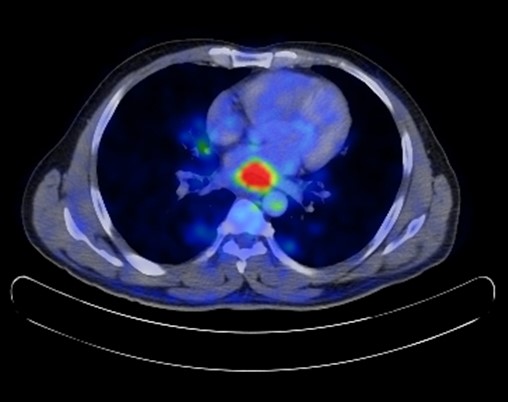
Figure 1: PET CT scan showing hyper metabolic mid to distal oesophageal thickening.
After multi-disciplinary team discussion neo-adjuvant chemotherapy and radiation were offered followed by surgery. Patient received platinum-based chemotherapy with radiation prior and later underwent minimally invasive three stage oesophagectomy in October, 2020. Final histology ypT0N0Mx with all margin were negative.
Patient was kept on 3 monthly surveillances. Last follow up at the end of October 2023, and patient was completely asymptomatic. However, in January, 2024, he developed jaundice and on examination patient was deeply jaundiced. Base line labs were done which shows Bilirubin 20 mg/dl, ALT 100 U/L, AST 170 U/L, GGT 176 U/L and Alkaline phosphatase 546 U/L. Hemoglobin 11 g/dl, Hepatitis B and C serology negative, and INR was 1.2. CT chest and abdomen features were suggestive of poorly-defined ampullary mass with dilatation of the biliary channels and main pancreatic duct along with metastatic deposit at L1 vertebrae (Figure 2). ERCP with plastic stent insertion into the pancreatic duct and common bile duct was performed.
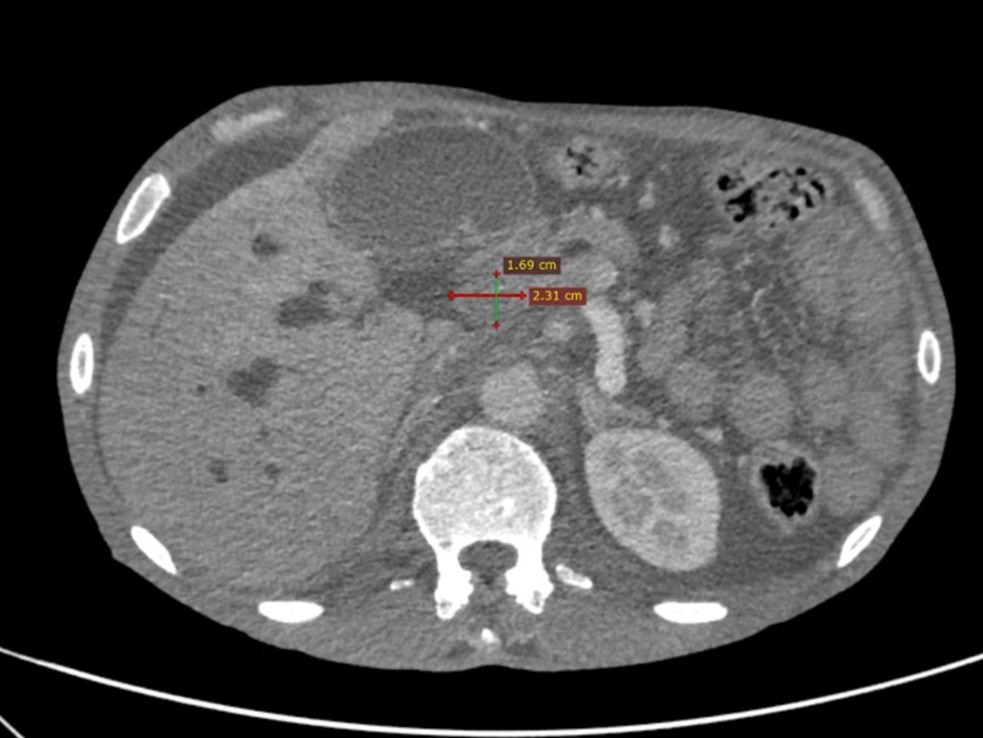
Figure 2: CT chest and abdomen showing poorly-defined ampullary mass with dilatation of the biliary channels.
EUS guided FNA of the pancreatic mass was done which reveals group of atypical cells having high nuclear/cytoplasmic ratio, pleomorphic, overlapping vesicular to hyper chromatic nuclei suggestive of squamous cell carcinoma staining positive for p40 (Figure 3).
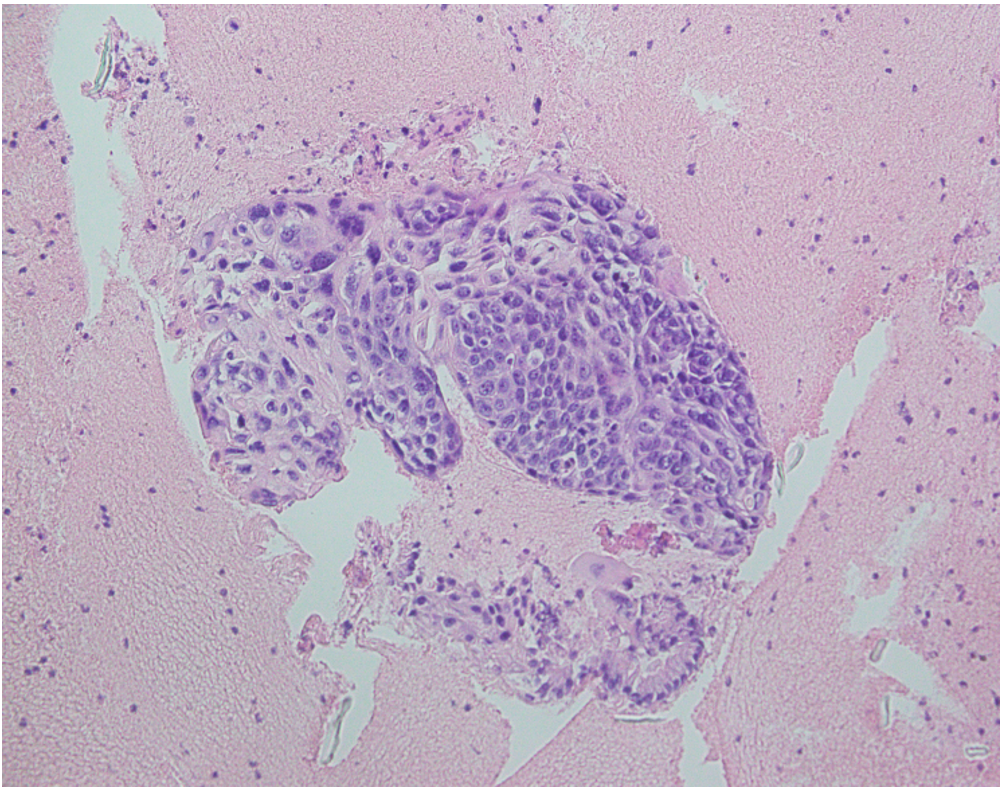
Figure 3: H/E stains slide of pancreatic mass suggestive of squamous cell carcinoma staining positive for p40.
Case was again discussed in multi-disciplinary meeting and it was decided to offer palliative chemotherapy in view of bony metastasis. Patient was assessed by Oncology team and was put on best supportive care due to poor performance status. Patient was kept on surveillance; he was last seen in the February 2024 after which he lost to follow.
Discussion
Squamous cell carcinoma with pancreatic metastasis is rare. It occurs in 0.12% of all esophageal squamous cell carcinoma [13]. So far only six cases have been reported of esophageal squamous cell carcinoma with pancreatic metastasis (Table 1) [14-18]. Three cases were diagnosed synchronously, and three metachronously. Among these 6 cases three with metachronous pancreatic metastasis and one with synchronous were treated surgically i.e distal pancreatectomy and one patient was offered chemotherapy and one was treated with best supportive care. As squamous cell carcinoma can arise not only from the esophagus but also from the pancreas or bile duct, the esophageal origin of the tumor can only be confirmed with special stains which are unique to oesophageal origin such as p40+, which was positive in our case confirming metastases from oesopahgeal origin.
Table 1: Reported cases of pancreatic metastasis from esophageal squamous cell carcinoma.
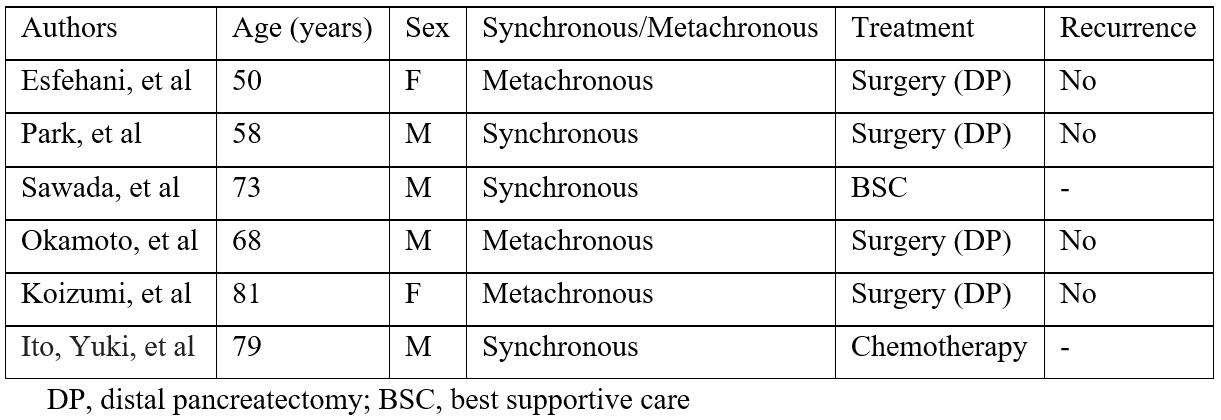
The interval between the diagnosis of the primary oesophageal cancer and the pancreatic metastasis ranged from 0 to 132 months [18] with our case having the interval of 50 months.
Favorable prognosis has been reported by several investigators with resection of pancreatic metastasis [19-22]. However, in the most of these cases the primary cancers consisted of colon cancer, renal cell cancer, melanoma, lung cancer, sarcoma, and breast cancer with very limited consideration of esophageal cancer. So far, the optimal treatment regimen remains unknown because of the rarity of the condition and limited data. Reddy et al [23] stated that pancreatic metastasectomy may be proven beneficial if there is any of the following: control of the primary cancer site , demonstration of isolated metastasis, a primary cancer type that was associated with good outcome, resectability of the metastasis, and patient fitness to tolerate pancreatectomy. It’s been reported that resection of solitary esophageal squamous cell carcinoma metastasis results in a longer survival [24] Our patient was put on best supportive care due to poor performance status.
Conclusion
Metastatic squamous cell carcinoma of the pancreas from primary esophageal cancers can present either in synchronous or metachronous setting. Primary surgical excision should be considered as a treatment modality for oligometastatic pancreatic metastasis in oesophageal squamous cell carcinoma. However, further investigation and an accumulation of case reports are needed to confirm these findings.
References
- Matsuda S, Takeuchi H, Kawakubo H, Ando N, Kitagawa Y. Current advancement in multidisciplinary treatment for resectable cStage II/III esophageal squamous cell carcinoma in Japan. Ann Thorac Cardiovasc Surg, 2016; 22: 275–283.
- Nakagawa S, Kanda T, Kosugi S, Ohashi M, Suzuki T, Hatakeyama K. Recurrence pattern of squamous cell carcinoma of the thoracic esophagus after extended radical esophagectomy with three-field lymphadenectomy. J Am Coll Surg, 2004; 198: 205–211.
- Takeuchi M, Takeuchi H, Kawakubo H, Booka E, Mayanagi S, Fukuda K, et al. Perioperative risk calculator predicts long-term oncologic outcome for patients with esophageal carcinoma. Ann Surg Oncol, 2018; 25: 837–843.
- Shiozaki H, Sudo K, Xiao L, Wadhwa R, Elimova E, Hofstetter WL, et al. Distribution and timing of distant metastasis after local therapy in a large cohort of patients with esophageal and esophagogastric junction cancer. Oncology, 2014; 86(5-6): 336-339.
- Esfehani M, Mahmoodzadeh H, Alibakhshi A, Safavi F. Esophageal squamous cell carcinoma with pancreatic metastasis: a case report. Acta Med Iran, 2011; 49: 760–762.
- Park C, Jang JY, Kim YH, Hwang EJ, Na KY, Kim KY, et al. A case of esophageal squamous cell carcinoma with pancreatic metastasis. Clin Endosc, 2012; 46:197–200.
- Okamoto H, Hara Y, Chin M, Hagiwara M, Onodera Y, Horii S, et al. An extremely rare case of pancreatic metastasis of esophageal squamous cell carcinoma. World J Gastroenterol, 2014; 20: 593–597.
- Brown HA, Dotto J, Robert M, Salem RR. Squamous cell carcinoma of the pancreas. J Clin Gastroenterol, 2005; 39: 915‑919.
- Itani KM, Karni A, Green L. Squamous cell carcinoma of the pancreas. J Gastrointest Surg, 1999; 3: 512‑515.
- Beyer KL, Marshall JB, Metzler MH, Poulter JS, Seger RM, Díaz‑Arias AA. Squamous cell carcinoma of the pancreas. Report of an unusual case and review of the literature. Dig Dis Sci, 1992; 37: 312‑318.
- Sears HF, Kim Y, Strawitz J. Squamous cell carcinoma of the pancreas. J Surg Oncol, 1980; 14: 261‑265.
- Nakashima H, Hayakawa T, Hoshino M, Kamiya Y, Ohara H, Yamada T, et al. Squamous cell carcinoma of the pancreas with massive invasion of the retroperitoneum. Intern Med, 1995; 34: 61‑64.
- Quint LE, Hepburn LM, Francis IR, Whyte RI, Orringer MB. Incidence and distribution of distant metastases from newly diagnosed esophageal carcinoma. Cancer, 1995; 76: 1120-1125.
- Esfehani MH, Mahmoodzadeh H, Alibakhshi A, Safavi F. Esophageal squamous cell carcinoma with pancreatic metastasis: A case report. Acta Med Iran, 2011; 49: 760-762.
- Park C, Jang JY, Kim YH, Hwang EJ, Na KY, Kim KY, et al. Case of esophageal squamous cell carcinoma with pancreatic metastasis. Clin Endosc, 2013; 46: 197-200.
- Sawada T, Adachi Y, Noda M, Akino K, Kikuchi T, Mita H, et al. Hepatic portal venous gas in pancreatic solitary metastasis from an esophageal squamous cell carcinoma. Hepatobiliary Pancreat Dis Int, 2013; 12: 103-105.
- Okamoto H, Hara Y, Chin M, Hagiwara M, Onodera Y, Horii S, et al. An extremely rare case of pancreatic metastasis of esophageal squamous cell carcinoma. World J Gastroenterol, 2014; 20: 593-597.
- Koizumi W, Kitago M, Shinoda M, Yagi H, Abe Y, Oshima G, et al. Successful resection of pancreatic metastasis from oesophageal squamous cell carcinoma: A case report and review of the literature. BMC Cancer, 2019; 19: 320. doi: 10.1186/s12885-019-5549-9.
- Masetti M, Zanini N, Martuzzi F, Fabbri C, Mastrangelo L, Landolfo G, et al. Analysis of prognostic factors in metastatic tumors of the pancreas: a single-center experience and review of the literature. Pancreas, 2010; 39: 135–143.
- Nakamura E, Shimizu M, Itoh T, Manabe T. Secondary tumors of the pancreas: clinicopathological study of 103 autopsy cases of Japanese patients. Pathol Int, 2001; 51: 686–690.
- Varker KA, Muscarella P, Wall K, Ellison C, Bloomston M. Pancreatectomy for non-pancreatic malignancies results in improved survival after R0 resection. World J Surg Oncol, 2007; 5: 145.
- Ballarin R, Spaggiari M, Cautero N, De Ruvo N, Montalti R, Longo C, et al. Pancreatic metastases from renal cell carcinoma: the state of the art. World J Gastroenterol, 2011; 17: 4747–4756.
- Reddy S, Wolfgang CL. The role of surgery in the management of isolated metastases to the pancreas. Lancet Oncol, 2009; 10: 287–293.
- Cho MM, Kobayashi K, Aoki T, Nishioka K, Yoshida K, Hatano N, et al. Surgical resection of solitary adrenal metastasis from esophageal carcinoma following esophagectomy. Dis Esophagus, 2007; 20: 79–81.