
Email id: info@ijclinmedcasereports.com
Herbal-Enriched Hypertonic Seawater Spray in Sinonasal Conditions: A Prospective Real-World User Survey
Sentiljana Gumeni and Konstantinos Alevizopoulos*
Gerolymatos International SA, Kryoneri, Greece
Received Date: 21/09/2026; Published Date: 18/11/2026
*Corresponding author: Alevizopoulos Konstantinos, Gerolymatos International SA, Asklipiou 8, Kryoneri 14568, Greece
Abstract
Acute and chronic sinonasal conditions, including upper respiratory tract infections (URTIs), particularly the common cold and seasonal influenza, are among the leading causes of primary care consultations and are associated with significant short-term morbidity, impaired quality of life, and increased symptomatic medication use. Saline-based nasal irrigation is a widely used non-pharmacological approach for the symptomatic management of sinonasal manifestations associated with these conditions. In the present prospective, real-world user survey, the clinical performance, tolerability, and acceptability of a 2.3% NaCl hypertonic seawater nasal spray (HSNS) enriched with herbal ingredients were evaluated during routine use in 100 patients with sinonasal conditions, predominantly the common cold and influenza. Specifically, participants rated ten sinonasal and quality-of-life (QoL) items before and after use and additionally reported the onset of relief, pattern of use, tolerability, and overall product evaluation. Data showed that the use of HSNS was associated with a significant reduction in symptom severity for all items: nasal obstruction improved by 66.1%, rhinorrhea by 58.0%, and itchy nose by 55.9% (all p < 0.0001). The onset of relief was rapid, with 84% of participants reporting improvement within 30 minutes of the first application and 92% by the third day. Reported adverse events were mild and transient, with nasal irritation being the most frequently reported event; no serious adverse events occurred. Overall, these real-world findings suggest that HSNS provides effective and well-tolerated symptomatic relief of sinonasal manifestations associated with the common cold and seasonal influenza.
Keywords: Hypertonic saline; Nasal spray; Nasal irrigation; Seawater; Common cold; Influenza; Real-world evidence; User survey
Abbreviations: AE: Adverse Event; HSNS: Hypertonic Seawater Nasal Spray; QoL: Quality of life; URTI: Upper Respiratory Tract Infection
Introduction
Acute and chronic sinonasal conditions, including upper respiratory tract infections (URTIs) such as the common cold and seasonal influenza, allergic rhinitis, and rhinosinusitis, are among the most common disorders affecting the upper airways. These conditions are frequently associated with nasal congestion, rhinorrhea, post-nasal discharge, and impaired nasal breathing, which may significantly affect sleep quality, daily activities, and overall quality of life [1,2]. As most of these conditions are managed primarily through symptomatic treatment, there is increasing interest in safe and effective supportive interventions that can alleviate symptoms and improve patient comfort.
Saline nasal irrigation is a well-established supportive and recommended therapy (EPOS 2020) for the management of various sinonasal conditions [3]. Its beneficial effects are attributed primarily to the mechanical cleansing of the nasal cavity, facilitating the removal of mucus, pathogens, allergens, and inflammatory mediators, while supporting mucociliary clearance and reducing mucosal edema [3]. Systematic reviews support saline nasal irrigation as an adjunctive measure in both acute URTIs and allergic rhinitis [4,5]. Among saline formulations, hypertonic saline formulations (>0.9% NaCl) have demonstrated beneficial effects in the relief of sinonasal symptoms, including improvement of nasal obstruction and mucus clearance, which are related to their osmotic effects on the nasal mucosa and enhancement of mucociliary function [6–10]. In the common cold specifically, hypertonic saline nasal irrigation has been associated with a shorter duration of illness and reduced viral shedding and medication use [11]. These interventions have shown a favorable tolerability profile across adult and pediatric populations, supporting their use as a non-pharmacological approach for symptom management [12,13].
In addition to saline-based therapy, some nasal formulations incorporate naturally derived ingredients to improve product characteristics, including sensory acceptability and user experience. However, clinical evidence regarding the performance and user experience of such combination formulations under routine conditions of use remains limited.
In this context, the present prospective, real-world user survey was conducted to evaluate the clinical performance, safety, tolerability, and user acceptability of a hypertonic seawater nasal spray enriched with herbal ingredients during routine use in patients with sinonasal conditions, predominantly the common cold and influenza. The study aimed to generate real-world evidence regarding symptom improvement, onset of relief, user experience, and product tolerability in everyday clinical practice.
Methods
Medical device:
The product evaluated in this study is SINOMARIN® 2,3 % COLD & FLU RELIEF, 30 mL; Gerolymatos International S.A (hereafter as HSNS). This nasal spray is composed of hypertonic (2.3% NaCl) seawater solution with three herbal essential oils and extracts (essential oils from Eucalyptus globulus and Mentha spicata, and a Thymus vulgaris extract) to impart a characteristic aroma during application [14]. The product is indicated for use in adults and children for nasal irrigation, for relieving symptoms of the common cold & flu including nasal congestion, sinus pressure and runny nose, cleansing the nasal cavities and moisturizing the nasal mucosa.
Survey patients and design:
This real-world, prospective user survey was conducted in United Arab Emirates between November 2025 – March 2026, and enrolled 100 participants Adults and children aged ≥6 years were eligible if they presented with the common cold, influenza, rhinosinusitis, sinusitis, or allergic rhinitis and were using, or had been advised to use, HSNS as part of routine clinical management.
Following enrolment, participants used the spray in accordance with the product label and completed a structured questionnaire prior to the first application and following a defined period of use (typically 7-14 days). The questionnaire included demographic information (age, sex), the condition(s) for which HSNS was used, sinonasal and quality of life (QoL) symptom severity scores before and after product use, usage patterns (frequency and timing relative to medication), overall satisfaction and efficacy ratings, ease of use, safety and performance data.
Questionnaire and Outcome Measures:
Five sinonasal items (stuffy nose, runny nose, sneezing, itchy nose, and other nasal problems) and five QoL items (fatigue, reduced productivity, poor sleep, emotional tiredness, and overall feeling) were each rated on a Likert scale from 0 (not troubled) to 6 (extremely troubled), consistent with previously reported user-survey methodology [15-17]. Overall satisfaction and perceived efficacy were rated from extremely dissatisfied (1) to extremely satisfied (6), and ease of use on a six-point scale from “Absolutely yes (1)” to “Absolutely not (6)”.
Data analysis:
All 100 completed questionnaires were included in the analysis. Responses were entered into a predefined database and examined for completeness and internal consistency prior to analysis. Each paired before/after item was analyzed only in participants providing valid responses at both time points; a missing value at either point resulted in exclusion from the corresponding paired comparison alone. Secondary, single-item outcomes were analyzed in all participants providing a valid response for the relevant item, with denominators reported where applicable. Inconsistent responses were managed according to predefined rules, and no participant was excluded on the basis of inconsistency. Where responses were internally inconsistent, free-text descriptions were used: specifically a symptom recorded in the free-text field without a corresponding ticked checkbox was counted as an adverse event, and a reported device malfunction whose description indicated a different product rather than a device fault was not counted as a malfunction.
Statistical analysis:
Data were analyzed using Python (version 3) in Jupyter Notebook (version 7.0.8) within the Anaconda distribution, together with standard statistical packages including NumPy and SciPy. Study variables were described as categorical variables using absolute and relative frequencies before and after treatment. For each item, changes after treatment were classified as improvement, no change, or worsening and summarized in frequency tables. Average scores were calculated for each item based on the respective rating scales: 0–6 (Not troubled – Extremely troubled), 1–6 (Absolutely yes – Absolutely not), or 1-6 (Extremely dissatisfied –Extremely satisfied), with percentages based on the total number of patients/responses. Variables are presented as mean (standard deviation) and median. Comparisons were performed using the Wilcoxon signed-rank test or paired t-test for paired before/after data and the Mann-Whitney U test for between-subgroup comparisons, as appropriate. The significance level was set at α = 0.05.
Results
Survey population and product use:
A total of 100 patients were enrolled, with a mean age of 34.1 ± 9.6 years (median 35; range 8-67); paired analyses were based on all available before/after responses for each item. Male patients comprised 64.0% (n=64) and female patients 36.0% (n=36) of the population (Figure 1A), and five participants were aged under 18 years. The most frequent presenting condition, for which HSNS was used, was the common cold and influenza (69.0%, n=69), followed by sinusitis (18.0%, n=18), rhinosinusitis (10.0%, n=10) and other conditions (3.0%, n=3) (Figure 1B). Only two patients reported the presence of more than one condition (not shown).
Among participants with available treatment duration data (n = 96), the mean duration of HSNS use was 7.3 ± 5.1 days (median, 5 days; range, 2–45 days), with most participants using the product for 4–7 days (56.2%) (Figure 2A). HSNS was administered 1–3 times daily by 59.0% of participants and more than three times daily by 24.0%. For the remaining participants, frequency of use was either indeterminate (11.0%) (Figure 2B) or not reported (6.0%) (not shown). 46.5% of participants (46/99) reported concomitant medication use, most commonly antihistamines/decongestants and analgesics/antipyretics (Figure 2C). Among these participants, HSNS was most frequently used before medication administration (50.0%) or between medication doses (47.8%), while 30.4% did not specify the timing of use (Figure 2D).
Sinonasal and Quality-of-Life Symptom Improvement:
The effects of HSNS use on sinonasal symptoms and QoL were evaluated by comparing baseline and post-treatment patient-reported scores. Improvements were observed across all assessed domains, with statistically significant reductions in symptom severity and corresponding improvements in QoL (Figure 3).
Specifically, nasal obstruction, the most severely rated symptom at baseline, improved by 66.1% (3.27 ± 1.55 to 1.11 ± 1.25, n=100). Comparable reductions were recorded for runny nose (58.0%; 2.86 ± 1.73 to 1.20 ± 1.38, n=99), sneezing (59.3%; 2.73 ± 1.65 to 1.11 ± 1.31, n=98), itchy nose (55.9%; 2.61 ± 1.63 to 1.15 ± 1.33, n=98), and other nasal symptoms (57.4%; 2.44 ± 1.58 to 1.04 ± 1.29, n=100) (Figure 3, upper panel).
Similar improvements were observed across all QoL domains. The greatest relative change was observed for impaired productivity (72.2%; 2.55 ± 1.48 to 0.71 ± 1.03, n=99), followed by overall feeling (67.8%; 2.67 ± 1.69 to 0.86 ± 1.03, n=100), sleep quality (63.5%; 2.96 ± 1.65 to 1.08 ± 1.28, n=99), fatigue (62.6%; 2.43 ± 1.67 to 0.91 ± 1.15, n=98), and emotional state (60.7%; 2.44 ± 1.83 to 0.96 ± 1.24, n=100) (Figure 3, lower panel).
The onset of symptom relief was rapid (n=99). Following the first application, 28.3% of participants experienced symptom improvement within 5 minutes, increasing cumulatively to 83.9% within 30 minutes, while the remaining participants reported improvement thereafter (Figure 4A). The proportion of participants reporting noticeable improvement increased progressively over time, reaching 33.3% by Day 1, 73.7% by Day 2, 91.9% by Day 3, 97.0% by Day 5, and 100% by Day 7 (Figure 4B).
To explore the potential influence of usage frequency on outcomes, participants applying HSNS 1–3 times daily (n = 59) were compared with those using HSNS more frequently (n = 24). However, no statistically significant differences were observed between the two groups across any evaluated symptom or QoL domain (data not shown), suggesting that similar patient-reported improvements were observed across the range of usage frequencies reported.
Participants using concomitant medication were also asked about their perception of HSNS regarding overall medication use. Among the 46 participants receiving concomitant medication, 37.0% reported that HSNS reduced their overall medication intake (“Yes”), 41.3% responded “Maybe yes,” and 13.0% responded “Absolutely yes” (Figure 5A; for comparison, the corresponding responses of the 54 participants who did not use concomitant medication are also displayed). In addition, participants were asked whether they would consider using HSNS without concomitant medication. In the overall study population (n = 100), 11.0% responded “Absolutely yes,” 43.0% “Yes,” and 33.0% “Maybe yes,” resulting in an overall positive response rate of 87.0% (Figure 5B). These findings indicate high user acceptance of HSNS as a potential standalone supportive measure for symptomatic management.
User Satisfaction and Ease of Use:
The overall patient evaluation of HSNS was favorable for perceived efficacy, overall satisfaction, ease of use, and intention for future use. Specifically, perceived efficacy was assessed by 98 participants, with a mean score of 4.63/6; 57.1% of respondents rated their perceived efficacy as “very satisfied” and 16.3% as “extremely satisfied” (Figure 6A). Similarly, overall satisfaction scores (n = 99; mean 4.52/6) showed that 53.5% of participants were “very satisfied” and 15.2% were “extremely satisfied,” corresponding to a combined high-satisfaction rate of 68.7% (Figure 6B).
Ease of use was rated also high (n = 99; mean score 1.63/6), with 51.5% of participants selecting “Absolutely yes” and 39.4% selecting “Yes,” indicating that approximately 90% of respondents considered the device easy to use (Figure 6C). Similarly, willingness to recommend or repurchase the product was high, with 60.2% of participants selecting “Absolutely yes” and 30.6% selecting “Yes” (n = 98) (Figure 6D).
Safety and Device performance:
Tolerability was assessed based on participant-reported adverse events. The most frequently reported event was nasal irritation or discomfort, reported by 21 participants (21.0%), including one pediatric participant. Epistaxis was reported by 3 participants (3.0%), including one pediatric participant. In addition, other side effects were reported by 9 participants (9.0%); these included nasal dryness in three cases and a combination of runny nose and nasal dryness in another case. No further description was provided for the remaining five cases (Figure 7A). All reported events were mild, transient, and self-limiting, and no serious adverse events were reported. Among the five pediatric participants, reported symptom improvement and tolerability findings were consistent with those observed in the overall study population; only mild, transient events were reported (one case of nasal irritation and one case of epistaxis). These findings are consistent with previous reports on the use of saline-based nasal preparations in pediatric populations [12,13,15].
Device performance was evaluated based on participant-reported device-related issues. Device malfunction was reported by 6 participants (6.0%), whereas 92 participants (92.0%) reported no malfunction; one response (1.0%) could not be interpreted, as the participant referred to another product in the description rather than reporting a device-related issue, and one response was missing (Figure 7B). A description of the reported malfunction was available for only one case, in which the participant reported a delayed spray activation. This was probably linked to the fact that upon initial use, the spray pump needs to be actuated several times before it starts dispensing liquid.
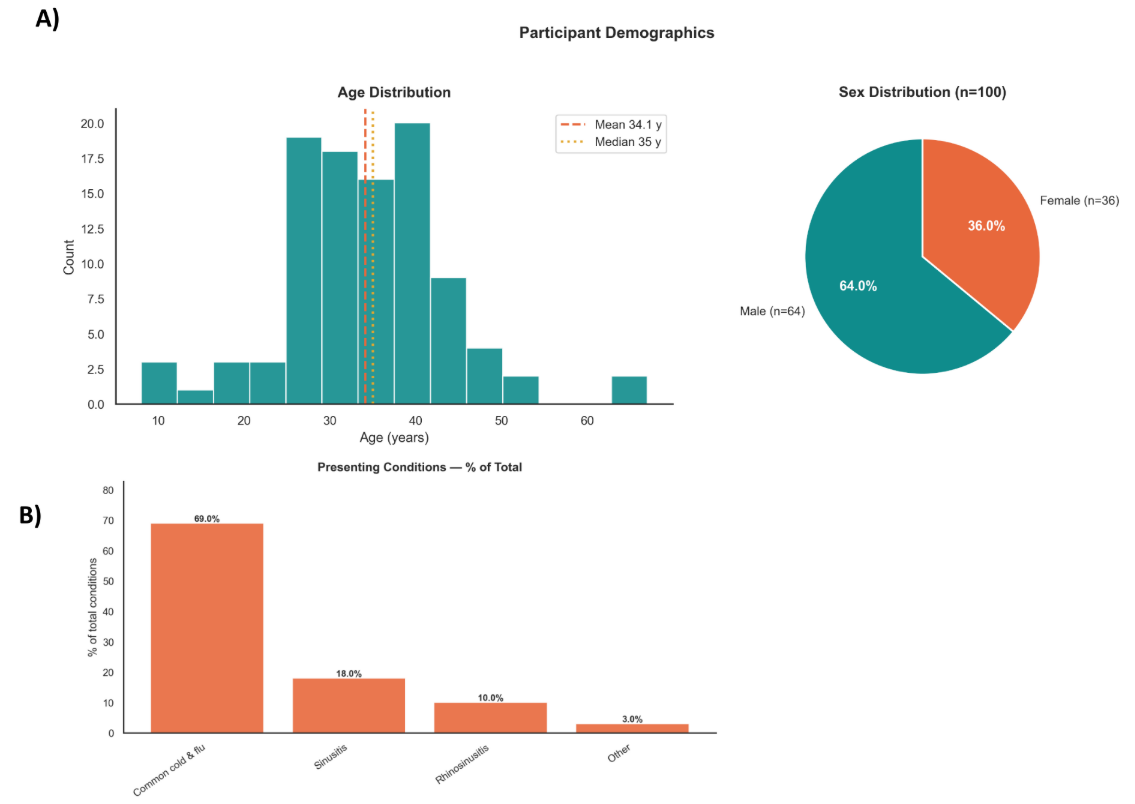
Figure 1: Demographic characteristics and presenting conditions of the study population. (A) Age distribution and sex composition (n=100; mean age 34.1 years, median 35 years; 64.0% male, 36.0% female). (B) Distribution of presenting diagnoses, expressed as patient counts and as a percentage of all reported conditions (n=100).
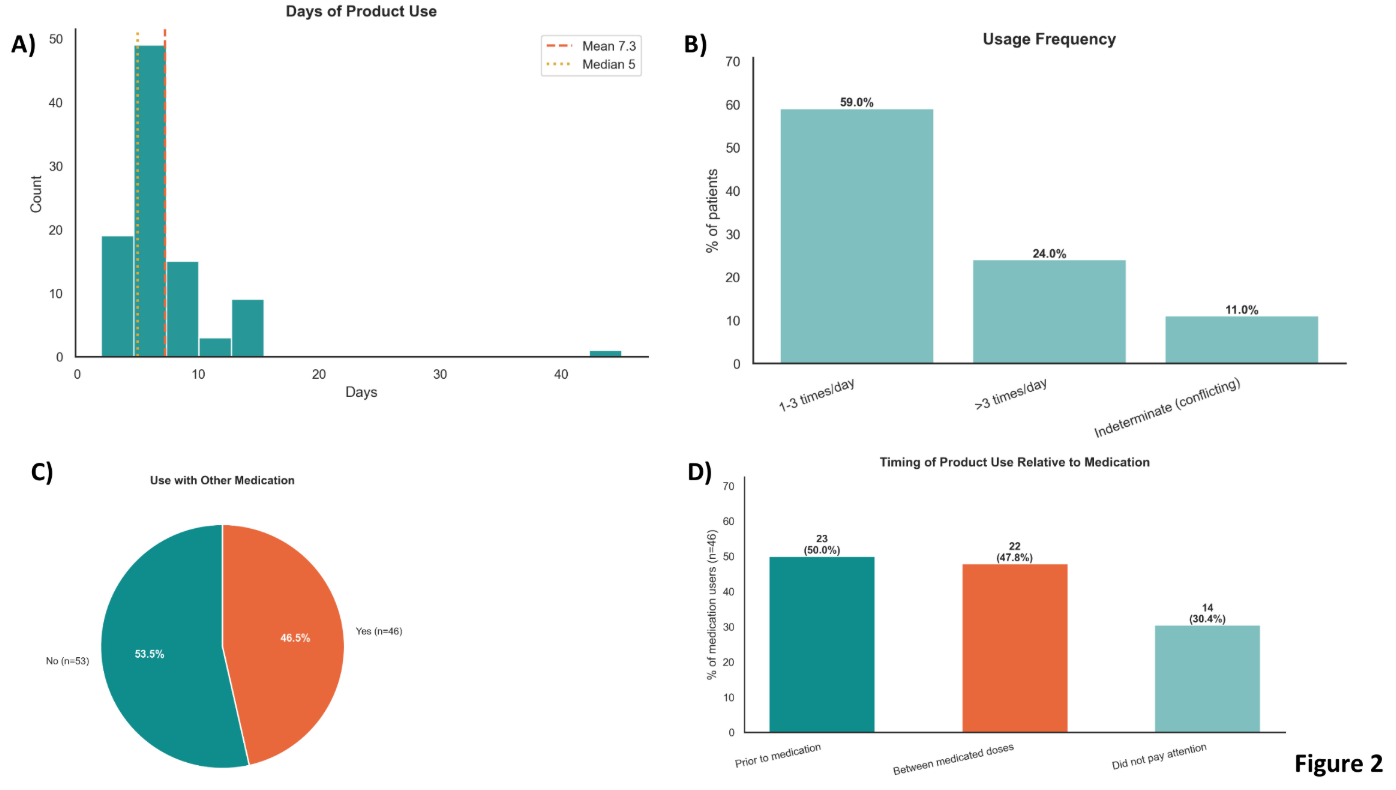
Figure 2: Patterns of product use. (A) Duration of use (n=96; mean 7.3 days, median 5 days). (B) Frequency of use (1-3 times/day versus >3 times/day, and indeterminate; unspecified responses are not shown). (C) Proportion of patients using HSNS concomitantly with other medicines (n=99). (D) Timing of HSNS administration relative to medication doses among medicated patients (n=46). Responses were not mutually exclusive, as participants could indicate more than one timing pattern; percentages therefore sum to >100%.
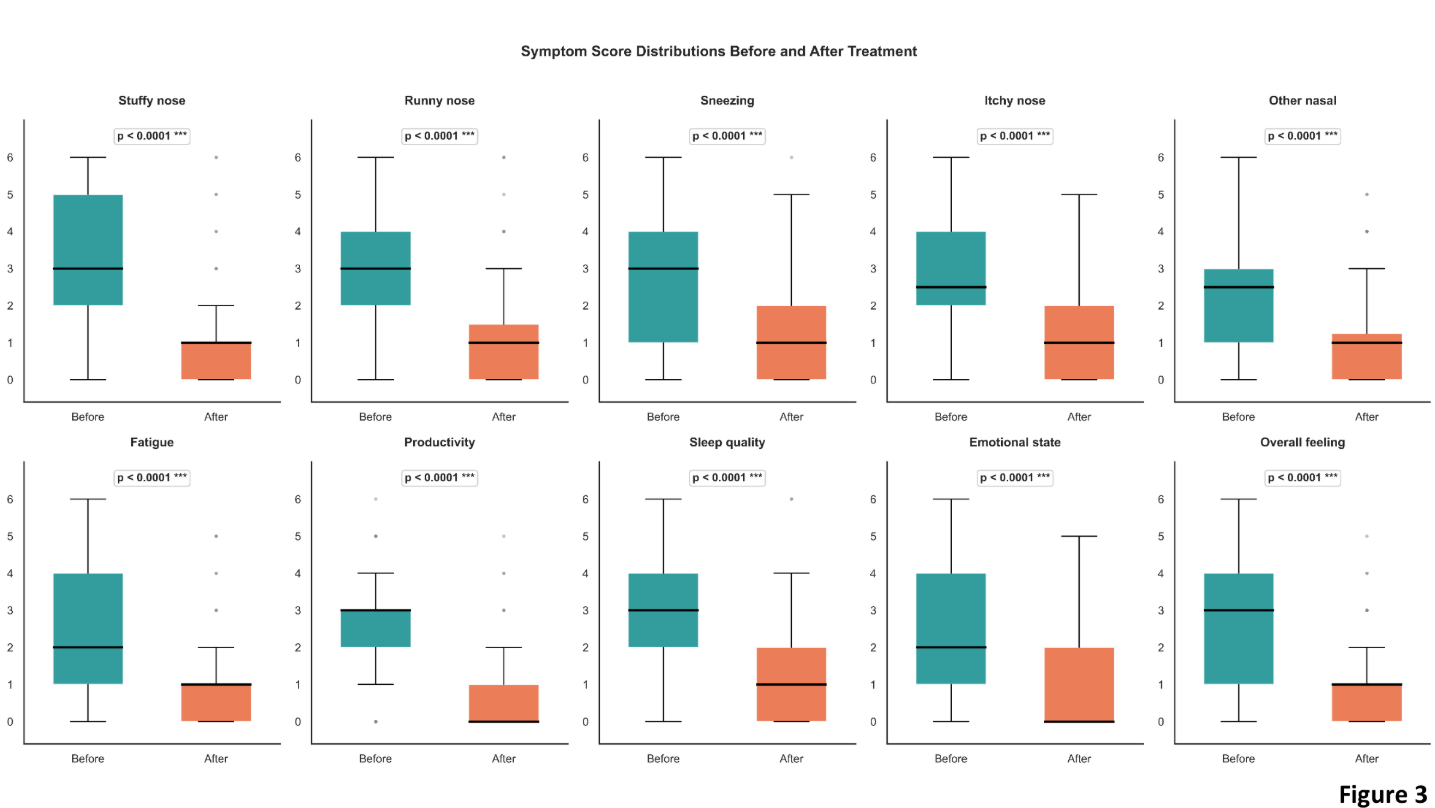
Figure 3: Symptom severity scores before and after treatment. Box plots of patient-reported severity scores (0-6) for all ten domains: five sinonasal (stuffy nose, runny nose, sneezing, itchy nose, other nasal) and five quality-of-life (fatigue, productivity, sleep quality, emotional state, overall feeling), before and after HSNS use. All paired comparisons were statistically significant (Wilcoxon signed-rank test, p < 0.0001). Circles denote outliers (retained in the analysis), included in the analysis; the number analyzed varies slightly between items because only paired responses were included.
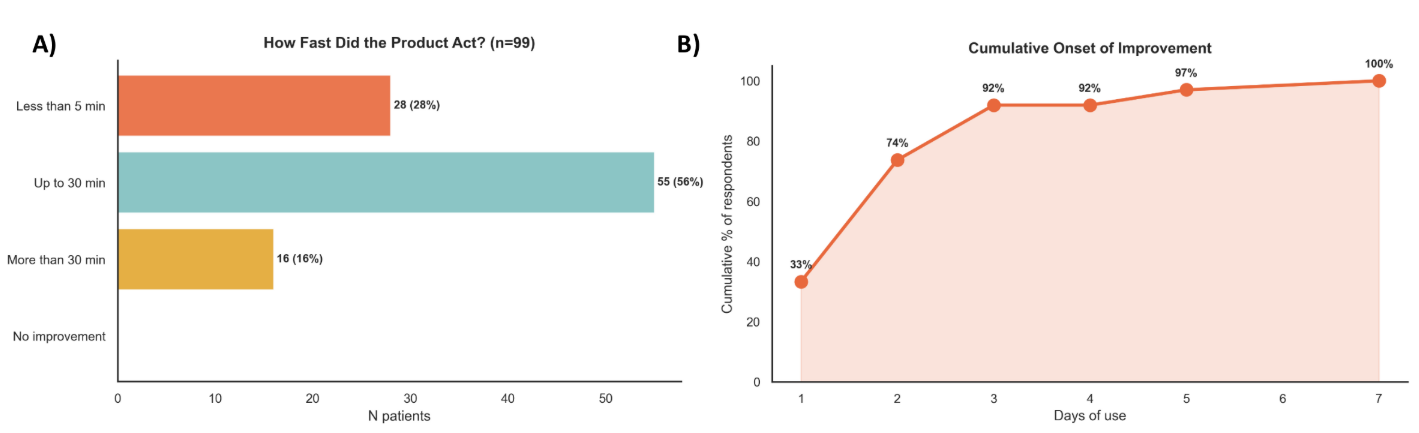
Figure 4: Onset and time course of symptom relief. (A) Time to first perceptible relief following application (n=99). (B) Cumulative percentage of patients reporting improvement by day of use (n=99).
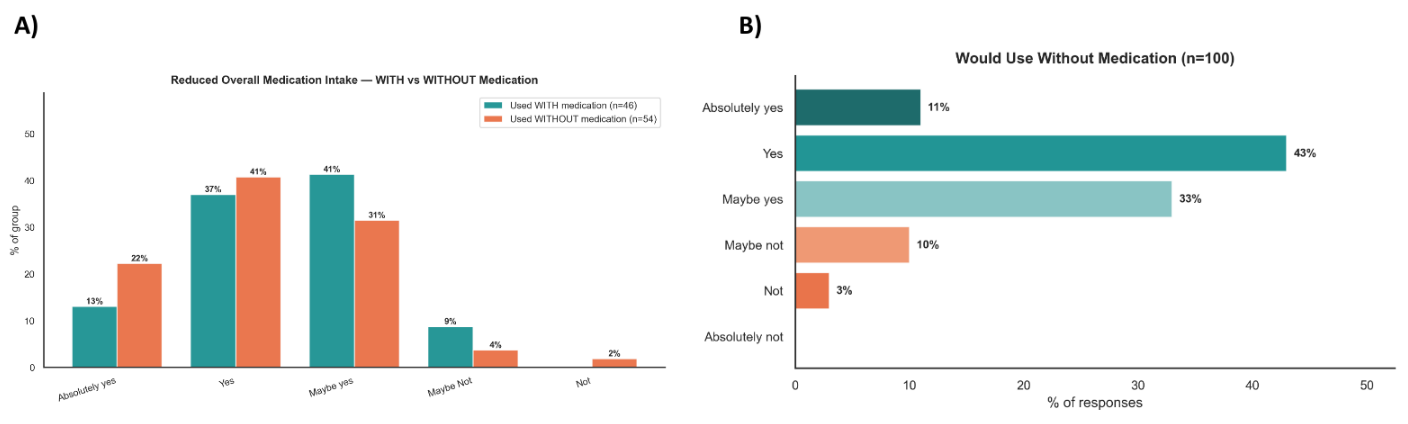
Figure 5: Medication use. (A) Perceived reduction in overall medication intake. Responses are shown separately for participants who used HSNS together with concomitant medication (n=46) and, for comparison, those who did not (n=54); the reduction in medication intake is reported in the text for the concomitant-medication subgroup, for whom the item is directly applicable. The without-medication group (n=54) includes one participant who did not state whether concomitant medication was used but provided timing and outcome data; this response was retained and reported. (B) Willingness to use HSNS without concomitant medication in the overall study population (n=100).
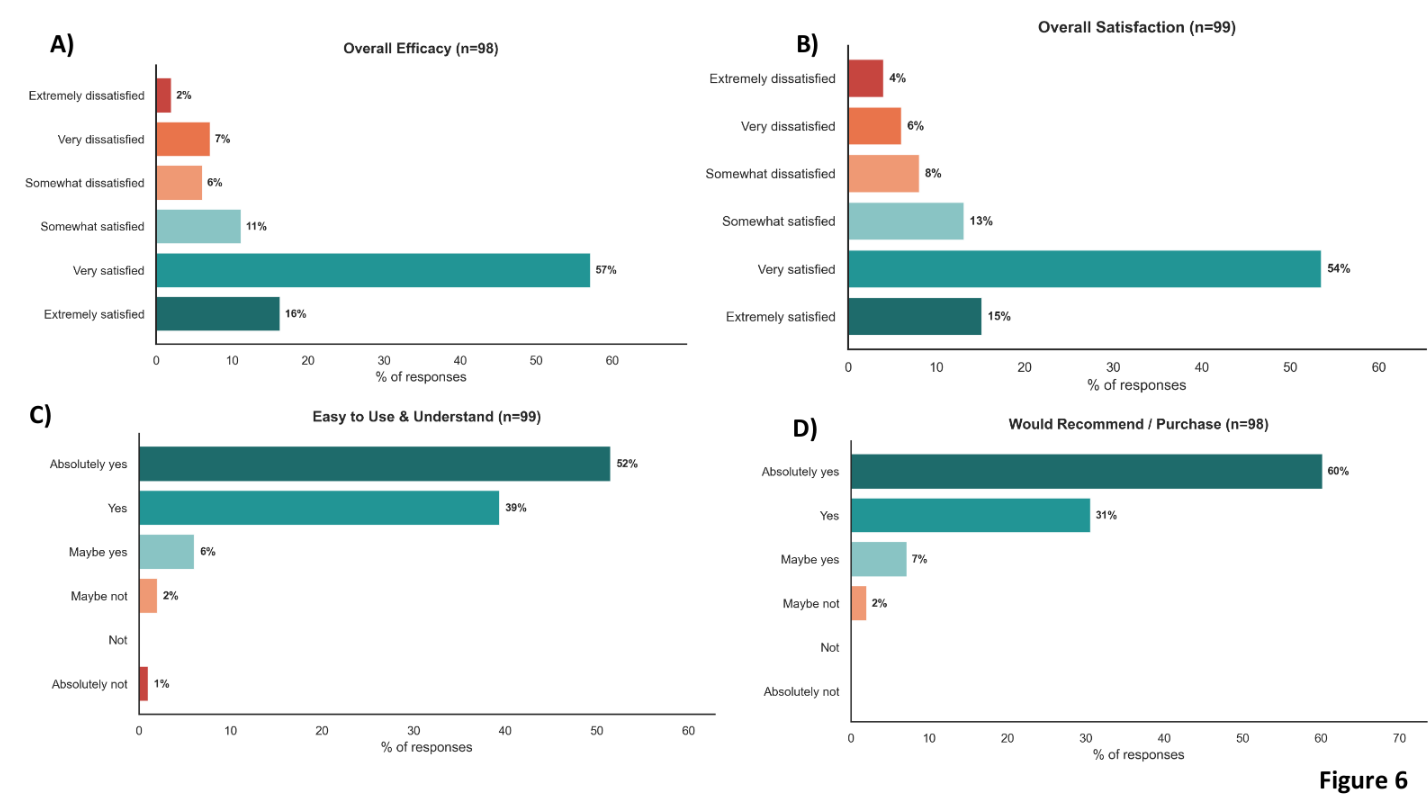
Figure 6: Patient-reported satisfaction and usability. Ratings for (A) perceived efficacy (n=98), (B) overall satisfaction (n=99), (C) ease of use (n=99), and (D) willingness to recommend or repurchase (n=98), expressed as the percentage of respondents in each category.
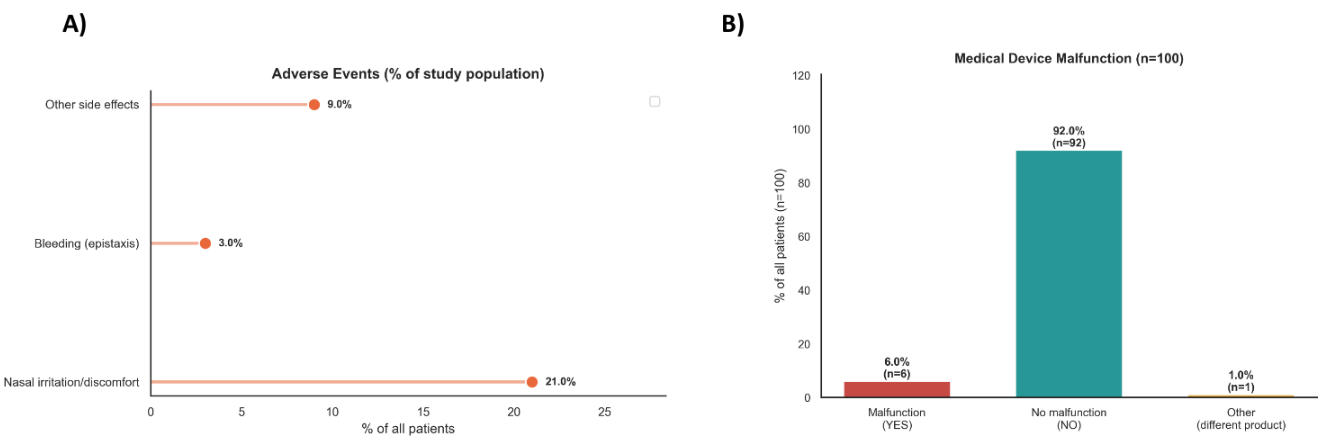
Figure 7: Safety and device performance. (A) Adverse events reported during the survey, expressed as a percentage of the study population (n=100). (B) Medical device malfunction (n=100). All adverse events were mild and self-limiting; no serious events were reported.
Discussion
This survey provides real-world evidence on the everyday use of a herbal-enriched 2.3% hypertonic seawater nasal spray in patients with predominantly URTI-related sinonasal complaints. Across all ten symptom and quality-of-life domains, participants reported a consistent and statistically significant decline in severity after use. In addition, tolerability and acceptability were high, supporting the potential role of this formulation as a non-pharmacological approach for symptomatic management in routine practice.
The observed improvements in nasal symptoms, particularly nasal obstruction and rhinorrhea, are consistent with the well-known mechanisms associated with hypertonic saline solutions, including osmotic effects on the nasal mucosa, enhancement of mucociliary clearance, and mechanical removal of mucus and pathogens [6,7]. The use of HSNS was also associated with rapid perceived symptom improvement, with the majority of participants reporting relief within 30 minutes of the first application and more than 90% within three days, indicating an early symptomatic benefit during routine use.
The tolerability profile observed in this survey was favorable and consistent with previous reports for hypertonic saline solutions and other seawater-based nasal sprays [3,7,17,18]. Nasal irritation was the most frequently reported event, while other events, including epistaxis and nasal dryness, occurred less frequently. Reported adverse events were mild, transient, and self-limiting, with no serious adverse events observed. Similar tolerability findings were observed in the small pediatric subgroup, although these results should be interpreted cautiously given the limited number of pediatric participants. High levels of satisfaction, perceived efficacy, usability, and willingness to recommend or reuse the product were also reported, in agreement with previous studies evaluating a similar formulation [16] and other seawater-based nasal sprays [15–18].
In addition, among participants who were taking concomitant medication, most reported that HSNS reduced their overall medication use, while the majority of participants in the overall cohort indicated a willingness to use the spray without concomitant medication. Although self-reported and non-comparative, these responses are consistent with prior evidence that saline irrigation can reduce the need for decongestants and antihistamines [4,5], and they suggest that a non-pharmacological option of this kind may help limit exposure to symptomatic drugs in selected patients.
Previous real-world surveys and clinical studies have reported improvements in symptoms and quality of life following the use of seawater-based nasal sprays across a range of conditions, including COVID-19, rhinosinusitis, allergic rhinitis, and postoperative sinonasal care [15–23]. Collectively, these findings suggest that hypertonic seawater formulations may represent a useful supportive option for the management of sinonasal symptoms across different clinical settings.
Study limitations:
This single-arm, uncontrolled design does not permit causal inference between HSNS use and the observed improvements in symptoms. In addition, the outcomes were based primarily on participant-reported assessments and may therefore be subject to reporting and recall bias. The lack of objective clinical assessments, such as nasal endoscopy, and the use of validated disease-specific instruments also limit the extent to which the reported changes can be related to objective changes in disease status. Nevertheless, the consistent improvements across multiple sinonasal and quality-of-life domains, together with the favorable tolerability profile, support the potential role of HSNS as a symptomatic management option for sinonasal conditions, predominantly those associated with URTIs.
Conclusion
In conclusion, this real-world user survey showed that use of a 2.3% hypertonic seawater spray enriched with herbal ingredients was associated with improvements in sinonasal symptoms, rapid perceived relief, favorable tolerability, and high user acceptability in patients with sinonasal conditions. Our findings provide supportive real-world evidence for HSNS use as an adjunctive non-pharmacological approach for symptomatic management.
Conflicts of Interest: SG and KA are employees of Gerolymatos-International.
Funding: Not applicable.
References
- Heikkinen T, Järvinen A. The common cold. Lancet, 2003; 361(9351): 51–59. DOI: 10.1016/S0140-6736(03)12162-9.
- Fendrick AM, Monto AS, Nightengale B, Sarnes M. The economic burden of non-influenza-related viral respiratory tract infection in the United States. Arch Intern Med, 2003; 163(4): 487–494. DOI: 10.1001/archinte.163.4.487.
- Fokkens WJ, Lund VJ, Hopkins C, et al. European Position Paper on Rhinosinusitis and Nasal Polyps 2020. Rhinology, 2020; 58(Suppl S29): 1–464. DOI: 10.4193/Rhin20.600.
- King D, Mitchell B, Williams CP, Spurling GKP. Saline nasal irrigation for acute upper respiratory tract infections. Cochrane Database Syst Rev, 2015; 4: CD006821. DOI: 10.1002/14651858.CD006821.pub3.
- Hermelingmeier KE, Weber RK, Hellmich M, Heubach CP, Mösges R. Nasal irrigation as an adjunctive treatment in allergic rhinitis: a systematic review and meta-analysis. Am J Rhinol Allergy, 2012; 26(5): e119–e125. DOI: 10.2500/ajra.2012.26.3787.
- Kanjanawasee D, Seresirikachorn K, Chitsuthipakorn W, Snidvongs K. Hypertonic Saline Versus Isotonic Saline Nasal Irrigation: Systematic Review and Meta-analysis. Am J Rhinol Allergy, 2018; 32(4): 269–279.
- Liu L, Pan M, Li Y, Tan G, Yang Y. Efficacy of nasal irrigation with hypertonic saline on chronic rhinosinusitis: systematic review and meta-analysis. Braz J Otorhinolaryngol, 2020; 86(5): 639–646. DOI: 10.1016/j.bjorl.2020.03.008.
- Rabago D, Zgierska A, Mundt M, Barrett B, Bobula J, Maberry R. Efficacy of daily hypertonic saline nasal irrigation among patients with sinusitis: a randomized controlled trial. J Fam Pract, 2002; 51(12): 1049–1055.
- Khianey R, Oppenheimer J. Is nasal saline irrigation all it is cracked up to be? Ann Allergy Asthma Immunol, 2012; 109(1): 20–28. DOI: 10.1016/j.anai.2012.04.019.
- Huijghebaert S, Hoste L, Vanham G. Essentials in saline pharmacology for nasal or respiratory hygiene in times of COVID-19. Eur J Clin Pharmacol, 2021; 77(9): 1275–1293. DOI: 10.1007/s00228-021-03102-3.
- Ramalingam S, Graham C, Dove J, Morrice L, Sheikh A. A pilot, open labelled, randomised controlled trial of hypertonic saline nasal irrigation and gargling for the common cold. Sci Rep, 2019; 9(1): 1015. DOI: 10.1038/s41598-018-37703-3.
- Garavello W, Di Berardino F, Romagnoli M, Sambataro G, Gaini RM. Nasal rinsing with hypertonic solution: an adjunctive treatment for pediatric seasonal allergic rhinoconjunctivitis. Int Arch Allergy Immunol, 2005; 137(4): 310–314. DOI: 10.1159/000086462.
- Chirico G, Quartarone G, Mallefet P. Nasal congestion in infants and children: a literature review on efficacy and safety of non-pharmacological treatments. Minerva Pediatr, 2014; 66(6): 549–557.
- Eccles R. Menthol: effects on nasal sensation of airflow and the drive to breathe. Curr Allergy Asthma Rep, 2003; 3(3): 210–214. DOI: 10.1007/s11882-003-0041-6.
- Gumeni S, Jovanovska A, Micevska V, Gruevska O, Alevizopoulos K. Use of hypertonic seawater nasal drops in infants with ENT symptoms: Real-world efficacy, safety and performance evaluation. J Clin Images Med Case Rep, 2026; 7(4): 4033.
- Georgiou S, Alevizopoulos K. A Real-World User Survey Study Conducted with a Hypertonic Seawater Nasal Irrigation Solution Comprising Algal and Herbal Ingredients in Patients with ENT Disorders. IJCMCR, 2021; 17(4): 002. DOI: 10.46998/IJCMCR.2021.17.000417.
- Gumeni S, Alevizopoulos K. A Real-World User Survey Study Conducted with an Isotonic Seawater Nasal Spray in Patients with ENT Disorders. IJCMCR, 2026; 59(5): 004. DOI: 10.46998/IJCMCR.2026.59.001474.
- Gangadi M, Georgiou S, Moschotzopoulou E, Antronikou T, Kainis E, Alevizopoulos K. Efficacy and safety of a hypertonic seawater nasal irrigation solution containing algal and herbal natural ingredients in patients with COVID-19. Eur Rev Med Pharmacol Sci, 2022; 26(2 Suppl): 112–123.
- Pantazopoulos I, Chalkias A, Miziou A, Spanos M, Gerovasileiou E, Rouka E, et al. A Hypertonic Seawater Nasal Irrigation Solution Containing Algal and Herbal Natural Ingredients Reduces Viral Load and SARS-CoV-2 Detection Time in the Nasal Cavity. J Pers Med, 2023; 13(7): 1093. DOI: 10.3390/jpm13071093.
- Öztürk Z, Bayar Muluk N, Koca R, et al. Efficacy of hypertonic nasal spray with algae in rhinosinusitis. Eur Arch Otorhinolaryngol, 2025; 282(4): 1963–1970. DOI: 10.1007/s00405-025-09266-3.
- Güner Atayoğlu A, Bayar Muluk N, Koca R, et al. Investigation of the Effectiveness of Nasal Sprays in Allergic Rhinitis. Ear Nose Throat J, 2024; 103(3_suppl): 144S–151S. DOI: 10.1177/01455613241287298.
- Penezić A, Kalogjera L, Grgić MV, Geber G, Tomljenović D, Alevizopoulos K, et al. Efficacy of nasal irrigation with isotonic and hypertonic solutions after endoscopic sinus surgery for chronic rhinosinusitis with nasal polyposis. Acta Clin Croat, 2025; 64(1): 111–117. DOI: 10.20471/acc.2025.64.01.12.
- Gumeni S, Alevizopoulos K. Hypertonic seawater spray enriched with algal and herbal ingredients in patients with ENT conditions: a real-world user survey. Int J Clin Stud Med Case Rep, 2026; 60(4): 005. doi: 10.46998/IJCMCR.2026.60.001495.