
Email id: info@ijclinmedcasereports.com
Sigmoidal Colpoplasty for the Treatment of Vaginal Aplasia: A Case Report
Riadi Chaimae*, Akhssas Zakaria, Bouljrouf Jawad, Ochan Monim and Kisra Mounir
Paediatric Surgery Department A, Rabat Children's Hospital, Ibn Sina University Hospital, Faculty of Medicine and Pharmacy, Mohammed V University of Rabat, Morocco
Received Date: 29/07/2026; Published Date: 26/10/2026
*Corresponding author: Riadi Chaimae, Paediatric Surgery Department A, Rabat Children's Hospital, Ibn Sina University Hospital, Faculty of Medicine and Pharmacy, Mohammed V University of Rabat, Morocco
Abstract
Mayer-Rokitansky-Küster-Hauser (MRKH) syndrome is a rare congenital malformation characterized by the absence or incomplete development of the uterus and upper vagina, while the ovaries and secondary sexual characteristics are usually normal. This condition leads to primary amenorrhea and vaginal agenesis, symptoms often discovered in adolescence, causing significant physical and psychosocial challenges for patients [1].
Treatment options for vaginal agenesis in Mayer Rokitansky Kuster Hauser syndrome include non-surgical approaches, such as the use of vaginal dilators, as well as surgical interventions. Among the latter, sigmoidocolpoplasty, which involves using a segment of the sigmoid colon to create a neo-vagina, has gained in popularity due to its satisfactory functional and aesthetic results.
This technique appears to produce a functional neovagina, with a low complication rate and high patient satisfaction. Psychosocial care, education on the reconstruction process, and rigorous postoperative follow-up are essential to ensure the long-term success of this procedure [2].
Keywords: MRKH syndrome; Vaginal agenesis; Sigmoidocolpoplasty; Neovagina; Surgical reconstruction
Introduction
The term vaginal aplasia or vaginal atresia refers to a congenital condition in which the ovaries and fallopian tubes are normal but the vagina is absent entirely or partially. Ninety percent of cases of this uncommon congenital condition are associated with the Mayer-Rokitanski-Kuster-Hauser (MRKH)syndrome.
In 95% of cases, the lack of a uterus impairs fertility; nonetheless, a normal "sex life" can be achieved by developing a neo-vagina in these young women.
Vaginal aplasia can now be surgically treated by sigmoidal colpoplasty, also known as the Schmid procedure (03). In order to create a neo-vagina, a section of the pedicled sigmoid colon that is not part of the digestive continuity must be transposed.
Here, we report a sigmoidoplasty-treated instance of MRKH syndrome.
Case Report
The 17-year-old girl, S.R., was brought to our clinic with cyclic pelvic pain and primary amenorrhea.
A clinical examination showed that, other from the absence of an external vaginal opening, the external genitalia were of normal growth and appearance (Figure 1). The hormonal profile was ordinary, and the karyotype was 46 XX.
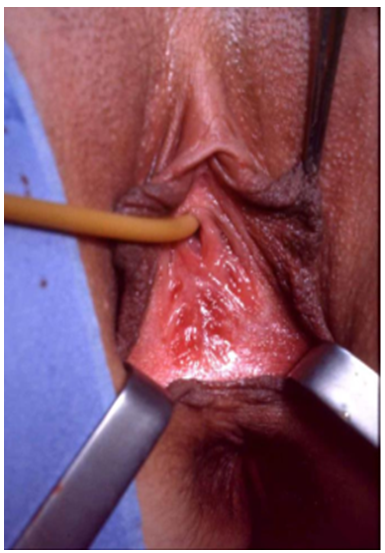
Figure 1: Vaginal aplasia with normal vulva.
An ultrasound of the abdomen and pelvis showed normal ovaries and a bicornuate uterus. Instead, MRI showed distal vaginal agenesis and a right unicornuate uterus (the left horn is primitive and non-communicating) (Figure 2). MRHK syndrome was the diagnosis. Using a double abdominoperineal technique, the patient had vaginoplasty through a vascularized portion of the sigmoid colon.
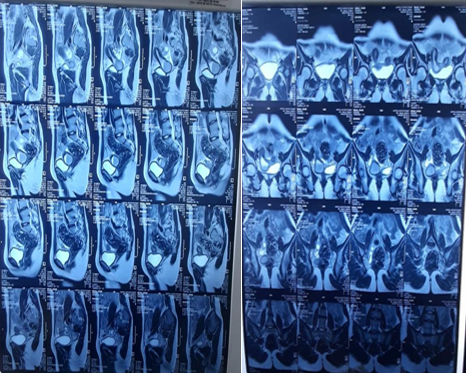
Figure 2: MRI image: right unicornuate uterus (left horn is rudimentary and non-communicating) and distal vaginal agenesis.
Abdominal time:
Bicornuate uterine (Figure 3) investigation with pfannenstiel incision under general anesthesia with:
- The right cavity is hematocolposis (Figure 4).
- Rudimentary cavity-left.
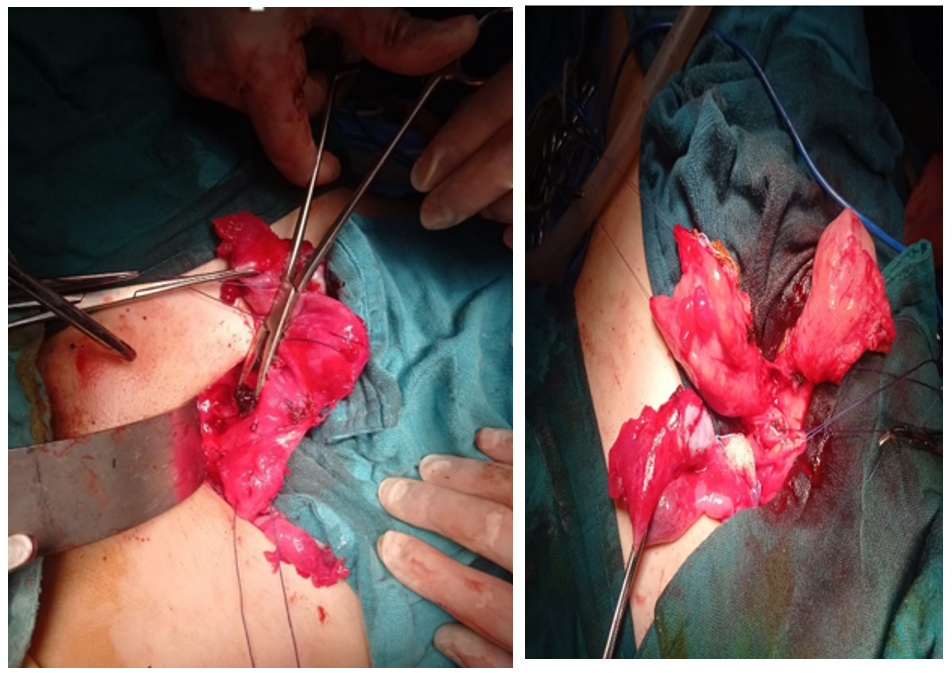
Figure 3: Bicornuate uterus.
Figure 4: Hematocolpos of the right cavity.
Partitioning the sigmoid and harvesting a pedicled graft that is about 5 cm long.
Using Vicryl 3/0, distinct extra-mucosal sutures are used to restore intestinal continuity at this stage. The sigmoid graft's proximal section is anastomosed to the uterine cervix following its opening and hematocolpos evacuation.
Perineal time:
When anastomosing at the vulva, the perineal technique recovers the distal part of the digestive graft. A CH 16 Foley catheter is inserted into the neo-vagina and maintained there for two months (Figure5).
After two months, the Foley probe was withdrawn, and calibration was done immediately. The post-operative follow-up was simple. A 12-cm-long CH 17 hegar candle was accepted with ease.
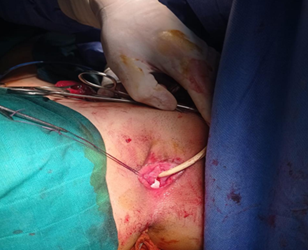
Figure 5: Docking the distal portion of the sigmoidal graft at the vulva.
Discussion
According to published reports, the prevalence of utero-vaginal aplasia ranges from 0.025% to 0.01%. The frequency, according to the most recent epidemiological study, is 1/5,000 female births [4]. 85% of vaginal aplasias are caused by MRKH syndrome, which is also the second most common cause of primary amenorrhea after gonadal dysgenesis [5,6].
Inquiries show a personal or familial history of abnormalities, particularly skeletal and renal [7]. A hymenal flange may make the vulva appear normal from the outside in babies and young girls. A vaginal cup that is blind can only be seen by catheterization using a tiny, flexible probe.
According to the pubertal evaluation, the adolescent is developing normally for their age.
With the patient's consent, a vulva examination verifies that the external genitalia appear normally and that there is a basic vaginal cup, the depth and depressibility of which can vary from nearly zero to a few centimeters. The cup's depressibility and depth can vary, ranging from nearly nothing to a few millimeters. According to Creatsas et al., 78.5% of 200 patients had a vaginal cup that measured between 3 and 20 mm. Complete vaginal aplasia without any cup depth might occasionally occur. The urethra may appear circular and slightly gaping, and it may be more posterior than usual, especially if there is no vaginal cup (19% of instances in the series by Khen-Dunlop et al.) [8]. The rectal examination, rarely performed, shows the absence of a median uterine structure. Clinical examination may reveal skeletal anomalies, inguinal hernia, hypoacusis, facial asymmetry, and extremity abnormalities [9].
In our case, the clinical indicators were primary amenorrhea with cyclical pelvic pain; a clinical examination showed normal external female genitalia and a well-developed look; however, there is no need for a clinical examination under general anesthesia. An objective analysis and accurate anatomical assessment of this syndrome are provided by MRI, the high-performance imaging tool of choice for diagnosis that is crucial for any surgical management.
Age- and pubertal-development-appropriate ovarian function is confirmed by measurements of FSH, LH, estradiol, androgens (delta-4 androstenedione and testosterone), and 17-OHP.
An increased FSH can be utilized to rule out gonadal dysgenesis or to draw attention to the uncommon occurrences of ovarian failure linked to MRKH syndrome.
Tests for testosterone also aid in ruling out total androgen insensitivity. Other abnormalities are not always routinely looked for in a series of MRKH patients, with the exception of urinary tract abnormalities. Clinical evaluation served as the starting basis for the search for related abnormalities.
The blood karyotype, 46 XX, is normal; no anomalies are apparent. Particularly prior to puberty, when the hormonal work-up is ineffective in differentially diagnosing androgen insensitivity syndrome, it removes MRMKH syndrome.
Parsons et al. [10] reported two transitory subocclusions, four mucosal prolapses, four introital stenosis, and perineal hematomas in a group of 28 patients with an average follow-up of 6.2 years. None of the patients thought these issues affected their quality of life.
A functioning vagina without significant postoperative stress is achieved after sigmoidal colpoplasty in 4–6 weeks. There aren't many published studies on sigmoidal colpoplasty's problems and functional outcomes [11]. The neovagina was 11.5 cm long on average and did not shorten over time. The neocavity does not gradually narrow, and some have even argued against autodilation altogether. The neovagina is adequately lubricated because the colon secretes very little, in contrast to ileal transplant procedures. Aside from the occlusion that comes with any laparotomy, the two main hazards are stenosis of the sigmoido-vestibular orifice, which can be avoided by autodilatation, and peritonitis through an anastomotic fistula [12]. There is a chance that any rectovesical cleavage, an operation that is a component of any procedure for uterovaginal aplasia [13].
Regardless of the method used, including vaginal sigmoidoplasty, the patient's participation and comprehension are essential and call for a level of maturity that can only be attained with thorough medical information and a patient who is very driven [14-16].
Conclusion
In the end, the vaginal sigmoidoplasty procedure has minimal morbidity and is simple to execute. It usually prevents subsequent stenosis and requires minimal postoperative care after the initial surgical phase is past [17,18].
Sigmoidoplasty should not be disregarded due to its good functional results, even if the Davydov method has garnered increased interest since its laparoscopic adaption.
References
- Wesley JR, Coran AG. Intestinal vaginoplasty for congenital absence of the vagina. J Pediatr Surg, 1992; 27: 885-889.
- Polednik J. Three cases of vaginal aplasia, surgically treated by the Polednikmodified Schubert technic. Gynaecologia, 1961; 151: 297-300.
- Freundt I, Toolenaar TA, Huikeshoven PJ, Drogendi JK, Jeekel H. A modified technique to create a neo vagina with an isolated segment of sigmoïd colon.Surg Gynecol Obstet, 1992; 174: 11-16.
- Tescher M, Remay Y. Epithélialisationd’un néovagin par nymphoplastie. Nouv
Presse Med, 1977; 6: 4063-4064. - Vecchietti G. Le néovagin dans le syndrome de Rokitansky-Kuster-Hauser.Rev Med Suisse Romande, 1979: 99: 593-601.
- Vecchietti G. Neovagina nella sindromedi rokitansky-Kuster-Hauser. AttualitaObstet Gynecol, 1965; 11: 131-147.
- Laffargue F, Giacalone PL, Boulot P, Vigoureux Hedon B, Benos P. Traitementpercœlioscopique de l’aplasie vaginale (technique de Vecchietti modifiée). JObstet Gynecol, 1994; 2: 293-296.
- Viala SL, Galand B, Barneon G. Réépithélialisation des néovagins après technique de Vecchietti. Gynécologie, 1986; 37: 65-67.
- Paniel BJ, Haddad B, Meneux E. Chirurgie des malformations vaginales (II).Encycl Méd Chir (Elsevier, Paris), Techniques chirurgicales-Urologie-Gynécologie, 1996; 41-855-B: 22 p.
- Kwun Kim S, Hoon Park J, Cheol Lee K, Min Park J, Tae Kim J, Chan Kim M. Long-term results in patients after rectosigmoid vaginoplasty. Plast ReconstrSurg, 2003; 112: 143-151.
- Darai E, Toullalan O, Besse O, Potiron L, Delga P. Anatomic and functional results of laparoscopic-perineal neovagina construction by sigmoid colpoplasty in women with Rokitansky’s syndrome. Hum Reprod, 2003; 18: 2454-2459.
- Parsons JK, Gearhart SL, Gearhart JP. Vaginal reconstruction utilizing sigmoid colon: Complications and long-term results. J Pediatr Surg, 2002; 37: 629-633.
- Peyromaure M, Villet R, Jung JL, Szwarc G. Prolapse of neovagina after anterior pelvic exenteration for urethral cancer. Prog Urol, 2000; 10: 456-460.
- Kapoor R, Sharma DK, et al. Sigmoid vaginoplasty: long-term results. Urology, 2006; 67: 1212-1215.
- Khen-Dunlop N, Lortat-Jacob S, Thibaud E, Clement-Ziza M, Lyonnet S, Nihoul-Fekete C. Rokitansky syndrome: clinical experience and results of sigmoid vaginoplasty in 23 young girls. J Urol, 2007; 177: 1107-1111.
- Schult M, Wolters HH, Lelle RJ, Winde G, Senninger N. Outcome of surgical intervention for rectoneovaginal fistulas in Mayer Rokitansky-Kuester-Hauser syndrome. World J Surg, 2001; 25: 438-440.
- Broadbent TR, Woolf RM, Hebertson R. Non operative reconstruction of the vagina. Two unusual cases. Plast Reconstr Surg, 1984; 1: 117-123.
- Frank RT. The formation of an artificial vagina without operation. Am J Obstet Gynecol, 1938: 35: 1053-1055.