
Email id: info@ijclinmedcasereports.com
Awareness and Preventive Practice of Cardiovascular Disease among Community People in Bangladesh
Hamida Khanam Lia1, Shahanaz Parveen2,*, Dr. Shanzida Khatun3 and Gauri Halder4
1MSN RN, Nursing Officer, National Institute of Cardiovascular Diseases and Hospital, Bangladesh
2Faculty, Community Health Nursing, of NIANER, Mugda, Dhaka, Bangladesh
3Faculty, Child Health Nursing, of NIANER, Mugda, Dhaka, Bangladesh
4MSN RN, Nursing Officer, Dhaka Medical College Hospital, Dhaka, Bangladesh
Received Date: 04/08/2026; Published Date: 16/10/2026
*Corresponding author: Shahanaz Parveen, MSN, RN, Faculty, Community Health Nursing, of NIANER, Mugda, Dhaka, Bangladesh
Abstract
Background: Cardiovascular Disease is the most common cause of mortality and morbidity throughout the world. Adequate awareness of cardiovascular disease and preventive practice may help reduce the population’s exposure to modifiable risk factors and thereby contribute to prevention and control strategies.
Objective: To assess the awareness and preventive practice of cardiovascular disease in addition to examine the relationship between these variables.
Method: A descriptive correlational study was conducted on 112 community people who living at Mugda area in Dhaka. The sample size was calculated using G power analysis and selected using a convenient sampling technique. Data was collected from the participants by face-to-face interview by using structured questionnaire. Data was analyzed by using descriptive statistics such as frequency, percentage, mean and standard deviation. Inferential statistics such as one-way ANOVA, independent t-test and Pearson correlation test were used to examine the relationship between variables.
Results: The mean score of awareness of cardiovascular disease was 11.66 (SD = 2.92) and the total mean of preventive practice was 2.18 (SD = .38) respectively. It indicates that the awareness and preventive practice among community people were at moderate level. In bivariate analysis, it has been showed that level of education (f = 5.17, p = .002), occupation (f= 4.39, p= .006), monthly family income (r= .35, p= .000) and awareness (r= .31, p= .001) were statistically significantly correlated with preventive practice of cardiovascular disease.
Conclusion: The study findings concluded that overall awareness and preventive practice of cardiovascular disease among community people in Bangladesh was moderate level. The study also found that level of education, occupation, monthly family income and awareness were statistically significantly correlated with preventive practice of cardiovascular disease. Appropriate health education program on prevention of cardiovascular disease for community people may be designed and conducted to increase the awareness and preventive practice. Health care provider can use this study findings to develop an intervention program to increase awareness and preventive practice of cardiovascular disease.
Keywords: Awareness; Preventive Practice; Cardiovascular Disease; Community People
Introduction
Cardiovascular Disease (CVD) is a group of disorders of the heart and blood vessels which include coronary heart disease, cerebrovascular disease, peripheral arterial disease, rheumatic heart disease, congenital heart disease, deep vein thrombosis and pulmonary embolism [1]. The global burden of cardiovascular disease has risen to epidemic proportions, and has been considered as a major public health issue worldwide [2]. According to estimates 17.9 million people died from CVD in 2019, representing 32% of all deaths worldwide and of these deaths, 85% were due to heart attack and stroke [1]. Every year around 60 million people globally develop a heart or circulatory disease. The global annual number of CVD deaths is expected to rise to more than 23 million by 2030 and more than 34 million by 2060 [3]. Total CVD prevalence nearly doubled from 271 million in 1990 to 523 million in 2019 [4]. South Asians are more vulnerable racial group having high prevalence of coronary heart disease as compared with another ethnicity [5]. According to estimates, the prevalence of CVD in India was near to 3% in 2000 and up to 10% in recent years [6]. In Bangladesh cardiovascular disease is an increasingly important cause of morbidity and mortality and the current prevalence of coronary artery disease, rheumatic fever and rheumatic heart disease and stroke may be 20-25%, 4-6%, <1/1000, 0.3-1.0 respectively [7].
The impact of different types of CVD is enormous. CVD cause around 19 million deaths each year - an average of 50,000 people each day or one death every 1.7 seconds and the death continue to rise. China had the most heart disease fatalities last year, followed by India, Russia, the United States and Indonesia [8]. The number of CVD deaths steadily increased from 12.1 million in 1990, reaching 18.6 million in 2019 [4]. Over three-quarters of CVD deaths occur in low- and middle-income countries, and CVD was responsible for 38% of the 17 million premature deaths (under the age of 70) due to noncommunicable diseases in 2019 [1]. In Bangladesh, CVD accounts for 30% of deaths due to all causes while noncommunicable diseases account for 67% of all deaths [9]. As a whole CVD and their known risk factors account for 13.4 % of disability adjusted life years (DALYs) lost in Bangladesh [10].
Awareness of CVD and its risk factors is considered to be crucial in encouraging people to adopt a healthier lifestyle [11]. There are several factors responsible for CVD, which can be broadly classified into two categories: modifiable factors such as obesity, dyslipidemia, diabetes, hypertension, and smoking; and nonmodifiable factors such as age, ethnicity, and family history [12]. The modifiable risk factors are increasing globally and locally. According to previous study, CVD risk factors are highest in Bangladesh among South Asian nations [13]. It has been shown that most CVD can be prevented by raising awareness about primary prevention and modifying the risk factors such as tobacco use, obesity, physical inactivity, high blood pressure, and unhealthy diet [14].
The level of awareness and preventive practice among the people about CVD is very low. Recently a study in Buea, Cameroon showed that 52.5% of participants had overall poor awareness on CVD with only about a quarter correctly identifying types of CVD. Overall, 45% were unaware of CVD risk factors, warning signs of heart attack and stroke [15]. Another previous study in US among Chinese immigrants found that only 15% of the respondents consumed five or more servings of fruit/ vegetables per day, and less than one-third (31%) engaged in regular physical activity and about two-third (74%) of them had received a cholesterol test in the previous five years as preventive practices of cardiovascular disease [16]. Identifying the awareness of cardiovascular diseases among the community people and taking appropriate preventive measures can greatly lessen the burden of CVD and reduce the burden on health system. Awareness of CVD, its symptoms, risk factors and preventive practices have been studied worldwide among the various populations. In Bangladesh most of the previous researchers conducted prevalence and risk factors of cardiovascular disease. Yet, little is known about the CVD awareness and preventive practice among the community people in Bangladesh. The findings of the study would contribute to develop strategies and appropriate intervention program for community people to increase the awareness and preventive practice of cardiovascular disease. Therefore, the investigator intended to conduct a study on awareness and preventive practices of cardiovascular disease among community people in Bangladesh.
Methods
A descriptive correlational study design was used in this study to assess the awareness and preventive practice of cardiovascular disease in addition to examine the relationship between these variables among the community people living at Mugda in Dhaka from July 2022 to June 2023.The approval was obtained from the Institutional Review Board (IRB) of NIANER and BMU and from Word Counselor of Mugda. The convenient sampling method was used to recruit the participants. Potential participants were explained about details of the study and were informed that they had the right to withdraw from the study any time without any harm. Participants who decided to participate in the study were asked to sign the consent form. Total of 112 participants were selected based on the following inclusion criteria; a) > 18 years old male and female, b) People who were available during data collection period, c) People who were agreed to participate voluntarily in this study. People who had cardiovascular disease were excluded.
The questionnaire was divided into three parts: 1st part: Socio-demographic Questionnaire consists of 9 items. 2nd part: Awareness of cardiovascular disease related questionnaire consist of 20- item awareness related questionnaire with a yes/ no/don’t know option was used to describe the awareness level of cardiovascular disease among community people. The questionnaire was developed by researcher based on the literature review. There were four negative items (item no 2, 11, 14 and 20) and it was reversed during data analysis. The score was ranged from 0 to 20. Each correct answer received 1 point while an incorrect answer received 0 points. The participant’s awareness was categorized into three levels: low, moderate and high. A high score indicates a high level of awareness of cardiovascular disease; 3rd part: Preventive practice of cardiovascular disease related questionnaire consist of 10- item preventive practice of cardiovascular disease related questionnaire was used to measure the community peoples preventive practice level which was developed by the researcher based on literature review. The participants were asked to express their opinion using a 4-point Likert scale ranging from 1= Never, 2= Rarely, 3= Sometimes and 4= Always. High score indicates high level of preventive practice.
Results
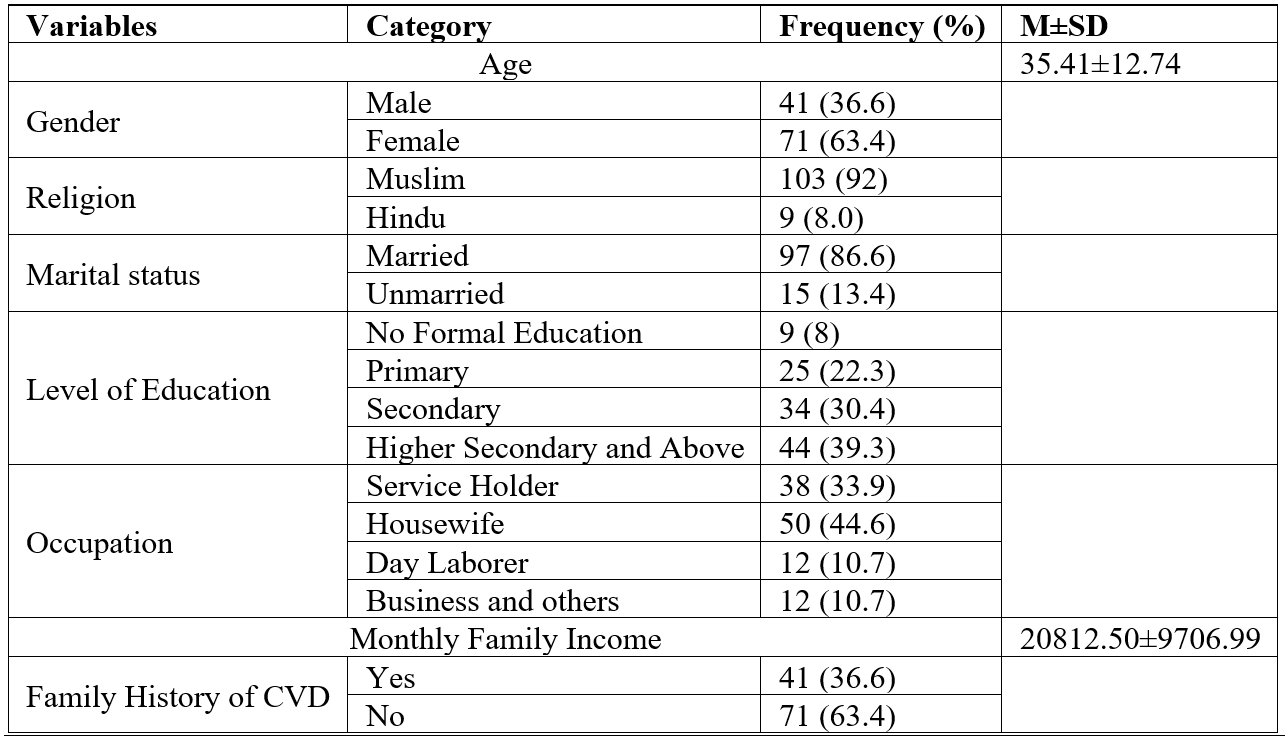
Table 1 shows the distribution of frequency and percentage of socio-demographic characteristics of the participants. The findings revealed that mean age of the participants was 35.41 (SD=12.74) years old ranging from 20-70 years. Among 112 participants, most of the participants 71 (63.4%) were female and about one-third of them 41 (36.6%) were male. Most of the participants 103 (92%) were Muslim and few of them 9 (8%) were Hindu. The marital status of the participants showed that, majority of the participants 97 (86.6%) were married and few of them 15 (13.4%) were unmarried. The level of education of the participants, 9 (8%) had no formal education, 25 (22.3%) were completed primary, 34 (30.4%) were completed secondary, while 44 (39.3%) completed higher secondary and above were. Occupational status of the participants, 38 (33.9%) were service holder, 50 (44.6%) were housewife, 12 (10.7%) were day laborer and 12 (10.7%) were businessman. The average monthly family income was 20812 BDT (SD=9706.99) which ranged from 8000 – 60000 BDT. The findings revealed that, 41 (36.6%) had family history of cardiovascular disease and 71 (63.4%) participants had no family history of cardiovascular disease.
Table 1: Distribution of Socio-demographic Characteristics of The Participants. (N=112).
Awareness of Cardiovascular Disease among Community People
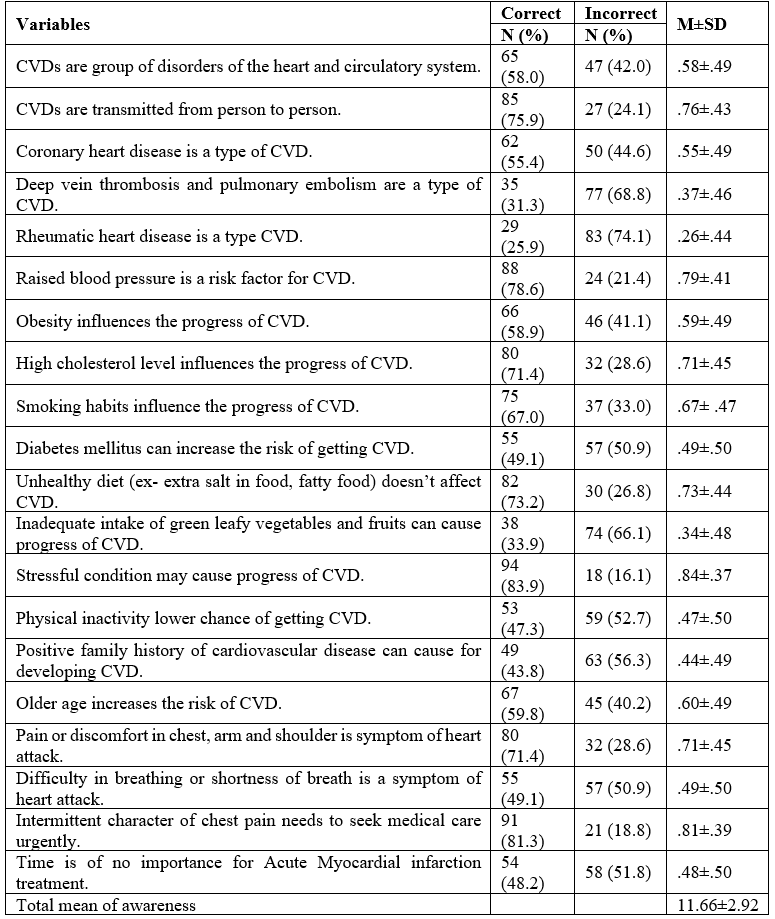
Table 2 shows the distributions of frequency, percentage, mean and SD of awareness level of the participants on cardiovascular disease. Based on item analysis, results reflected that majority of the participants had correct answer regarding, CVDs are transmitted from person to person 85 (75.9%), stressful condition 94 (83.9%), raised blood pressure 88 (78.6%), High cholesterol level 80 (71.4%), unhealthy diet (ex-extra salt in food, fatty food) 82 (73.2%) respectively are the risk factors of CVD, intermittent character of chest pain needs to seek medical care urgently 91 (81.3%), pain or discomfort in chest, arm and shoulder is symptom of heart attack 80 (71.4%), CVDs are group of disorders of the heart and circulatory system 65 (58.0%), Coronary heart disease is a type of CVD 62 (55.4%). In contrast, most of the participants didn’t know Rheumatic heart disease 83(74.1%), Deep vein thrombosis and pulmonary embolism 77 (68.8%) are types of CVD, inadequate intake of green leafy vegetables and fruits 74 (66.1%), Diabetes mellitus 57 (50.9%), physical inactivity 59 (52.7%) are risk factors for CVD. The result showed that the total mean score of cardiovascular disease awareness was 11.66 (SD=2.92) out of maximum score 20 which indicate moderate level of awareness regarding cardiovascular disease.
Table 2: Distribution of Awareness of Cardiovascular Disease among the Participants. (N=112).
Cardiovascular Disease Preventive Practice among the Participants
Table 3, it shows that the distribution of participants level of preventive practice of cardiovascular disease among community people. The findings of the present study, the mean preventive practice score of cardiovascular disease was found as 2.17 (SD=.38) out of a maximum of 4 point which indicates a moderate level of preventive practice. Majority of the participants never performed physical exercise 3 to 5 days in a week 90 (80.4%), never smoked 92 (82.1%), never performed cholesterol test 90 (80.4%), never avoid fatty food consumption 71 (63.4%). Less than half of the participants rarely checked their body weight 47 (42.0%), rarely checked their blood pressure 43 (38.4%) and rarely consult with health care providers 43 (38.4%). 49 (43.8%) participants always eat green leafy vegetables and fruits, and always avoid extra salt in food 47 (42.0%).
Table 3: Distribution of cardiovascular disease preventive practice among the participants. (N=112).
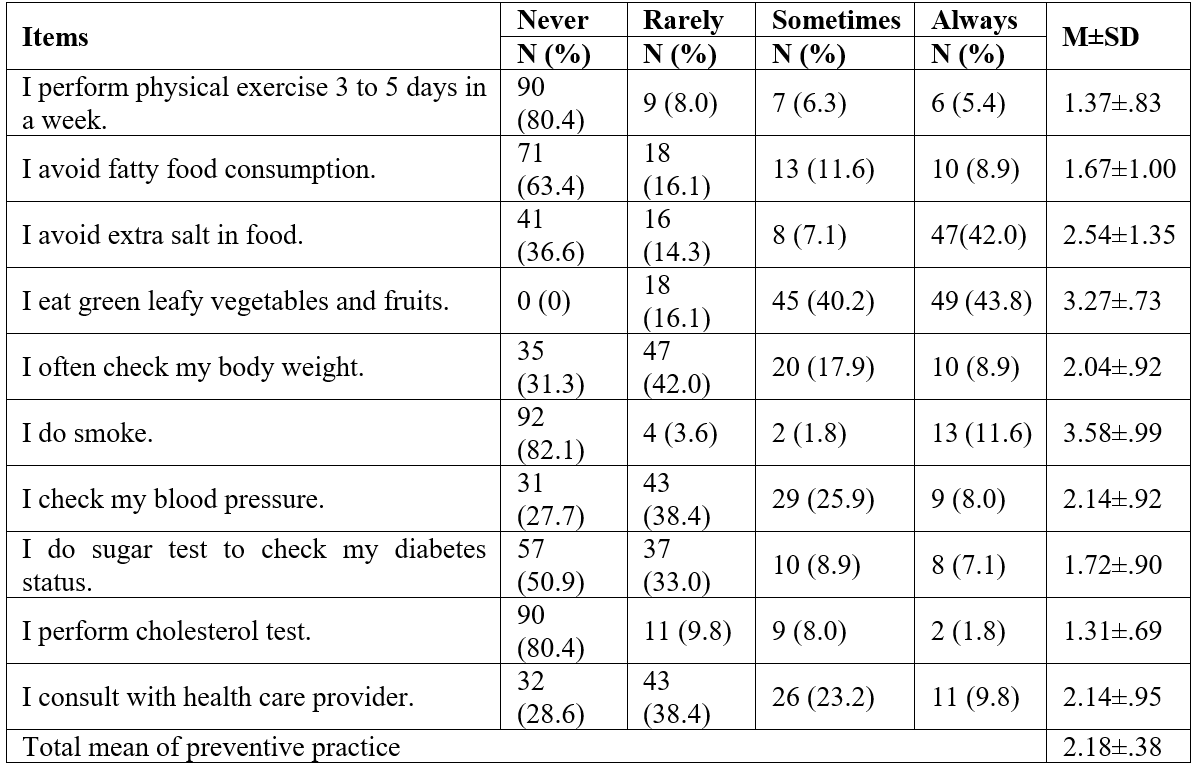
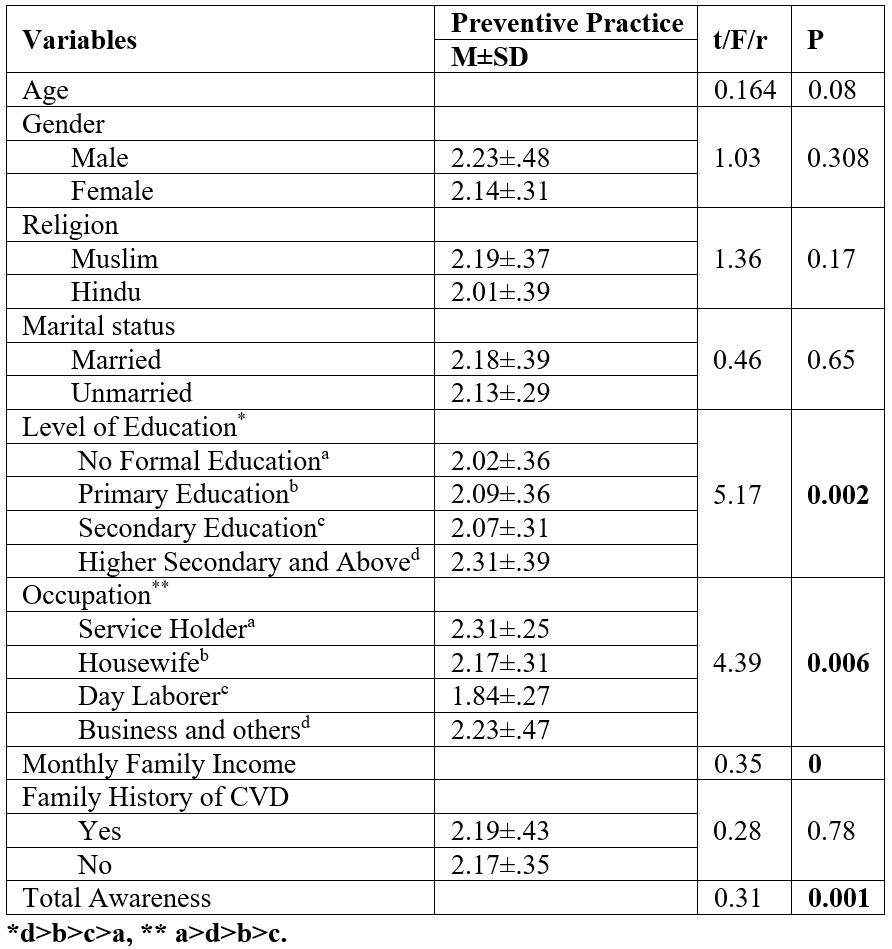
Table 4 showed the relationship among socio-demographic characteristics and awareness with preventive practice of cardiovascular disease among community people. Bivariate analysis was done to examine the relationship between socio-demographic characteristics and preventive practice of cardiovascular disease among community people. The study finding revealed significant relationship between preventive practice and level of education (F=5.17, P=.002). It means that those participants highly educated were good preventive practice regarding cardiovascular disease. The study result found that occupation was related with preventive practice of cardiovascular disease (F= .35, p=.006). It means that those participants were service holders were good preventive practice about cardiovascular disease. The study findings also revealed that monthly family income was significantly related with preventive practice (r=.35, p=.000). The rest of the variables were non-significant towards preventive practice of cardiovascular disease. The result showed that the total awareness score of cardiovascular disease was (r=.31, p=.001) which was very significantly correlated with preventive practice.
Table 4: Relationship between socio-demographic characteristics, awareness and preventive practice among the participants (N=112).
Discussion
The study findings revealed that the mean age of the participants was 35.41 years which ranging from 20-70 years. This finding nearly similar with a study conducted in Buea, Cameroon. The predominance of young and middle-aged adults in community-based surveys may reflect the age group that is more socially and economically active and therefore more accessible during data collection [15]. Regarding gender, 63.4% of the participants were female, while 36.6% were male. This female predominance differs from several previous studies conducted in Bangladesh and other countries, where male participants constituted the majority (17; 18). The higher proportion of women in the present study may be attributed to the community-based data collection process, as women, particularly housewives, were more likely to be available at home during the survey period.
The majority (92.0%) of the participants were Muslims, whereas only 8.0% were Hindus. This finding reflects the religious composition of Bangladesh, where Islam is the predominant religion, and is consistent with national demographic statistics and previous community-based studies conducted in Bangladesh [9, 10]. Most participants (86.6%) were married. Similar findings have been reported in community-based studies from Bangladesh, where married adults constituted the majority of the study population [10]. The high proportion of married participants may be explained by the inclusion of adults from established households within the selected communities.
With regard to educational status, 39.3% of the participants had completed higher secondary education or above, followed by 30.4% with secondary education. This educational profile is comparable to previous studies conducted in Jordan and among immigrant communities, where a considerable proportion of participants had completed secondary or higher education [11, 16]. Educational attainment is recognized as an important determinant of health literacy and may influence awareness and adoption of healthy behaviors related to cardiovascular disease prevention. In terms of occupation, nearly half (44.6%) of the participants were housewives, followed by service holders (33.9%). This occupational distribution is expected in community-based studies conducted in Bangladesh, where women are commonly engaged in household responsibilities rather than formal employment [19]. The predominance of housewives may also explain the higher proportion of female participants, as they were more readily available for interviews during daytime data collection.
The mean monthly family income was BDT 20,812.50 ± 9,706.99, indicating that most participants belonged to the middle-income group. This finding is consistent with the socioeconomic profile reported in previous Bangladeshi studies, which identified income as an important determinant of health-seeking behavior and the utilization of preventive healthcare services [10, 19]. The present study also found that 63.4% of the participants had no family history of cardiovascular disease, whereas 36.6% reported a positive family history. Similar observations were reported by Aminde et al. (2017), who found that many community members had no known family history of cardiovascular disease. However, the absence of a reported family history does not necessarily indicate a lower risk of cardiovascular disease, as many individuals may be unaware of their family members' medical conditions or may have undiagnosed cardiovascular risk factors [15].
The present study demonstrated that community people had a moderate level of awareness regarding cardiovascular disease (CVD), as (62.5%) of the participants answered awareness question correctly. with a mean awareness score of 11.66 ± 2.92 out of a possible 20. This shows the lack of awareness among community people in Bangladesh. This research findings were similar with other study conducted in general population and university students and opposite from previous study had poor awareness and other have high awareness regarding cardiovascular diseases [15; 11; 20]. In this study among the participant’s more than fifty participants know that cardiovascular diseases are group of disorders of the heart and circulatory system and 76% knows that CVD are non-communicable disease which was consistent with previous study conducted in Jordan [11]. Although more than half of the participants answered most awareness questions correctly, considerable knowledge gaps remained regarding specific types of CVD, risk factors, and emergency management. These findings suggest that awareness of cardiovascular disease among community people in Bangladesh remains suboptimal. Similar levels of awareness have been reported in community-based studies conducted in Cameroon and Jordan, where participants demonstrated satisfactory knowledge of common cardiovascular risk factors but had limited understanding of disease classification and prevention [11, 15]. However, the present findings are lower than those reported among urban populations with higher educational attainment, where overall cardiovascular health awareness was considerably better [20].
The present study found that 58.0% of participants correctly identified cardiovascular disease as a group of disorders affecting the heart and circulatory system. Similarly, 55.4% recognized coronary heart disease as a type of CVD. However, awareness of less common cardiovascular conditions was poor; only 31.3% correctly identified deep vein thrombosis and pulmonary embolism as cardiovascular diseases, and only 25.9% recognized rheumatic heart disease as a form of CVD. Comparable findings were reported by Mukattash et al. (2012), who observed that participants were generally familiar with common cardiovascular diseases but had limited knowledge of less frequently discussed conditions. This discrepancy may reflect the greater emphasis placed on coronary heart disease in public health campaigns compared with other cardiovascular disorders [11].
Regarding cardiovascular risk factors, the majority of participants correctly recognized stress (83.9%), raised blood pressure (78.6%), unhealthy diet (73.2%), high cholesterol (71.4%), and smoking (67.0%) as important contributors to cardiovascular disease. These findings are consistent with previous studies conducted in Cameroon and Jordan, which also identified hypertension, smoking, unhealthy diet, and psychological stress as the most commonly recognized cardiovascular risk factors [11, 15]. The relatively high level of awareness of these risk factors may be attributed to increased dissemination of health information through healthcare providers, television, social media, and other public health campaigns. In the present study majority of the participants had low level of awareness regarding the following item of awareness related questionnaire – diabetes mellitus, physical inactivity and positive family history. This result is consistent with other study conducted in Jordan [11].
In contrast, awareness regarding several important modifiable risk factors remained inadequate. Less than half of the participants correctly identified diabetes mellitus (49.1%), physical inactivity (47.3%), and a positive family history of cardiovascular disease (43.8%) as risk factors. Furthermore, only 33.9% recognized inadequate consumption of fruits and green leafy vegetables as contributing to cardiovascular disease. Similar deficiencies have been reported in previous studies conducted in Jordan and Cameroon, where participants demonstrated limited understanding of diabetes, family history, and sedentary lifestyle as cardiovascular risk factors [11, 15]. These findings indicate that health education programs should place greater emphasis on these less well-recognized but clinically important risk factors.
With respect to the recognition of symptoms of acute myocardial infarction, 71.4% of participants correctly identified chest, arm, or shoulder pain as a symptom of heart attack, while 49.1% recognized shortness of breath as a warning sign. These findings are broadly consistent with previous studies conducted in Jordan and Pakistan, where chest pain was the most frequently recognized symptom, whereas awareness of atypical symptoms was considerably lower [11, 21]. Adequate recognition of warning symptoms is essential because delayed identification often contributes to postponed healthcare seeking and poorer clinical outcomes.
The present study also found that 81.3% of participants understood that intermittent chest pain requires urgent medical attention. However, 51.8% incorrectly believed that the timing of treatment is not important in acute myocardial infarction. This finding highlights a significant knowledge gap regarding the importance of early reperfusion therapy and the concept that "time is muscle." Similar misconceptions have been reported in previous community-based studies, where delays in seeking medical care were associated with limited public awareness of the urgency of myocardial infarction treatment [21, 15]. Improving public knowledge about the need for immediate medical attention after the onset of heart attack symptoms should therefore be a priority for cardiovascular health promotion programs in Bangladesh. Overall, the findings indicate that although community people possess reasonable knowledge of common cardiovascular diseases and several major risk factors, substantial deficiencies remain regarding specific cardiovascular conditions, modifiable risk factors, and emergency management of acute myocardial infarction. Strengthening community-based health education through primary healthcare services, mass media campaigns, and targeted awareness programs may improve cardiovascular health literacy and promote early recognition and prevention of cardiovascular disease.
The present study found that community people demonstrated a moderate level of cardiovascular disease (CVD) preventive practice, with a mean preventive practice score of 2.18 ± 0.38 out of a maximum score of 4. This finding indicates that although participants adopted some healthy behaviors, overall adherence to recommended preventive practices was insufficient. Similar findings have been reported in Ethiopia and Malaysia, where participants demonstrated moderate levels of cardiovascular disease prevention practices despite having reasonable knowledge of cardiovascular risk factors [22, 23]. These findings suggest that awareness alone may not always translate into healthy lifestyle behaviors.
Regular physical activity is one of the most effective strategies for preventing cardiovascular disease. However, the present study revealed that 80.4% of participants never performed physical exercise three to five days per week. This finding is consistent with previous studies conducted in Nigeria and Ethiopia, which reported low levels of regular physical activity among community populations ([20, 22]. A sedentary lifestyle remains an important modifiable risk factor for cardiovascular disease and may be influenced by limited awareness, lack of motivation, occupational demands, insufficient recreational facilities, and cultural practices. Public health interventions promoting regular exercise should therefore be strengthened at the community level. These indicate that participants had no desire to engage in exercise.
Regarding dietary practices, 63.4% of participants reported that they never avoided fatty foods, indicating poor adherence to dietary recommendations for cardiovascular disease prevention. In contrast, encouraging findings were observed for other healthy dietary behaviors, with 43.8% of participants always consuming green leafy vegetables and fruits and 42.0% consistently avoiding excessive salt intake. These findings partially agree with previous studies, which demonstrated that although many individuals recognize the importance of a healthy diet, adherence to dietary recommendations remains inconsistent [22, 23]. Differences in dietary practices may be related to food preferences, affordability, cultural habits, and limited nutritional counseling.
The present study also found that 82.1% of participants reported never smoking, indicating a relatively favorable preventive behavior. This finding contrasts with studies from Nigeria, where tobacco use was more common among adults [18]. The low prevalence of smoking observed in this study may reflect the higher proportion of female participants, cultural norms discouraging tobacco use among women, and increasing public awareness regarding the harmful effects of smoking through national tobacco control initiatives.
Routine health screening practices were generally poor among the participants. More than half (50.9%) had never undergone blood glucose testing, while 80.4% had never checked their cholesterol level. Furthermore, approximately one-third rarely monitored their blood pressure or body weight, and only a small proportion regularly consulted healthcare providers. These findings are comparable to those reported by Oguoma et al. (2014), who observed inadequate utilization of preventive health services in rural communities. Limited access to healthcare facilities, financial constraints, insufficient awareness regarding routine screening, and the absence of symptoms may contribute to poor participation in preventive health examinations.
Regular consultation with healthcare professionals plays an important role in the early detection and management of cardiovascular risk factors. In the present study, only 9.8% of participants reported always consulting healthcare providers, while 38.4% rarely sought professional advice. Similar findings have been reported in developing countries, where preventive healthcare utilization remains low because of limited accessibility, financial barriers, and inadequate health education [22]. Strengthening primary healthcare services and promoting regular health check-ups may improve preventive behaviors and facilitate early identification of cardiovascular risk factors.
The present study examined the relationship between selected socio-demographic characteristics, awareness, and preventive practices regarding cardiovascular disease (CVD) among community people. The findings revealed that educational level, occupation, monthly family income, and awareness of cardiovascular disease were significantly associated with preventive practice, whereas age, gender, religion, marital status, and family history of cardiovascular disease were not significantly associated.
Educational status showed a statistically significant association with preventive practice (F = 5.17, p = .002). Participants who had completed higher secondary education or above demonstrated better preventive practices than those with lower educational attainment. This finding is consistent with the study by Workina et al. (2022), which reported that individuals with higher educational levels were more likely to adopt healthy lifestyle behaviors and engage in cardiovascular disease prevention. Higher educational attainment may improve health literacy, increase access to health information, and enhance individuals' ability to understand and implement preventive recommendations. Similarly, Mukattash et al. (2012) reported that education was positively associated with knowledge and health-related behaviors concerning cardiovascular disease.
Occupation was also significantly associated with preventive practice (F = 4.39, p = .006). Service holders achieved the highest preventive practice scores, whereas day laborers had the lowest scores. This finding is comparable to previous studies indicating that occupational status influences health-related behaviors through differences in education, socioeconomic status, working conditions, and access to healthcare services [22]. Individuals employed in formal sectors may have greater exposure to health education, workplace wellness programs, and financial resources that facilitate healthier lifestyle choices.
Monthly family income demonstrated a significant positive correlation with preventive practice (r = .35, p < .001). Participants with higher household incomes reported better cardiovascular disease preventive practices than those with lower incomes. This finding agrees with previous research showing that socioeconomic status plays an important role in adopting healthy behaviors and utilizing preventive healthcare services [19, 22]. Higher income enables individuals to purchase healthier foods, participate in regular medical check-ups, afford diagnostic screening, and access healthcare services more easily than lower-income populations.
The present study further demonstrated a significant positive relationship between awareness and preventive practice (r = .31, p = .001), indicating that participants with greater awareness of cardiovascular disease were more likely to engage in preventive behaviors. This finding supports the concept that health knowledge contributes to positive behavioral change by improving individuals' understanding of disease risk factors and encouraging healthy lifestyle practices. Similar findings have been reported by Workina et al. (2022), who observed that greater knowledge of modifiable cardiovascular risk factors was associated with better preventive practices among diabetic patients. Increased awareness may enhance motivation, improve self-efficacy, and promote adherence to recommended lifestyle modifications for cardiovascular disease prevention [22]. In contrast, no statistically significant relationships were observed between preventive practice and age (p = .08), gender (p = .308), religion (p = .17), marital status (p = .65), or family history of cardiovascular disease (p = .78). These findings suggest that preventive behaviors were relatively similar across these demographic groups within the study population. Similar observations have been reported in several community-based studies, where demographic characteristics alone were insufficient predictors of preventive health behaviors after considering educational and socioeconomic factors [15, 18]. This may indicate that health education and access to preventive resources have a greater influence on cardiovascular disease prevention than demographic characteristics alone.
Overall, the findings indicate that socioeconomic and educational factors play an important role in promoting cardiovascular disease preventive practices. Individuals with higher education, stable occupations, higher family income, and better awareness demonstrated significantly healthier preventive behaviors. These results emphasize the importance of strengthening community-based health education programs, improving health literacy, and increasing access to affordable preventive healthcare services, particularly among socioeconomically disadvantaged populations. Interventions targeting these modifiable determinants may contribute to improved cardiovascular disease prevention and reduced disease burden in Bangladesh.
Conclusion
This study was a descriptive type of correlational study, conducted among 112 participants into assess awareness and preventive practice of cardiovascular disease in addition to examine the relationship between these variables among the community people in Bangladesh. Overall awareness and preventive practice of cardiovascular disease among community people in Bangladesh was moderate level. The study findings concluded that the occupation, level of education, monthly family income and awareness was statistically significantly related to preventive practice of cardiovascular disease. Health care researcher can use this baseline data to make some strategy for increasing awareness and preventive practice among people in Bangladesh. This study findings can be used to develop especially community health nursing practice for awareness and preventive practice of cardiovascular disease among not only community people but also mass population of Bangladesh. The scenario was borne out of awareness and preventive practice of the people toward cardiovascular disease; and structured health education, proper utilization of available cardiovascular disease guidelines, measure to improve health affordability and accessibility to health intervention would be an important tenet to increase awareness and cardiovascular disease prevention and management.
Limitations
The main limitation of the study was single setting and the study was based on a convenient sampling technique that might have been a selection bias. Therefore, the finding of the current study cannot be generalized because it doesn’t cover the whole scenario of cardiovascular disease awareness and preventive practice among community people in Bangladesh. It may be more generalizable if data collected from multiple setting with large sample size. The researcher received no funding from any organization so limited budget is the limitation of the study. More over in this study included limited awareness and preventive practice related questions and not included any other awareness and practice related questions due to limited time framework. Another limitation of the study was participants practice have been asked through likert scale which was not rely on participant’s complete response.
Recommendations
Based on the study findings, the researcher recommended that further study with a large number of sample sizes and multiple setting in a large scale. Interventional study may be conducted to increase awareness and preventive practice of cardiovascular disease among the community people. Health care provider especially community health nurse and community leader may arrange various health education session and awareness program regularly to increase awareness and preventive practice among community people. Strategy may be taken to increase social awareness and practice level. Both the electronic and print media may be utilized to disseminate information about the program and as well as cardiovascular disease to the local people to reduce cardiovascular disease related morbidity and mortality.
References
- WHO. World Health Organization. Cardiovascular Diseases, 2021.
- Ghrayeb FA, Rusli AM, Ismail M. Non-Communicable Diseases Behavioral Risk Factors among Palestinian Adolescents: A Descriptive Study from a Rural Community of Tarqumia. World Journal of Medical Sciences, 2014; 10(3): 267-274.
- British Heart Foundation. Global Heart & Circulatory Disease Factsheet, 2022.
- Roth GA, Mensah GA, Johnson CO, Addolorato G, Ammirati E, Baddour LM, et al. Global Burden of Cardiovascular Diseases and Risk Factors, 1990–2019. Journal of the American College of Cardiology, 2020; 76(25): 2982–3021. doi: 10.1016/j.jacc.2020.11.010.
- Prasad D, Dash A, Kabir Z, Das B. Childhood cardiovascular risk factors in South Asians: A cause of concern for adult cardiovascular disease epidemic. Annals of Pediatric Cardiology, 2011; 4(2): 166. doi: 10.4103/0974-2069.84663.
- Gupta R, Joshi P, Mohan V, Reddy KS, Yusuf S. Epidemiology and causation of coronary heart disease and stroke in India. Heart, 2008; 94(1): 16–26. doi: 10.1136/hrt.2007.132951.
- Islam AM, Mohibullah A, Paul T. Cardiovascular Disease in Bangladesh: A Review. Bangladesh Heart Journal, 2017; 31(2): 80–99. doi: 10.3329/bhj.v31i2.32379.
- World Heart Federation. Cardiovascular Disease (CVD), 2022.
- World Health Organization. Noncommunicable diseases country profile 2018: Bangladesh. World Health Organization, 2018.
- El-Saharty S, Ahsan KZ, Koehlmoos TLP, Engelgau MM. Tackling non communicable disease in Bangladesh: Now is the time: World Bank, 2013.
- Mukattash TL, Shara M, Jarab AS, Al-Azzam SI, Almaaytah A, Al Hamarneh YN. Public knowledge and awareness of cardiovascular disease and its risk factors: a cross-sectional study of 1000 Jordanians. International Journal of Pharmacy Practice, 2012; 20(6): 367–376. doi:10.1111/j.2042-7174.2012.00208.x
- Kwon SC, Wyatt LC, Li S, Islam NS, Yi SS, Trinh-Shevrin C. Obesity and Modifiable Cardiovascular Disease Risk Factors Among Chinese Americans in New York City, 2009–2012. Preventing Chronic Disease, 2017; 14. doi: 10.5888/pcd14.160582.
- Yusuf S, Hawken S, Ounpuu S, Dans T, Avezum A, Lanas F, et al. Effect of potentially modifiable risk factors associated with myocardial infarction in 52 countries (the INTERHEART study): case-control study. The Lancet, 2004; 364(9438): 937–952. doi: 10.1016/s0140-6736(04)17018-9.
- Ray KK, Laufs U, Cosentino F, Lobo MD, Landmesser U. The year in cardiology: cardiovascular prevention. European Heart Journal, 2020; 41(11): 1157–1163. doi: 10.1093/eurheartj/ehz929.
- Aminde LN, Takah N, Ngwasiri C, Noubiap JJ, Tindong M, Dzudie A, et al. Population awareness of cardiovascular disease and its risk factors in Buea, Cameroon. BMC Public Health, 2017; 17(1). doi: 10.1186/s12889-017-4477-3.
- Taylor VM, Yasui Y, Tu SP, Neuhouser ML, Li L, Woodall E, et al. Heart Disease Prevention Among Chinese Immigrants. Journal of Community Health, 2007; 32(5): 299–310. doi: 10.1007/s10900-007-9057-5.
- Muhamad R, Yahya R, Yusoff HM. Knowledge, Attitude and Practice on Cardiovascular Disease among Women in North-Eastcoast Malaysia. International Journal of Collaborative Research on Internal Medicine & Public Health, 2012; 4(1): 85-98.
- Oguoma VM, Nwose EU, Bwititi PT. Cardiovascular disease risk prevention: preliminary survey of baseline knowledge, attitude and practices of a Nigerian rural community. North American Journal of Medical Sciences, 2014; 6(9): 466. doi: 10.4103/1947-2714.141644.
- Bleich SN, Koehlmoos TL, Rashid M, Peters DH, Anderson G. Noncommunicable chronic disease in Bangladesh: Overview of existing programs and priorities going forward. Health Policy, 2011; 100(2–3): 282–289. doi: 10.1016/j.healthpol.2010.09.004.
- Ofoegbu CC, In O, Ilika AL, Ifeadike C. Awareness of Cardiovascular Diseases and Knowledge of Cardiovascular Risk Factors and Risk Reduction Measures among Urban and Rural Primary School Teachers in South-Eastern Nigeria. Journal of Health Education Research & Development, 2018; 06(04). doi: 10.4172/2380-5439.1000289.
- Jafary FH, Aslam F, Mahmud H, Waheed A, Shakir M, Afzal A, et al. Cardiovascular health knowledge and behavior in patient attendants at four tertiary care hospitals in Pakistan – a cause for concern. BMC Public Health, 2005; 5(1). doi: 10.1186/1471-2458-5-124.
- Workina A, Habtamu A, Diribsa T, Abebe F. Knowledge of modifiable cardiovascular diseases risk factors and its primary prevention practices among diabetic patients at Jimma University Medical Centre: A cross-sectional study. PLOS Global Public Health, 2022; 2(7): e0000575. doi: 10.1371/0000575.
- Muhamad R, Yahya R, Yusoff HM. Knowledge, attitude and practice on cardiovascular disease among women in North-East Coast Malaysia. International Journal of Collaborative Research on Internal Medicine & Public Health, 2012; 4(1): 85–98.