
Email id: info@ijclinmedcasereports.com
Patterns of Inpatient Admissions for Psychiatric Diagnoses at a Tertiary Care Center in Pakistan: A Nine-Month Analysis
Nabira Khan1,#, Anil Kumar1,#, Akash Kumar Ahuja2, Chooni Lal1, Omar Irfan1,3, Muhammad Awais4, Khadija Ateeq4, Anoosha Sohail4, Brahma1, Haresh Kumar5 and Salman Muhammad Soomar6,7,*
1Department of Psychiatry and Behavioural Sciences, Jinnah Postgraduate Medical Centre, Karachi, Pakistan
2Medical College, Aga Khan University Hospital, Karachi, Pakistan
3Independent Consultant, Milton, Ontario, Canada
4Medical College, Jinnah Sindh Medical University, Karachi, Pakistan
5Department of Psychiatry and Behavioural Sciences, Khairpur Medical College, Khairpur, Pakistan
6King’s College London, Dubai, UAE
7Aga Khan University, Karachi, Pakistan
#Equally contributed to the joint first author position
Received Date: 05/08/2026; Published Date: 09/10/2026
*Corresponding author: Salman Muhammad Soomar, Aga Khan University, Karachi, Pakistan; King’s College Hospital, London, Dubai, UAE
Abstract
Introduction: Understanding the patterns in psychiatric admissions in tertiary care centers in resource-limited Countries like Pakistan provides valuable insight into disease patterns, service utilization, and emerging mental health needs of the population. This retrospective study explores the clinical characteristics of patients seeking care at the largest government-run tertiary psychiatric inpatient facility in Karachi, Pakistan, over nine months.
Methods: A retrospective observational study was conducted using inpatient psychiatric records from January–September 2025. All patients aged ≥12 years were included. Data collected included age, gender, ICD-11 diagnosis, and length of stay (LOS). Associations were assessed using Fisher’s Exact test, and crude and adjusted incidence rate ratios (cIRR, aIRR) with 95% confidence intervals were reported.
Results: 470 patients were admitted and were therefore included in the study. Their mean age was 31.1 (± 11.4), with the majority being men (n=278, 59.2%). The most common mental illnesses were schizophrenia spectrum disorders (n=153, 32.6%), followed by bipolar affective (n=112, 23.8%) and depressive disorders (n=81, 17.2%). The mean LOS was 9.3 days (SD 5.7). The mean LOS seen with schizophrenia-related and mood disorders was numerically longer than for other illnesses; this difference was not statistically significant (p=0.270). Patients aged 21–40 represented the largest proportion of admissions.
Conclusion: This study helped identify psychiatric illnesses (schizophrenia and mood disorders) and population (aged 21-40 years and males) that most commonly required inpatient care. As these illnesses account for a considerable proportion of patients seeking inpatient care at the psychiatric unit and account for longer LOS, it helps anticipate the resources that need to be allocated for them.
Keywords: Mental health; Psychiatry; Schizophrenia; Depression; Anxiety; Bipolar disorder; Pakistan
Introduction
Mental health disorders represent a significant and growing public health concern worldwide, contributing substantially to morbidity, disability, and healthcare utilization. The World Health Organization (WHO) estimates that 1 in 7 people globally live with a mental disorder, with depression and anxiety being among the leading contributors to the global burden of disease [1,2]. A broader epidemiological lens further reveals that mental disorders account for a substantial share of global health burden—nearly 12.0% of the global population in 2019 and rising in prominence among top causes of disease-related disability [3]. Hospital admissions for psychiatric conditions not only reflect the severity of mental illness but also highlight gaps in early diagnosis, outpatient management, and community-based mental health services.
A stark inequity persists, with over 90.0% in Low- and Middle-Income Countries (LMICs) lacking access to mental health treatment, compared to over 50.0% receiving care in high-income countries [4]. These disparities emanate from a chronic underinvestment, with low-income nations allocating a mere fraction, less than 1% of health budgets, to mental health [5]. In LMICs, including Pakistan, the challenge is compounded by limited mental health infrastructure, societal stigma, a shortage of trained professionals, and underfunding of psychiatric services [6]. Consequently, tertiary care centers often serve as the primary referral hubs for patients requiring psychiatric evaluation and inpatient management. Understanding the patterns in psychiatric admissions in such centers provides valuable insight into disease patterns, service utilization, and emerging mental health needs of the population.
Previous studies have documented variable patterns of psychiatric hospitalizations across different regions, influenced by sociodemographic profiles, healthcare accessibility, and cultural attitudes toward mental illness. However, data from South Asia, particularly Pakistan, remain scarce and fragmented regarding the burden of psychiatric admissions in tertiary care hospitals. A retrospective review from India of all the patients visiting out-patient care and in-patient care of a hospital in a period of two years, revealed a healthy trend of community-oriented (out-patient based) care with a decrease in hospital admissions during the period [7]. Inpatient psychiatric epidemiology is particularly important in Pakistan, where mental health services remain under-resourced and under-funded, stigma associated with mental illnesses, lack of national psychiatric surveillance systems, and tertiary care hospitals often serve as the primary treatment centers for severe mental illnesses.
This study aims to assess the patterns in hospital admissions for psychiatric indications and diagnoses over nine months at a tertiary care center in Pakistan. A nine-month analysis provides a feasible yet informative snapshot of the current burden of psychiatric illness, capturing seasonal and service utilization variations while remaining manageable for detailed data collection and analysis. Findings from this study will help identify the most common psychiatric diagnoses and associated risk factors requiring hospitalization, evaluate demographic and clinical characteristics of admitted patients, and generate evidence to inform future research and health system planning.
Methods
This is a retrospective observational study conducted using inpatient psychiatric admission medical records of patients admitted during January 2025 to September 2025. The Strengthening the Reporting of Observational Studies in Epidemiology (STROBE) checklist was used to ensure the comprehensibility and completeness of this study.
Study Setting:
This study included all patients who were admitted to the Adult Inpatient Ward of the Psychiatry and Behavioral Sciences Department at Jinnah Postgraduate Medical Centre (JPMC), Karachi, Pakistan. Patients are admitted via the emergency department or psychiatry clinics. This ward is one of the largest inpatient psychiatric facilities in Pakistan, equipped with 120 beds. The tertiary hospital serves as a referral center for both urban and rural populations, providing inpatient and outpatient mental health services to not just the population from Karachi, but also for residents from several cities and villages [8]. Given how patients receive care at a negligible cost, this hospital draws the greatest number of patients within Karachi.
Participants and Eligibility Criteria:
All patients aged 12 years or older admitted to the adult psychiatric ward for any psychiatric indication during January 2025 to September 2025, a 9-month period, were included in the study. All psychiatric diagnoses were categorized according to the International Classification of Diseases, 11th Revision (ICD-11). Where multiple diagnoses were recorded, the primary discharge diagnosis was used to classify patterns. Only the first admission for each patient during the study period was included.
Sampling Strategy and Sample Size:
All eligible patients admitted during the study period were included; therefore, a total population (census) sampling approach was used.
Data Collection:
Data recorded was subject to the availability of information variables recorded in the hospital medical records. Data included patient demographics, diagnosis at admission, duration of hospital stay (days), and outcome (still admitted, discharged, re-admitted, change of ward, death). Data were collected from the patient files and were assimilated into Microsoft Excel.
Data Analysis:
Data were analyzed using R software. Continuous variables were summarized using medians and Interquartile Ranges (IQRs), and categorical variables using frequencies and percentages. Fisher’s exact test assessed associations between psychiatric diagnoses and age categories or Length of Stay (LOS). Univariable and multivariable Poisson regression analyses were conducted to identify factors associated with psychiatric admissions, with results reported as crude and adjusted Incidence Rate Ratios (IRRs) and 95% confidence intervals (CIs). Variables were selected based on clinical relevance, data availability, and univariable significance. Model fit was assessed for overdispersion; Poisson regression was retained as no substantial overdispersion was observed. All tests were two-sided, with p≤0.05 considered statistically significant.
Ethical Considerations:
The Ethics Review Committee of JPMC approved the study (ID NO.F.2-81/2026-GENL/28/JPMC) on 28 Feb 2026. All data collected were de-identified to ensure patient confidentiality.
Results
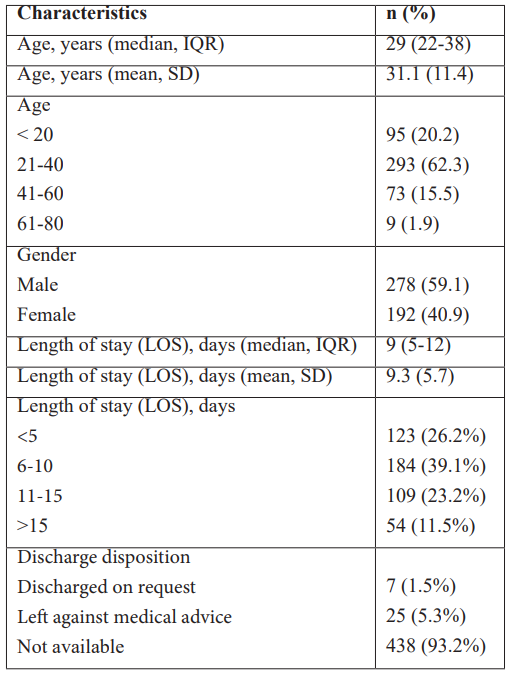
Over the course of 9 months, 470 patients were admitted and received care at the inpatient psychiatric facility at the Hospital and were therefore included in the study. The mean age of the patients was 31.1 (± 11.4), with the majority being men (n=278, 59.2%). Most patients admitted were in the age group of 21-40, accounting for almost two-third of the total sample with more than 80.0% of the patients below 40 years of age (Table 1).
Table 1: Demographics of the 470 patients admitted during the nine-month period.
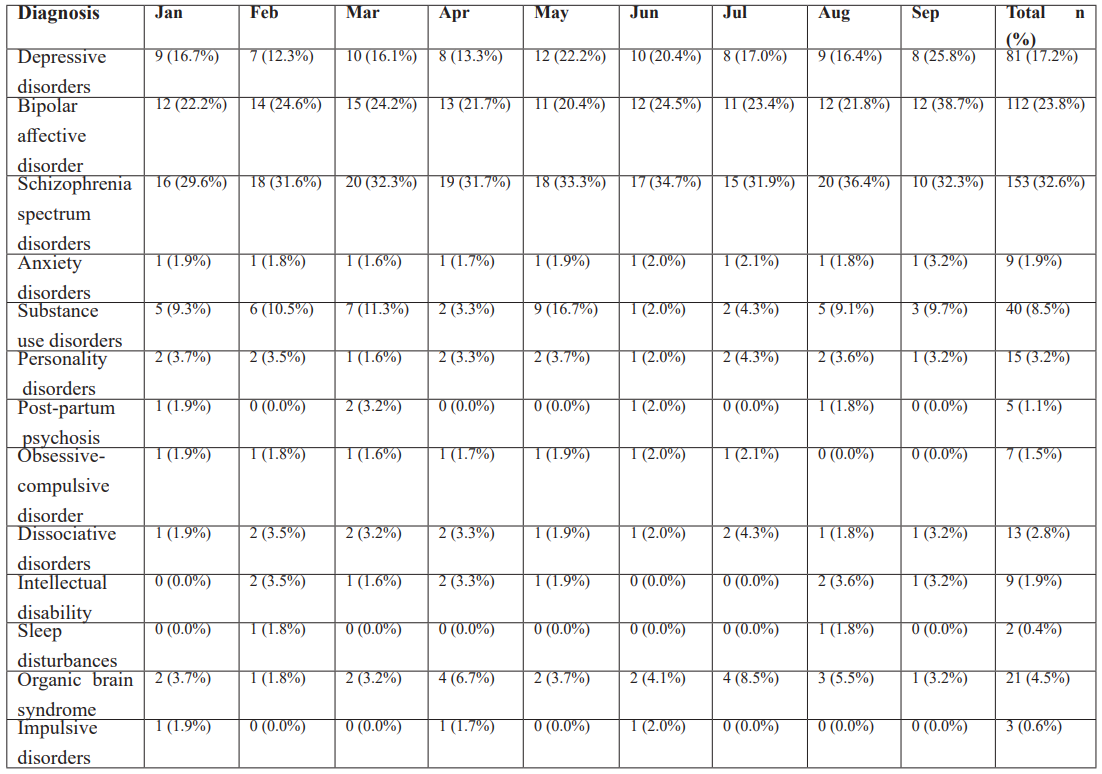
The most common mental illnesses were schizophrenia spectrum disorders (n=153, 32.6%), which included schizophrenia, schizoaffective disorder, and acute, transient psychotic disorder. Within mood disorders, bipolar affective disorder (BPAD), with or without mania, was most common (n=112, 23.8%). Across the study period, schizophrenia spectrum disorders consistently remained the predominant diagnosis, with proportions ranging from 29.6% in January to a peak of 36.4% in August. Bipolar affective disorder was the second most frequent condition and demonstrated relatively stable monthly proportions, with a noticeable increase in September (38.7%). Depressive disorders showed moderate variability over time, with the highest proportion observed in May (22.2%). Substance use disorders exhibited some fluctuation, peaking in May (16.7%) and declining in subsequent months. Other conditions, including anxiety disorders, obsessive compulsive disorder, and dissociative disorders, remained relatively infrequent throughout the study period (Table 2).
Table 2: Patterns of Clinical Diagnoses during the nine-month period (n = 470).
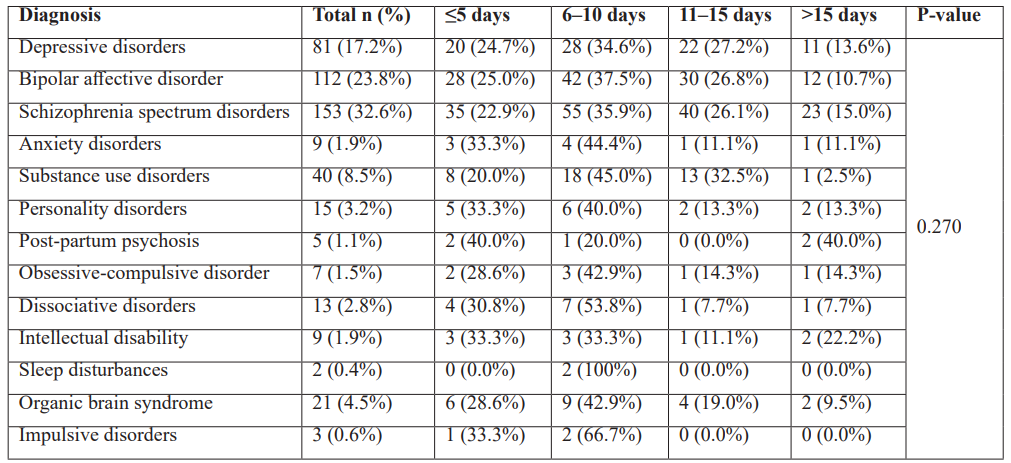
The median duration of inpatient stay was 9 days (IQR 5-12), with the most common duration of hospitalization was 6–10 days (Table 1). Among the patients admitted for more than 10 days, the majority had been diagnosed with schizophrenia spectrum disorders. There was, however, no statistically significant association between any mental illness and LOS (Table 3). There was a steady decline in the number of inpatient admissions from February onwards, except for August 2025. Among patients with schizophrenia spectrum disorders, 35.9% were admitted for 6–10 days, while 26.1% stayed for 11–15 days, and 15.0% had prolonged hospitalizations (>15 days). Patients with bipolar affective disorder showed a comparable distribution, with 37.5% staying 6–10 days. Depressive disorders also followed a similar trend, with the largest proportion (34.6%) admitted for 6–10 days. Substance use disorders had a slightly higher proportion of patients in the 6–10-day category (45.0%), but very few experienced prolonged hospitalizations (2.5%). There was no statistically significant association between the type of mental health disorder and duration of hospitalization (p = 0.270) (Table 3).
Table 3: Association between Clinical Diagnosis and Length of Stay (LOS).
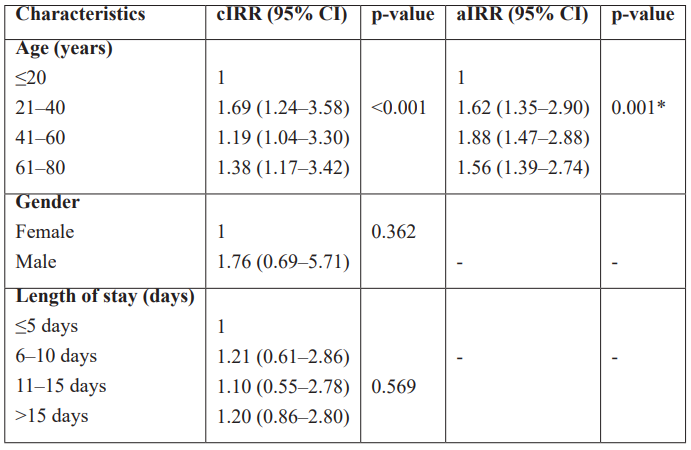
Compared to patients aged ≤20 years, those aged 21–40 years had higher incidence rates (aIRR = 1.62, 95% CI: 1.35–2.90), as did patients aged 41–60 years (aIRR = 1.88, 95% CI: 1.47–2.88) and 61–80 years (aIRR = 1.56, 95% CI: 1.39–2.74). This association remained statistically significant in the multivariable model (p = 0.001) (Table 4).
Table 4: Crude and adjusted Incidence Rate Ratio of variables associated with Psychiatric admissions.
Discussion
With no nationally or regionally representative registries for mental illness burden within Pakistan, studying demographic and clinical characteristics at hospitals becomes important. Our study explores the demographic and clinical characteristics of patients seeking care at the largest government-run psychiatric inpatient facility, JPMC, in Karachi, Pakistan.
The results show that schizophrenia spectrum disorders (n=153, 32.6%) were the most common illnesses for which patients sought inpatient care at JPMC. These results correspond with prior studies from Pakistan, which show that mood disorders account for the most inpatient admissions, followed by Schizophrenia and related disorders [8-12]. Literature from Africa also shows Schizophrenia and mood disorders as the most common diagnoses requiring inpatient care [13]. In the US, affective (mood) disorders comprised of 75% of all inpatient cases [14].
Merely 40 (8.5%) patients presented with substance use disorder. The common substances included alcohol, cannabis, opioids, and stimulants. Prior studies from Pakistan report 1.9% [15] and 9.5% [8] patients reporting substance use. This contrasts with studies from India [7], Brazil [16], and Sierra Leone [17] where substance use-related issues were seen among 32.0%, 49.2%, and 38.9% of the patients, respectively. This could be because many patients who present to the emergency room with substance intoxication either don’t warrant an inpatient admission in the psychiatric ward because their medical condition has been stabilized, or they leave against medical advice once they are medically stable and conscious, even if they have been advised to admit. Substance ingestion is a common method of suicide in Pakistan [18] and since suicide, although decriminalized now [19] in Pakistan, it still warrants medicolegal and police involvement in Pakistan; many patients leave the emergency room against medical advice once medically stable, therefore not wanting to be admitted to the psychiatric ward for further care.
Among patients diagnosed with a mood disorder in our study, bipolar affective disorder (20.6%) was seen more often than unipolar depression (11.7%). Some studies from Pakistan indicate a greater incidence of unipolar depression [9,10,15] whereas others had a greater incidence of bipolar depression [11,12]. Some mental illness presentations to the emergency room are new cases, while others reflect relapse or symptom exacerbation. More severe cases may require psychiatric admission, whereas milder cases can often be managed in the ER with outpatient follow-up. Given the higher cost of inpatient care, patients and families may prefer outpatient management when appropriate. Literature shows that unipolar depression remains the most common presenting illness in outpatient settings in Pakistan [20] and literature from India reflects this as well [7].
An essential element of hospitalization to consider is the LOS. Its importance is not just tied to the clinical outcomes of patients but also to the financial, social, and emotional burden that comes with it [21]. Longer LOS have been associated with negative outcomes such as increased risk of suicidal ideation because of stigma (especially if hospitalized involuntarily) [22], post-traumatic stress [23], and increased financial burden [24]. The mean LOS for mental illnesses in this study was 9.3 ± 5.7 days (median being 9 days). This is similar to the LOS (11 days) seen at a private hospital in Pakistan [15]. It is also comparable to the average LOS seen in the US (10 days) [14,25] and shorter than the average LOS seen in African countries: Nigeria (28.7 days) [13], Ethiopia (28.7 days) [26], and Uganda (18.3 days) [27]. The relatively shorter LOS seen is in line with the international recommendations for early discharge once stabilization is achieved, so the patient can be managed in a less restrictive environment [21,28]. The relatively shorter LOS can also be explained by the fact that many patients, along with their families, travel long distances from other cities and provinces [8] to seek care at JPMC and, therefore, find it more convenient to continue treatment in an outpatient setting after a symptomatic improvement in the hospital.
In our study, patients with Schizophrenia had, on average, a longer LOS in the hospital in our study. This corresponds with the literature, which shows that a diagnosis of schizophrenia has been associated with a longer LOS [27]. Given how schizophrenia spectrum disorders account for a considerable proportion of patients seeking inpatient care at the psychiatric unit, and the longer LOS associated with it helps anticipate the resources that need to be allocated for them specifically.
The age group of 21-40 was seen most in this study. This corresponds to other literature from Pakistan [10,12] and can be explained by the findings of a large-scale meta-analysis of 192 studies, which shows that the median onset of symptoms for mental illnesses such as mood disorders (MDD, BPAD) and schizophrenia spectrum disorders (the two most common categories seen in this study) occurs at ages 25 and 31, respectively [29]. The 21–40-year age group represents the most socially and economically productive segment of the population, making mental illness in this group particularly impactful on workforce participation and national productivity. Illness during young adulthood can disrupt education, employment, relationships, and family responsibilities, leading to long-term social and economic consequences.
This study explores patterns of psychiatric illnesses seen at a government-run psychiatric facility. Data from a government-run setup, where the majority of the population seek care from, reflects an accurate pattern of mental illness burden within the community. Furthermore, this study highlights which mental illnesses are more likely to require inpatient care (psychosis-related and mood-related illnesses), therefore identifying areas which necessitate capacity building.
Limitations
The data acquired in this study depended on the record-keeping of the hospital. Information bias may have occurred because the study relied on routinely maintained medical records, which may contain incomplete or inconsistent documentation. A modification in the hospital’s record-keeping system could include variables such as marital status, education, occupation, socioeconomic status, and any prior admissions. A possible confounding factor that could affect the LOS would be medical and/or surgical co-morbid conditions, severity of illness, socio-economic status, prior psychiatric admissions or medication adherence. Selection bias may be present because the study only included patients admitted to the tertiary care facility, and this may have overrepresented patients with more severe illnesses. Patients were contacted for records with incomplete information for key study variables, and were excluded from the respective analyses if the required information could not be obtained. Additionally, the retrospective nature of the study limits the ability to infer temporal or causal relationships.
Conclusion
This study identified mood disorders and schizophrenia, particularly among males aged 21–40 years, as the leading causes of psychiatric inpatient admissions at the largest tertiary care center in Karachi, Pakistan. Patients with schizophrenia also had numerically longer hospital stays. These findings highlight the burden of severe mental illness in the country's most economically productive population. In the absence of national mental health statistics, such epidemiological data are valuable for identifying healthcare gaps, informing resource allocation, and guiding public health policy.
Declaration
Conflicts of Interest: None
Approval/IRB Statement: The Ethics Review Committee of Jinnah Postgraduate Medical Centre approved the study (ID NO.F.2-81/2026-GENL/28/JPMC).
Informed Consent Statement: N/A
Clinical Trial Registration: N/A
Funding Sources: None
Acknowledgements: None
Data Availability Statement: Can be provided by the corresponding author upon request
Large-Language Model (LLM) – Generative AI Use Statement: N/A
Authors Contribution Statement:
Nabira Khan: Study conceptualization, Data collection, Interpretation of results, Write up and Final approval of the manuscript.
Anil Kumar: Study conceptualization, Interpretation of results, and Final approval of the manuscript. Guarantor of the study results and manuscript.
Akash Kumar Ahuja: Interpretation of results, Write up and Final approval of the manuscript.
Chooni Lal: Study conceptualization, Interpretation of results, and Final approval of the manuscript.
Omar Irfan: Study conceptualization, Data collection methodology, Interpretation of results, Write up and
Final approval of the manuscript.
Muhammad Awais: Data collection, Interpretation of results, and Final approval of the manuscript Khadija Ateeq: Data collection, Interpretation of results, and Final approval of the manuscript.
Anoosha Sohail: Data collection, Interpretation of results, and Final approval of the manuscript Brahma: Data collection, Interpretation of results, and Final approval of the manuscript.
Haresh Kumar: Data collection methodology, Interpretation of results, Write up and Final approval of the manuscript.
Salman Muhammad Soomar: Data collection methodology, Data analysis, Interpretation of results, Write up and Final approval of the manuscript.
References
- World Health Organization. Mental disorders, 2025.
- Institute for Health Metrics and Evaluation. 2021 Global Burden of Disease (GBD), 2021.
- Fan Y, Fan A, Yang Z, Fan D. Global burden of mental disorders in 204 countries and territories, 1990–2021: results from the global burden of disease study 2021. BMC Psychiatry, 2025; 25(1): 486. doi: 10.1186/s12888-025-06932-y.
- Kakuma R, Minas H, van Ginneken N, Dal Poz MR, Desiraju K, Morris JE, et al. Human resources for mental health care: current situation and strategies for action. The Lancet, 2011; 378(9803): 1654–1663. doi: 10.1016/S0140-6736(11)61093-3.
- World Health Organisation. Mental Health ATLAS 2017. Geneva, 2018; p. 68.
- Husain W. Barriers in Seeking Psychological Help: Public Perception in Pakistan. Community Ment Health J, 2020; 56(1): 75–78. doi: 10.1007/s10597-019-00464-y.
- Shah PS. Trend of psychiatric disorders among out-patients and in-patients of a tertiary care center of India. Int J Res Med Sci, 2014; 2(2): 439. doi: 10.5455/2320-6012.ijrms20140512.
- Rahman R ur, Khan AG, Shahbaz NN. 10-year pattern of admissions in psychiatric unit at a tertiary care hospital in pakistan. Pak J Neurol Sci PJNS, 2016; 11(2): 59–64.
- Abdul Wahab Yousafzai, Attique ur Rehman Jehangiri, Mehrunissa Kazim, Mubashir Shah. Demographic And Clinical Characteristics of Patients Referred To Psychiatric Unit In A Tertiary Care Hospital. J Ayub Med Coll Abbottabad, 2015; 27(1): 208–211.
- Ejaz Gul, Muslim Muhammad Khan, Mukhtiar Azeemi, Pirzada Muhammad Muneeb. Demographic Profiles of patients Admitted in Psychiatric Ward of a Tertiary Care Hospital. J Bacha Khan Med Coll, 2021; 2(02). doi: 10.69830/jbkmc.v2i02.38.
- Saad B Malik, Iram Zehra Bokharey. Psychiatric admissions in a teaching hospital: A profile of 177 patients. J Coll Physicians Surg Pak, 1999; 9(8): 359–361.
- Mehmood N, Talib U, Rehman RU. Pattern of mental health disorders in adult population attending a tertiary mental health care setting. Pak J Neurol Sci PJNS, 2018; 13(2).
- Oladeji BD, Ogundele AT, Dairo M. Determinants of length of stay in the psychiatric wards of the University College Hospital, Ibadan, Nigeria. Afr J Med Med Sci, 2012; 41(2): 147–152.
- Lee S, Rothbard AB, Noll EL. Length of Inpatient Stay of Persons with Serious Mental Illness: Effects of Hospital and Regional Characteristics. Psychiatr Serv, 2012. Located at: world. doi: 10.1176/appi.ps.201100412.
- Syed EU, Mehmud S, Atiq R. Clinical and demographic characteristics of psychiatric inpatients admitted via emergency and non-emergency routes at a university hospital in Pakistan. J Pak Inst Med Sci, 2002; 52(10): 456–459.
- Salum GA, Leite LDS, Dos Santos SJE, Mazzini G, Baeza FLC, Spanemberg L, et al. Prevalence and trends of mental disorders requiring inpatient care in the city of Porto Alegre: a citywide study including all inpatient admissions due to mental disorders in the public system from 2013-2017. Trends Psychiatry Psychother, 2020; 42(1): 86–91. doi:10.1590/2237-6089-2018-0115.
- Eze GO, Onyishi NT, Nnaji FC, Kromba K. Epidemiology and Pattern of Mental Health (Psychiatric) Disorders in Sierra Leone: A Retrospective Cross-Sectional Study of 4020 Cases. Niger Med J J Niger Med Assoc, 2025; 66(3): 942–952. doi: 10.71480/nmj.v66i3.680.
- Shekhani SS, Perveen S, Hashmi D e S, Akbar K, Bachani S, Khan MM. Suicide and deliberate self-harm in Pakistan: a scoping review. BMC Psychiatry, 2018; 18(1): 44. doi: 10.1186/s12888-017-1586-6.
- Mirza S. The recent decriminalization of suicidal behavior in Pakistan as a critical opportunity for research and clinical progress. Asian J Psychiatry, 2023; 82: 103481. doi: 10.1016/j.ajp.2023.103481.
- Amin A Gadit. Pattern of Mental Health Morbidity. J Coll Physicians Surg Pak, 2001; 11(11): 706–708.
- Navarro FC, Villalobos NAÁ, Muñoz AMC, Medrano AFG, Rodríguez NST, Uribe ES. Predictors of the length of stay of psychiatric inpatients: protocol for a systematic review and meta-analysis. Syst Rev, 2021; 10(1): 65. doi: 10.1186/s13643-021-01616-6.
- Xu Z, Müller M, Lay B, Oexle N, Drack T, Bleiker M, et al. Involuntary hospitalization, stigma stress and suicidality: a longitudinal study. Soc Psychiatry Psychiatr Epidemiol, 2018; 53(3): 309–312. doi: 10.1007/s00127-018-1489-y.
- Guzmán-Parra J, Aguilera-Serrano C, García-Sanchez JA, García-Spínola E, Torres-Campos D, Villagrán JM, et al. Experience coercion, post-traumatic stress, and satisfaction with treatment associated with different coercive measures during psychiatric hospitalization. Int J Ment Health Nurs, 2019; 28(2): 448–456. doi: 10.1111/inm.12546.
- Davlasheridze M, Goetz S, Han Y. The Effect of Mental Health on US County Economic Growth. Rev Reg Stud, 2018; 48: 155–171. doi: 10.52324/001c.7997.
- Bessaha ML, Shumway M, Smith ME, Bright CL, Unick GJ. Predictors of Hospital Length and Cost of Stay in a National Sample of Adult Patients with Psychotic Disorders. Psychiatr Serv. 2017 Jun 1. Located at: Arlington, VA. doi: 10.1176/appi.ps.201600312.
- Addisu F, Wondafrash M, Chemali Z, Dejene T, Tesfaye M. Length of stay of psychiatric admissions in a general hospital in Ethiopia: a retrospective study. Int J Ment Health Syst, 2015; 9(1): 13. doi:10.1186/s13033-015-0006-x
- Kaggwa MM, Najjuka MS, Kesande C, Nyemara N, Kule M, Mamum MA, et al. Length of stay of hospitalized patients at tertiary psychiatry facilities in Uganda: the role of caregiver’s presence. Discov Ment Health, 2022; 2(1). doi:10.1007/s44192-022-00018-x.
- Sharfstein SS. Goals of Inpatient Treatment for Psychiatric Disorders. Annu Rev Med, 2009; 60: 393–403. doi: 10.1146/annurev.med.60.042607.080257
- Solmi M, Radua J, Olivola M, Croce E, Soardo L, Salazar de Pablo G, et al. Age at onset of mental disorders worldwide: large-scale meta-analysis of 192 epidemiological studies. Mol Psychiatry, 2022; 27(1): 281–295. doi: 10.1038/s41380-021-01161-7.