
Email id: info@ijclinmedcasereports.com
Integrative Multi-Omic Analysis of Clinically Relevant Radioligand and ADC Targets and Immune Exclusion in Prostate Cancer
Ogbonna Chikere1, Onyekachi Anya1, Progress Asoluka1, Oluchi Idenyi3 and Alexandra Sokolova2,4,*
1Department of Internal Medicine, Legacy Salmon Creek Medical Center, Vancouver, WA, USA
2Department of Internal Medicine, Oregon Health and Science University, Portland, OR, USA
3Department of Internal Medicine, North Knoxville Medical Center, Knoxville, TN, USA
4Division of Hematology and Oncology, Oregon Health & Science University, Portland, OR, USA
Received Date: 14/07/2026; Published Date: 21/09/2026
*Corresponding author: Alexandra Sokolova, MD, Division of Hematology and Oncology, Oregon Health & Science University, Portland, OR, USA
Abstract
Background: Advanced prostate cancer remains a major cause of cancer mortality. Radioligand and antibody drug conjugate therapies targeting PSMA, B7 H3, ERBB2, TROP2, and STEAP1 are under clinical development, yet their relationship with the tumor immune microenvironment remains insufficiently defined. Understanding whether target expression is associated with immune exclusion may inform therapeutic selection and resistance mechanisms.
Objective: To evaluate the expression of clinically relevant radioligand and antibody drug conjugate targets and assess their association with immune exclusion using integrative multi omic analysis.
Methods: A retrospective analysis of 554 primary prostate adenocarcinoma samples from The Cancer Genome Atlas was performed. Transcriptomic data generated using the STAR Counts workflow and masked somatic mutation data were obtained through the Genomic Data Commons. An immune infiltration score was calculated as the mean expression of CD8A, GZMB, PRF1, CXCL9, CXCL10, IFNG, PDCD1, and CTLA4. Target gene expression and mutation status for PTEN and TP53 were integrated. Multivariable linear regression assessed independent associations with immune score.
Results: Mean expression levels were highest for TACSTD2 and FOLH1. PTEN mutations were identified in 17 samples and TP53 mutations in 61 samples. In multivariable analysis, higher ERBB2 expression was independently associated with lower immune score, -0.91, p=0.003, whereas CD276, PTEN mutation, and TP53 mutation were not independently associated. The model was statistically significant at 5% level of significance (p= 0.01).
Conclusion: ERBB2 expression is independently associated with reduced immune infiltration in prostate adenocarcinoma. These findings support further investigation of ERBB2 as a potential marker of immune exclusion and therapeutic stratification in targeted radioligand and antibody drug conjugate strategies.
Keywords: Prostate cancer; ERBB2; Radioligand therapy; Antibody drug conjugate; Immune exclusion; Multi omic analysis
Introduction
Prostate cancer is one of the most serious health issues in the world and there are greater geographical and ethnic inequalities in the incidence and mortality rates [1]. Although localized prostate cancer can be treated effectively using surgery, radiation therapy, or androgen deprivation therapy, metastatic and advanced prostate cancer presents a serious challenge in the treatment of prostate cancer [2, 3]. The resistance of prostate cancer to castration (CRPC) outlines the necessity of new treatment methods that are targeted [4]. Radioligand therapies and antibody-drug conjugates (ADCs) have become the topic of interest in recent years as promising methods of precision oncology therapies aimed at specific cytotoxic delivery to tumor cells without systemic toxicity [5]. Nevertheless, the therapeutic efficiency of the treatment differs significantly among patients, which explains the necessity of the comprehension of the molecular remnants of targeting expression and the features of the tumor microenvironment [6].
The radioligand therapy (RLT) of prostate cancer offers an effective therapeutic treatment for patients with high levels of prostate-specific membrane antigen (PSMA) [7]. Likewise, novel ADC targets, such as trophoblast cell-surface antigen 2 (TROP2), B7-H3 (CD276), STEAP1, and HER2, have demonstrated preclinical and early clinical efficacy [8, 9]. Consequently, the systematic characterization of current and new therapeutic targets at genomic, transcriptomic and proteomic levels has become a necessity in order to achieve the most by way of patient selection and treatment [10].
Prostate cancer is said to be an immunologically cold tumor, with low T-cell infiltration, and immune exclusion phenotype [11]. Immune exclusion, the presence of immune cells in the peritumoral stroma that are unable to invade tumor nests may help to mediate immune therapeutic resistance, as well as to targeted modalities whose performance may be affected by immune mediators [12]. The interaction between radioligand and ADC target expression and immune exclusion signatures can give information on how to incorporate strategies to increase treatment response [13].
Technological progress in the high-throughput sequencing and massive cancer genomics projects have made it possible to perform multi-omic profiling of prostate tumors [14]. A genome-wide interaction analysis of genomic changes, RNA expression patterns, epigenetic changes, and proteomic landscapes provides a better perspective on the biology of tumors than integrated that of individual platforms [15]. Co-expression networks, pathway dysregulation, immune signaling signature and molecular subtypes of therapeutic targets can be identified by multi-omic integration [16]. These types of analyses have the potential to reveal correlations between particular antigen expressions with either certain genomic changes, androgen receptor signaling conditions, neuroendocrine differentiation, or immune microenvironmental characteristics [17].
Although targeted radioligand and ADC therapies are rapidly being developed, little systematic assessment of the interaction of these molecular targets with immune exclusion phenotypes at a population scale has been performed to date [18]. An extensive integrative approach is required to map disease-stage and molecular-subtype clinically actionable targets, and also to define immune contexture [19]. This method can demonstrate the patterns of co-enrichment, mutual exclusive, or immune suppression in relation to therapeutic antigens expression [20].
The objective of the study is to systematically evaluate the molecular expression patterns of established and emerging radioligand and antibody–drug conjugate targets in prostate cancer and assess their correlation with immune exclusion signatures using integrative multi-omic analysis. The findings of the study will enable knowledge-based decisions on precision treatment and rational combination in advanced prostate cancer.
Methods
Study Design and Data Source: This study was designed as a retrospective multi omic analysis of prostate adenocarcinoma using publicly available data from The Cancer Genome Atlas Prostate Adenocarcinoma cohort. Gene expression quantification data generated using the STAR Counts workflow and masked somatic mutation data were obtained through the Genomic Data Commons using the TCGAbiolinks package in R. Gene level expression values were extracted from upper quartile normalized fragments per kilobase per million mapped reads. Somatic mutation data were downloaded as masked somatic mutation files and processed to derive sample level mutation indicators. All analyses were conducted using R statistical software.
Study Population: The study population consisted of primary prostate tumor samples available in the TCGA Prostate Adenocarcinoma cohort with complete gene expression data for selected therapeutic targets and immune related genes. Samples were included if valid tumor barcodes were available and if expression data were present for the predefined target and immune gene panels. When multiple aliquots existed for the same case, patient level identifiers were harmonized to the first twelve characters of the TCGA barcode to ensure one record per tumor sample. Samples lacking expression data for the variables of interest were excluded from downstream analyses resulting to 554 primary prostate adenocarcinoma as final analytics sample.
Variables and Measures: The primary outcome was an immune infiltration score derived from tumor transcriptomic data. The immune score was calculated as the mean expression of predefined T cell and cytotoxicity associated genes, including CD8A, GZMB, PRF1, CXCL9, CXCL10, IFNG, PDCD1, and CTLA4. Expression values were log transformed using log base two of expression plus one prior to modeling. The primary exposure variables were expression levels of clinically relevant radioligand and antibody drug conjugate targets, including FOLH1, CD276, ERBB2, TACSTD2, STEAP1, and DLL3. Somatic mutation status for PTEN, TP53, and BRCA2 was derived from masked somatic mutation data and converted into binary indicators, with one representing the presence of at least one non silent mutation and zero representing wild type. For genes not listed in the mutation file for a given sample, mutation status was assigned as wild type. Descriptive statistics were calculated for all continuous variables and summarized as means, standard deviations, medians, and ranges.
Missing Data: Missing mutation values resulting from the absence of a gene in the mutation file were interpreted as wild type and recoded as zero. For gene expression variables, samples with missing values for any of the predefined target or immune genes were excluded from the specific analysis requiring those variables. No imputation procedures were performed. The final analytic dataset included samples with complete information on the immune score and the covariates included in the regression model.
Statistical Analysis: Descriptive statistics were computed to characterize the distribution of target gene expression levels and mutation frequencies. Continuous variables were summarized using means, standard deviations and medians. Pearson correlation through heatmap were presented to assess the association between therapeutic target expression and the immune score. Multivariable linear regression analysis was performed to evaluate the independent association between therapeutic target expression and the immune score while adjusting for PTEN and TP53 mutation status. All the data management and statistical analyses were conducted using R version 4.5.0.
Ethical Considerations: All data used in this study were obtained from publicly accessible de identified repositories. The TCGA database contains anonymized genomic and clinical information collected with institutional review board approval at participating institutions. Because this study involved secondary analysis of publicly available de identified data, additional ethical approval and informed consent were not required.
Results
Table 1 below presents the distribution of transcriptomic expression levels for selected radioligand and antibody drug conjugate targets in 554 primary prostate adenocarcinoma samples from The Cancer Genome Atlas cohort.
Table 1: Expression Characteristics of Therapeutic Targets in TCGA Prostate Adenocarcinoma (n = 554).
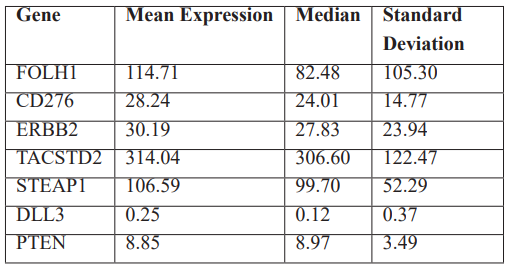
Note: FOLH1=folate hydrolase 1; CD276=cluster of differentiation 276; ERBB2=erb b2 receptor tyrosine kinase 2; TACSTD2=tumor associated calcium signal transducer 2; STEAP1= six transmembrane epithelial antigen of the prostate 1; DLL3=delta like canonical Notch ligand 3; PTEN=phosphatase and tensin homolog. Expression values represent upper quartile normalized RNA sequencing counts from The Cancer Genome Atlas (TCGA) Prostate Adenocarcinoma (PRAD) cohort.
From the findings above its evident that there exists a substantial variability in expression across targets. TACSTD2 demonstrated the highest mean expression level at 314.04 with a median of 306.60 and a standard deviation of 122.47. FOLH1 and STEAP1 also showed high expression, with mean values of 114.71 and 106.59, respectively. ERBB2 and CD276 exhibited moderate expression levels, with mean values of 30.19 and 28.24. PTEN expression was lower in comparison, with a mean of 8.85 and a median of 8.97. DLL3 demonstrated minimal expression across the cohort, with a mean of 0.25 and a median of 0.12. For several targets, the standard deviation was large relative to the mean, particularly for FOLH1 and TACSTD2, indicating marked inter tumor heterogeneity within the cohort.
Table 2 below presents the results of the multivariable linear regression analysis examining the association between selected therapeutic targets and the immune score in the TCGA prostate adenocarcinoma cohort.
Table 2: Multivariable Linear Regression Predicting Immune Score.
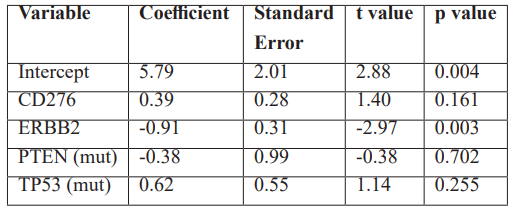
Outcome Variable: Immune Score; CD276=cluster of differentiation 276; ERBB2=erb-b2 receptor tyrosine kinase 2; PTEN=phosphatase and tensin homolog; TP53=tumor protein p53. CD276 and ERBB2 represent log transformed gene expression levels. PTEN and TP53 represent binary somatic mutation status coded as 1 for mutated and 0 for wild type.
The regression findings above reveals that higher ERBB2 expression was independently associated with lower immune score, β= -0.91, p=0.003. This indicates a statistically significant inverse relationship after adjustment for other covariates. CD276 expression reported a positive β=0.39, but this association did not reach statistical significance, with a p value of 0.161. PTEN mutation status was associated with β= -0.38 and was not statistically significant, with a p value of 0.702. TP53 mutation status demonstrated a positive β=0.62, also without statistical significance, with a p value of 0.255. These findings indicate that among the variables examined, only ERBB2 expression demonstrated an independent association with immune score in this cohort.
Figure 1 illustrates the correlation between therapeutic target expression levels and the immune score across the TCGA prostate adenocarcinoma cohort.
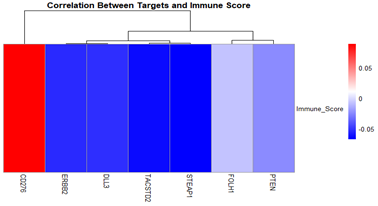
Figure 1: Correlation Between Therapeutic Target Expression and Immune Score in TCGA Prostate Adenocarcinoma.
Heatmap displaying Pearson correlation coefficients between log transformed gene expression levels of selected targets and the immune score. Red indicates positive correlation and blue indicates negative correlation. Hierarchical clustering was applied to group genes with similar correlation patterns.
The heatmap demonstrates modest correlations between individual target genes and the immune score. CD276 shows a weak positive correlation, reflected by a light red signal. ERBB2, DLL3, TACSTD2, and STEAP1 display negative correlations of small magnitude, represented by varying intensities of blue. FOLH1 shows a near neutral correlation, with color intensity close to zero. PTEN demonstrates a weak negative association. The clustering dendrogram groups genes with similar correlation patterns, with ERBB2, DLL3, TACSTD2, and STEAP1 forming a related cluster characterized by negative associations. These findings indicate that most targets exhibit low magnitude correlations with immune infiltration, with ERBB2 among the genes showing an inverse relationship with immune score.
Discussion
This study examined the expression of clinically relevant radioligand and antibody drug conjugate targets and their relationship with immune exclusion in prostate adenocarcinoma using integrative multi omic analysis. The principal findings were that TACSTD2, FOLH1, and STEAP1 demonstrated the highest transcriptomic expression levels across the cohort, while DLL3 expression was minimal. In multivariable analysis, higher ERBB2 expression was independently associated with lower immune score, whereas CD276 expression and PTEN and TP53 mutation status were not significantly associated with immune infiltration. These results identify heterogeneity in therapeutic target expression and suggest that ERBB2 expression may be linked to an immune cold tumor profile.
Prostate cancer remains a major contributor to global cancer burden, with increasing incidence and mortality in many regions [1]. Although systemic therapies have expanded, metastatic and treatment resistant disease continues to pose clinical challenges [3]. Recent efforts have focused on molecularly targeted approaches, including radioligand therapies and antibody drug conjugates directed against surface antigens such as PSMA, B7 H3, ERBB2, TROP2, and STEAP1 [4,5,7]. Multi omic profiling has emerged as a tool to refine therapeutic selection and identify molecular vulnerabilities [2,10,15]. The present findings demonstrate substantial variability in expression of these targets within primary tumors, consistent with prior reports of molecular heterogeneity in prostate cancer [14,19]. High expression of TACSTD2 and FOLH1 in a subset of tumors supports the biologic rationale for continued development of TROP2 and PSMA directed strategies.
The inverse association between ERBB2 expression and immune score is notable in the context of the immune microenvironment of prostate cancer. Prostate tumors are often characterized as immunologically cold, with limited T cell infiltration and reduced response to immune checkpoint blockade [11,12]. Tumor intrinsic signaling pathways can shape immune exclusion by influencing antigen presentation, chemokine expression, and stromal interactions [12]. The observed relationship suggests that tumors with higher ERBB2 expression may exhibit lower immune cell infiltration, potentially reflecting an immune suppressive microenvironment. While causality cannot be inferred, this pattern aligns with the broader understanding that oncogenic signaling pathways may be linked to immune modulation [6,12]. These findings may have implications for patient selection in trials exploring ERBB2 targeted antibody drug conjugates in prostate cancer [5].
CD276, also known as B7 H3, has been investigated as both an immune regulatory molecule and a therapeutic target [4,8]. In this study, CD276 expression demonstrated a positive but non-significant association with immune score. This suggests that higher CD276 expression does not necessarily correspond to reduced immune infiltration at the transcriptomic level. Experimental studies have shown that targeting B7 H3 may enhance immune mediated antitumor responses in combination strategies [8]. The absence of a statistically significant association in this cohort may reflect the complexity of immune regulation within the tumor microenvironment, which is influenced by multiple cellular and stromal components [6,14].
Mutation status of PTEN and TP53 was not independently associated with immune score. PTEN loss has been implicated in aggressive disease biology and altered immune signaling [4,12], and TP53 alterations are common in advanced disease [3]. The low mutation frequencies observed in this primary tumor cohort may have limited the ability to detect meaningful associations. In addition, immune infiltration is shaped by multiple genomic and epigenomic factors beyond single gene mutations [15,19]. Multi omic approaches that incorporate methylation, proteomic, and spatial data may provide additional insight into these relationships [15,17].
The clinical relevance of these findings lies in the integration of target expression with immune context. Radioligand therapy directed against PSMA and other surface antigens is being evaluated in earlier disease states [7], and combination strategies with immunotherapy are under investigation [13,18]. Understanding how target expression relates to immune exclusion may inform rational trial design and sequencing strategies. Tumors with low immune infiltration and high target expression may require combination approaches to enhance immune activation while delivering targeted cytotoxic payloads [13,18]. These observations also support continued development of multi omic profiling frameworks to guide precision oncology in prostate cancer [2,16,19].
Strengths and limitations of the study:
This study has several strengths and limitations. The use of a well characterized public dataset allowed standardized transcriptomic and mutation analyses across a large cohort. The integrative approach aligns with current multi omic research strategies. However, the analysis was cross sectional and limited to primary tumor samples, which restricts temporal and causal inference. Clinical annotations in public databases may include incomplete or self-reported elements, and missing data may influence variable distribution. Mutation frequencies were low for some genes, reducing statistical power. Future studies incorporating longitudinal sampling, metastatic disease cohorts, and spatial or single cell analyses may clarify the relationship between therapeutic targets and immune exclusion in clinically advanced settings.
Conclusion
This study highlights substantial heterogeneity in the expression of radioligand and antibody drug conjugate targets in prostate adenocarcinoma and demonstrates that ERBB2 expression is independently associated with lower immune infiltration. Most evaluated targets showed limited correlation with immune score, indicating that target availability and immune context may represent distinct biological dimensions. These findings are clinically relevant as targeted radioligand and antibody drug conjugate therapies continue to expand in prostate cancer management. Integrating molecular target expression with immune profiling may improve patient stratification and inform combination strategies. Future research should evaluate these associations in metastatic disease, incorporate spatial and longitudinal data, and explore therapeutic implications in prospective clinical cohorts.
References
- Lin X, Zhi Y. Global epidemiological trends in prostate cancer burden: a comprehensive analysis from Global Burden of Disease Study 2021. Transl Androl Urol, 2025; 14(5): 1238-1252. doi: 21037/tau-2025-103.
- Fatima Y, Jobre KN, Gomez-Gomez E, Małkiewicz B, Vlahou A, Mokou M, et al. Omics-mediated treatment for advanced prostate cancer: moving towards precision oncology. Int J Mol Sci, 2025; 26(15): 7475. doi: 3390/ijms26157475.
- Posdzich P, Darr C, Hilser T, Wahl M, Herrmann K, Hadaschik B, et al. Metastatic prostate cancer-a review of current treatment options and promising new approaches. Cancers (Basel), 2023; 15(2): 461. doi: 3390/cancers15020461.
- Gopi P, Ishfaq M, Das SK, Shkoukani ZW, Khattak AQ, Gana HB, et al. Advances in prostate cancer treatment: exploring molecular targets and new strategies in castration-resistant disease. Cureus, 2025; 17(10): e94427. doi: 7759/cureus.94427.
- Lin C, Hadfield MJ, Santopietro A, Lagos G, Cheng L, El-Deiry WS, et al. The evolving landscape of antibody-drug conjugates (ADCs) for treatment of prostate cancer. NPJ Precis Oncol, 2025; 9(1): 351. doi: 1038/s41698-025-01131-0.
- Ge R, Wang Z, Cheng L. Tumor microenvironment heterogeneity an important mediator of prostate cancer progression and therapeutic resistance. NPJ Precis Oncol, 2022; 6(1): 31. doi: 1038/s41698-022-00272-w.
- Laudicella R, Bauckneht M, Burger IA, Cacciola A, Fanti S, Farolfi A, et al. The role of PSMA-based radioligand therapy in hormone-sensitive prostate cancer. Eur J Nucl Med Mol Imaging, 2025; 52(7): 2723-2735. doi: 1007/s00259-025-07083-8.
- Dong Y, Zhang Z, Luan S, Zheng M, Wang Z, Chen Y, et al. Novel bispecific antibody-drug conjugate targeting PD-L1 and B7-H3 enhances antitumor efficacy and promotes immune-mediated antitumor responses. J Immunother Cancer, 2024; 12(10): e009710. doi: 1136/jitc-2024-009710.
- Stumpo S, Carlini A, Mantuano F, Di Federico A, Melotti B, Sperandi F, et al. Efficacy and safety of TROP-2-targeting antibody-drug conjugate treatment in previously treated patients with advanced non-small cell lung cancer: a systematic review and pooled analysis of reconstructed patient data. Cancers (Basel), 2025; 17(11): 1750. doi: 3390/cancers17111750.
- Suo Y, Song Y, Wang Y, Liu Q, Rodriguez H, Zhou H. Advancements in proteogenomics for preclinical targeted cancer therapy research. Biophys Rep, 2025; 11(1): 56-76. doi: 52601/bpr.2024.240053.
- Kwon WA, Joung JY. Immunotherapy in prostate cancer: from a "Cold" tumor to a "Hot" prospect. Cancers (Basel), 2025; 17(7): 1064. doi: 3390/cancers17071064.
- Brea L, Yu J. Tumor-intrinsic regulators of the immune-cold microenvironment of prostate cancer. Trends Endocrinol Metab, 2025; 36(9): 855-866. doi: 1016/j.tem.2024.12.003.
- Jiao R, Dadachova E. Combination of radioligand therapy and immunotherapy: how to make it work in clinic? Immunotargets Ther, 2025; 14: 755-759. doi: 2147/ITT.S485643.
- Yu X, Liu R, Gao W, Wang X, Zhang Y. Single-cell omics traces the heterogeneity of prostate cancer cells and the tumor microenvironment. Cell Mol Biol Lett, 2023; 28(1): 38. doi: 1186/s11658-023-00450-z.
- Liang WW, Lu RJ, Jayasinghe RG, Foltz SM, Porta-Pardo E, Geffen Y, et al. Integrative multi-omic cancer profiling reveals DNA methylation patterns associated with therapeutic vulnerability and cell-of-origin. Cancer Cell, 2023; 41(9): 1567-1585.e7. doi: 1016/j.ccell.2023.07.013.
- Yang S, Zheng L, Li L, Zhang J, Wang J, Zhao H, et al. Integrative multiomics analysis identifies molecular subtypes and potential targets of hepatocellular carcinoma. Clin Transl Med, 2024; 14(6): e1727. doi: 1002/ctm2.1727.
- Krossa S, Andersen MK, Sandholm EM, Wess M, Kiviaho A, Sharma A, et al. Spatial multi-omics identifies aggressive prostate cancer signatures highlighting pro-inflammatory chemokine activity in the tumor microenvironment. Nat Commun, 2025; 16(1): 10160. doi: 1038/s41467-025-65161-9.
- Kleinendorst SC, Hooijmans CR, Muselaers S, Oosterwijk E, Konijnenberg M, Heskamp S, et al. Efficacy of combined targeted radionuclide therapy and immune checkpoint Inhibition in animal tumour models: a systematic review and meta-analysis of the literature. Eur J Nucl Med Mol Imaging, 2025; 52(12): 4735-4751. doi: 1007/s00259-025-07293-0.
- Zheng K, Hai Y, Xi Y, Zhang Y, Liu Z, Chen W, et al. Integrative multi-omics analysis unveils stemness-associated molecular subtypes in prostate cancer and pan-cancer: prognostic and therapeutic significance. J Transl Med, 2023; 21(1): 789. doi: 1186/s12967-023-04683-6.
- He Z, Chen M, Li Q, Luo Z, Li X. Multi-omics and tumor immune microenvironment characterization of a prognostic model based on aging-related genes in melanoma. Am J Cancer Res, 2024; 14(3): 1052-1070. doi: 62347/UZGP9704.