
Email id: info@ijclinmedcasereports.com
Efficacy and Safety of a Polyherbal Formulation as Monotherapy and Adjunct Therapy in Type 2 Diabetes Mellitus: A Randomized Open-Label Pilot Study
Ramshyam Agarwal1,* and Dilip Kadam2
1General Medicine, Lokmanya Medical Research Centre and Hospital, Pune, Maharashtra, India
2General Medicine, Care Multispecialty Hospital, Pune, Maharashtra, India
Received Date: 26/06/2026; Published Date: 31/08/2026
*Corresponding author: Dr. Ramshyam Agarwal, Lokmanya Medical Research Centre and Hospital, Pune, Maharashtra, India
Trial registration: Clinical Trials Registry-India (CTRI): CTRI/2024/10/074582 (registered on 01 October 2024).
Abstract
Type 2 Diabetes Mellitus (T2DM) is a progressive metabolic disorder in which many patients fail to achieve durable glycaemic control with Oral Hypoglycaemic Agents (OHAs). This randomized, open-label, parallel-group study evaluated DIABAC DS, a polyherbal formulation, as monotherapy in newly diagnosed T2DM (Group B, n=40) and as an adjunct to OHAs in previously diagnosed T2DM (Group A, n=44) for 90 days. All 84 participants completed the study. By Day 90, fasting plasma glucose decreased by 43.05% and 41.55%, postprandial glucose by 37.25% and 46.10%, and HbA1c by 18.44% and 21.29% in Groups A and B, respectively (all p<0.001). HOMA-IR, lipid parameters, metabolic syndrome severity scores, and diabetes-related quality-of-life scores improved significantly in both groups. Twenty-eight mild adverse events occurred in Group A and six in Group B; none were serious or treatment-related. High compliance (>99%) was observed. These findings support the potential of DIABAC DS as monotherapy or adjunct therapy in T2DM, warranting confirmation in larger blinded controlled trials.
Keywords: Type 2 diabetes mellitus; Polyherbal formulation; Glycemic control; Insulin resistance; Quality of life
Introduction
Diabetes mellitus is a metabolic disorder characterized by chronic hyperglycemia due to impaired insulin secretion or action, leading to progressive microvascular and macrovascular complications [1,2]. Its global prevalence continues to rise, affecting 10.5% of adults in 2021 and projected to reach 12.2% by 2045, with India contributing a major burden [3,4]. Type 2 diabetes mellitus (T2DM) accounts for nearly 90% of cases and is strongly linked to obesity, sedentary lifestyle, and other metabolic risk factors [4-6]. Although current pharmacological therapies are effective, long-term use is often limited by adverse effects and declining glycemic durability [7-9]. Consequently, complementary approaches such as herbal formulations with glucose-lowering, insulin-sensitizing, antioxidant, and lipid-modulating properties are being explored. The herbal ingredients incorporated in the present polyherbal formulation have been traditionally used in the management of diabetes and metabolic disorders. However, clinical evidence supporting the efficacy of this specific formulation remains limited. Therefore, this randomized parallel-arm trial evaluated its safety and efficacy in patients with type 2 diabetes mellitus (T2DM) over 90 days.
Materials and Methods
This randomized, open-label, parallel-group Phase II study evaluated the safety and efficacy of DIABAC DS in patients with T2DM over 90 days at two tertiary-care centers in Pune, India, between January and June 2025. Eighty-four eligible patients aged 30–65 years with an HbA1c level of 6.5%–8.0%, fasting plasma glucose (FPG) of 130–250 mg/dL, and a BMI of 28–35 kg/m² were randomized according to a computer-generated randomization schedule prepared by an independent biostatistician and assigned to either Group A [DIABAC DS plus ongoing oral hypoglycaemic agents (OHAs)] (n = 44) or Group B [DIABAC DS monotherapy] (n = 40). DIABAC DS is a proprietary polyherbal formulation of Gymnema sylvestre, Aegle marmelos, Shilajit, Eugenia jambolana, Ficus benghalensis, Momordica charantia, Phyllanthus niruri, Azadirachta indica, and Triphala. Key exclusions included type 1 diabetes, insulin requirement, significant systemic disease, pregnancy, and participation in another clinical trial. Standardized dietary and lifestyle counselling was provided to all participants. Glycaemic parameters, insulin resistance (HOMA-IR), lipid profile, metabolic syndrome severity score, safety, and treatment compliance were assessed at baseline and follow-up. Statistical analyses were carried out using SPSS, and p < 0.05 was deemed statistically significant. Institutional ethics committee approvals were obtained and the study registered prospectively (CTRI/2024/10/074582). The study complied with ICH-GCP and AYUSH guidelines.
Observations and Results
A total of 84 participants completed the study with no dropouts, randomized into Group A (DIABAC DS + OHAs; n=44) and Group B (DIABAC DS; n=40), as shown in the CONSORT diagram. The mean age of participants in Group A was 56.17 ± 5.14 years and in Group B was 38.55 ± 4.68 years. Participant demographic and anthropometric details are summarized in Table 1. Both groups demonstrated significant improvements in glycemic parameters over 90 days. Fasting plasma glucose decreased by 43.05% in Group A and 41.55% in Group B (p<0.001), while postprandial glucose reduced by 37.25% and 46.10%, respectively (p<0.001). HbA1c showed a significant reduction of 18.44% in Group A and 21.29% in Group B (p<0.001). (Table 2). Significant improvements were also observed in insulin resistance indices, with HOMA-IR decreasing by 67.48% in Group A and 55.65% in Group B (p<0.001), alongside reductions in fasting insulin levels in both groups (Table 3). Lipid parameters improved in both groups, with reductions in total cholesterol, LDL-C, triglycerides, and VLDL, and favourable changes in lipid ratios, with Group B showing numerically greater improvements. Metabolic Syndrome Severity Z-score decreased significantly by 87.28% in Group A and 82.85% in Group B (p<0.001). Anthropometric parameters showed modest but significant reductions in body weight, BMI, and waist circumference in both groups over the study period. Diabetes-related quality of life scores improved significantly in both groups, with reductions of 36.37% in Group A and 37.41% in Group B. Safety analysis showed that all adverse events were mild and self-limiting, with no serious adverse events reported. The most common events were gastrointestinal (hyperacidity, constipation) and mild infections. Adverse events were more frequent in Group A but did not require discontinuation. Vital parameters remained stable throughout the study. Compliance exceeded 99% in both groups. Overall, both DIABAC DS monotherapy and adjunct therapy demonstrated significant improvements in glycemic control, insulin resistance, metabolic profile, and quality of life with a favourable safety and tolerability profile.
Table 1: Demographic and Anthropometric characteristics.
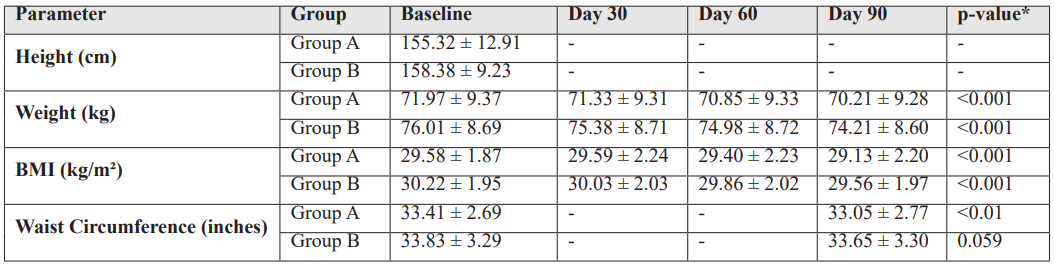
Data are presented as mean ± SD. Between-group age comparisons were performed using the independent Student's t-test. Within-group changes were assessed using the paired Student's t-test or Wilcoxon signed-rank test, as appropriate. *P<0.05 was considered statistically significant.
Table 2: Changes in glycemic parameters.

Data are presented as mean ± SD. Within-group comparisons were performed using the Student's t-test or Wilcoxon signed-rank test, as appropriate. *P<0.05 was considered statistically significant versus baseline.
Table 3: Changes in insulin resistance parameters.
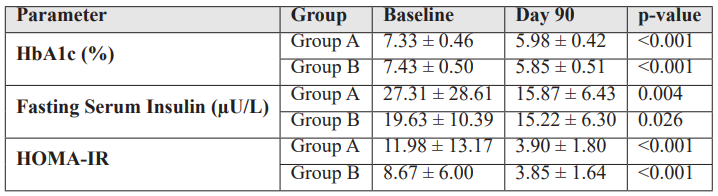
Data are presented as mean ± SD. Within-group comparisons were performed using the Student's t-test or Wilcoxon signed-rank test, as appropriate. *P<0.05 was considered statistically significant versus baseline.
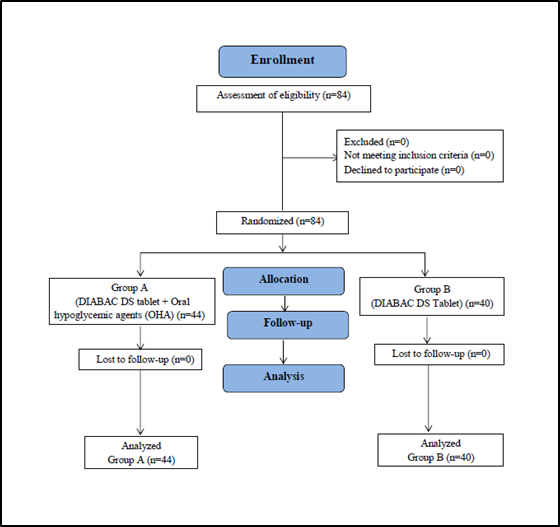
Figure 1: CONSORT diagram for the study.
Discussion
In this 90-day trial, DIABAC DS was associated with clinically meaningful improvements in glycaemic control, insulin resistance, lipid profile, metabolic syndrome severity and quality of life, whether used as monotherapy in newly diagnosed patients or as an adjunct to OHAs in previously diagnosed patients with a favourable safety and tolerability profile. These findings are broadly consistent with reports on the individual constituents of DIABAC DS: Gymnema sylvestre has been shown to reduce fasting and postprandial glucose, HbA1c, and improve lipid profile in T2DM patients [10]. Aegle marmelos and Shilajit have demonstrated hypoglycaemic and lipid-lowering effects attributed to coumarins and fulvic acid/dibenzo-α-pyrones, respectively [11,12]. Eugenia jambolana and Ficus benghalensis exert glucose-lowering activity via β-cell–protective and insulin-secretagogue mechanisms [13,14]. Momordica charantia improves insulin sensitivity and glucose utilisation [15]. A randomized, double-blind, placebo-controlled trials of Azadirachta indica extract and of Triphala in T2DM each reported glycaemic and lipid improvements comparable to those observed here [16,17]. The combined formulation may therefore act through complementary mechanisms, enhanced insulin secretion and sensitivity, reduced intestinal glucose absorption, and antioxidant protection of pancreatic β-cells although this trial cannot establish the contribution of individual ingredients. However, the relatively short study duration, open-label design, and limited sample size represent important study limitations, and the findings require validation in larger randomized controlled trials.
Conclusion
DIABAC DS was associated with significant improvements in glycaemic control, insulin resistance, lipid parameters, metabolic syndrome severity, and diabetes-related quality of life over 90 days in patients with type 2 diabetes mellitus. Beneficial effects were observed both when used as adjunct to oral hypoglycaemic agents and as monotherapy in newly diagnosed patients. The formulation was well tolerated, with only mild adverse events and excellent treatment compliance. These findings support the potential role of DIABAC DS as an adjunctive or standalone therapeutic option in T2DM management. However, larger, adequately powered, double-blind, randomized controlled trials with longer follow-up are required to confirm these findings and further establish its safety and efficacy.
Acknowledgments: The authors would like to acknowledge the research team and the back-office team involved in the research work. We would like to acknowledge the support of Mprex Healthcare Pvt. Ltd., Pune, as a clinical research organisation for this trial.
Author Contribution: RA and DK contributed to the acquisition, analysis, and interpretation of data, and supervised the conduct of the trial. GG contributed to drafting and critically reviewing the manuscript for important intellectual content. All authors approved the final version of the manuscript.
Funding Statement: The material and testing expenses of the study were borne by BACFO Pharmaceuticals (India) Ltd.
Conflict of Interest Statement: The authors declare no conflicts of interest.
Data Availability Statement: The datasets generated and/or analysed during the current study are not publicly available due to intellectual property constraints.
References
- Kharroubi AT, Darwish HM. Diabetes mellitus: The epidemic of the century. World J Diabetes, 2015; 6(6): 850.
- Cade WT. Diabetes-related microvascular and macrovascular diseases in the physical therapy setting. Phys Ther, 2008; 88(11): 1322-1335.
- Sun H, Saeedi P, Karuranga S, Pinkepank M, Ogurtsova K, Duncan BB, et al. IDF Diabetes Atlas: Global, regional and country-level diabetes prevalence estimates for 2021 and projections for 2045. Diabetes Res Clin Pract, 2022; 183: 109119.
- International Diabetes Federation. IDF Diabetes Atlas 2025 | Global Diabetes Data & Insights. Diabetes Atlas, 2025.
- Ning C, Jiao Y, Wang J, Li W, Zhou J, Lee YC, et al. Recent advances in the management of type 2 diabetes mellitus and natural hypoglycemic substances. Food Sci Hum Wellness, 2022; 11(5): 1121-1133.
- Galicia-Garcia U, Benito-Vicente A, Jebari S, et al. Pathophysiology of type 2 diabetes mellitus. Int J Mol Sci, 2020; 21(17): 6275.
- Blahova J, Martiniakova M, Babikova M, et al. Pharmaceutical drugs and natural therapeutic products for the treatment of type 2 diabetes mellitus. Pharmaceuticals, 2021; 14(8): 806.
- Padhi S, Nayak AK, Behera A. Type II diabetes mellitus: A review on recent drug-based therapeutics. Biomed Pharmacother, 2020; 131: 110708.
- Yedjou CG, Grigsby J, Mbemi A, et al. The management of diabetes mellitus using medicinal plants and vitamins. Int J Mol Sci, 2023; 24(10): 9085.
- Tiwari P, Mishra BN, Sangwan NS. Phytochemical and pharmacological properties of Gymnema sylvestre: an important medicinal plant. Biomed Res Int, 2014; 2014: 830285.
- Singh R, Singh A, Babu N. Ethnomedicinal and pharmacological activities of Aegle marmelos. Pharm Innov J, 2019; 8(6): 176-181.
- Stohs SJ. Safety and efficacy of shilajit (mumie, moomiyo). Phytother Res, 2014; 28(4): 475-479.
- Baliga MS, Bhat HP, Baliga BR, et al. Phytochemistry, traditional uses and pharmacology of Eugenia jambolana Food Res Int, 2011; 44(7): 1776-1789.
- Ahmad S, Rao H, Akhtar M, et al. Phytochemical composition and pharmacological prospectus of Ficus benghalensis J Med Plants Res, 2011; 5: 6393-6400.
- Sridhar MG, Vinayagamoorthi R, Suyambunathan VA, et al. Bitter gourd (Momordica charantia) improves insulin sensitivity by increasing skeletal muscle insulin-stimulated IRS-1 tyrosine phosphorylation in high-fat-fed rats. Br J Nutr, 2008; 99(4): 806-812.
- Pingali U, Ali MA, Gundagani S, Nutalapati C. Evaluation of the effect of an aqueous extract of Azadirachta indica (Neem) leaves and twigs on glycemic control, endothelial dysfunction and systemic inflammation in subjects with type 2 diabetes mellitus: a randomized, double-blind, placebo-controlled clinical study. Diabetes Metab Syndr Obes, 2020; 13: 4401-4412. doi:10.2147/DMSO.S274378.
- Singh N, Mahajan S, Subramani SK, et al. Triphala improves glucose homeostasis by alleviating atherogenic lipids and oxidative stress in type 2 diabetes mellitus. Int J Ayurveda Med, 2015; 6(3): 212-219.Top of Form