
Email id: info@ijclinmedcasereports.com
Angiographic Characteristics of Young Patients with Premature Coronary Artery Disease Undergoing Diagnostic Coronary Angiography
Tayeb Bafadhl1,*, Ajlan Al- Ajili2 and Hana Basubaih3
1Department of Cardiology, FSCAI, Head of cath lab of Nabdh Al-Hayat Cardiac Center, Mukalla, Hadramout Gov, Yemen
2Yemeni board of Cardiology, Department of Cardiology, Nabdh Al-Hayat Cardiac Center, Mukalla, Hadramout Gov, Yemen
3Cath lab technician Nabdh Al-Hayat Cardiac Center, Mukalla, Master critical care, Yemen
Received Date: 10/05/2026; Published Date: 06/07/2026
*Corresponding author: Tayeb Bafadhl, Department of Cardiology, FSCAI, Head of cath lab of Nabdh Al-Hayat Cardiac Center, Mukalla, Hadramout Gov, Yemen
Abstract
Background: Coronary Artery Disease (CAD) remains the leading cause of morbidity and mortality worldwide, accounting for a significant proportion of deaths in individuals over 35 years of age. While CAD-related mortality has declined in Western countries, it continues to rise in developing regions, particularly in South Asia and the Middle East. The definition of “young” in CAD varies, commonly considered as age <45 years for males and <55 years for females. Previous angiographic studies suggest that younger patients tend to have less extensive disease, with a higher prevalence of normal coronary arteries and single-vessel involvement compared to older populations.
Aim: To determine the angiographic pattern and severity of coronary artery disease in young patients presenting with premature CAD at a tertiary cardiac center in Yemen.
Methods: This cross-sectional study was conducted from January 1 to December 31, 2023, at Nabdh Al-Hayat Cardiac Center (NCC), Mukalla, Hadramout, Yemen. A total of patients aged 25–45 years (males) and 25–55 years (females) undergoing elective diagnostic coronary angiography were included. Detailed clinical history, cardiovascular risk factors, and physical examination findings were recorded. Angiographic data were analyzed to assess the distribution and severity of coronary artery involvement.
Results: A total of 222 patients were included, with a mean age of 45.1 ± 5.7 years. Males constituted 123 (55.4%) and females 99 (44.6%) of the cohort. Dyslipidemia was the most prevalent risk factor (84.2%), followed by elevated body mass index (overweight/obesity) in 76.1% of patients. A positive family history of CAD was observed in 25.7% of cases. The left anterior descending artery (LAD) was the most commonly affected vessel (63.1%), followed by the right coronary artery (RCA) (30.2%) and left circumflex artery (LCX) (19.8%). Significant left main coronary artery disease was identified in 3.6% of patients.
Conclusion: Premature CAD represents a growing and concerning health burden in Yemen, largely driven by the clustering of modifiable cardiovascular risk factors. Early identification and aggressive management of these risk factors are essential to reduce the incidence and adverse outcomes of CAD in young individuals.
Keywords: Premature CAD; Young adults; Coronary angiography; Yemen
Introduction
Coronary Artery Disease (CAD) remains the leading cause of morbidity and mortality worldwide, affecting both developing and developed countries, and accounts for one-third or more of all deaths among individuals older than 35 years [1]. While CAD-related mortality has declined in Western countries, it continues to rise in developing regions, particularly in South Asian populations [2].
The definition of “young” in the context of CAD varies, with most studies considering individuals aged <45 years for males and <55 years for females presenting with Myocardial Infarction (MI), as no universally accepted definition exists. Premature CAD carries significant socioeconomic implications, as affected individuals are often the primary earners in their families; thus, the consequences extend beyond the patient to impact dependents both psychologically and economically [3].
Younger patients frequently present late and may overlook early symptoms of CAD, often due to a false sense of security associated with their age [4]. Moreover, the incidence of CAD is expected to increase further due to the growing burden of modifiable risk factors, including sedentary lifestyle, smoking, and unhealthy dietary habits, along with the rising prevalence of diabetes mellitus, hypertension, and obesity [5].
Hypertension and prehypertension among young adults have also been identified as significant contributors to the early development of Acute Myocardial Infarction (AMI) worldwide [6,7]. In addition, regional variations in CAD prevalence may be influenced by nontraditional risk factors. In Yemen, khat chewing—a widely prevalent social habit—has been proposed as a potential risk factor for CAD. It has been associated with increased mortality and adverse cardiovascular outcomes such as cardiogenic shock, heart failure, recurrent ischemia, and stroke, despite a relatively lower prevalence of conventional risk factors like diabetes mellitus and prior cardiovascular disease [8,9].
Angiographic studies suggest that younger patients tend to have less extensive coronary artery involvement, with a higher prevalence of normal coronary arteries and single-vessel disease compared to older individuals [10].
Aim of Study:
This study aims to determine the angiographic patterns of Coronary Artery Disease (CAD) in patients with premature CAD presenting to the cardiac catheterization laboratory. It also aims to assess the prevalence and severity of coronary artery involvement among these patients at Nabdh Al-Hayat Cardiac Center, Mukalla, Yemen.
Methods
This cross- sectional study was conducted from January 1 to December 31, 2023, at Nabdh Al-Hayat Cardiac Center (NCC), Mukalla, Hadramout, Republic of Yemen. The study included patients undergoing elective diagnostic coronary angiography, aged >25 years up to 45 years for males and up to 55 years for females, consistent with the definition of premature coronary artery disease.
All participants underwent detailed clinical evaluation, including history taking with emphasis on cardiovascular risk factors such as smoking, tobacco chewing, family history of CAD, Hypertension (HTN), Diabetes Mellitus (DM), and dyslipidemia. A thorough physical examination was performed, including measurement of height, weight, and blood pressure.
Written informed consent was obtained from all participants prior to the procedure. In cases involving illiterate or elderly patients, verbal consent was obtained in the presence of relatives after explaining the study details. The study protocol was approved by the center administration.
Coronary Angiography (CAG) was performed using a standard transradial approach. All angiograms were interpreted by an experienced interventional cardiologist. The severity, morphology, and length of coronary lesions were assessed using the visual estimation (eyeballing) method.
The severity of CAD was classified based on the degree of luminal stenosis and the number of affected vessels as follows:
- Normal coronary arteries: No detectable coronary lesions.
- Hemodynamically insignificant CAD: 1–69% stenosis, regardless of the number of vessels involved.
- Significant CAD: ≥70% stenosis in major epicardial coronary arteries (left anterior descending [LAD], left circumflex [LCx], right coronary artery [RCA], or their branches), or ≥50% stenosis in the left main coronary artery (LMCA). Based on the number of vessels involved, patients were further classified as single-vessel disease (SVD) or Double-Vessel Disease (DVD).
- Multivessel CAD: ≥70% stenosis in three vessels or ≥50% stenosis in the LMCA (as per Gensini classification, 1983) [11].
Statistical analysis was performed using the Statistical Package for the Social Sciences (SPSS), version 25 (IBM Corp., Armonk, NY, USA). Continuous variables were expressed as mean ± standard deviation (SD), while categorical variables were presented as frequencies and percentages. The Student’s t-test and chi-square test were used to assess associations between variables. A p-value of <0.05 was considered statistically significant.
Results
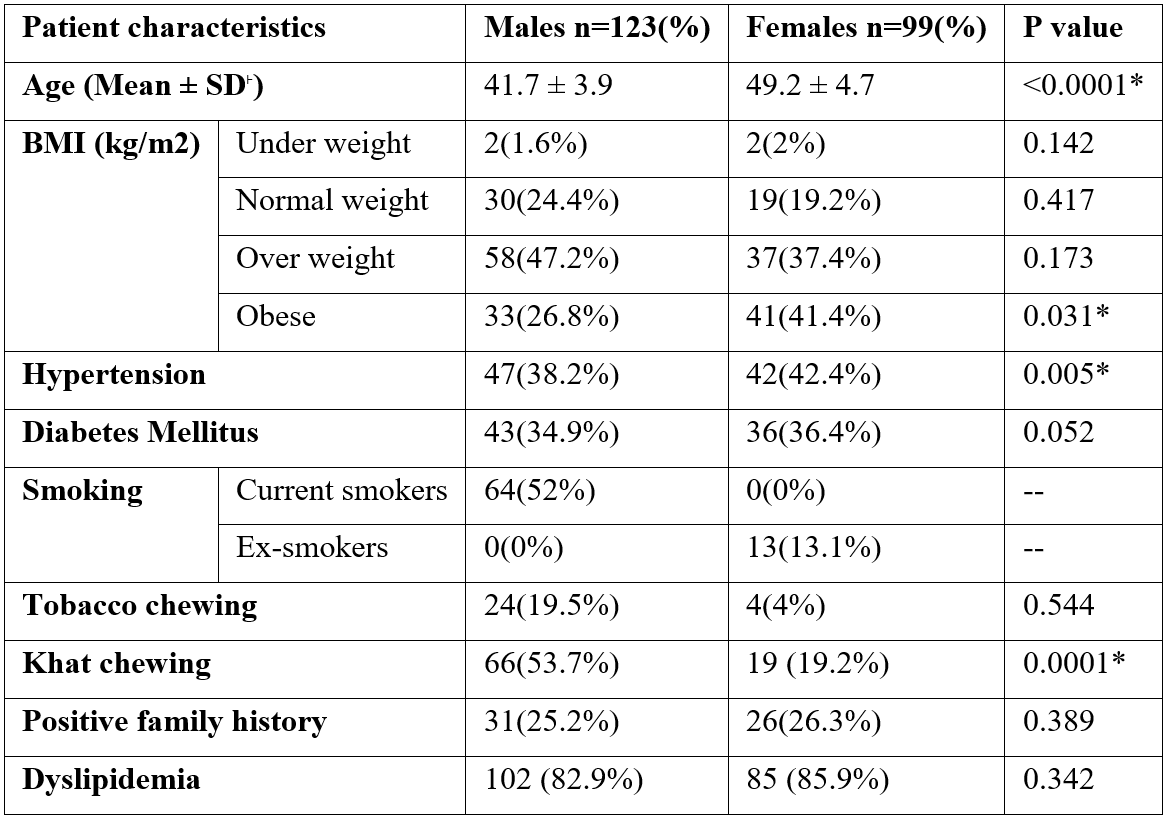
A total of 222 young patients with age range of 25-55 years were included in this study and had undergone CAG between January 1st 2023 and 31st December 31st 2023. 123 patients (55.4%) males and 99 (44.6%) females. mean age of CAD in young is 45.1 ± 5.7 years, Dyslipidemia was found to be the most common risk factor (84.2%) followed by high BMI (Overweight & obesity) (76.1%). Fifty-seven (25.7%) of the patients had positive family history of CAD.
further analysis of our results, age of female studied patients was significantly higher than that of male ones, (49.2±4.7 and 41.7±3.9 years respectively, p <0.0001). Regarding BMI: Obesity was significantly more prevalent in females (41.4% vs 26.8%, p=0.031). No significant differences were observed in underweight, normal weight, or overweight categories.
Risk Factors:
- Hypertension was significantly more common in females (42.4% vs 38.2%, p=0.005)
- Diabetes mellitus showed a borderline/non-significant difference (36.4% vs 34.9%, p=0.052)
- Dyslipidemia was highly prevalent in both groups (>80%) with no significant difference (p=0.342).
- Positive family history was similar between groups (p=0.389).
- Smoking: Highly prevalent among males (52% current smokers). Absent among females, though ex-smoking was reported in 13.1% of females
- Khat chewing was significantly more common in males (53.7% vs 19.2%, p=0.0001)
- Tobacco chewing was more frequent in males (19.5% vs 4%), but not statistically significant (p=0.544) (Table 1).
Table 1: Clinical demographic.
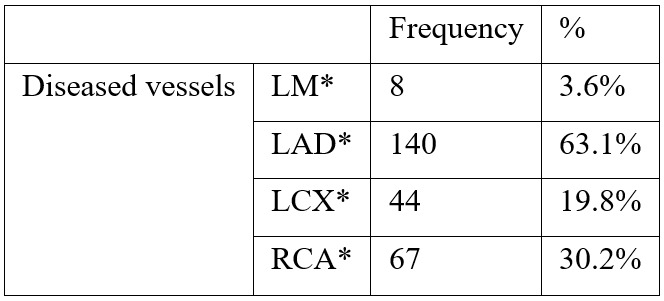
By analyzing data from Coronary angiogram reports, the predominant vessel involved in premature CAD patients was LAD (63.1%) followed by RCA (30.2%), and LCX (19.8%). Eight (3.6%) patients had significant left main disease (Table 2).
Table 2: Distribution of coronary vessel affection.
Severity of Coronary Artery Disease
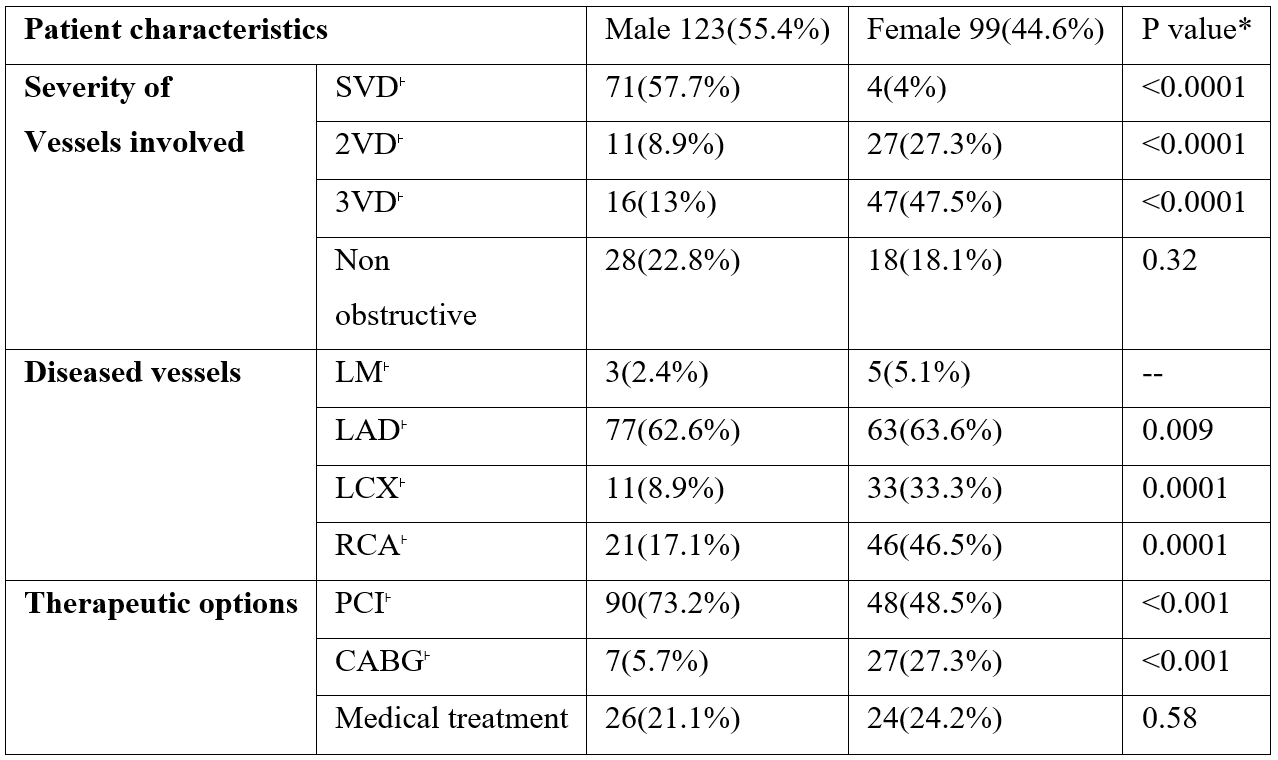
There was a marked gender difference in disease extent:
- Single-vessel disease (SVD) was significantly more common in males (57.7% vs 4.0%, p<0.0001).
- In contrast, females had a substantially higher prevalence of multi-vessel disease:
- 2VD: 27.3% vs 8.9% (p<0.0001)
- 3VD: 47.5% vs 13.0% (p<0.0001)
- Non-obstructive disease showed no significant difference (22.8% vs 18.1%, p=0.32).
Distribution of Diseased Vessels
- LAD involvement was similarly high in both groups (~63%), though statistically significant (p=0.009), the clinical difference is minimal.
- Females had significantly higher involvement of:
- LCX (33.3% vs 8.9%, p=0.0001)
- RCA (46.5% vs 17.1%, p=0.0001)
- Left main (LM) disease was slightly higher in females (5.1% vs 2.4%), though no statistical test was provided.
Therapeutic Strategy
Management differed significantly between genders:
- PCI was more frequently performed in males (73.2% vs 48.5%, p<0.001).
- CABG was markedly higher in females (27.3% vs 5.7%, p<0.001).
- Medical therapy alone showed no significant difference (p=0.58) (Table 3).
Table 3: Distribution of coronary vessel affection a therapeutic option among gender difference.
Discussion
Coronary Artery Disease (CAD) remains highly prevalent in both developed and developing countries and continues to be a leading cause of morbidity and mortality despite substantial advances in diagnostic and therapeutic modalities (Nowbar et al., 2019) [12]. Premature Coronary Artery Disease (PCAD), particularly among young and economically active individuals, represents a significant clinical and public health concern. In recent years, increasing attention has been directed toward identifying the risk factors associated with PCAD, as well as understanding whether its angiographic patterns differ from those observed in older populations (Mahjoob et al., 2018) [13].
In terms of sex differences, female patients in our study were significantly older than male patients (49.2 ± 4.7 vs. 41.7 ± 3.9 years, p < 0.0001), which is consistent with findings by Mohammad et al. (2015) [14]. Smoking was markedly more prevalent among men, likely reflecting sociocultural norms, whereas it was rare among women, particularly in the Hadramout region where smoking among females is less socially accepted. This observation aligns with findings from Mohammad et al. (2015) [14] in Iraq.
Conversely, other cardiovascular risk factors—including Type 2 Diabetes Mellitus (T2DM), hypertension, and dyslipidemia—were significantly more prevalent among women in our cohort. These findings are partially supported by Islam et al. (2011) [15], who reported higher rates of T2DM and dyslipidemia among women, although hypertension and smoking were more common among men in their study. Similarly, Shehab et al. (2013) [16] found that women exhibited higher rates of hypertension and diabetes
In the present study, a high prevalence of elevated body mass index (BMI) was observed among patients with PCAD, with obesity being significantly more common among female patients. This finding is consistent with previous studies by Prashanth et al. (2010) [17] and Foroughi et al. (2014) [18], which demonstrated a strong association between increased BMI and premature CAD. The high prevalence of obesity in our cohort may be attributed to a combination of sedentary lifestyle, dietary habits, and sociocultural factors prevalent in the community.
Smoking is a well-established and potent risk factor for CAD, contributing to endothelial dysfunction, inflammation, and accelerated atherosclerosis. It is frequently reported as the most common modifiable risk factor among young patients with CAD. However, in our study, the prevalence of smoking was relatively low (28.8%) compared with other reports This finding is comparable to that of Mohammad et al. (2015) [19], who reported a smoking prevalence of 30%. In contrast, higher prevalence was reported in studies by Sadeghi et al. (2013) [20] and Foroughi et al. (2014) [18], at 46% and 47%, respectively. This discrepancy may be explained by cultural and gender-related differences, particularly the lower prevalence of smoking among females, which may influence the overall rate observed in the study population
Faulty lifestyle, psychosocial stress, and genetic predisposition are recognized contributors to Premature Coronary Artery Disease (PCAD) and hypertension. In the present study, hypertension was observed in 40.1% of patients, which is consistent with findings reported by Noeman et al. (2007) [21] and Foroughi et al. (2014) [18]. In contrast, Christus et al. (2011) [22] reported a lower prevalence (19.5%), likely due to inclusion of a younger study population (<30 years), which may explain the discrepancy.
With respect to dyslipidemia, our study demonstrated a significantly high prevalence among patients with PCAD. This finding is in agreement with previous studies by Gopalakrishnan et al. (2020) [23], Adam et al. (2017) [24], Dan (2021) [25], and Penida et al. (2008) [26], all of which reported a high burden of dyslipidemia in this population. Additionally, genetic factors have been shown to play a crucial role in acute myocardial infarction, acting alongside both conventional and emerging risk factors (Deshpande & Danesh, 2008) [27].
A family history of CAD was present in 25% of patients in our study, which is comparable to the findings of Bos et al. (2006) [28] and Dahal et al. (2018) [29], who reported prevalences of 28.7% and 32%, respectively. However, higher rates have been documented in other populations, including Pakistani (57.1%; Shah et al., 2021) [30], Bangladeshi (60.0%; Pramanik et al., 2021) [31], and Iranian cohorts (38%; Foroughi et al., 2014) [18]. While the reasons for these variations remain unclear, differences in genetic background, sex distribution, and sociocultural factors may contribute.
Regarding angiographic findings, Single-Vessel Disease (SVD) was the most common pattern in our study (33.8%), followed by multi-vessel disease (MVD) (28.4%) and double-vessel disease (DVD) (17.2%). These findings are consistent with reports by Mohammad et al. (2013) [32], Deora et al. (2006) [33], Yildirim et al. (2007) [34], and Batra et al. (2019) [35], which also identified SVD as the predominant pattern among young patients with PCAD. In contrast, Kaul and Bhatia (2010) [36] reported a higher prevalence of double- and triple-vessel disease.
Among the major coronary arteries, the Left Anterior Descending artery (LAD) was the most frequently involved vessel (63.1%), followed by the Right Coronary Artery (RCA) (30.2%) and the left circumflex artery (LCX) (19.8%). Similar patterns have been reported by Al-Kebsi et al. (2013) [37], Mohammad et al. (2013) [32], all of whom identified LAD as the most commonly affected vessel.
Regarding the relationship between sex and coronary artery involvement, left main stem (LMS) disease was more frequently observed in women in our study. This contrasts with findings by Soleimani et al. (2009) [38], who reported a higher prevalence among men.
In terms of disease severity, women in our study had a higher prevalence of Triple-Vessel Disease (TVD) compared to men (47.5% vs. 13%), whereas SVD was more common among men (57.7% vs. 4%). Non-obstructive coronary disease showed minimal sex differences. These findings are consistent with Chiha et al. (2016) [39], who also reported a higher prevalence of TVD among women. However, Giannoglou et al. (2008) [40] reported that men were more likely to have multi-vessel disease at a younger age, highlighting ongoing variability in the literature.
Study Limitations
This study has several limitations that should be considered when interpreting the findings. First, only symptomatic patients who were referred for and underwent diagnostic coronary angiography were included, which may limit the generalizability of the results to the broader population, including asymptomatic individuals.
Second, as a single-center study, the findings may be subject to referral bias. However, given the relative similarities in lifestyle, genetic background, and socioeconomic conditions across the population, the results may still reasonably reflect the broader pattern of premature CAD within the country.
Third, no follow-up data were collected, limiting the ability to assess long-term clinical outcomes. In addition, advanced intracoronary imaging modalities, such as Intravascular Ultrasound (IVUS), were not utilized, which may have provided more detailed characterization of coronary lesions.
Despite these limitations, this study represents one of the first comprehensive evaluations of premature CAD in Hadramout. It includes a relatively large sample size and provides well-defined clinical and angiographic data, thereby highlighting an important gap in the current literature and offering a foundation for future research in this area.
Conclusion
This study demonstrates that the burden of premature Coronary Artery Disease (CAD) in Yemen is concerning and appears to be largely driven by the clustering of modifiable cardiovascular risk factors. Young males constituted the majority of affected patients, with dyslipidemia, overweight/obesity, and hypertension identified as the most prevalent risk factors.
Angiographically, single-vessel disease was more common, with predominant involvement of the Left Anterior Descending (LAD) artery. LAD involvement, particularly leading to anterior ST-Elevation Myocardial Infarction (STEMI), was the most frequent presentation among patients with Acute Coronary Syndromes (ACS).
These findings highlight that premature CAD in young patients may exhibit distinct clinical and angiographic patterns compared to older populations. Therefore, management strategies should be carefully individualized, with thorough assessment of disease severity before adopting invasive approaches. Notably, a substantial proportion of young patients demonstrated non-severe coronary artery disease.
Overall, effective control of cardiovascular risk factors, early identification of high-risk individuals, and strengthening of interventional cardiology services are essential to reduce the incidence and adverse outcomes of premature CAD.
Recommendations
Given the high prevalence of modifiable risk factors, particularly smoking, there is an urgent need to enhance public awareness and implement targeted prevention strategies aimed at smoking cessation.
Efforts should also focus on strengthening primary prevention through lifestyle modification programs, including promotion of healthy diet, physical activity, and weight control, especially among young adults.
Establishment and expansion of primary Percutaneous Coronary Intervention (PCI) facilities are strongly recommended, as timely management of Acute Myocardial Infarction (AMI) in young patients is associated with favorable in-hospital outcomes.
In addition, screening programs targeting high-risk populations should be implemented to enable early detection and management of cardiovascular risk factors. Such measures are crucial for reducing the socioeconomic burden of premature CAD and preserving the productivity of the young population.
Acknowledgements: We would like to express our sincere gratitude to all the patients who participated in this study. We also thank the staff of Nabdh Al-Hayat Cardiac Centre, Mukalla, for their valuable support and cooperation. Special appreciation is extended to our colleagues who contributed to data collection and technical assistance
Authors Information:
Tayeb Ali Bafadhl -MD Cardiology, FSCAI, Department of Cardiology
Nabdh Al-Hayat Cardiac Center, Hadramout government, Mukalla, Republic of Yemen.
Hana Omer Ali basubaih, Cath lab technician Nabdh Al-Hayat Cardiac Center, Mukalla, Master critical care.
Ajlan Saeed Al-Ajili, Yemeni board of cardiology, cardiology department, Nabdh Al-Hayat Cardiac Center, Mukalla , Hadramout Gov.,Yemen,
Authors Contributions: The authors contributed to the Conceptualization, Investigation, and Data Curation by acquiring and critically reviewing the selected articles, and involved in the Writing – Original Draft preparation and Writing – Review & Editing to refine the manuscript.
Conflict of Interest Statement: None
Funding: None
Guarantor: None
References
- Lloyd-Jones D, Adams RJ, Brown TM, Carnethon M, Dai S, De Simone G, et al. Executive summary: heart disease and stroke statistics: a report from the American Heart Association, 2010.
- Joshi P, Islam S and Pais P. Risk Factors for Early Myocardial Infarction in South Asians Compared with Individuals in Other Countries. JAMA, 2007; 297(3): 286-294. https://doi. org/10.1001/jama.297.3.286.
- Shah N, Kelly AM, Cox N, Wong C, Soon K. Myocardial infarction in the "young": risk factors, presentation, management and prognosis. Heart Lung Circ, 2016; 25: 955-960.
- Jamil G, Jamil M, AlKhazraji H, Haque A, Chedid F, Balasubramanian M, et al. Risk factor assessment of young patients with acute myocardial infarction. Am J Cardiovasc Dis, 2013; 3: 170-174.
- Sekhri T, Kanwar RS, Wilfred R, Chugh P, Chhillar M, Aggarwal R, et al. Prevalence of risk factors for coronary artery disease in an urban Indian population. BMJ Open, 2014; 4: 005346.
- Wan Ahmad WA. National Cardiovascular Disease. Annual Report of the Acute Coronary Syndrome (ACS) Registry 2011-2013. Kuala Lumpur, Malaysia: National Heart Association of Malaysia (NHAM) and the Ministry of Health Malaysia, 2015.
- Naing C, Yeoh PN, Wai VN, Win NN, Kuan LP, Aung K. Hypertension inMalaysia: An analysis of trends from the national surveys 1996 to 2011. Med (United States), 2016; 95: 1–13.
- Al-Shami m, Al-Motarreb A. Association of khat chewing with significant coronary artery disease in patients presenting with heart failure: J Saudi Heart Assoc, 2013; 25: 113-172.
- Al-Motarreb A, Al-Kebsi M, Al-Adhi B, Broadley KJ. Khat chewing and acute myocardial infarction. Heart, 2002; 87: 279-280.
- Rezende PC, Hueb W, Garzillo CL, Lima EG, hueb ac, Ramires JAF. Ten-year outcomes of patients randomized to surgery, angioplasty, or medical treatment for stable multivessel coronary disease: effect of age in the Medicine, Angioplasty, or Surgery Study II trial. J Thorac Cardiovasc Surg, 2013; 146: 1105-1112.
- Gensini GG. A more meaningful scoring system for determining the severity of coronary heart disease. Am J Cardiol, 1983; 51: 606.
- Nowbar AN, Gitto M, Howard JP, Francis DP, Al-Lamee R. Mortality from ischemic heart disease. Circ Cardiovasc Qual Outcomes, 2019; 12: 005375.
- Mahjoob MP, Sadeghi S, Khanaman HF, Naderian M and Khaheshi I. Comparison of coronary risk factors and angiographic findings in younger and older patients with significant coronary artery disease. Rom J Intern Med, 2018; 56: 90-95.
- Mohammad AM, Jehangeer HI, Shaikhow SK: Prevalence and risk factors of premature coronary artery disease in patients undergoing coronary angiography in Kurdistan, Iraq. BMC Cardiovasc. Disord, 2015; 15: 155.
- Islam A, Faruque M, Chowdhury A, Khan H, Haque M, Ali M, et al. Risk factor analysis and angiographic profiles in first 228 cases undergone coronary angiography in cardiac cath lab of Dhaka medical college hospital. Cardiovasc J, 2011; 2: 122-125.
- Shehab A, Al-Dabbagh B, Alhabib KF, Alsheikh-Ali AA, Almahmeed W, Sulaiman K, et al. Gender disparities in the presentation, management and outcomes of acute coronary syndrome patients: Data from the 2nd gulf registry of acute coronary events (gulf race-2). PLoS One, 2013; 8: 55508.
- Prashanth P, Kadhim S, Ibrahim A-Z, Said A. Acute Coronary Syndrome in Young Adults from Oman: Results from the Gulf Registry of Acute Coronary Events. Heart Views, 2010; 11: 93–98.
- Foroughi M, Ahranjani SA, Ebrahimian M, Saieedi M, Safi M, Abtahian Z. Coronary artery disease in Iranian young adults, similarities and differences. Open J Epidemiol, 2014; 4: 19-24.
- Mohammad AM, Jehangeer HI, Shaikhow SK. Prevalence and risk factors of premature coronary artery disease in patients undergoing coronary angiography in Kurdistan, Iraq. BMC Cardiovasc. Disord, 2015; 15: 155.
- Sadeghi R, Adnani N, Erfanifar A, Gachkar L, Maghsoomi Z. Premature Coronary Heart Disease and Traditional Risk Factors - Can We Do Better? Int Cardiovasc Res J, 2013; 7: 46-50.
- Noeman A, Ahmad N, Azhar M. Coronary artery disease in young: faulty lifestyle or heredofamilial or both. Annals, 2007; 13: 162–164.
- Christus T, Shukkur AM, Rashdan I, Koshy T, Alanbaei M, Zubaid M, et al. Coronary artery disease in patients aged 35 or less - A different beast? Heart Views, 2011; 12: 7-11.
- Gopalakrishnan A, Sivadasanpillai H, Ganapathi S, Nair KKM, Sivasubramonian S, Valaparamil A. Clinical profile & long-term natural history of symptomatic coronary artery disease in young patients (˂ 30 yr). Indian J Med Res, 2020; 152: 263–272.
- Adam AM, Rehan A, Waseem N, Iqbal U, Saleem H, Ali MA, et al. Prevalence of conventional risk factors and evaluation of baseline indices among young and elderly patients with coronary artery disease. J Clin Diagn Res, 2017; 11: 34–39.
- Dan K. Prevalence of acute myocardial infarction in young adults and conventional risk factors. Sch J App Med Sci, 2021; 1: 172–178.
- Pineda J, Marin F, Roldan V, Valencia J, Marco P, Sogorb F. Premature myocardial infarction: Clinical profile and angiographic findings. Int. J. Cardiol, 2008; 126: 127-129.
- Deshpande J, Danesh J. Risk factors for acute myocardial infarction: a hospital-based case control study. Heal Popul Perspect Issues, 2008; 31: 164-169.
- Bos MJ, Koudstaal PJ, Hofman A, Witteman JCM, Breteler MMB. Uric acid is a risk factor for myocardial infarction and stroke: the Rotterdam study. Stroke, 2006; 37: 1503–1507.
- Dahal K, Karki P, Maskey R, Sherpa K, Lamsal M, Niraula A. Risk factors of acute myocardial infarction in young adults of Nepalese population. International Journal of Medicine in Developing Countries, 2018; 2: 80–85.
- Shah SIA, Sikandar MZ, Qazi UY, Hag I. Clinical risk factors of acute myocardial infarction in young people: Anxiety in the lead? Medical science, 2021; 25: 501–507.
- Pramanik AK, Bhuiyan MMA, Yesmin MS, Ferdousi S, Parvin T, Karmoker KK, et al. Relationship of serum testoster_one with coronary artery disease in young adult males of Bangladesh. Bangabandhu Sheikh Mujib Medical University Journal, 2021; 14: 67–73.
- Mohammad AM, Sheikho SK, Tayib JM. Relation of cardiovascular risk factors with coronary angiographic findings in Iraqi patients with Ischemic heart disease. Am J Cardiovasc Dis Res, 2013; 1: 25-29.
- Deora S, Kumar T, Ramalingam R, Manjunath CN. Demographic and angiographic profile in premature cases of acute coronary syndrome: analysis of 820 young patients from South India. Cardiovasc Diagn Ther, 2016; 6: 193.
- Yildrim N, Arat N, Dogan MS, Sokmen Y, Ozcan F. Comparison of traditional risk factors, natural history and angiographic findings between coronary heart disease patients with age < 40 and [greater than or equal to] 40 years old. Anatolian Journal of Cardiology, 2007; 7: 124-128.
- Batra MK, Rasool SI, Solangi BA, Khan N, Karim M, Hassan Rizvi SN. Multivessel Disease as A Prognostic Marker in Patients Presenting for Primary Percutaneous Coronary Intervention. J Ayub Med Coll Abbottabad, 2018; 30: 534
- Kaul U and Bhatia V. Perspective on coronary interventions & cardiac surgeries in India. Indian J Med Res, 2010; 132: 543-548.
- Al-Kebsi M, Al-Jaber N, Munibari A, Al-Awadi A, AlKahtani W. Angiographic Characteristics of Young Yemeni Patients Undergoing Diagnostic Coronary Angiography: Data from A Major Cardiac Center In Yemen. Sana'a University Journal of Medical and Health Sciences, 2013; 1: 1-5.
- Soleimani A, Abbasi A, Kazzazi EH, Hosseini K, Salirifar M, Darabian S, et al. Prevalence of left main coronary artery disease among patients with ischemic heart disease: insights from the Tehran Angiography Registry. Minerva Cardioangiol, 2009; 57: 175-183.
- Chiha J, Mitchell P, Gopinath B, Burlutsky G, Kovoor P, Thiagalingam A. Gender differences in the prevalence of coronary artery tortuosity and its association with coronary artery disease. Int J Cardiol Heart Vasc, 2016; 14: 23-27.
- Giannoglou GD, Antoniadis AP, Chatzizisis YS, Damvopoulou E, Parcharidis GE, Louridas GE. Sex-related differences in the angiographic results of 14 500 cases referred for suspected coronary artery disease. Coron Artery Dis, 2008; 19: 9.