
Email id: info@ijclinmedcasereports.com
A Rare Case of Herpes Zoster in the Area Breastfeeding Trauma: Causal Relationship with Nursing Strike
Seçil Soylu1,*, Dilara Güler2, İrem Nur Durusu Türkoğlu3 and Fatma Çevik Özdamar4
1Assistant Professor/Research Associate, Department of Dermatovenereology, Healthcare Practice and Research Center, Afyonkarahisar Health Sciences University, Afyonkarahisar, Turkey
2Medical Specialist, Department of Dermatovenereology, Konya Meram State Hospital, Konya, Turkey
3Specialist in Dermatology, Haydarpaşa Numune Training and Research Hospital, Istanbul, Turkey
4Specialist in Dermatology, Kahramanmaraş Provincial Directorate of Health, Necip Fazıl City Hospital, Kahramanmaraş, Turkey
Received Date: 23/02/2026; Published Date: 08/05/2026
*Corresponding author: Seçil Soylu, MD Department of Dermatovenereology, Healthcare Practice and Research Center, Afyonkarahisar Health Sciences University, Zafer Sağlık Külliyesi, Dörtyol Mahallesi 2078 Sokak No: 3, Afyonkarahisar, Turkey
Abstract
Immunosuppression and advanced age are known factors triggering herpes zoster, but there are few reports on postpartum onset in areas of nursing-associated physical trauma, specifically during a “breastfeeding strike.” We present a 32-year-old lactating woman who developed herpes zoster along the left T4 dermatome (back, axillae, breast, areola, and nipple) while nursing her 10-month-old infant. Treatment with 800 mg acyclovir five times daily for five days led to lesion regression. The infant subsequently developed mild varicella and was managed following pediatric consultation and vaccination. Clinicians and lactation consultants should recognize nursing trauma as a potential trigger for herpes zoster in mothers with unilateral breastfeeding difficulties. Prompt identification of symptoms like breast hyperesthesia or vesicles is crucial to ensure early treatment for both mother and infant, thereby reducing the risk of viral transmission.
Keywords: Herpes zoster; Nursing strike; Infant; Breastfeeding; Prevention; Varicella
Introduction
Immunosuppression and advanced age are well-known factors that can trigger herpes zoster (HZ), a common disease with many complications [1,2]. Despite the association of other factors such as psychological stress, a history of shingles or chickenpox in the family, and physical injury with the disease, these are currently under investigation [1]. Moreover, there is only one case report in the literature regarding the onset of zona in nursing trauma as a physical injury [3]. We present the second case of HZ triggered by nursing injury and associated with the infants’ refusal to breastfeed, known as a nursing strike.
Case Report
A 32-year-old woman presented with complaints of itching and tingling sensations around her left areolar region for three days while breastfeeding her 10-month-old baby. Her medical history included papillary thyroid cancer, for which she underwent surgery and was taking levothyroxine.
Dermatological examination revealed a linear erythematous vesicular eruption in the left T4 dermatome, involving the back, axillae, breast, areola, and nipple (Figure 1a, 1b). The lesions originated in and around the areola and spread to the dermatomal area. Based on clinical findings, HZ was diagnosed, and the patient was prescribed acyclovir 800 mg five times daily. Breastfeeding was discontinued. After ten days, the mother’s lesions were crusted (Figure 2a, 2b), and the infant developed a mild rash suggestive of varicella infection. The infant was consulted by a specialist in pediatric diseases and vaccinated according to recommendations.
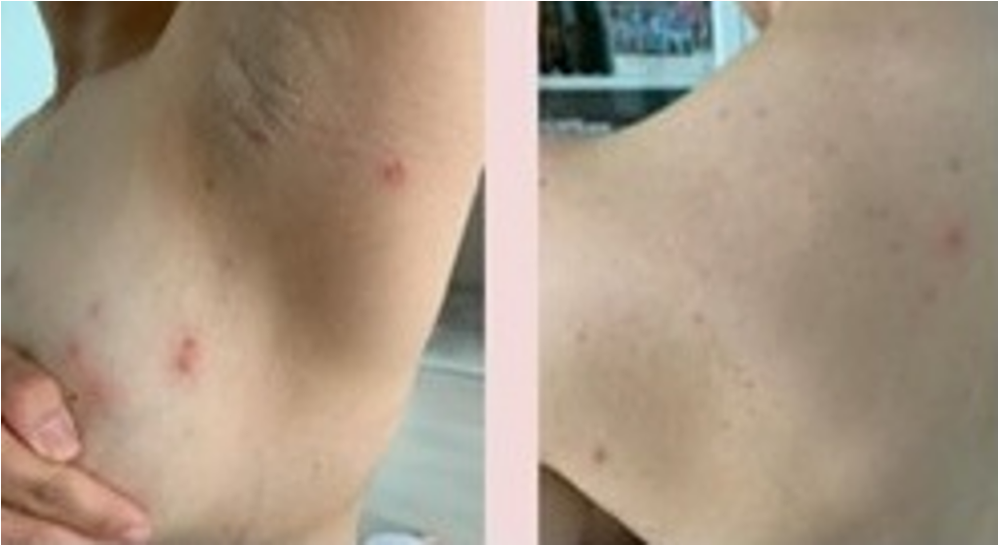
Figure 1a, 1b: Painful grouped vesicles developed around the breastfeeding area within a sensory dermatome.
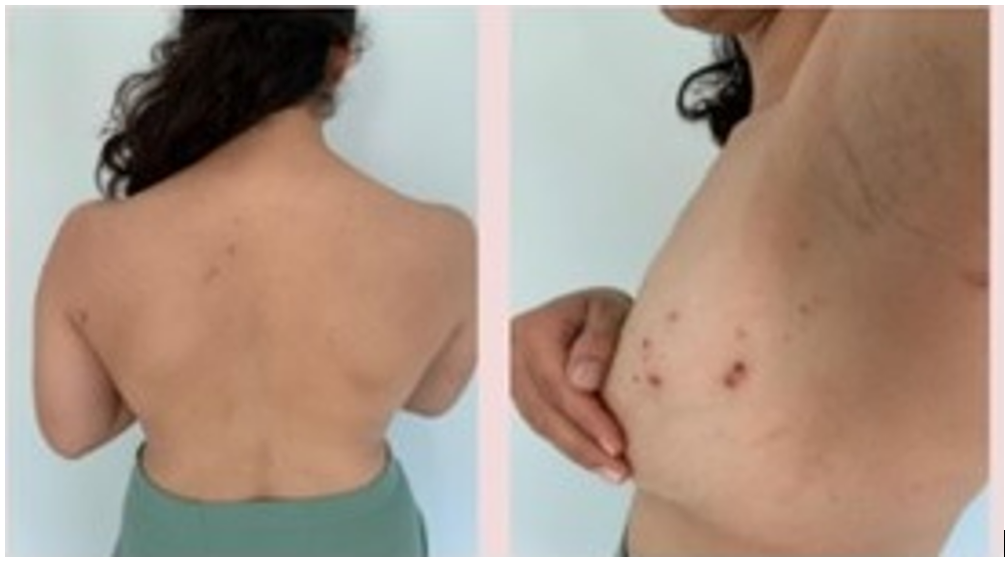
Figure 2a, 2b: The crusted lesions after ten days.
Discussion
Chickenpox is the primary infection caused by the Varicella-Zoster Virus (VZV) in non-immune individuals. After primary infection, VZV remains latent in the dorsal root ganglia and can be reactivated by factors or conditions that suppress immune function, resulting in HZ. Early diagnosis and prompt antiviral treatment can reduce the severe complications of shingles [4]. Therefore, identifying risk factors for shingles is vital.
There is a strong correlation between aging/immunosuppression and the reactivation of the virus [1,2,4]. However, few publications address other risk factors, such as physical injury [1,3,5-8]. In a systematic review, Marra et al. demonstrated that physical trauma significantly increases the risk of the disease [1]. White et al. also emphasized the association between the onset of the zoster rash and previous physical trauma [8]. The dermatomal distribution of the rash often corresponds to the area of prior trauma, with the highest risk occurring in the first week after injury [8, 9]. Reported cases induced by injury include cryotherapy [10], liver biopsy [11], intubation [12], knee arthroplasty [13], and axillary nerve block [14]. To our knowledge, only one case report exists regarding HZ development related to nursing trauma [3]. Shingles may be triggered by traumatic nerve stimulation leading to viral reactivation in the dorsal root ganglion [5], or directly from trauma and subsequent virus-induced local immune dysfunction.
A “nursing strike” refers to a sudden refusal to breastfeed [3,15]. Infant-related factors include infection, teething, and pain, while maternal factors include breast infection, anxiety, or medication [15]. We hypothesize that the nursing strike in our case was caused by the mother’s lesions and pain in the nursing region. Unvaccinated infants may present with chickenpox after contact with zoster lesions [4]. Although the exact transmission route in our case was not determined, the baby developed mild varicella and received appropriate care.
Conclusion
This case report emphasizes that physical trauma may be a significant factor in triggering HZ. Clinicians and lactation consultants should consider zoster when assessing mothers with unilateral breastfeeding problems. Educating parents to seek immediate medical care for unilateral breast hyperesthesia or vesicles can accelerate diagnosis and proper care for both mother and baby, potentially lessening the infant’s risk of exposure to VZV.
Author Contributions: All authors have made substantial contributions to all of the following: (1) the conception and design of the study, or acquisition of data, or analysis and interpretation of data for the work; (2) drafting the article or revising it critically for important intellectual content; (3) final approval of the version to be submitted; and (4) agree to be accountable for all aspects of the work in ensuring that questions related to the accuracy or integrity of any part of the work are appropriately investigated and resolved. Seçil Soylu is designated as the guarantor.
Competing Interests: The authors declare no conflict of interest.
Grant Information: The authors received no specific funding for this work.
Acknowledgments: The written patient consent forms have been received and archived by the authors.
References
- Marra F, Parhar K, Huang B, et al. Risk factors for herpes zoster ınfection: a meta-analysis. Open Forum Infect Dis, 2020; 7(1): ofaa005.
- Thomas SL, Hall AJ. What does epidemiology tell us about risk factors for herpes zoster? Lancet Infect Dis, 2004; 4(1): 26-33.
- Mathers LJ, Mathers RA, Brotherton DR. Herpes zoster in the T4 dermatome: a possible cause of breastfeeding strike. J Hum Lact, 2007; 23(1): 70-71.
- Gershon AA, Breuer J, Cohen JI, et al. Varicella zoster virus infection. Nat Rev Dis Primers, 2015; 1: 15016.
- Thomas SL, Wheeler JG, Hall AJ. Case-control study of the effect of mechanical trauma on the risk of herpes zoster. BMJ, 2004; 328(7437): 439.
- Zhang JX, Joesoef RM, Bialek S, et al. Association of physical trauma with risk of herpes zoster among medicare beneficiaries in the United States. J Infect Dis, 2013; 207(6): 1007-1011.
- Dimić JS, Jegorović B. Herpes zoster in an immunocompetent infant with a history of varicella in early infancy and after a minor injury – case report and literature review. Srp Arc Celok Lek, 2021; 149(11-12): 686-691.
- White MB, Vazirani S. Trauma and Herpes Zoster: Two Cases. Proceedings of UCLA Health, 2019; 23.
- Winstock D. Post-traumatic herpes zoster. Br J Oral Surg, 1966; 4: 29-37.
- Honan AE, Morais R, Clark C, et al. Cryotherapy-triggered herpes zoster. J Am Acad Dermatol, 2018; 79: AB90.
- Levy JM, Smyth SH. Reactivation of herpes zoster after liver biopsy. J Vasc Interv Radiol, 2002; 13(2 Pt 1): 209-210.
- Wackym PA, Gray GF Jr, Avant GR. Herpes zoster of the larynx after intubational trauma. J Laryngol Otol, 1986; 100(7): 839-841.
- Park KS, Yoon TR, Kim SK, et al. Acute postoperative herpes zoster with a sciatic nerve distribution after total joint arthroplasty of the ipsilateral hip and contralateral knee. J Arthroplasty, 2010; 25(3): 497.e11-15.
- Percival NJ. Shingles following axillary nerve block: A case report. J Hand Surg Br, 1986; 11(1): 115-116.
- Nayyeri F, Raji F, Haghnazarian E, et al. Frequency of “nursing strike” among 6-month-old infants, at East Tehran Health Center and contributing factors. J Family Reprod Health, 2015; 9(3): 137-140.