
Email id: info@ijclinmedcasereports.com
Assessment of Mental Health Status of Undergraduates of Medical and Non-Medical Background in Different Universities, AJK, Pakistan via DASS 21 and PHQ 9
Afifa Hameed1,*, Sara liaquat1, Aqna Malik2,3, Farwa Liaquat4,5, Waleed Awais2 and Asad Ali2
1Mohi-ud-Din Islamic Institute of Pharmaceutical Sciences, Industrial Area, Mirpur AJ&K., Mohi ud Din Islamic University, Nerian Sharif AJ&K
2Department of Pharmacy, University of Chenab, Gujrat
3Department of Pharmacy, University of Lahore
4Department of Physical Therapy
5University of Lahore, Islamabad campus
Received Date: 23/12/2025; Published Date: 02/02/2026
*Corresponding author: Dr. Aqna Malik, Department of Pharmacy, University of Chenab, Gujrat; Department of Pharmacy, University of Lahore, Lahore
https://orcid.org/0000-0003-3875-9621
Abstract
Background: Mental health problems are on the rise around the world. Most of them are youngsters.
Objective: This study aimed to assess DASS-21 and PHQ-9 among university students (medical/non-medical of both genders in Mirpur, AJK, Pakistan.
Methodology: A cross-sectional study was conducted involving 500 students from both public and private universities in AJK, from May-July 2023. A sample size of 250 medical and 250 non-medical students of both genders aged 18-24 years was selected. The survey was done through a questionnaire divided in 3 portions. Ist comprised of sociodemographic characteristics of students, 2nd was concerned with questions regarding DASS-21 21 while 3rd related to PHQ-9. Data were analysed via GraphPad Prism 10.6.1.
Result: Medical boys with severe and extremely severe depression responded differently from those with less depression. Significant variations were seen between Normal, Mild, and Moderate Severity (p ≤ 0.0018, some p < 0.0001). Normal/Mild/Moderate minus Severe had a negative 95%CI difference, indicating that higher severity levels produce higher depression scores. Medical girls had a more consistent depression severity trend. Normal is significantly different from Moderate, Severe, and Extremely Severe (p < 0.0001). Mild mean values differ from severe and extremely severe (p = 0.0449 and 0.001). The non-medical girls had significant differences in Normal vs Severe (p = 0.0037) and Mild vs Severe (p = 0.0168). Non- Medical Boys had minimal depression scores medical boys have a significant difference (p = 0.0052) between Mild and Severe anxiety. almost same with medical girls (p = 0.0114) between Normal and Extremely Severe. Non-medical boys (A): Normal vs Moderate (p = 0.0229) and Moderate vs Severe (p = 0.0106) transitions differ considerably. Interestingly, Moderate vs Severe 95%CI is positive, indicating severity increases. Anxiety levels were comparable in non-medical girls.
Stress (S): Medical boys' stress was significantly divided, notably by severity: Normal vs Extremely Severe (p = 0.0449), Mild vs Severe (p = 0.0031), and Mild vs Extremely Severe (p = 0.0005). Medical girls showed the most widespread stress patterns, with Moderate differing from Extremely Severe (p = 0.0368), Mild from Severe and Extremely Severe (p = 0.0034 and <0.0001), and Normal from Extremely Severe (p = 0.0007 to <0.0001). Non-medical girls (S) showed significant variations in severity levels, including Severe and Extremely Severe (p ≤ 0.0004, p < 0.0001). Severe and Extremely Severe differ significantly (p = 0.0003) with a positive CI. Non-medical boys have lower stress levels and are calm.
Conclusion: DASS-21 was found to be correlated with age, academic year, satisfaction, physical well-being, potential stressors, and self-rated mental health. and it was more prevalent in female medical students. In item-wise analysis of PHQ-9 symptoms, certain demographic factors were strongly linked with specific depressive domains, whereas others were limited or item-specific. Gender, residency, study year, satisfaction with study, economic status, hobbies, number of friends, life events, and family history of illness were the most consistent correlates across multiple PHQ-9 items, while medical vs. non-medical showed fewer significant associations.
Keywords: Mental-health; DASS-21; PHQ-9
Background
WHO states that a person's physical, psychological, and social health affect their overall wellness [1,2]. 3 out of the top 10 causes of impairment for 15–44-year-olds are mental health issues. Anxiety is a neurological response to perceived threats or unpleasant events [3]. Long-lasting or severe symptoms can be debilitating, uncomfortable, and socially disruptive. Performance declines as anxiety levels become intolerable. Research findings consistently show a higher incidence of depression, anxiety, and stress among students. [4] indicated that women usually have more psychological distress than men. The years of high school and early college are especially risky for mental health problems because of the growing academic demands [5,6] also claimed that negative thoughts make people less happy with their lives and more anxious and depressed. University students, both medical and non-medical, suffer a lot of psychological stress because of their heavy course load, uncertainty about the future, economic problems, and social expectations. The study was designed to provide insight into escalating depression, anxiety, and stress among undergraduate university medical and non-medical students, as they were at major risk of suffering mental health issues due to academic and social burden as well.
To accurately measure mental health burden, psychometric screening tools The DASS-21 and PHQ-9 were selected that were valid, reliable and were used in different cultures. As they are scientifically sound tools for these kinds of tests.
Objective: To assess the level of depression, anxiety, and stress among medical and non-medical undergraduate university students.
Methodology
This was a cross-sectional descriptive questionnaire-based survey, employed to evaluate the DASS-21 and PHQ-9 in university undergraduate students of Mirpur, AJK. Approval of the current study was obtained from the IRB of Mohi-ud-din Islamic Institute of Pharmaceutical Sciences, Mirpur, AJK. Respective heads of different public and private institutes were also approached for official written consent. All undergraduate medical students and non-medical students from different public and private institutes in Mirpur, AJK, were contacted through their institutional email. Students aged 18-24years were selected voluntarily after discussing the purpose of the study and obtaining their written consent to fill the questionnaire honestly, and assurance of their data privacy and confidentiality that the results of the study will be used only for research purposes. A pilot study was done with Class proctors to evaluate the validity of both psychometric questionnaires in a small poolSample size was selected using the Cocrane formula and 95% CI was maintained. 500 participant students, including medical and non-medical undergraduate students of both genders aged 18-24 years, were selected, and convenience sampling was done. Data was collected by using standardized Psychometric tools, DASS-21 with their sub-scales, and PHQ-9. The survey was expanded to select a sample size. Survey questionnaire was divided in 3 portions, In Ist part demographic and socioeconomic data of students were inquired e.g. age, gender, study domain, year of study, guardian, residency, guardian economic status, friends and family life, any past life event, etc. 2nd part was concerned with the assessment of subscales of DASS 21 to gain insight into psychosocial issues due to harsh life situation/events to access dysphoria, hopelessness, devaluation of life, self-deprecation, lack of interest, anhedonia and inertia. Subscale Anxiety measured autonomic arousal, effects on skeletal muscle, situation-based anxiety, and subjective experience of anxious affect. Stress scale assessed, difficulty in relaxing, nervous arousal and being easily upset/agitated, over-reactive, and impatient.
21 items of the DASS-21 questionnaire were categorized as
Never - Did not apply to me at all................................................(0)
Sometimes - Applied to me to some degree, or some of the time......................1
Often - Applied to me to a considerable degree, or a good part of time...............2
Almost always - Applied to me very much, or most of the time on ...............3
3rd part consisted of the Patient Health Questionnaire-9 (PHQ-9), a self-complete 9-item depression-specific questionnaire with good psychometric properties as regards to validity, reliability, and brevity. A 9-item self-report was also utilized to check the severity of depression based on DSM-IV diagnostic criteria. The questionnaire comprised recorded demographic details and questions about vulnerability factors potentially associated with depression, financial burden, ethnicity, family and personal history of depression, whether students had completed a previous degree, and their expressed motivation for doing their particular degree course. The questionnaire was taken offline after 4weeks. Respondents were asked to self-rate how often they had experienced the indicated symptoms of depression on each of 9 items: anhedonia (inability to feel pleasure in normally pleasurable activities), depressed mood, sleep difficulty, fatigue, appetite change, feeling of worthlessness, concentration difficulties, psychomotor agitation/retardation, and thoughts of death. Data was refined after careful monitoring. Statistical analysis result was obtained using the chi-square test.
Results
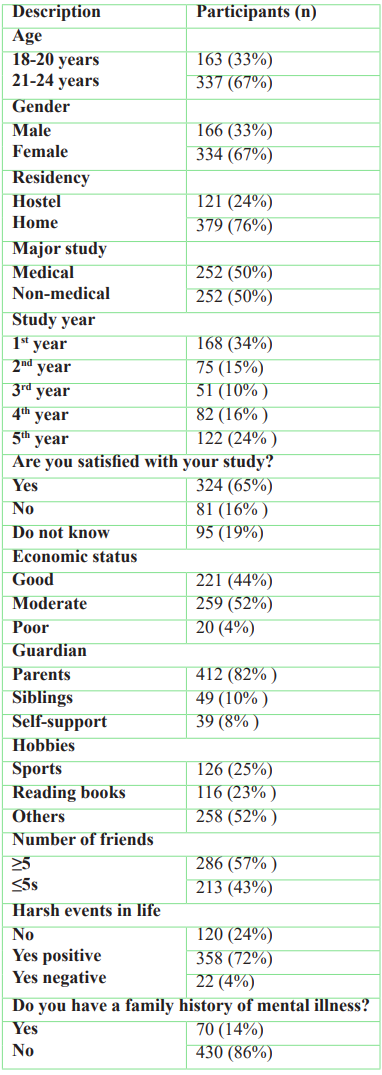
Among 500 students, 166 (33%) were males, 334 (67%) were females, 121 (24%) were hostilities, and 379 (76%) were home residents. Half were from a medical group, and half were non-medical. 163 (33%) Students were aged 18-20 years.
Table 1: Sociodemographics of medical and non-medical university students.
Evaluation of (DASS-21) among medical and non-medical undergraduate university students: Response of participants (n) to each component of DASS-21 was measured and tabulated in Table 2.
Table 2: Evaluation of (DASS-21) among medical and non-medical university students.
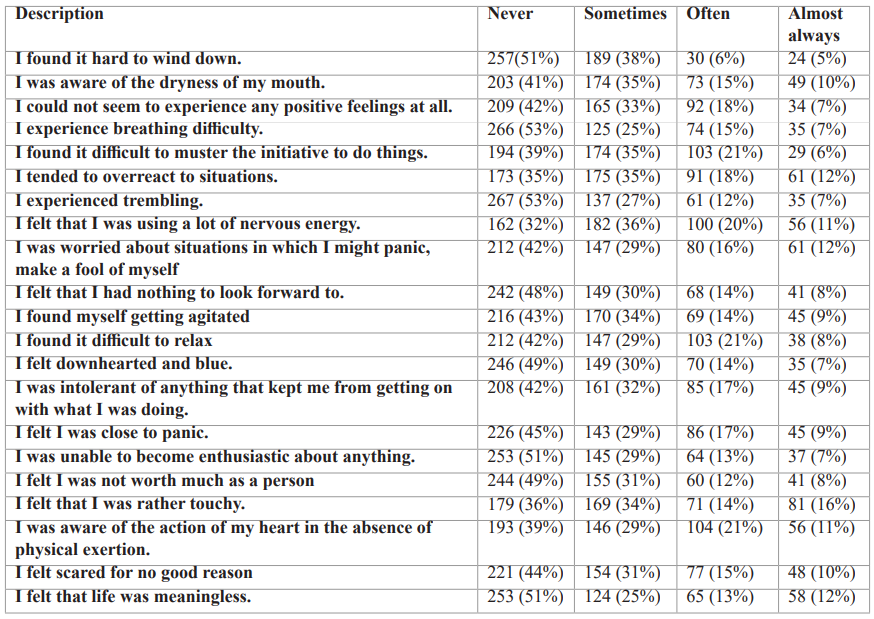
Impact of statement applied to respondents over the past week among medical and non-medical undergraduate university students:
The impact of the statement applied to respondents over the past week was evaluated and tabulated in Table 3.
Table 3: Impact of statement applied to respondents over the past week.

Evaluation and comparison of sub-scales of depression, anxiety, and stress according to recommended cut-off scores for conventional severity labels (normal, mild, moderate, severe& extremely severe)
Subscales in DASS-21 comprised the following questions
D (Depression) Q3, 5, 10, 13, 16, 17, 21--A (Anxiety) Q2, 4, 7, 9, 15, 19, 20--S (Stress) Q1, 6, 8, 11, 12, 14, 18. Evaluation of sub-scales of depression, anxiety, and stress according to recommended cut-off scores for conventional severity labels (normal, mild, moderate, severe, and extremely severe) among medical and non-medical students was tabulated in Table 4. Two-way ANOVA was applied.
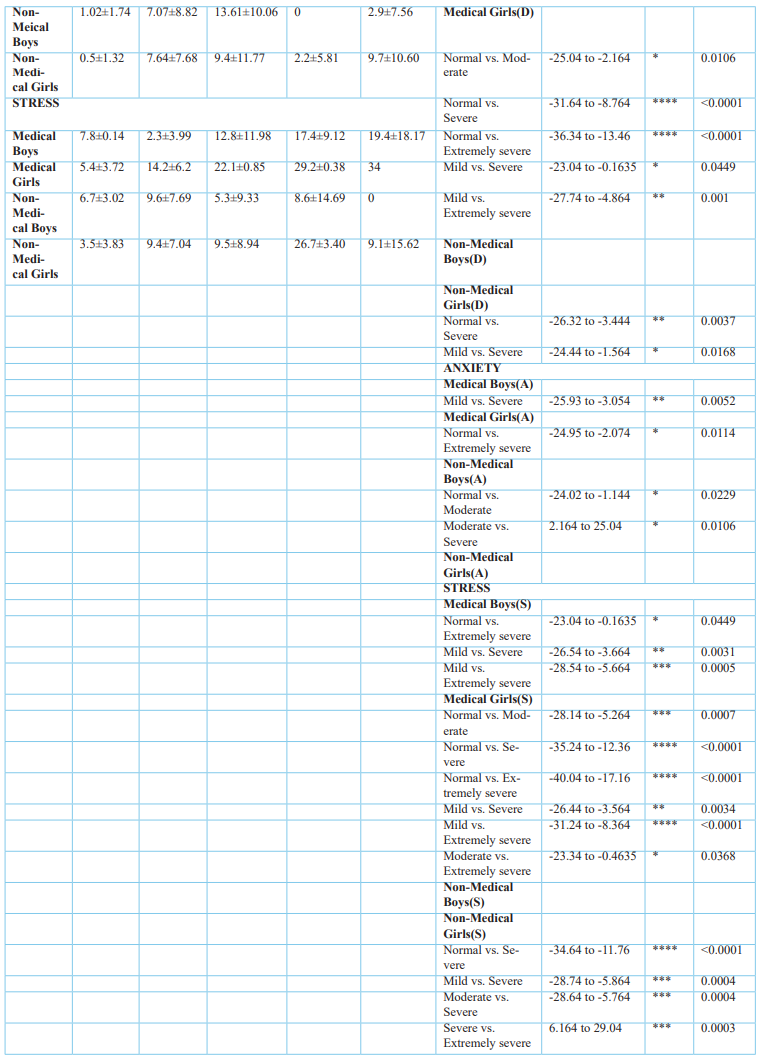
Table 4: Evaluation and comparison of sub-scales of depression, anxiety, and stress according to recommended cut-off scores for conventional severity labels (normal, mild, moderate, severe& extremely severe).
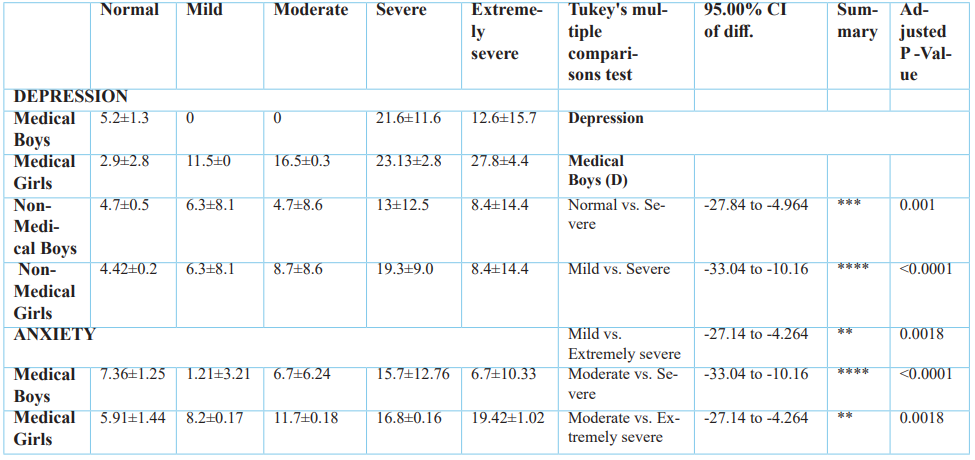
Depressive (D) : Responses of medical boys who were categorized as Severe and extremely severe depression according to the Depression range differed greatly from the lesser categories. Significant differences were found between Normal, Mild, and Moderate Severity (usually p ≤ 0.0018, with some p < 0.0001). 95%CI difference was negative (e.g., Normal/Mild/Moderate minus Severe), showing that higher severity values have much higher depression scores.
Medical girls showed a more consistent pattern across the depression severity range. Normal is considerably different from Moderate, Severe, and Extremely severe (p < 0.0001). Mean values of mild also differ from severe and extremely Severe (p = 0.0449 and 0.001). Girls in the non-medical group showed significant differences in the Normal vs Severe (p = 0.0037) and Mild vs Severe (p = 0.0168). Non-medical boys showed no significant depression distinctions. Anxiety (A): The difference between Mild and Severe anxiety is considerable (p = 0.0052) for medical boys, as Severe anxiety increases significantly. Similarly, among medical girls, Normal vs. Extremely Severe differed significantly (p = 0.0114).
Non-medical boys (A): Normal vs Moderate (p = 0.0229) and Moderate vs Severe (p = 0.0106) transitions differ significantly. Interestingly, the 95%CI for Moderate vs Severe is positive, indicating that severity increases. However, non-medical girls depicted no differences in anxiety levels.
Stress (S): Among medical boys, stress demonstrated substantial division, especially with high severity: Normal vs Extremely Severe (p = 0.0449), Mild vs Severe (p = 0.0031), and Mild vs Extremely Severe (p = 0.0005). On the other hand, medical girls had the most extensive stress pattern: Moderate differs from Extremely Severe (p = 0.0368), Mild differs from Severe and Extremely Severe (p = 0.0034 and <0.0001), and Normal differs from Extremely Severe (p = 0.0007 to <0.0001). Non-medical girls (S) had substantial differences in severity levels, including Severe and Extremely Severe (p ≤ 0.0004, including p < 0.0001). The difference between Severe and Extremely Severe is substantial (p = 0.0003) with a positive CI. Non-medical boys showed no stress.
Table 5: Comparison of Normal, Mild, Moderate, Severe, and Extremely Severe levels among DASS 21 subscales.
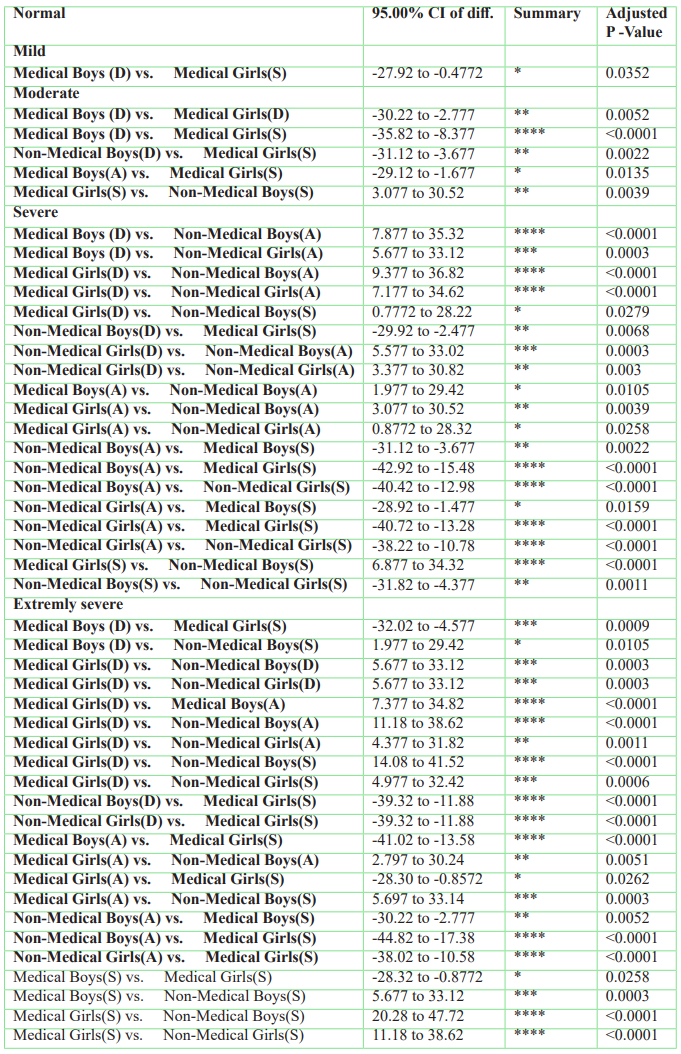
Based on Tukey's post hoc analysis, there are very small differences between medical and non-medical boys and girls regarding the Normal range and a smaller gap in the Mild range. However, these differences grow significantly in the Moderate, Severe, and Extremely Severe strata. Interestingly, medical girls consistently show statistically significant separation from other groups, particularly on the Stress subscale and, at the end, Depression. This suggests that subgroup differences are most relevant for clinical purposes among participants experiencing moderate-to-extreme distress, which supports targeted screening and severity-informed interventions.
Assessment of DASS-21 with the demographics among medical and nonmedical undergraduate university students:
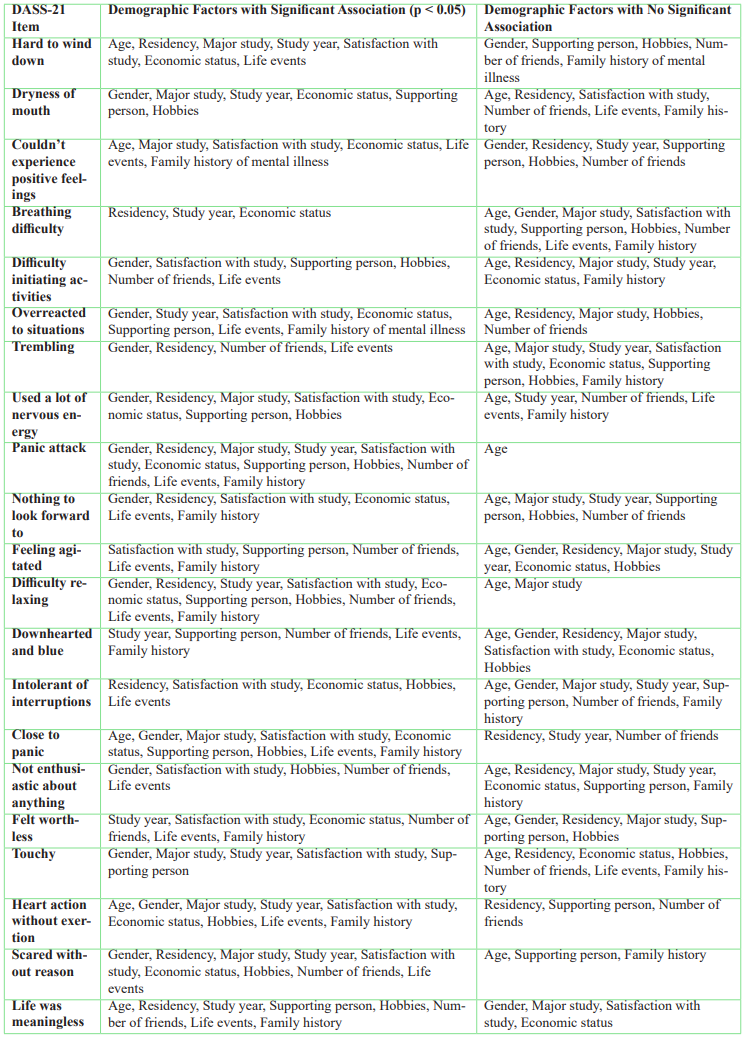
Each item among the 21 items of DASS-21 was compared with demographic characteristics chi-square test was applied. Chi-square analysis demonstrated that DASS-21 items showed differential associations with demographic variables among participant students (Table 6). Academic-related factors (study year, satisfaction with study), psychosocial variables (life events, supporting person, number of friends), and socioeconomic status were the most consistently associated factors, while age and gender showed item-specific rather than universal associations among both medical and non-medical Boys and Girls.
Table 6: Association between DASS-21 Items with Demographic Factors of participants.
Assessment of PHQ-9 with the demographic factors among medical and nonmedical undergraduate university students:
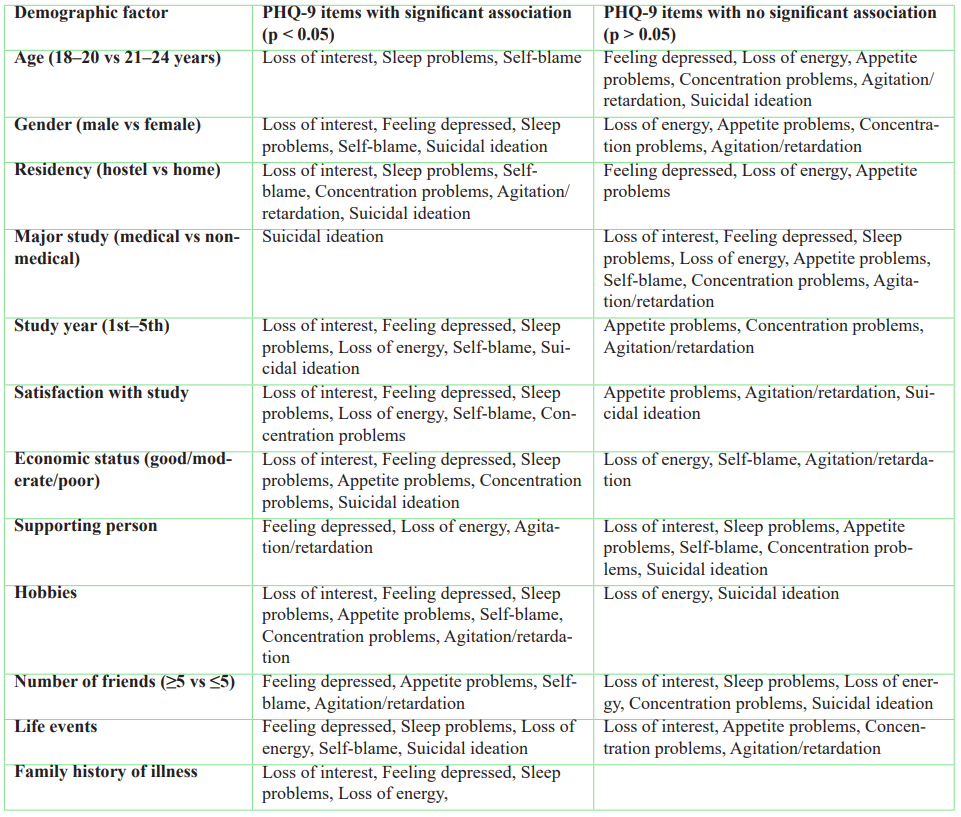
Associations were assessed using the Chi-square test. A p-value < 0.05 was considered statistically significant. PHQ-9 items reflect individual depressive symptom domains rather than total score categories.
Table 7: Chi-square association between demographic characteristics of medical and non-medical students and PHQ-9 items.
Discussion
With good reliability and criteria, Original DASS-21 and PHQ-9 demonstrated great psychometric properties in a large primary care population. DASS-21 assesses stress, anxiety, and depression Using a questionnaire with a grading subscale [7]. PHQ-9 is a diagnostic, monitoring, and severity measurement quick clinical tool for depressive disorder screening [8]. Repeating the PHQ-9 can indicate either depression improvement or worsening in response to treatment [9]. Like many previous studies this study examines socio-demographic characteristics that may trigger depression, anxiety, and stress among university medical and nonmedical students of both genders [10,11]. As discussed in a previous research [12] current study also study assessed age, gender, residency, major study domain, study year, satisfaction, economic status, supportive person, hobbies, friends, life events, and family history of mental illness.
It was observed, in the current study, that Depressive symptoms were more prevalent among aged 18–20, years and it is consistent with previous researches [13,14], It was observed, in the current study, It was observed after analysing results that medical students had more depressive symptoms than non-medical students and it is inline with previous researches [15,16]. The study also found that female students of both medical and non-medical backgrounds had higher rates of anxiety and sadness [15,16]. Academic strain and the inevitable mountain of medical and non-medical coursework are both manageable with the support of counsellors [17]. Students of both study areas were also suffering have emotional and mental problems, and it was also mentioned by researchers [18].
This study found that factors such as age, gender, socioeconomic status, life satisfaction, life events, and a family history of mental illness were related to the DASS-21 and PHQ-9, as found by Duica 2025 [19]. Consistent with earlier research, there was a strong correlation between student age and depression, particularly among those in the 18–20-year [18]. Perhaps the pressure to succeed academically and stress about one's future employment make young people more susceptible to depression, and similar was found by the Czech study that younger students were more anxious [20]. A crucial component was gender. Sadness, worry, and tension were more common among females, as was found in another US study [18,21]. Another Spanish study found that people experiencing depression were more likely to be women [22].
During observation and analysis of PHQ-9 data, we found that some demographic variables were significantly linked to certain categories of depression symptoms, whereas others exhibited weak or item-specific associations [23,24]. In terms of major study (medical vs. non-medical), there were relatively fewer significant associations. However, the most consistent correlates across various PHQ-9 items were gender, residency, study year, satisfaction with study, economic status, hobbies, number of friends, life events, and family history of illness [25]. Collectively, it was observed that academic and psychosocial factors shape the way depression symptoms manifest (PHQ-9) [26].
DASS-21 severity classification corresponds to statistically distinct symptom levels within several subgroups. The most consistent and significant differences, across subscales, were observed when comparing lower categories (Normal/Mild/Moderate) to higher categories (Severe/Extremely Severe) [27]. Among medical females, the most extensive split was observed for stress and depression, with even the distinction between "normal" and "moderate" being statistically significant [28]. This indicates that there were earlier divergence and a greater gradient across severity levels. A subgroup with an unusually high concentration of extremely high stress levels may be the non-medical girls, who exhibited a marked increase from Severe to Extremely Severe and other measures of stress escalation [29].
Limitation of the study: While interpreting the results, certain limitations can be kept in mind for consideration. The student's mental health was the focus of interest and thus only depression, anxiety, and stress were covered in the present investigation. The rest of the prevalent mental health problems were not examined in the current student population. The current study was only conducted among undergraduate university students aged 18-24 years.
Conclusion
In conclusion, this research addressed depression, anxiety and stress among university students. The prevalence of depression and anxiety is found to be higher, and it was more among female non-medical students. This highlights the need for attention by health care professionals and the university administrative staff to develop appropriate support services catering to this group of students. It is important to explore the differences further to allow appropriate screening and intervention programs, especially during orientation to prevent mental health problems among young adults in the universities; monitoring should be done regularly. It is vital to identify and diagnose those vulnerable students early, offer treatment and provide intervention such as individual counselling. Also, Parental support is important for students as well as social support, so they can overcome mental problems at times.
References
- Breslow L. A quantitative approach to the World Health Organization definition of health: physical, mental and social well-being. International journal of Epidemiology, 1972; 1(4); 347-355.
- Ruihua L, Hassan NC, Qiuxia Z, Sha O, Jingyi D. A systematic review on the impact of social support on college students’ wellbeing and mental health. PloS one, 2025; 20(7):
- Luo Q, Li X, Zhao J, Jiang Q, Wei D. The effect of slow breathing in regulating anxiety. Scientific reports, 2025; 15(1):
- Beiter R, Nash R, McCrady M, Rhoades D, Linscomb M, Clarahan M, et al. The prevalence and correlates of depression, anxiety, and stress in a sample of college students. Journal of affective disorders, 2015; 173: 90-96.
- Karki A, Thapa B, Pradhan PMS, Basel P. Depression, anxiety and stress among high school students: A cross-sectional study in an urban municipality of Kathmandu, Nepal. PLOS global public health, 2022; 2(5):
- Mahmoud JS, Staten RT, Lennie TA, Hall LA. The relationships of coping, negative thinking, life satisfaction, social support, and selected demographics with anxiety of young adult college students. Journal of Child and Adolescent Psychiatric Nursing, 2015; 28(2): 97-108.
- Moya E, Larson LM, Stewart RC, Fisher J, Mwangi MN, Phiri KS. Reliability and validity of depression anxiety stress scale (DASS)-21 in screening for common mental disorders among postpartum women in Malawi. BMC Psychiatry, 2022; 22(1):
- Kroenke K, Spitzer RL, Williams JB. The PHQ‐9: validity of a brief depression severity measure. Journal of General Internal Medicine, 2001; 16(9): 606-613.
- Angstman KB, Rohrer JE, Rasmussen NH. PHQ-9 response curve: rate of improvement for depression treatment with collaborative care management. Journal of Primary Care & Community Health, 2012; 3(3): 155-158.
- Iqbal S, Gupta S, Venkatarao E. Stress, anxiety & depression among medical undergraduate students & their socio-demographic correlates. Indian journal of medical research, 2015; 141(3): 354-357.
- Mengesha AK, Misker MF, Tadesse SA. Identifying factors contributing to depression and anxiety among medical students: a multicenter cross-sectional study. Scientific reports, 2015; 15(1):
- Roldán Merino J, Moreno Poyato A, Malleville ME, Botero C, Arredondo AY, Rodriguez Quiroga A, et al. Examining the relationships between eco-anxiety, sociodemographic factors, experience of climate events, pro-environmental behaviours, and life satisfaction in young adults. BMC psychology, 2015; 13(1): 1-17.
- Au Young SWS, Teo CH, Parhar IS, Soga T. Role of telomere length and telomerase activity in accelerated cellular aging and major depressive disorder: a systematic review. Molecular Psychiatry, 2025; 1-12.
- Karmacharya I, Chapadia B, Shrestha A, Subedi J, Yadav UN, Mistry SK, et al. Depressive symptoms among resettled Bhutanese older adults in Ohio: a cross-sectional study. BMC psychology, 2025; 13(1):
- Alruwaili AR, Alnajashi SA, Alwasedi AM, Albraihi SK, Keenan RJ, Melzer TR, et al. Comparative analysis of hippocampal volume and stress levels between medical and non-medical undergraduate female students. Medicine, 2025; 104(38):
- Shen Z, Wang T, Zeng X, Wang J. Discrepant Associations Between Psychological Stress and Sleep Quality Among Medical and Non-Medical Students: A Nationwide Cross-Sectional Study in China. Behavioral Psychology/Psicología Conductual, 2025; 33(3).
- Meyer TL. The Lived Experiences of Neurodivergent Students in a Clinical Mental Health Counseling Program: A Qualitative Study, 2025.
- Al-Garni AM, Shati AA, Almonawar NA, Alamri GM, Alasmre LA, Saad TN, et al. Prevalence of depression, anxiety, and stress among students enrolled at King Khalid University: a cross-sectional study. BMC Public Health, 2025; 25(1):
- Duica CL, Negoita SI, Pleșea-Condratovici A, Moroianu L-A, Ignat MD, Nicolcescu P, et al. Depression in Romanian Medical Students—A Study, Systematic Review, and Meta-Analysis. Journal of Clinical Medicine, 2025; 14(16):
- Prokeš M, Jan K. Too much of everything is bad: The case of Czech university students' work-study balance during the Covid-19 pandemic. Journal on Efficiency and Responsibility in Education and Science, 2025; 18(2).
- Salih HS, Ibrahim SA, Gaded MAA, Osman LAA, Mahmoud MF, Elbadawi MH, et al. Depression, stress and anxiety among Khartoum University students who stay in war-afflicted regions in Sudan 2024. BMC Psychiatry, 2025; 25(1):
- García-Pérez-de-Sevilla G, Franco AB, Trinidad A, Gasque-Celma P, del-Blanco-Muñiz JÁ. Stress, pain intensity, and work productivity in individuals with chronic pain: a cross-sectional observational study. BMC Public Health, 2025; 25(1):
- Talkkari A, Rosenström TH. Non-Gaussian liability distribution for depression in the general population. Assessment, 2025; 32(6): 978-991.
- Qirko S, Prifti V, Kicaj E, Cercizaj R, Rogozea L. Adherence barriers, patient satisfaction, and depression in Albanian ambulatory patients. Healthcare, Healthcare (Basel), 2025; 13(14):
- Mehmetoglu E, Mummadisetty A, Chatzittofis A, Parperis K, Sandorfi N, Derk CT. A systematic review of prevalence and predictors of depression in systemic sclerosis based on the CES-D, BDI, and PHQ-9 self-assessment questionnaires. Clinical rheumatology, 2025; 1-15.
- Ji Z, Wang H, Liu S, Cen L. Depression and Anxiety among High School Students in the United States and China and its Relationship with Academic and Familial Satisfaction, 2025; 1-6.
- Ali AM, Alkhamees AA, Hori H, Kim Y, Kunugi H. The Depression Anxiety Stress Scale 21: Development and Validation of the Depression Anxiety Stress Scale 8-Item in Psychiatric Patients and the General Public for Easier Mental Health Measurement in a Post COVID-19 World. Int J Environ Res Public Health, 2021; 18(19). https://doi.org/10.3390/ijerph181910142.
- Burger P, Scholz M. Gender as an underestimated factor in mental health of medical students. Annals of Anatomy - Anatomischer Anzeiger, 2018; 218. https://doi.org/10.1016/j.aanat.2018.02.005
- Alsunni A, Latif R. Perceived stress among medical students in preclinical years: A Saudi Arabian perspective. Saudi Journal for Health Sciences, 2014; 3: 155. https://doi.org/10.4103/2278-0521.142324