
Email id: info@ijclinmedcasereports.com
Comparative Efficacy of Recombinant Vegan and Marine Collagen in Improving Aging Related Skin Parameters in Adults
Hemant Talnikar1, Yali Yuan2, Gayatri Ganu3,* and Dheeraj Nagore3
1Skin & VD, Consultant, Lokmanya Medical Research Centre and Hospital, Fourth-floor OPD Lokmanya Hospital, India
2Undergraduation, Global Sales Director, Jland Biotech Co., Ltd, Zhuji City, Shaoxing City, Zhejiang Province, China
3Director, Mprex Healthcare Pvt. Ltd., Maharashtra, India
Received Date: 09/09/2025; Published Date: 29/09/2025
*Corresponding author: Gayatri Ganu, Ph.D., Director, Mprex Healthcare Pvt. Ltd., Office Number 813-816, Sai Millenium, Mumbai Pune Bypass Road Flyover, Punawale, Pune, Maharashtra, India
Abstract
This clinical trial evaluated the efficacy and safety of recombinant vegan collagen (Pepwell Collagen) compared to traditional fish-derived collagen in improving age-related skin parameters. Ninety healthy adults were randomized into three groups receiving either 0.14g or 0.245g of Pepwell Collagen, or 5g of Fish Collagen daily for 60 days. Key outcomes included changes in wrinkle depth, skin firmness, under-eye dark circles, pigmentation, blemishes, and skin porosity. The high-dose Pepwell Collagen group (0.245g) consistently showed comparable results compared to Fish Collagen, achieving the highest reductions in nasolabial and lateral canthal wrinkles (79.51% and 80.51%, respectively) and notable improvements in firmness (39.80%), pigmentation (91.67%), and dark circles (21.43%). All treatments were well-tolerated with no adverse events related to the supplements and excellent compliance across groups. Notably, Pepwell Collagen achieved comparable benefits at significantly lower doses than fish collagen, offering a more convenient and sustainable alternative. Its vegan formulation also aligns with growing consumer preference for plant-based and environmentally responsible products. These findings support Pepwell Collagen as an effective, safe, and practical solution for skin aging management, though further long-term studies across diverse populations are warranted.
Keywords: Recombinant collagen; Vegan collagen; Skin aging; Wrinkle reduction; Anti-aging skincare
Background
The aging process profoundly affects human skin, leading to dehydration, reduced elasticity, and the development of wrinkles. With rising beauty standards and a growing proportion of aging populations worldwide, the psycho-social impact of skin aging has become increasingly significant. In response, nutraceutical, particularly collagen supplements—have emerged as a popular and promising intervention for maintaining skin health and combating visible signs of aging [1].
Collagen, making up 80% of the skin's dry weight, is the primary protein in connective tissues. Its triple helix structure, characterized by glycine, proline, and hydroxyproline, is crucial for its function. As a key component of the extracellular matrix, collagen supports tissue structure and development. With aging, decreased enzyme activity affects collagen processing, leading to reduced fibroblast function and vascular support in the skin [1-3].
The aging-related decrease in collagen synthesis and skin vascularity contributes to a decline in skin quality, characterized by diminished elasticity and the formation of wrinkles. These changes are attributed to the decreased number of fibroblasts and blood vessels in the skin, leading to regressive alterations such as dehydration, loss of elasticity, and reduced epidermal thickness [1,2].
Collagen, as the structural support substance of the skin, possesses the ability to fortify the dermal support structure and impede the skin's aging process [4]. Moreover, the amino acid content of collagen products plays a pivotal role in the protective and moisturizing functions of the skin [5]. While traditional collagen supplements are derived from animal sources, the emergence of vegan collagen has garnered attention due to the increasing popularity of vegan diets. Vegan collagen stands out as an alternative to human type I collagen with the same amino acid sequence. It stimulates the natural process of type I collagen synthesis by triggering collagen expression genetically [6]. The TGF-β/Smad pathway activates Smad3 and Smad4, leading to collagen gene transcription in fibroblasts. Vegan collagen, with fermented amino acids similar to type I collagen, serves as a substrate in collagen production, naturally supporting type I collagen synthesis by promoting gene transcription and protein translation. [7, 8].
Despite their widespread use, animal source-based collagen supplements face several challenges. These include the necessity for large doses and potential palatability issues. Recent research has shown that typical doses of animal-derived collagen range from 2.5g to 15g daily, which can be impractical for regular consumption [9]. Moreover, Amyoony and colleagues (2023) reported that the taste of animal collagen can be off-putting to consumers, potentially affecting compliance [10].
A randomized controlled trial in 10 healthy males reported higher absorption rates and bioavailability of key bioactive amino acids from orally administered collagen hydrolysate compared to non-hydrolyzed collagen [11]. Additionally, Collagen Tripeptides, which contain different concentrations of the bioactive peptides Gly-Pro-Hyp and Pro-Hyp, were efficiently absorbed within 1 hour in 12 human subjects, but only when present in the tripeptide form [12]. Recent evidence has further highlighted the importance of collagen bioavailability and absorption in mediating clinical efficacy. Studies confirm that collagen-derived hydroxyproline-containing peptides reach peak plasma concentration within 1–2 hours post oral intake, indicating rapid absorption [13]. The molecular weight of these peptides plays a critical role in absorption efficiency, where low molecular weight collagen peptides exhibit superior bioavailability [14]. With increasing demand for vegan or recombinant collagen alternatives, innovative production methods, including fermentation-based synthesis of bioactive peptides, are being explored to achieve comparable absorption and bioavailability profiles while ensuring consumer acceptability and sustainability [15].
In light of these considerations, this clinical trial aimed to evaluate the efficacy of recombinant vegan collagen in comparison to fish collagen for mitigating age-related skin changes. By exploring this innovative alternative, the study seeks to advance the development of more effective, sustainable, and user-friendly solutions for managing skin aging.
Methods
Study Design
The current study, monocentric, double-blind, randomized, controlled clinical trial to evaluate the efficacy and safety of Recombinant Vegan Collagen attributed to improving aging-related skin parameters in adults. In this study, 90 participants (30 in each arm) were randomized and assessed throughout the treatment duration of 60 days. The patients were recruited after the Ethics Committee's approval and CTRI registration (CTRI/2024/02/063380 - 29/02/2024). The trial site was Lokmanya Medical Research Centre and Hospital, Pune. The study was conducted as per the approved protocol, Declaration of Helsinki and Good Clinical Practices guidelines. Data was collected between 20/03/2024 to 29/05/2024.
Treatment Intervention
Pepwell Collagen is a synthetic, recombinant collagen-like protein engineered from a genetically modified strain of Pichia pastoris. This recombinant Pepwell Collagen protein is specifically optimized for enhanced water solubility while preserving the essential structural properties of collagen. The Pepwell Collagen is derived from a human pro-α-1 type III collagen template gene, but features modifications where hydrophobic amino acids, such as Trp, Tyr, Phe, Leu, Ile, Val, and Met are replaced with hydrophilic counterparts like Asp, Asn, Glu, and Gln. Collagen is a recombinant type III collagen that shares structural features to type II and III collagens and has no natural homologue. Produced as a white or off-white powder with a mild odor, Pepwell Collagen is obtained through a fermentation process using the modified Pichia pastoris strain, which over expresses a 99-amino-acid protein monomer. The final product includes six repeating units of this monomer. Structural analysis of Pepwell Collagen, using Fourier-transform infrared (FTIR) and circular dichroism spectroscopy, confirms its similarity to type III collagen from bovine sources and type II collagen from both bovine and chicken sternal cartilage, demonstrating its efficacy as a synthetic alternative. The investigational product was provided by Jland Biotech Co., Ltd., which was critical to ensuring the consistency and quality required for reproducibility of these experiments.
Inclusion Criteria:
Males and females aged 30-45 with mild to moderate wrinkles nasolabial and lateral canthal region near the eyes (crow's feet)] and either under-eye dark circles, hyper-pigmentation spots, or dry, dull skin were included. Participants had not taken nutritional supplements or therapeutic medication in the last 45 days. They were willing to complete all study-related documents and visits, and provided voluntary, written informed consent.
Exclusion Criteria:
Participants with chronic illnesses, clinical conditions, or a history of substance abuse (alcohol, tobacco, or drugs) were excluded. Those who had used collagen peptide supplements in the past six months or high-dose vitamin C (≥500 mg/day) or other antioxidant products (oral or topical) in the past month were ineligible. Participants using hypo-pigmentation products or with a BMI >30 kg/m² were also excluded. Additionally, those enrolled in other clinical trials within the last 90 days and females who were pregnant, lactating, planning pregnancy, or not using reliable contraception were not eligible. Any condition deemed by the investigator to interfere with study completion or outcomes was also an exclusion criterion.
Sample Size
Based on the assumptions of an 8.5% reduction in wrinkle depth between the test and placebo group and non-inferiority between the test and comparator group, a sample size of a total of 90 completed cases is needed to assess the study objective at 90% power and 5% level of significance (Three study groups under consideration).
Methodology
The participants were equally randomized using computer generated randomization sheet prepared by bio-statistician to one of three groups in 1:1:1 a ratio (30 in each group). Allocation concealment was ensured by securely storing the randomization schedule, and both study investigators and participants were blinded to group assignments throughout the study. Participants visiting the OPD were screened and enrolled in the study. The randomization sequence was generated using a computer-based random number generator by a qualified biostatistician. The randomization list was prepared prior to study initiation to ensure unbiased group allocation. Allocation concealment was implemented by pre-packed, labeled with unique randomization codes using enrollment ID, and provided to the site in numbered containers. Randomization schedule were securely stored with access restricted to the Site Investigator, with un-blinding only permitted in case of adverse events requiring treatment identification, though un-blinding was not needed. The investigators responsible for participant assessments, data collection, and outcome evaluations remained blinded to the group assignments throughout the study. They were not involved in randomization or product dispensing. Their role was limited to conducting clinical evaluations, recording observations, and ensuring protocol compliance without knowledge of the participant’s group allocation. To maintain blinding, all study products (Low Dose, High Dose, and Marketed Collagen) were identical in appearance, packaging, labeling, and dosing instructions. Randomization codes were securely maintained. Unblinding was permitted only after database lock or in case of adverse events requiring treatment identification, which did not occur.
The 0.14g Pepwell Collagen group (Low Dose), 0.245g Pepwell Collagen group (High Dose), and 5g Fish collagen group. Each group received a specific dosage of their assigned supplement for 60 days. Participants were instructed by the investigator to dissolve the contents of one sachet in 100 mL of water (approximately half a cup) and consume it daily, 30 minutes after dinner, for a period of 60 days. Concomitant diseases/medications were recorded at the screening. Clinical and physical examinations were conducted at screening, baseline, day 30, and day 60. Assessment of changes in wrinkles by using the Modified Fitzpatrick, skin firmness using modified Griffith's 10-point scale score skin texture and, hyper-pigmentation and blemishes by using MSI: P, under-eye dark circles for both eyes graded on a bespoke scale was performed at screening, day 30 and day 60. A blinded physician assessed treatment efficacy on wrinkles and pigmentation through on-site evaluations and scheduled photographs, which were later analyzed to ensure consistency and objectivity. Adverse events profile, compliance, and tolerability of the investigational product from baseline to end of the study. The study utilized two evaluators, both qualified physicians holding post-graduation in Dermatology. The evaluators had prior experience in skin assessments and clinical trials. Before and after images, reports where each evaluator independently rated the study parameters based on the specified criteria.
Statistical analysis
The normality of the data was assessed using the Kolmogorov-Smirnov test. Based on the results, parametric tests (such as Student’s t-test) were applied for normally distributed data, while non-parametric tests (such as Mann-Whitney U test) were used for data that did not meet normality assumptions for within-group and between-group comparisons. Nasolabial wrinkles and Lateral Canthal (Crow’s feet) region scores were analyzed using the paired (dependent) Student’s t-test for normally distributed data and the Wilcoxon Signed-Ranks test for non-normal data within groups. For between-group comparisons among the three study groups, One-Way ANOVA was performed followed by Tukey’s post-hoc test. Skin firmness scores (assessed using a modified Griffiths’ 10-point scale) were analyzed using the paired Student’s t-test or Wilcoxon Signed-Ranks test for within-group changes and Mann-Whitney U test for between-group comparisons. Hyperpigmentation, blemishes (MSI:P score), and under-eye dark circles (graded on a bespoke scale) were analyzed using the paired Student’s t-test for within-group changes and ANOVA followed by Tukey test for between-group comparisons. Hyperpigmentation, blemishes (MSI:P score), and under-eye dark circles (graded on a bespoke scale) and 3D imaging were represented as mean ± standard deviation (SD) and % change. Data were summarized as mean ± standard deviation (SD) for continuous variables and as frequency (n) and percentages (%) for categorical variables. Statistical analysis was performed using SPSS software, and the significance level was set at p < 0.05.
Results
Assessment of demographics and lifestyle habits
There were no significant differences in age were observed among the groups. The mean age was 36.75±5.56 years for the Pepwell (Low dose) group, 35.10±3.90 years for the 0.245g Pepwell (High dose) group, and 36.82±5.29 years for the Fish Collagen group. Total 90 (30 each group) participants were analyzed. However, there were comparatively higher number of females than males in the study across groups. There were no alcohol drinkers as well as smokers in the study.
Assessment of wrinkles based on modified Fitzpatrick wrinkle scale
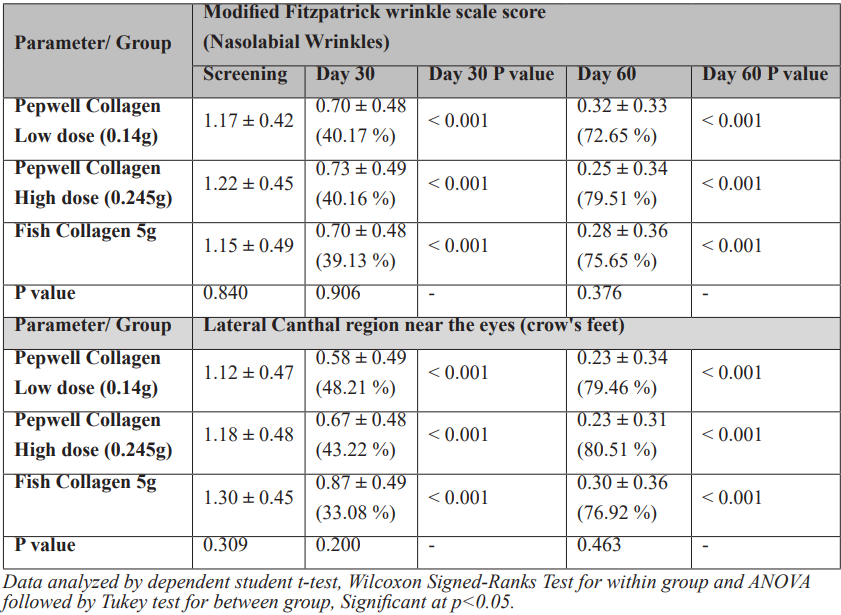
Wrinkles were scored using the modified Fitzpatrick wrinkle scale: 0 (no wrinkle), 0.5 (very shallow), 1 (fine), 1.5 (clear indentation, wrinkle depth <1 mm), 2 (moderate, wrinkle depth 1-2 mm), 2.5 (prominent, wrinkle depth 2-3 mm), 3 (deep, wrinkle depth >3 mm). Depth was estimated visually. Data was recorded for nasolabial wrinkles and lateral canthal region near both eyes on both sides of the face, but only one set is represented due to identical results.
A total of 90 subjects were evaluated for improvements in nasolabial wrinkles using the Modified Fitzpatrick Wrinkle Scale at baseline, Day 30, and Day 60. Both low-dose (0.14g) and high-dose (0.245g) Pepwell Collagen groups showed statistically significant reductions in wrinkle scores over time (p < 0.001), with effects comparable to Fish Collagen (5g). The high-dose Pepwell group demonstrated marginally superior outcomes at Day 60. Though the difference was not statistically significant, the numerical trend favors high-dose Pepwell as a potentially superior alternative in reducing nasolabial wrinkles.
The changes in lateral canthal wrinkles were evaluated over 60 days using a standardized wrinkle scoring scale. All groups demonstrated statistically significant intra-group reductions in wrinkle scores (p < 0.001). The high-dose Pepwell group (0.245g) showed the greatest percentage improvement at Day 60, with a numerical advantage over Fish Collagen.
Table 1: Assessment of changes in nasolabial and laterral canthal wrinkles based on modified Fitzpatrick wrinkle scale.
The Figure 1 illustrates the impact of Pepwell Collagen on crow's feet wrinkles over 60 days, comparing three groups: 0.14g Pepwell Collagen (Low-Dose) shows noticeable improvement in wrinkle reduction from screening to Day 30 and Day 60. 0.245g Pepwell Collagen (High-Dose) demonstrates the most significant wrinkle reduction, with a clear decrease in wrinkle depth and visibility from screening to Day 60. Fish Collagen (5g) demonstrated minimal wrinkle reduction, in crow's feet wrinkles from screening to Day 60.
Assessment of skin firmness by using modified Griffiths’ 10-point scale
The modified Griffiths’ 10-point scale measures skin firmness, where 0: very firm, thick skin, and 1–3: mild firmness issues. 4–6: moderate issues, 7–9: severe firmness issues with pliable, thin, and non-resilient skin. Lower scores mean firmer, more resilient skin, while higher scores indicate less firmness and resilience.
The 0.14g Pepwell Collagen group demonstrated substantial significant improvement, with an 18.37% (4.90 ± 0.99 to 4.00 ± 0.91) reduction in skin firmness score by Day 30 and a 34.69% (4.90 ± 0.99 to 3.20 ± 0.66) reduction by Day 60. The 0.245g Pepwell Collagen group exhibited even greater efficacy, with a 22.94% (5.10 ± 0.84 to 3.93 ± 0.87) reduction by Day 30 and a 39.80% (5.10 ± 0.84 to 3.07 ± 0.69) reduction by Day 60. The Fish collagen 5g group also showed significant improvement, with a 21.87% (5.03 ± 0.76 to 3.93 ± 0.74) reduction by Day 30 and a 36.38% (5.03 ± 0.76 to 3.20 ± 0.41) reduction by Day 60. Comparing the treatments, the 0.245g Pepwell Collagen showed the most pronounced improvement in skin firmness, followed by the Fish collagen 5g, and then the 0.14g Pepwell Collagen. However, the between-group analysis revealed no statistically significant differences. These results suggest that all three treatments led to improved facial skin firmness as evaluated by a dermatologist, with the 0.245g Pepwell Collagen showing a slight edge in effectiveness.
Assessment of change in hyper-pigmentation and blemishes using MSI: P
The MSI: P scale for hyper-pigmentation and blemishes ranges from 0 to 3, where 0 indicates minimal residual pigmentation (clear skin), 1 indicates mild pigmentation slightly darker than the surrounding area, 2 indicates moderate pigmentation darker than the surrounding area, and 3 indicates severe pigmentation significantly darker than the surrounding area. Lower scores reflect clearer skin with less pigmentation, while higher scores indicate more pronounced pigmentation and blemishes.
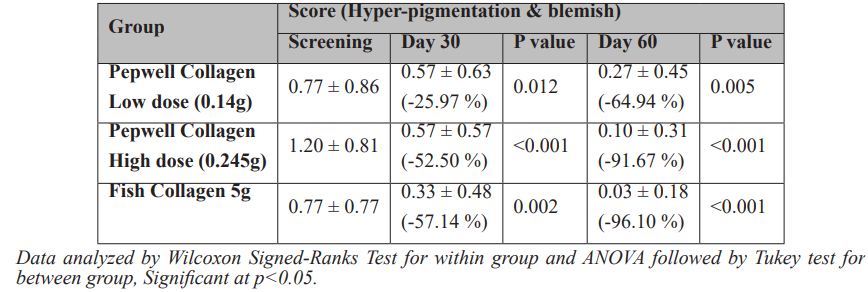
Both Pepwell Collagen doses and fish collagen demonstrated significant reductions in hyper-pigmentation by Day 60. The 0.14g Pepwell Collagen showed a 64.94% reduction, while the 0.245 g dose was even more effective, demonstrating a 91.67% reduction. Fish collagen at 5g exhibited a similar improvement with a 96.10% reduction.
Regarding the area covered by hyper-pigmentation and blemishes, all treatments increased the percentage of participants in the ≤10% area category by Day 60. The 0.14g Pepwell Collagen increased it from 50.00% to 93.33%, the 0.245g dose from 23.33% to 90.00%, and fish collagen from 43.33% to 96.67%.
Overall, fish collagen showed similar efficacy to the high dose of Pepwell Collagen. These findings indicate that collagen supplementation, particularly at higher doses, effectively reduces hyper-pigmentation and blemishes (Table 2, Graph 1).
Table 2: Assessment of changes in hyper-pigmentation and blemishes score.
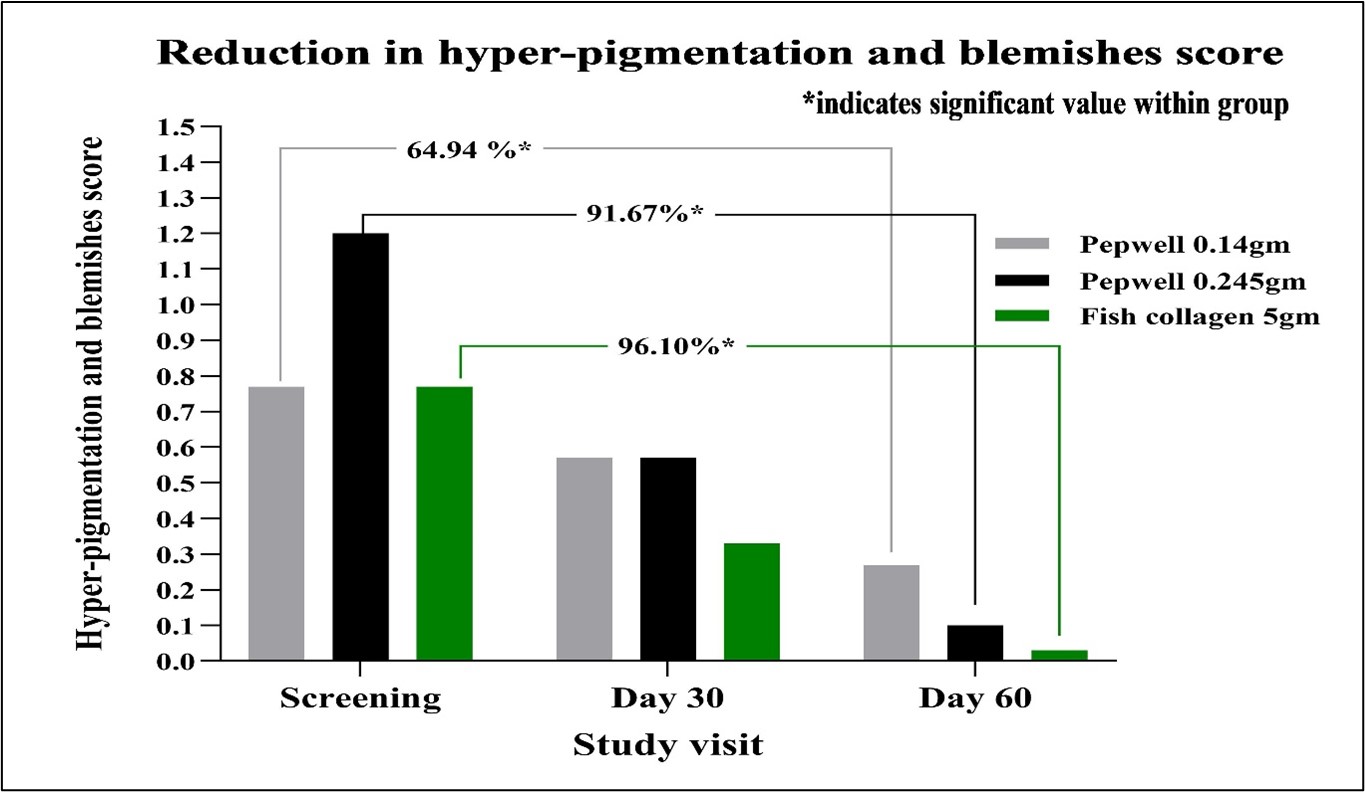
Graph 1: Reduction in hyper- pigmentation area over 60 Days.
Assessment of under-eye dark circles (median and lateral) graded on a bespoke scale
Under-eye dark circles, graded on a bespoke 0–5 scale (0 = no dark circles, 5 = blueish-black discoloration), showed significant improvement across all treatment groups over 60 days (Table 3). For the median right eye, the 0.245g Pepwell Collagen group demonstrated the highest reduction at 21.43%, followed by fish collagen (17.52%) and 0.14g Pepwell (14.60%).
Similarly, in the lateral right eye, the 0.245g Pepwell dose again showed superior efficacy (19.29% reduction), compared to 0.14g Pepwell (18.90%) and fish collagen (17.20%).
Overall, all interventions were effective in reducing pigmentation associated with under-eye dark circles. However, Pepwell Collagen at 0.245g consistently outperformed both the lower dose and fish collagen, indicating a dose-dependent response and its potential as a more effective alternative for periorbital skin concerns (Table 3).
Table 3: Assessment of changes in under eye dark circles score between groups.
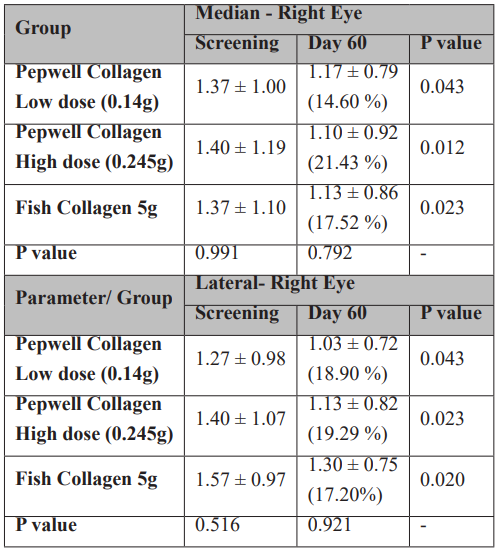
Data analyzed by Student t dependent Test for within group and ANOVA followed by Tukey test for between group, Significant at p<0.05.
Assessment of Skin Porosity via 3D Imaging (Antera 3D®)
Skin porosity, assessed using Antera 3D® imaging, showed significant improvement across all groups by Day 60. The 0.14g Pepwell Collagen group demonstrated modest but progressive improvement with an 11.34% reduction at Day 30 and 39.87% at Day 60. In contrast, the 0.245g Pepwell Collagen group showed a markedly greater reduction of 33.22% at Day 30 and 44.52% by Day 60, indicating a dose-dependent response.
Fish Collagen (5g) also led to notable improvements, with porosity index reductions of 27.43% at Day 30 and 47.08% at Day 60—marginally outperforming the high-dose Pepwell Collagen group by the end of the study.
Overall, high-dose Pepwell Collagen and Fish Collagen both demonstrated superior efficacy in reducing pore size and visibility, suggesting enhanced collagen supplementation improves skin texture, with low-dose Pepwell still offering visible, albeit more gradual, improvements (Figure 2).
Assessment of vital signs and compliance
There were no clinically significant changes observed in any of the three groups throughout the study. All parameters remained within the normal physiological ranges. There was approximately 100% compliance in all the three group participants throughout the study.
Assessment of adverse events
There were fourteen adverse events observed in the all the groups of study participants such as constipation, acidity, common cold, diarrhoea, nausea, heartburn, vomiting, headache, dizziness. All the adverse events were mild in nature and resolved without any rescue medication. None of the adverse events were related to the investigational products.
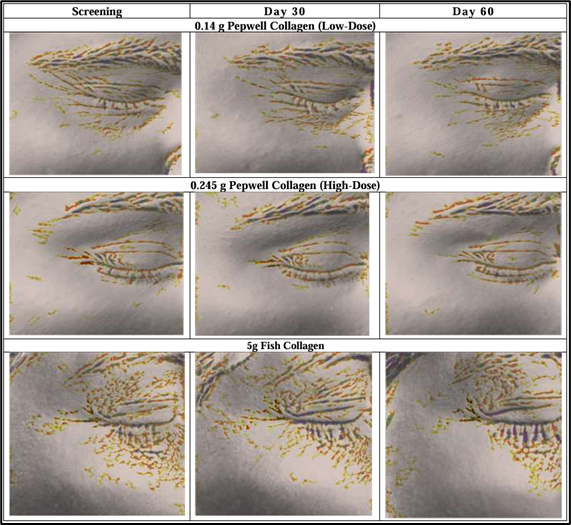
Figure 1: Effect of Pepwell Collagen, fish collagen on Crow's Feet Reduction Over 60 Days.
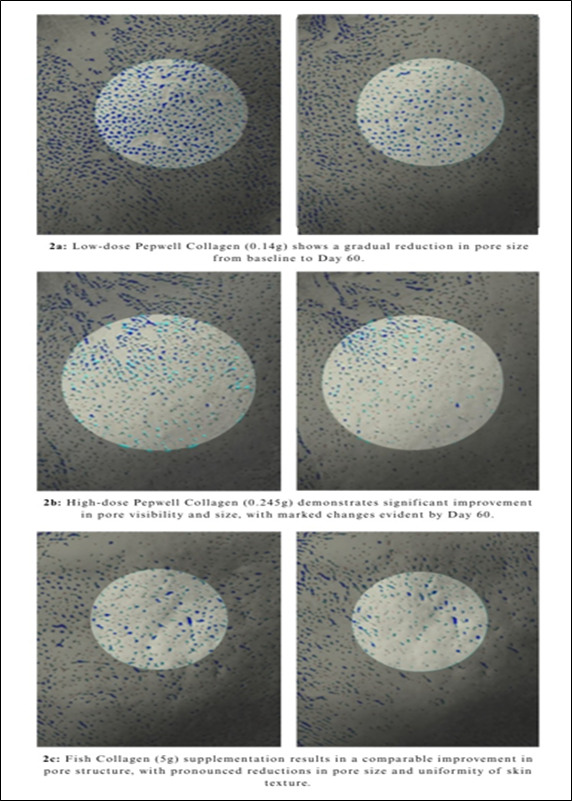
Figure 2: Effect of Collagen Supplementation on Pore Size and Visibility.
Discussion
In this study comprising 90 participants, demographic analysis indicated a predominantly female cohort with and no significant age differences across groups. None of the participants reported alcohol consumption or smoking habits.
This study, comprising 90 participants, primarily consisted of a female cohort with no significant age differences across groups. None of the participants reported alcohol consumption or smoking habits, ensuring a more controlled baseline for assessing the effects of collagen supplementation.
The assessment of nasolabial wrinkles using the Modified Fitzpatrick Wrinkle Scale demonstrated that both doses of Pepwell Collagen and Fish Collagen significantly reduced wrinkles. By day 60, the 0.245g Pepwell Collagen group showed the highest reduction (79.51%), followed closely by Fish Collagen (75.65%) and the 0.14g Pepwell Collagen group (72.65%). Similar trends were observed for wrinkles in the lateral canthal region (Crow's Feet), with all active treatments demonstrating substantial reductions. The 0.245g Pepwell Collagen group achieved the highest reduction (80.51%) by day 60, slightly outperforming Fish Collagen (76.92%).
Skin firmness, assessed using a modified Griffiths' 10-Point Scale, showed significant improvements across all groups. The 0.245g Pepwell Collagen group exhibited the greatest improvement (39.80% reduction in score), followed by Fish Collagen (36.38%) and the 0.14g Pepwell Collagen group (34.69%). These results suggest that higher doses of Pepwell Collagen may be more effective in improving skin firmness.
The assessment of hyperpigmentation and blemishes using the MSI: P scale revealed that both Pepwell Collagen doses and Fish Collagen significantly reduced hyperpigmentation by Day 60. Notably, the 0.245g Pepwell Collagen (91.67% reduction) and Fish Collagen (96.10% reduction) showed similar high efficacy, outperforming the 0.14g Pepwell Collagen dose (64.94% reduction).
Evaluation of under-eye dark circles indicated improvements across all groups. The 0.245g Pepwell Collagen group demonstrated the highest efficacy, with a 21.43% reduction for the median right eye and a 19.29% reduction for the lateral right eye by day 60. These results were slightly better than those observed in the Fish Collagen group (17.52% and 17.20% reductions, respectively).
3D imaging assessment also revealed that Overall, both doses of Pepwell Collagen significantly reduced the porosity index, with the high dose showing greater efficacy. Fish collagen also proved to be highly effective, with reductions comparable to the high dose of Pepwell Collagen.
The study reported high compliance rates and no significant changes in vital signs across all groups. While some mild adverse events were reported, none were related to the investigational products, suggesting a good safety profile for both Pepwell Collagen and Fish Collagen supplements.
Both Pepwell Collagen and Fish Collagen supplements offer substantial benefits for skincare, including wrinkle reduction, enhanced skin firmness, under-eye dark circles and hyperpigmentation and blemishes reduction. The higher dose of Pepwell Collagen (0.245g) consistently demonstrated efficacy comparable to or slightly better than Fish Collagen across multiple parameters.
UV radiation, nutrition, pollution and cigarette smoke can result in collagen damage leading to extrinsic Collagen production decreases by approximately 1% per year intrinsically. This can result in the breakdown of the bonds holding the dermis to the epidermis resulting in wrinkling and decreased elasticity [16].
Aging contributes to the decline of elastin and collagen fibers in the skin, leading to the formation of fine lines and wrinkles. Furthermore, skin wrinkling progresses due to a decrease in dermal thickness, primarily caused by reduced collagen levels over time [17].
Previous studies have also linked the depth of wrinkles in wrinkle-prone areas of the skin to the structure and thickness of underlying ligaments known as retinacula cutis. Research suggest that a decrease in retinacula cutis density results in diminished support for the dermis, potentially influencing wrinkle formation. Thus, enhancing the dermal extracellular matrix (ECM) might reduce the width of wrinkles without affecting their depth [18]. In the current study, both doses of Pepwell and Fish collagen consistently and significantly reduced both the depth and width of wrinkles over time. This outcome contrasts with the hypothesis proposed by Tsukahara et al., suggesting that enhancing dermal ECM through these treatments not only minimized the width but also visibly reduced the depth of wrinkles. This indicates a potential dual mechanism of action—improving ECM structure while also possibly affecting underlying retinacula cutis density or other factors influencing wrinkle depth.
The collagen network primarily provides skin firmness, while elastin is responsible for elasticity, both depending on an interconnected network and thus intrinsically related. According to the literature, Collagen consumption has been shown to promote elastin production in vitro and inhibit matrix metalloproteinase-3 (MMP3), which degrades elastin [19]. Consequently, after 60 days of treatment with Pepwell collagen and Fish collagen, skin firmness significantly improved, as assessed by the Griffith scale score.
According the research collagen significantly reduces the pigmented patches and redness after 1 month of intake [20], similar results were observed in the present study where pigmentation and blemishes were also reduced in Pepwell –both doses and Fish collagen. Post-acne scarring, hyperpigmentation, and blemishes not only affect cosmetic appearance but also have detrimental effects on mental health, social functioning, and overall well-being [21].
An important observation from this study is that the Pepwell Collagen doses were significantly lower compared to the fish collagen dose, yet equivalent or even superior results were obtained across various skin health parameters. This finding addresses a key limitation of traditional animal-derived collagen supplements, which often require higher doses for efficacy. The ability of Pepwell Collagen to achieve comparable results at substantially lower doses not only demonstrates its superior efficiency but also offers a practical solution to the challenges of large-dose requirements and potential palatability issues associated with animal-based collagens. Furthermore, the study reported 100% compliance across all treatment groups, indicating that the lower-dose Pepwell Collagen formulations were well-tolerated by participants. This high compliance, coupled with the lower required dosage, positions Pepwell Collagen as a more convenient and potentially more sustainable alternative for long-term collagen supplementation.
Choosing recombinant vegan collagen over Fish collagen is beneficial for those transitioning to veganism and prioritizing sustainability. Scientifically, recombinant vegan collagen offers similar benefits, as shown in current research, without the risks of marine pollutants and allergens. Sourcing Fish collagen impacts marine biodiversity and carries the risk of oceanic pollution and heavy metal contamination. In contrast, recombinant vegan collagen is an eco-friendly and health-conscious alternative. Moreover, fish collagen is less thermally stable due to fewer proline and hydroxyproline residues [22]. Recombinant collagen provides comparable efficacy, making it a superior choice for both health and ethical reasons.
The doses for the human studies are based on the preclinical studies performed on Pepwell collagen. In previous studies, Pepwell Collagen digestates demonstrated superior molecular characteristics, cellular activity, and oxidative stress reduction compared to fish and bovine collagen digestates. The Pepwell Collagen digestates exhibited a higher proline content and an average molecular weight of 7222.96 Da. This molecular profile contributed to enhanced fibroblast proliferation, increasing it by 133.41%, and significantly boosted cell migration by 3.23 times in UVA-damaged human skin fibroblasts (HSF) [23].
Furthermore, Pepwell Collagen digestates effectively reduced reactive oxygen species (ROS) levels by 54.02% by increasing the activities of antioxidant enzymes such as superoxide dismutase (SOD) and glutathione peroxidase (GSH-Px). Additionally, they upregulated the mRNA and protein expression of key components involved in skin health, including collagen type I (COL1A1), collagen type III (COL3A1), hyaluronic acid synthase 2 (HAS2), and tissue inhibitor of metalloproteinase-1 (TIMP-1). They also inhibited the expression of matrix metalloproteinase-1 (MMP-1), an enzyme responsible for collagen degradation [23].
These beneficial effects observed in prior research were corroborated by the findings of the present clinical trial, which confirmed the efficacy of Pepwell Collagen in providing protective effects against anti-aging effects, where high dose performed similar to the fish collagen digestates.
Previous studies have generally reported no adverse effects from oral and topical collagen use [18]. Similarly, in the present study, no adverse effects were attributed to collagen supplementation, as all observed adverse events were unrelated to the investigational products. Compliance was nearly 100%, and vital signs remained stable across all three groups, indicating the safety of the investigational products.
A primary limitation of this study is the relatively short duration of 60 days, which may not capture the long-term effects of collagen supplementation. Additionally, the predominantly female cohort limits the generalizability of the findings to other demographics. The study also lacked diversity in age and skin types, which could influence the outcomes. Nonetheless, the strengths of the study include a robust sample size, the use of validated and objective measures for skin parameters, and the high compliance rate among participants. The study's design, including a double-blind methodology, enhances the reliability of the findings, confirming that both high-dose Pepwell and Fish Collagen are highly efficacious in improving skin health compared to low-dose Pepwell Collagen.
Conclusion
This study highlights Pepwell Collagen as an effective therapeutic alternative for enhancing multiple skin health parameters, including wrinkle reduction, improved skin firmness, diminished under-eye circles, reduced porosity index, and decreased hyperpigmentation. Notably, these benefits were achieved at significantly lower doses compared to traditional fish collagen supplements. The higher dose of Pepwell Collagen (0.245g) consistently demonstrated results comparable to, or slightly better than, those of Fish Collagen, while the lower dose (0.14g) also produced meaningful improvements.
However, further research is warranted to evaluate the long-term effects of Pepwell Collagen beyond the 60-day period and across more diverse populations. A key advantage of Pepwell Collagen is its vegan formulation, addressing sustainability and ethical concerns associated with animal-derived collagen. Both Pepwell and Fish Collagen were well-tolerated, with high compliance rates and no reported adverse effects. Overall, the evidence supports Pepwell Collagen as a safe, effective, and sustainable option for skin health management, particularly for individuals seeking plant-based or lower-dose collagen alternatives.
Conflicts of Interest/ Competing Interests: Yali Yuan is a global sale director of Jland Biotech Co., Ltd. Other authors declare no conflict of interest.
Grant Information: Investigational product was provided by Jland Biotech Co., Ltd. and testing expenses borne in the trial were supported by Jland Biotech Co., Ltd.
Acknowledgements: The authors would like to acknowledge the research team and the back-office team involved in the research work. We would like to acknowledge the support of Mprex Healthcare Pvt. Ltd., Pune, as a clinical research organization for this trial.
Author Contributions: H. T, Y. Y, G. G, D. H.; Acquisition, analysis, or interpretation of data- H. T, Y. Y, G. G, D. H.; Drafting and critical review of the manuscript- H. T, Y. Y, G. G, D. H. All authors have read and agreed to the published version of the manuscript.
References
- Pu SY, Huang YL, Pu CM, Kang YN, Hoang KD, Chen KH, et al. Effects of Oral Collagen for Skin Anti-Aging: A Systematic Review and Meta-Analysis. Nutrients, 2023; 15(9): 2080. doi: 10.3390/nu15092080.
- Bolke L, Schlippe G, Gerß J, Voss W. A Collagen Supplement Improves Skin Hydration, Elasticity, Roughness, and Density: Results of a Randomized, Placebo-Controlled, Blind Study. Nutrients, 2019; 11(10): 2494. doi: 10.3390/nu11102494.
- de Miranda RB, Weimer P, Rossi RC. Effects of hydrolyzed collagen supplementation on skin aging: a systematic review and meta-analysis. Int J Dermatol, 2021; 60(12): 1449-1461. doi: 10.1111/ijd.15518.
- Campos LD, Santos Junior VA, Pimentel JD, Carregã GLF, Cazarin CBB. Collagen supplementation in skin and orthopedic diseases: A review of the literature. Heliyon, 2023; 9(4): e14961. doi: 10.1016/j.heliyon.2023.e14961.
- Diaz I, Namkoong J, Wu JQ, Giancola G. Amino acid complex (AAComplex) benefits in cosmetic products: In vitro and in vivo clinical studies. J Cosmet Dermatol, 2022; 21(7): 3046-3052. doi: 10.1111/jocd.14544.
- Kwok HH, Yue PY, Mak NK, Wong RN. Ginsenoside Rb₁ induces type I collagen expression through peroxisome proliferator-activated receptor-delta. Biochem Pharmacol, 2012; 84(4): 532-539. doi: 10.1016/j.bcp.2012.05.023.
- Chen SJ, Yuan W, Mori Y, Levenson A, Trojanowska M, Varga J. Stimulation of type I collagen transcription in human skin fibroblasts by TGF-beta: involvement of Smad 3. J Invest Dermatol, 1999; 112(1): 49-57. doi: 10.1046/j.1523-1747.1999.00477.x.
- Lin YK, Liang CH, Lin YH, Lin TW, Vázquez JJ, van Campen A, et al. Oral supplementation of vegan collagen biomimetic has beneficial effects on human skin physiology: A double-blind, placebo-controlled study. J. Funct. Foods, 2024; 112: 105955.
- Deane CS, Bass JJ, Crossland H, Phillips BE, Atherton PJ. Animal, Plant, Collagen and Blended Dietary Proteins: Effects on Musculoskeletal Outcomes. Nutrients, 2020; 12(9): 2670. doi: 10.3390/nu12092670.
- Amyoony J, Gorman M, Dabas T, Moss R, McSweeney MB. Consumer perception of collagen from different sources: An investigation using hedonic scale and check all that apply. J Food Sci, 2023; 88(12): 5236-5247. doi: 10.1111/1750-3841.16822.
- Skov K, Oxfeldt M, Thøgersen R, Hansen M, Bertram HC. Enzymatic Hydrolysis of a Collagen Hydrolysate Enhances Postprandial Absorption Rate-A Randomized Controlled Trial. Nutrients, 2019; 11(5): 1064. doi: 10.3390/nu11051064.
- Yamamoto S, Deguchi K, Onuma M, Numata N, Sakai Y. Absorption and Urinary Excretion of Peptides after Collagen Tripeptide Ingestion in Humans. Biol Pharm Bull, 2016; 39(3): 428-434. doi: 10.1248/bpb.b15-00624.
- Ichikawa S, Morifuji M, Ohara H, Matsumoto H, Takeuchi Y, Sato K. Hydroxyproline-containing dipeptides and tripeptides quantified at high concentration in human blood after oral administration of gelatin hydrolysate. Int J Food Sci Nutr, 2010; 61(1): 52-60. doi: 10.3109/09637480903257711.
- Pillai NS, Khan AK, Mehrotra N, Jadhav K. A Comprehensive Review on the Role of Collagen in Health and Disease. Biotech Res Asia, 2024; 21(4): 1329-1347.
- de Moura Campos S, Dos Santos Costa G, Karp SG, Thomaz-Soccol V, Soccol CR. Innovations and challenges in collagen and gelatin production through precision fermentation. World J Microbiol Biotechnol, 2025; 41(2): 63. doi: 10.1007/s11274-025-04276-z.
- Steele C. Collagen: a review of clinical use and efficacy. Med. J, 2022; 1: 12-36.
- Motwani MS, Khan K, Pai A, Joshi R. Efficacy of a collagen hydrolysate and antioxidants-containing nutraceutical on metrics of skin health in Indian women. J Cosmet Dermatol, 2020; 19(12): 3371-3382. doi: 10.1111/jocd.13404.
- Al-Atif H. Collagen Supplements for Aging and Wrinkles: A Paradigm Shift in the Fields of Dermatology and Cosmetics. Dermatol Pract Concept, 2022; 12(1): e2022018. doi: 10.5826/dpc.1201a18.
- Reilly DM, Lozano J. Skin collagen through the lifestages: importance for skin health and beauty. Plast Aesthet Res, 2021; 8. http://dx.doi.org/10.20517/2347-9264.2020.153.
- Himeno A, Tsujikami M, Koizumi S, Watanabe T, Igase M. Effect of Reducing Pigmentation by Collagen Peptide Intake: A Randomized, Double-Blind, Placebo-Controlled Study. Dermatol Ther (Heidelb), 2022; 12(7): 1577-1587. doi: 10.1007/s13555-022-00748-4.
- Kandhari S, Ganjoo A, Talathi A, Aurangabadkar S, Bhatia S, Goel A, et al. Efficacy and safety of innovative acne scar serum in Indian patients (ESTEEM India study). J Cosmet Dermatol, 2023; 22(3): 880-889. doi: 10.1111/jocd.15536.
- Geahchan S, Baharlouei P, Rahman A. Marine Collagen: A Promising Biomaterial for Wound Healing, Skin Anti-Aging, and Bone Regeneration. Mar Drugs, 2022; 20(1): 61. doi: 10.3390/md20010061.
- Wang L, Li J, Zhang Y, Zhu Z, Gao R. Recombinant human collagen digestates exhibit higher protective effect on UVA-damaged skin fibroblasts than animal-derived collagens. Journal of Functional Foods, 2024; 113: 106035.